

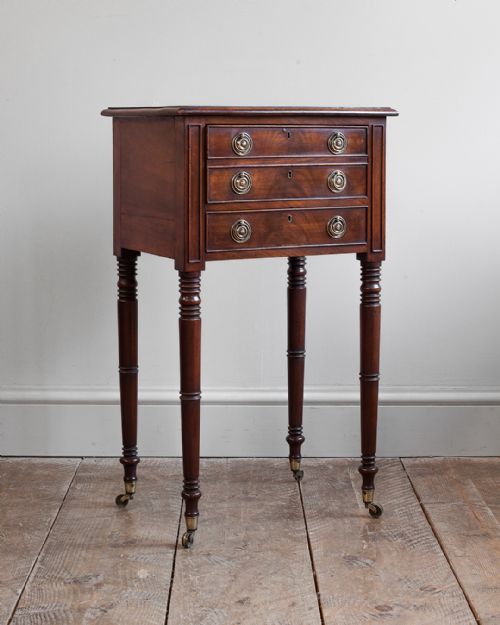
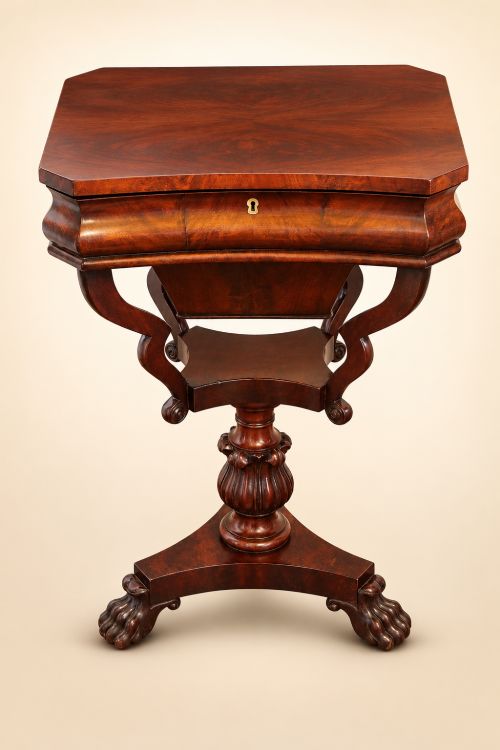
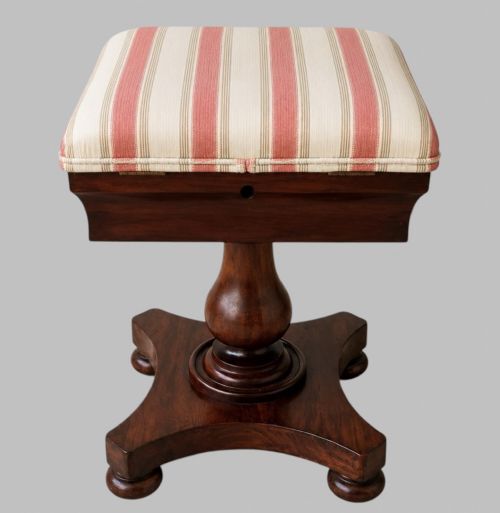

Mahogany Pedestal Box
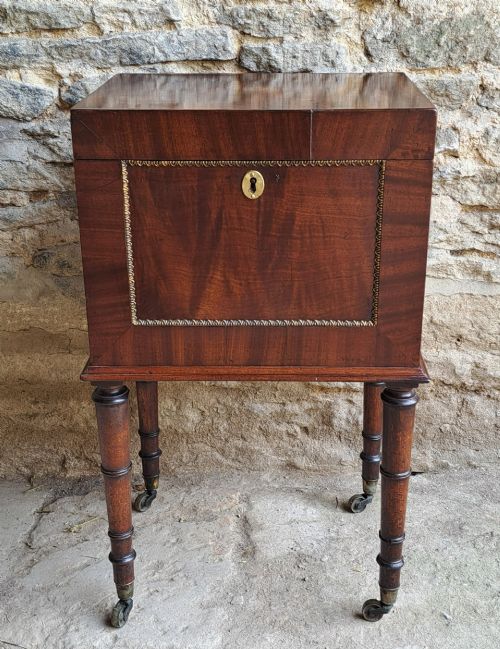
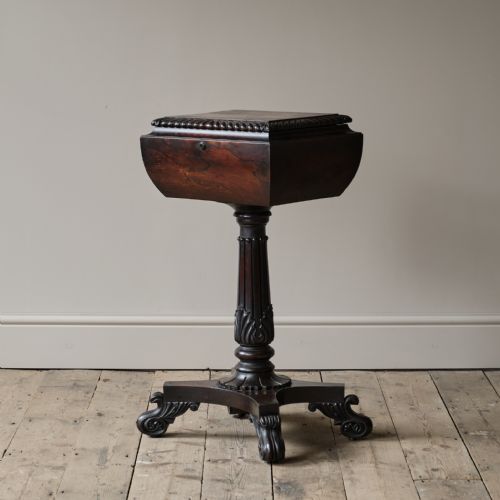
A mahogany pedestal box combines solid timber with a raised stand, offering storage for tea, sewing implements, or wine.
Mahogany Pedestal Box
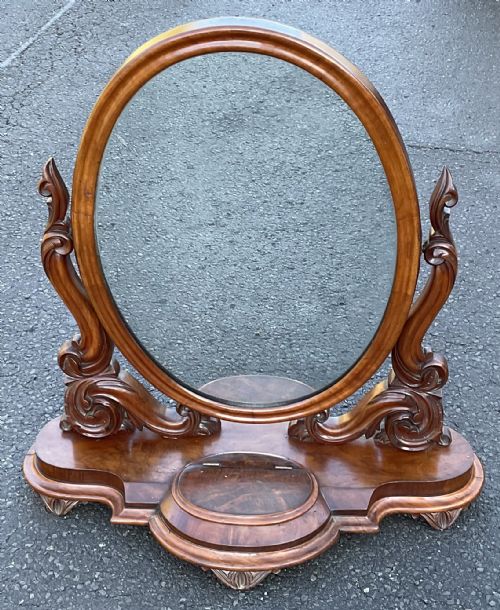
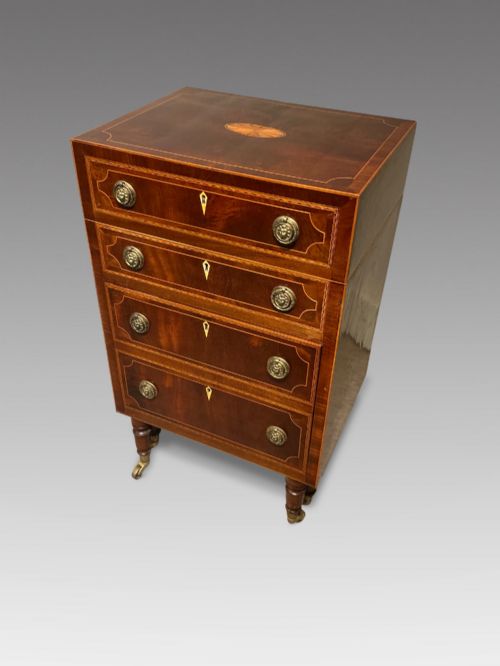
When you search for a mahogany pedestal box, you encounter a variety of forms designed to hold specialised household items. These pieces span periods from the mid-eighteenth century through the Victorian era, encompassing Georgian, Regency, and William IV styles.
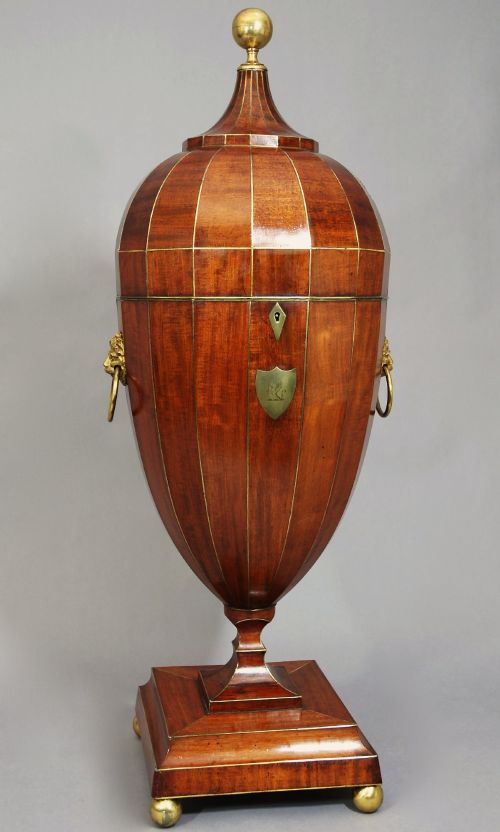
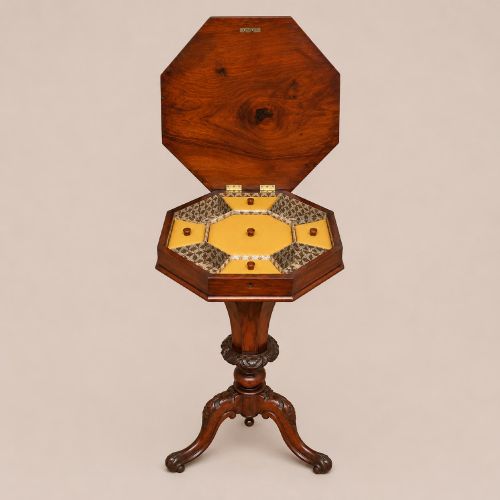
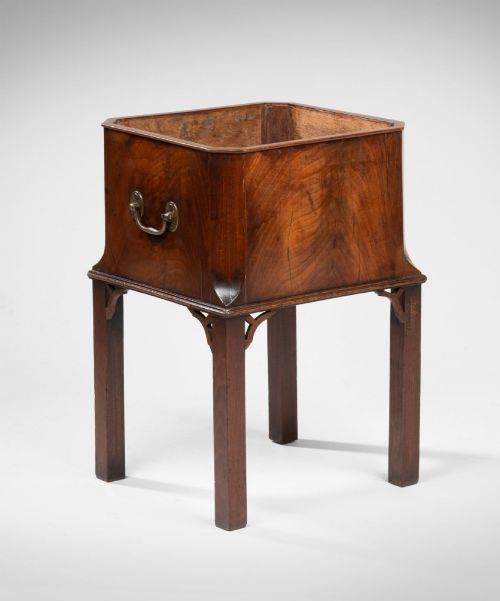
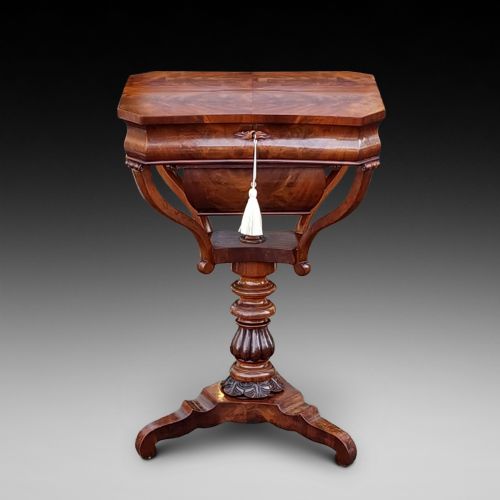
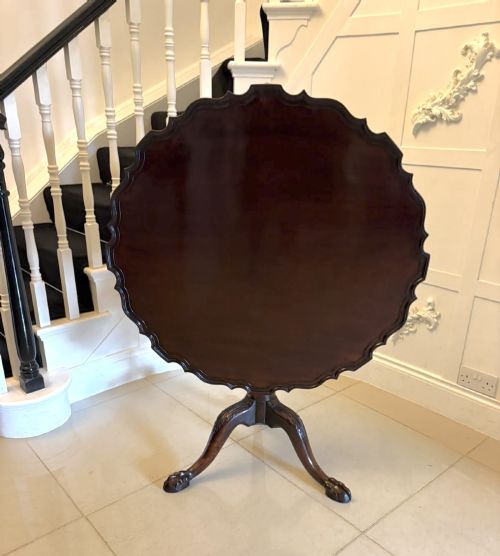
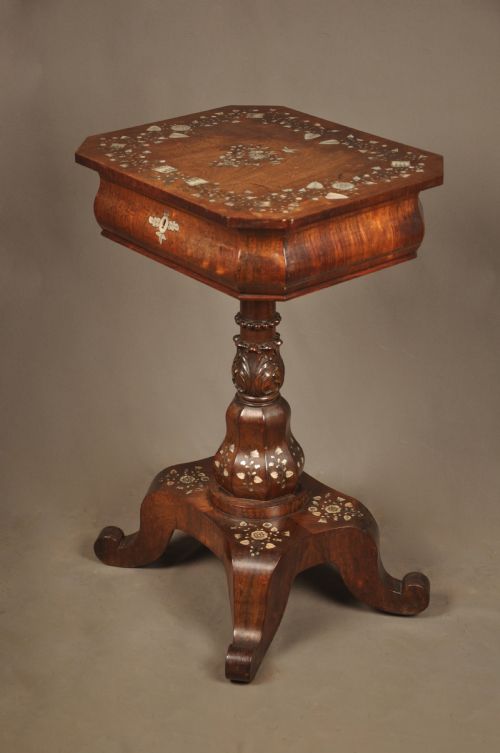
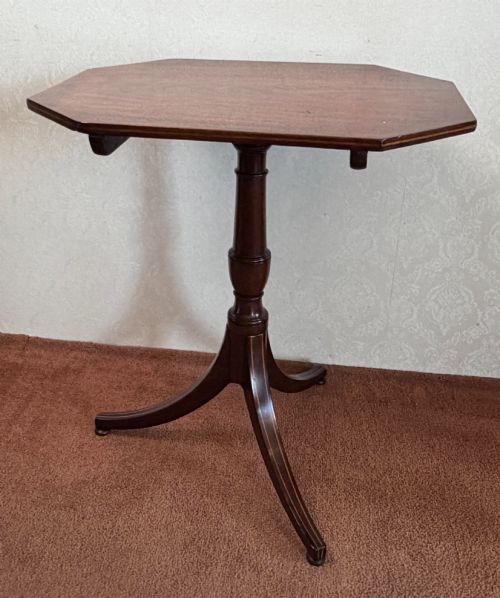
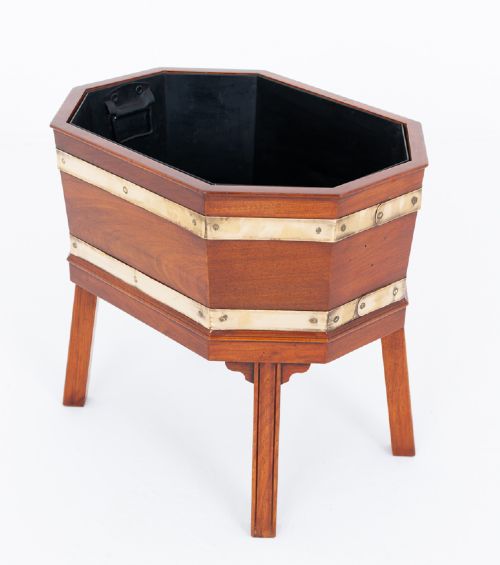
The most common examples on this page are work tables, sewing tables, and teapoys raised on central pedestals or stands. Alongside these, cellarettes, wine coolers, and cutlery urns appear in pedestal formats.
Materials and construction
Cabinet makers utilised solid mahogany and figured veneers such as flame mahogany to construct these boxes and their supporting columns. Contrasting timbers like boxwood provided delicate inlay work, while brass mounts and ormolu added structural and decorative detail.
Interior compartments often featured fitted arrangements for sewing tools or tea storage, housed within sarcophagus, rectangular, or urn-shaped bodies supported by tripod feet or plinth bases.
Mahogany Pedestal Box Retail Price Guide 2026
Typical asking prices for mahogany pedestal box among the pieces listed under this phrase on Sellingantiques today, from the lower quarter to the upper quarter. They describe what is for sale here now, not the wider market.
Listings feature mahogany, boxwood, and ormolu across Georgian, Regency, and Victorian periods.
Distinctions in craftsmanship
The degree of refinement in the timber grain and the precision of the boxwood inlay separate standard examples from finer pieces. Flame mahogany veneer selection and the crispness of carved details on the pedestal column indicate the standard of workshop production.
Original fitted interiors and robust structural joinery in the stand distinguish better-preserved boxes. Ormolu mounts and cast brass fittings show varying levels of chasing and finish that influence the overall character.
Gillows
The Mahogany Pedestal Box Glossary
- Teapoy
- A box for storing loose tea, typically mounted on a central pillar or stand. These containers often featured internal lidded compartments to keep tea leaves fresh.
- Cellarette
- A lockable container used for storing bottles of wine or spirits. They frequently took the form of pedestal boxes or sarcophagus-shaped urns during the Georgian and Regency periods.
- Flame mahogany
- A veneer cut from the fork of the mahogany tree to produce a flickering, flame-like grain pattern. Cabinet makers used this timber on prominent surfaces of high-status boxes.
- Work table
- A small pedestal table equipped with a fabric bag or wooden box for sewing and needlework. These multifunctional items became popular in domestic interiors during the nineteenth century.
Mahogany Pedestal Box: Frequently Asked Questions
What is a mahogany pedestal box used for?
These boxes served specific domestic functions, primarily holding sewing equipment, loose tea, or wine bottles in the dining room or parlour.
Interior compartments and fitted trays organised small implements, while secure lids protected the contents from light and moisture.
How do I identify a Regency teapoy?
Regency teapoys typically feature sarcophagus or rectangular box forms resting on sturdy central pillars with platform bases or splayed legs. They often incorporate brass handles and detailed wood veneers.
Inside, you usually find multiple lidded canisters or mixing bowls designed for preparing tea.
Where should I place a pedestal work table?
These compact pieces fit well beside seating areas in a living room or study as functional accent tables. Their enclosed compartments make them useful for storing small everyday items out of sight.
Freestanding designs allow them to sit comfortably away from walls.
How do I distinguish Georgian from Victorian pieces?
Georgian and George III pieces generally display restrained classical proportions, subtle boxwood stringing, and balanced architectural details. Victorian examples often introduce bolder, heavier pedestal forms and more expansive curl or flame grain veneers.
Stylistic influences from the Biedermeier or William IV periods also appear on later nineteenth-century variations.