




Mahogany Paint Box
A mahogany paint box is a compact fitted case for watercolour materials, prized by collectors for its clever internal engineering and fine timber.
Mahogany Paint Box
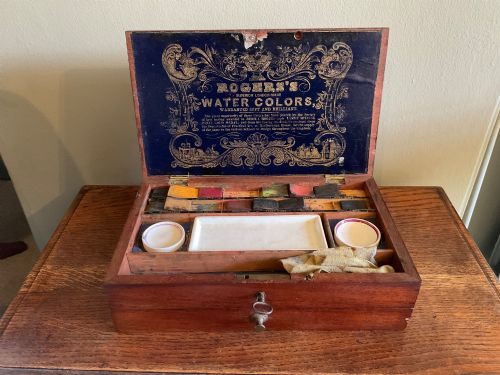
When you search for a mahogany paint box, you encounter portable lidded cases designed to hold artist materials, ceramic palettes, and pigment cakes securely. These pieces survive largely from the Georgian, Regency, and Victorian eras, reflecting a time when sketching in watercolour was a standard accomplishment.
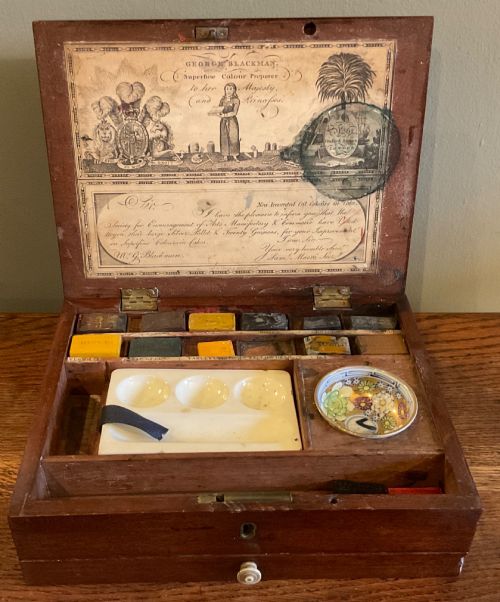
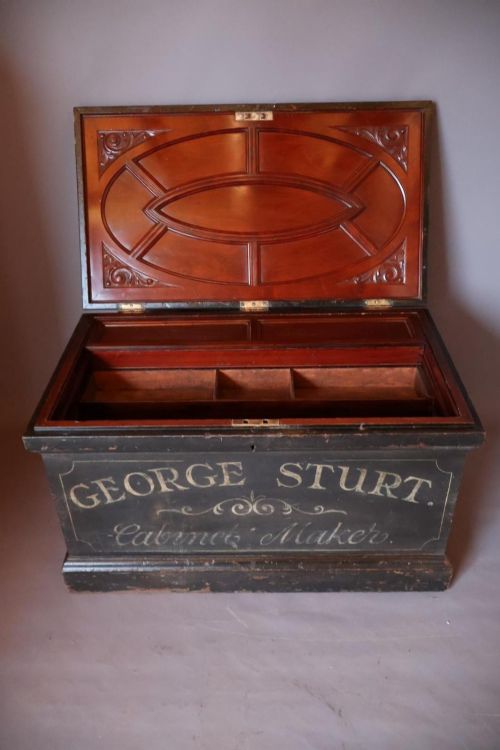
The version you are most likely to meet on this page is a Victorian or Georgian artist box fashioned from solid mahogany, often featuring internal compartments, glass mixing trays, and lift-out trays. Alongside dedicated artist boxes, you find related storage forms such as tea caddies and decorative chests that share the same timber and cabinet-making traditions.
How they were made
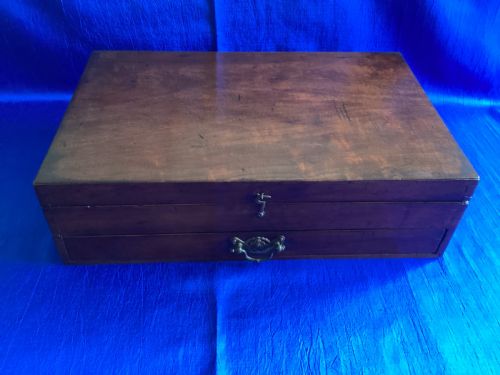
These boxes rely on dense mahogany timber, selected for stability and grain, frequently enhanced with brass corner mounts, campaign handles, and fine stringing inlay. Cabinet makers constructed the carcases with tight joints to withstand travel, fitting the interiors with precision dividers for ceramic pans, glass bottles, and paper stores.
Surface finish relies on hand-rubbed polish that highlights the natural red-brown tones of the wood, while internal fittings often incorporate brass locks, ceramic mixing slabs, and paper trade labels identifying the original supplier.
What varies in quality
Quality in these pieces rests upon the integrity of the internal fit-out and the completeness of the original contents, such as ceramic saucers and glass jars. Boxes that retain their lift-out trays, mixing slates, and maker stamps command greater attention than those with later or missing internal elements.
The refinement of the exterior carpentry, from mitred joints and brass inlays to fiddleback grain selection, separates standard utility items from luxury bespoke commissions made for professional artists.
George Blackman·Winsor & Newton·Reeves & Sons Ltd·Newman·Ackermann·George Rowney
The Mahogany Paint Box Glossary
- Crossbanded
- Timber edged with a narrow strip of veneer running perpendicular to the main grain. This technique frames the lid and adds a decorative border to the primary surface.
- Campaign box
- A sturdy portable chest fitted with flush brass handles and corner brackets designed for travel. These pieces were built for durability in transit.
- Fiddleback
- Mahogany featuring a rippled, undulating grain pattern resembling the back of a violin. This figure appears in higher-grade furniture and select boxes.
- Inlay
- Material set into the surface of the wood to form a decorative pattern. Common examples include light satinwood lines or shell motifs set flush into the mahogany lid.
- Tea caddy
- A lidded box originally designed to store loose tea leaves, sharing construction methods and locking mechanisms with artist boxes.
Mahogany Paint Box: Frequently Asked Questions
How do I date a mahogany paint box?
Dating relies on construction methods, brass hardware styles, and internal paper trade labels left by the original supplier. Georgian examples often display simpler, heavier carcases, whereas Victorian versions frequently feature elaborate fitted trays and patent brass inkwells.
Examining the hinges, locks, and secondary woods inside the compartments helps narrow the decade of manufacture. Maker marks stamped into the timber or printed on paper labels provide the clearest chronological anchor.
What did these boxes contain originally?
An original artist box held dry pigment cakes, ceramic mixing palettes, glass water bottles, and porcelain saucers for washing brushes. Many retained space for pencils, small rulers, and pads of watercolour paper.
Complete sets feature marked ceramic pans or colour cakes stamped with the manufacturer name. Finding surviving glass and ceramic inserts inside the fitted mahogany partitions is uncommon.
Are these boxes suitable for modern painting?
Many collectors use antique paint boxes for travel sketching, as the internal compartments accommodate modern half-pans and brushes. The robust mahogany construction protects the contents during transit just as it did in the nineteenth century.
Care should be taken to protect the historical wood finish from moisture and direct sunlight during regular studio use. Original brass hardware and internal paper labels require gentle handling.
How do I clean and maintain the wood?
Maintenance involves dusting with a dry, soft cloth and occasionally applying a conservative coat of microcrystalline wax to nourish the antique polish. Avoid water and harsh modern solvents on the mahogany surface and the internal paper labels.
Keeping the boxes away from direct heat sources prevents the mahogany from warping and protects the glue in the structural joints. Proper humidity control preserves both the exterior polish and the delicate internal dividers.