

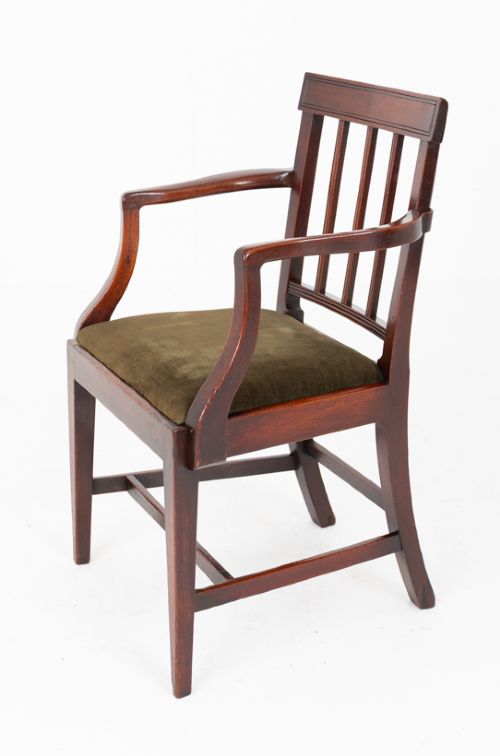
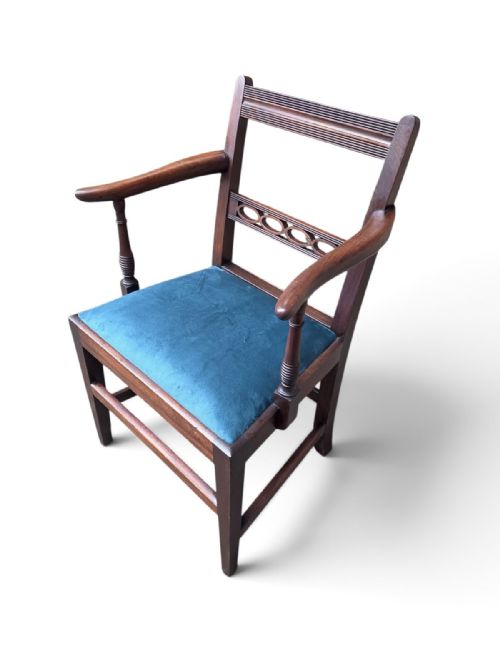
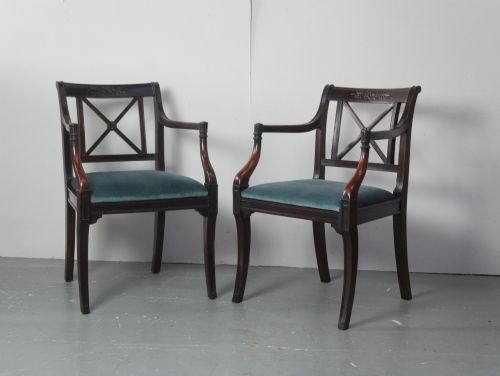
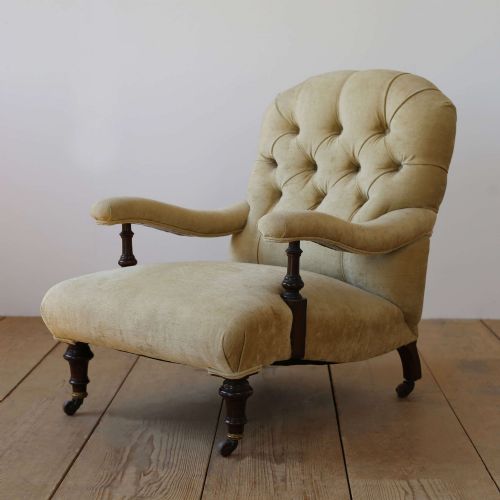
Mahogany Open Back Chairs
Mahogany open back chairs bring structural elegance and warmth to a room through sculpted timber and open framing.
Mahogany Open Back Chairs
When a buyer looks for mahogany open back chairs, they encounter seating designed with exposed timber frames and supportive back rails rather than solid upholstery. These pieces serve primarily as dining chairs, armchairs, and salon seating across domestic interiors.
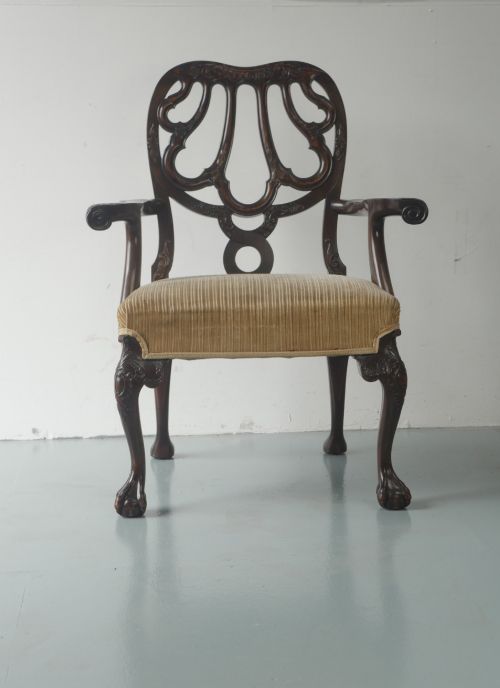
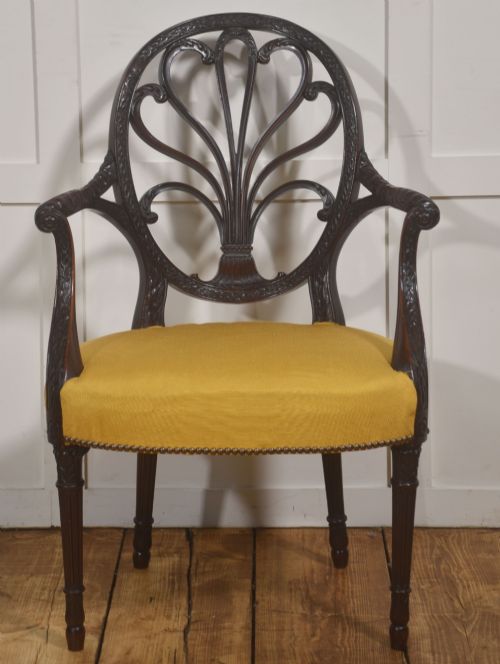
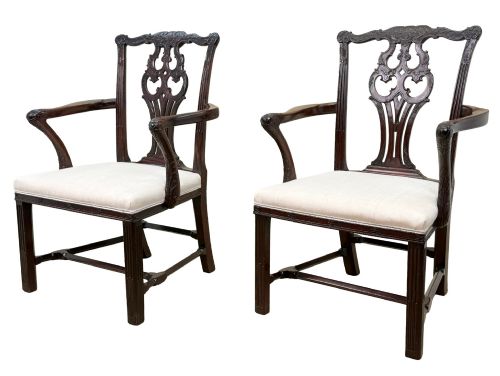
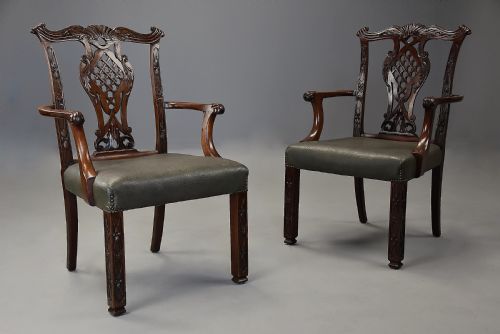
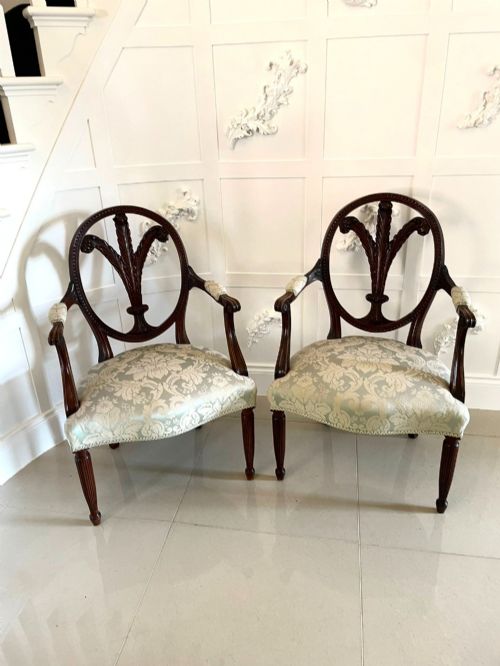
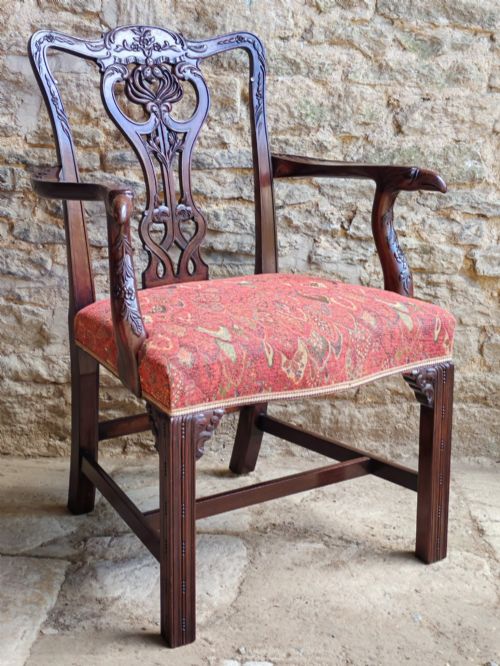
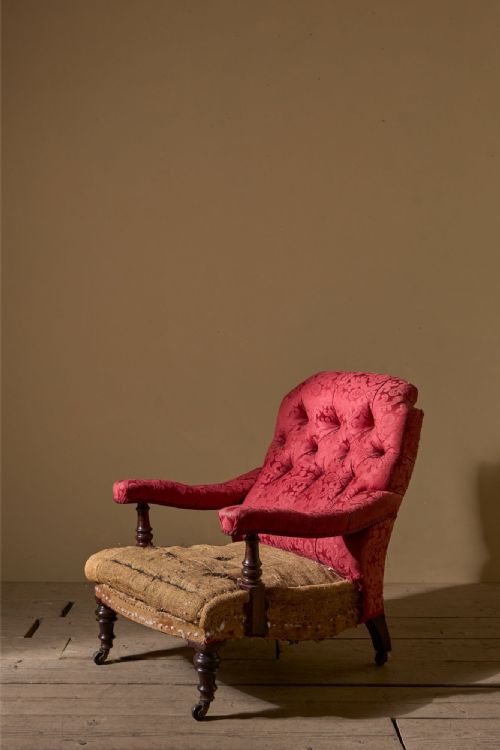
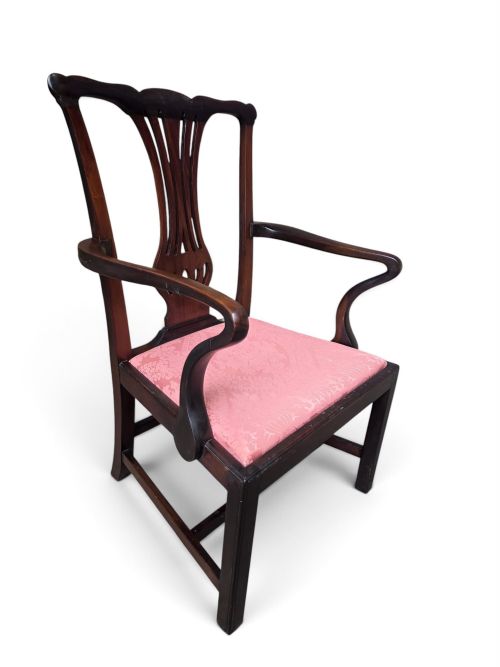
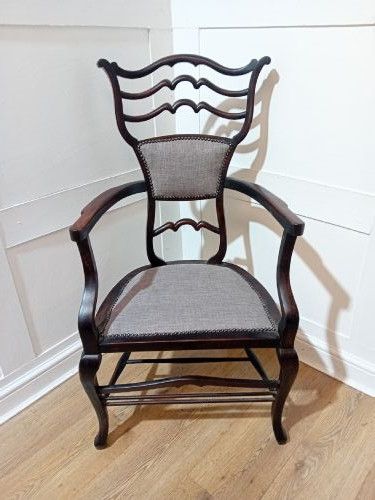
The pieces appearing on this page span the Georgian, Victorian, and Edwardian eras, alongside various revival periods. Buyers meet chairs showing Georgian proportions, late nineteenth-century interpretations of Chippendale and Hepplewhite styles, and simpler ladder-back or lyre-back forms.
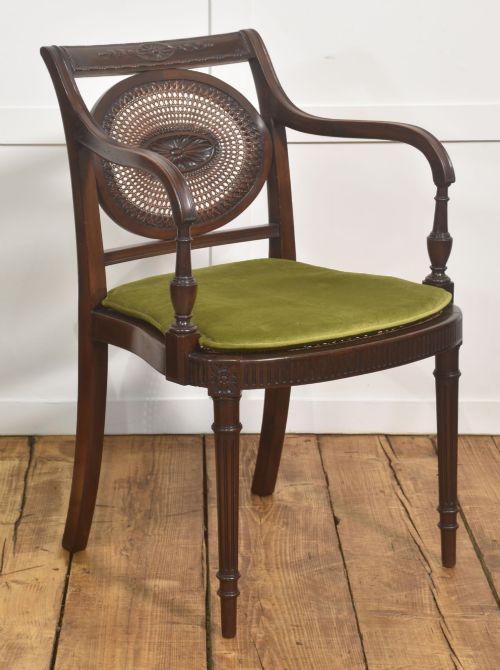
Originating largely from British and European workshops, these chairs range from grand country house carvers to lighter salon chairs. The material selection focuses on mahogany timbers paired with cane, fabric, leather, or velvet upholstery inserts.
What Varies in Quality
The depth and crispness of the timber carving separate ordinary production from superior examples. Master carvers produced undercut details and smooth contours that lesser workshops achieved only through superficial surface scoring.
The selection and figure of the mahogany timber itself dictate much of the inherent value. Dense, straight-grained wood with rich natural figuring holds joints more securely and ages with a deeper patina than softer or more uniform substitute timbers.
Mahogany Open Back Chairs Retail Price Guide 2026
Typical asking prices for mahogany open back chairs among the pieces listed under this phrase on Sellingantiques today, from the lower quarter to the upper quarter. They describe what is for sale here now, not the wider market.
Some nineteenth-century makers evidently decided standard seating was far too dull and added lyre-shaped backs so owners could pretend to play a tune while sitting down.
Howard and Sons·Gillows·Holland and Sons
The Mahogany Open Back Chairs Glossary
- Carver
- An armchair, typically designed to match a set of dining chairs and featuring supportive armrests. These pieces often sat at the head of a dining table.
- Splat
- The vertical wooden strip down the centre of a chair back. Pierced and carved splats form a defining feature of Chippendale and Hepplewhite designs.
- Gainsborough chair
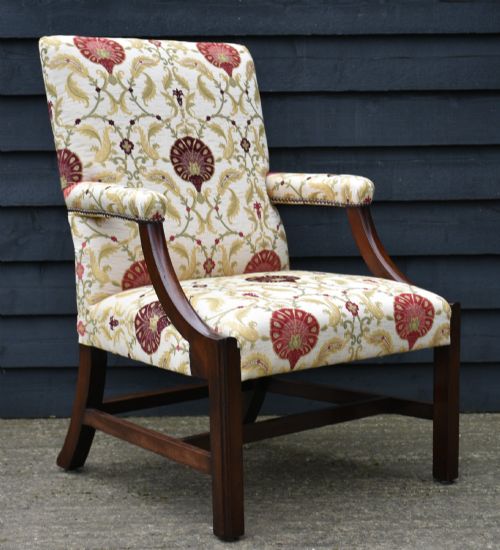
- A wide, upholstered armchair with an open frame and low seat, dating from the eighteenth century. This form allowed comfortable seating for people wearing wide garments.
- Revival
- A later period style that copies historical designs from earlier centuries. Victorian and Edwardian makers frequently reproduced Georgian aesthetics.
- Cane
- Woven rattan material used for chair seats and backs. This technique lightens the visual weight of heavy mahogany frames.
Mahogany Open Back Chairs: Frequently Asked Questions
How do I date a mahogany open back chair?
Dating relies on examining the timber species, joinery methods, and the style of the carving. Eighteenth-century pieces show hand-cut joinery and aged patination, while later revivals often incorporate machine-cut elements.
Secondary woods used in the frames also help determine age. Oak or deal secondary framing typically points to earlier pieces, whereas pine or modern hardwoods suggest nineteenth-century or revival manufacture.
Where should I place these chairs at home?
These chairs suit reception rooms, studies, and dining spaces where the open wooden back remains visible. Placing an armchair beside a fireplace or writing desk highlights the craftsmanship of the arms and splat.
Because the backs are open, they do not block light or sightlines in a room. This makes them useful for partitioning large spaces or furnishing smaller areas without crowding the floor plan.
What is the difference between Georgian and revival chairs?
Georgian chairs were made during the eighteenth and early nineteenth centuries as contemporary seating for upper-class homes. They display the original proportions and construction methods of the period.
Revival chairs were manufactured later, particularly during the Victorian and Edwardian eras, copying those earlier designs. While they often feature skilled craftsmanship, their internal construction and timber preparation reflect nineteenth-century workshop practices.
How do I care for mahogany chair frames?
Maintenance involves dusting with a soft, dry cloth and avoiding placement near direct heat sources or strong sunlight. Excessive warmth dries out the timber and causes the finish to craze.
Applying a traditional beeswax polish occasionally helps nourish the wood and maintain its natural lustre. Avoid silicone-based sprays, which build up on the surface and attract dust over time.