


Mahogany Needlepoint Stool
A mahogany needlepoint stool brings rich timber and worked wool together, offering a practical seat that anchors a period interior with warmth and texture.
Mahogany Needlepoint Stool
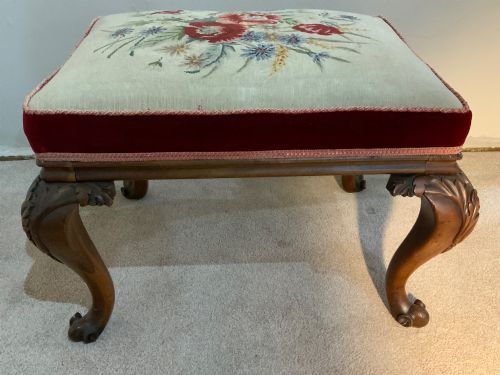
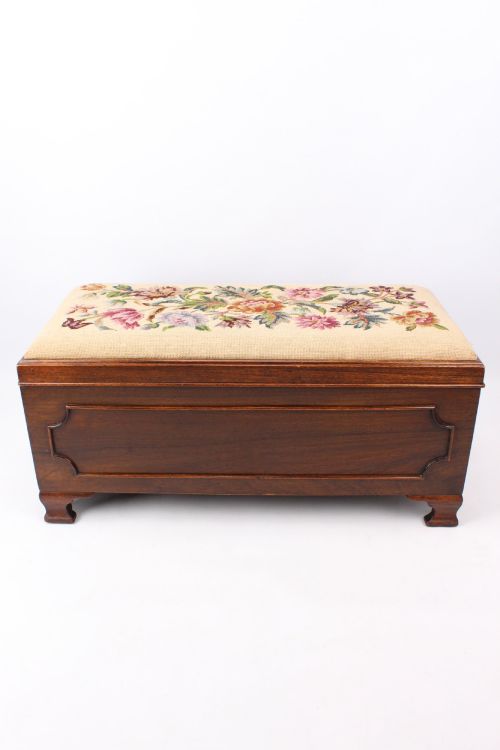
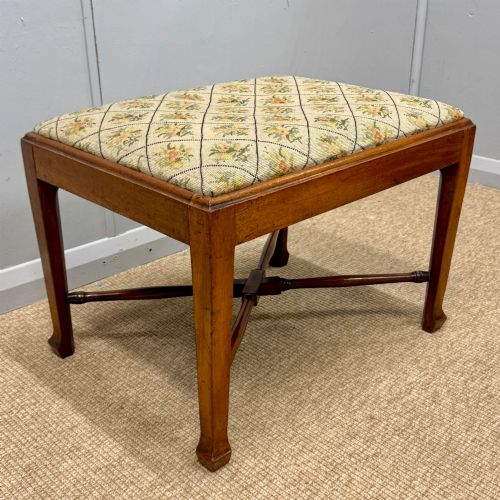
A mahogany needlepoint stool takes many forms across the evidence, appearing as small footstools, long ottomans, piano stools, dressing stools, and window seats. You will frequently encounter Victorian examples alongside pieces from the Edwardian era, 1920s, and George III period, all sharing the warmth of dark timber frames.
The variety in these pieces spans distinct revival aesthetics including Queen Anne Style, Georgian Revival, and Chippendale Style, as well as 19th Century French designs. Form follows function from tall circular stools down to low footrests and cross-stretcher dressing seats.
Most pieces combine solid mahogany or mahogany-framed construction with textile tops worked in wool, tapestry fabric, or gros-point. Original upholstery surfaces frequently survive alongside later needlework iterations, giving each example a distinct character shaped by its era of production.
Construction and Materials
Makers built these frames primarily from mahogany, occasionally pairing the dense timber with secondary woods such as beech. Turned or carved legs, cross stretchers, and window seat frames demonstrate traditional joinery suited to supporting frequent weight.
Upholstery relied on textile working techniques, employing wool, tapestry fabric, and gros-point needlework stitched directly onto the seat foundation. Brass details sometimes supplemented the structural woodwork on specific stool types.
Stools that doubled as piano seats sometimes hid secret mechanics inside their mahogany frames to save musicians from awkward stretching.
Judging Quality
Quality rests heavily on the crispness of the mahogany carving, particularly on styles referencing Chippendale or Queen Anne aesthetics where cabriole legs and detailed stretchers demand skilled joinery. Timber selection and frame stability differentiate standard production items from finer workshop pieces.
The execution of the needlepoint top determines visual distinction, with dense gros-point stitching and original period textiles holding greater decorative presence than simplified later replacements. The harmony between the proportion of the wooden frame and the scale of the top defines a balanced piece.
Jas Shoolbred·Whytock and Reid
The Mahogany Needlepoint Stool Glossary
- Mahogany
- A durable tropical hardwood prized for its deep reddish-brown tone and fine grain. It served as the primary framing material for finer British seating through the Georgian and Victorian periods.
- Gros-point
- A type of needlepoint worked on a coarse canvas using heavy wool yarn. This technique produced robust, textured seat covers capable of withstanding heavy daily use.
- Stretcher
- A horizontal wooden brace connecting the legs of a stool to provide structural rigidity. Cross stretchers form an X-shape beneath the centre of the seat frame.
- Cabriole leg
- A furniture leg featuring a double curve that swells outward at the knee and tapers inward to the foot. It is characteristic of Queen Anne and related revival styles.
- Ottoman
- A low, upholstered seat without arms or a back, often built in larger proportions than a standard footstool. These pieces frequently accommodate extended needlework panels.
Mahogany Needlepoint Stool: Frequently Asked Questions
How do I date a mahogany needlepoint stool?
Dating relies on observing the interplay of stylistic traits in the mahogany frame, such as cabriole legs or cross stretchers, alongside the execution of the needlework. Construction methods and secondary woods often align with specific periods like the Victorian era or the 1920s.
Evidence from past examples shows that Georgian and Regency pieces display different turning styles compared to Edwardian or later revival items. Comparing the frame's joinery to known period standards helps clarify the decade of production.
Were these stools used for pianos?
Many examples served specifically as piano or music stools, designed to sit at the keyboard and often featuring adjustable height mechanisms or compact circular seats. Their sturdy mahogany frames supported the pianist during performance.
Other variants functioned as dressing stools or footstools, reflecting the versatile nature of low seating in period homes. The inclusion of needlework tops ensured comfort during extended periods of sitting.
How should I clean needlepoint upholstery?
Needlepoint upholstery requires gentle maintenance, typically involving careful surface dusting with a soft brush to remove embedded debris. Avoid harsh liquid cleaners that might compromise the historic wool fibres of the tapestry.
Professional textile conservation advice should be sought for significant cleaning or structural stabilization of fragile gros-point work. Preserving the integrity of the original wool remains paramount.
Can I use an antique footstool daily?
Solid mahogany frames provide robust structural support, making these pieces suitable for regular use as footrests or casual seating. Checking the stability of the legs and stretchers ensures the timber can handle everyday weight.
Fragile or historic needlepoint tops benefit from mindful placement to prevent excessive wear on antique wool threads. Many stools retain durable foundations that comfortably accommodate modern living.