

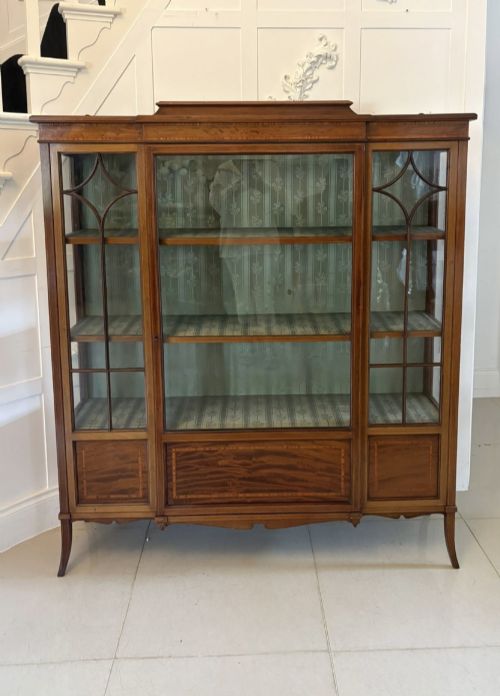
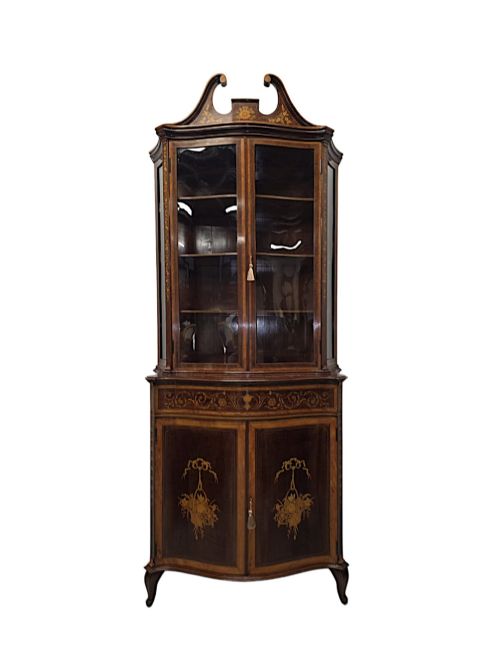
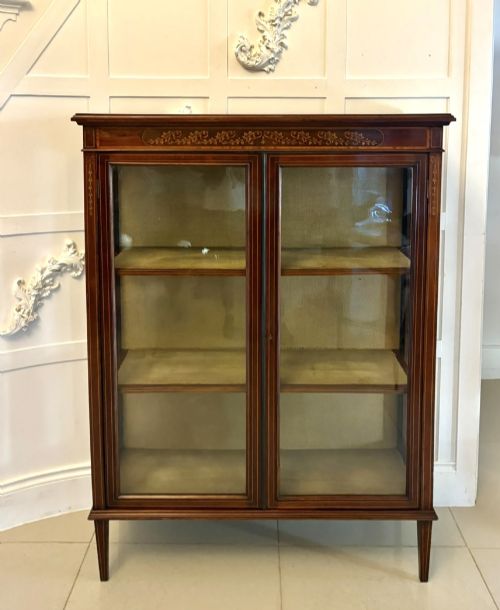
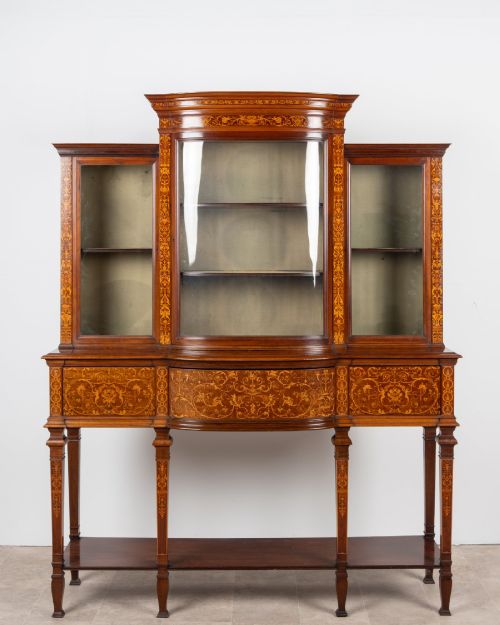
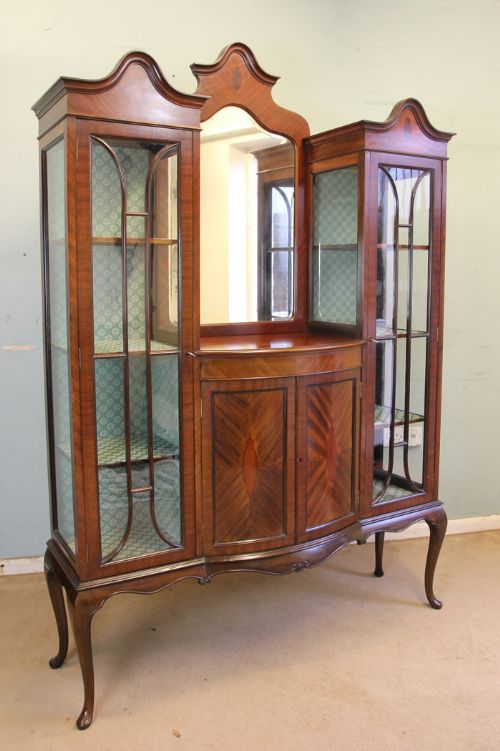
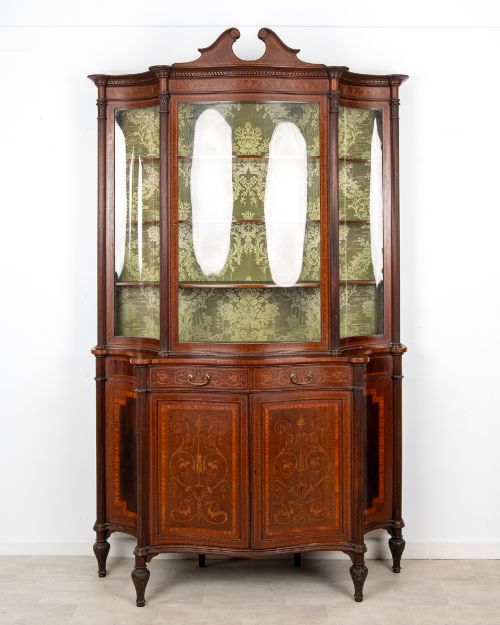
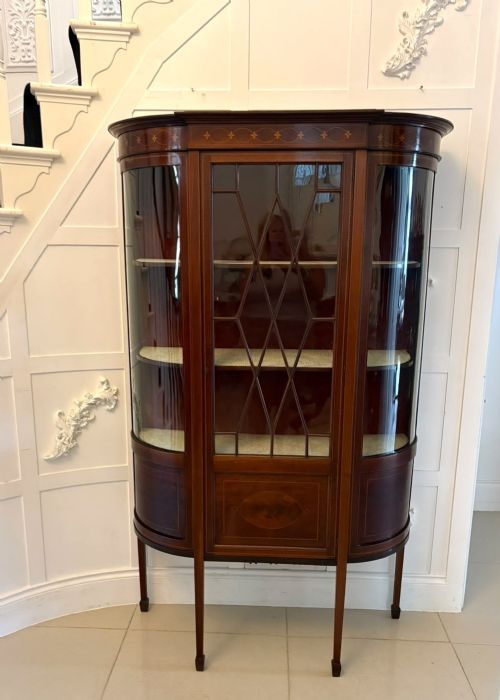
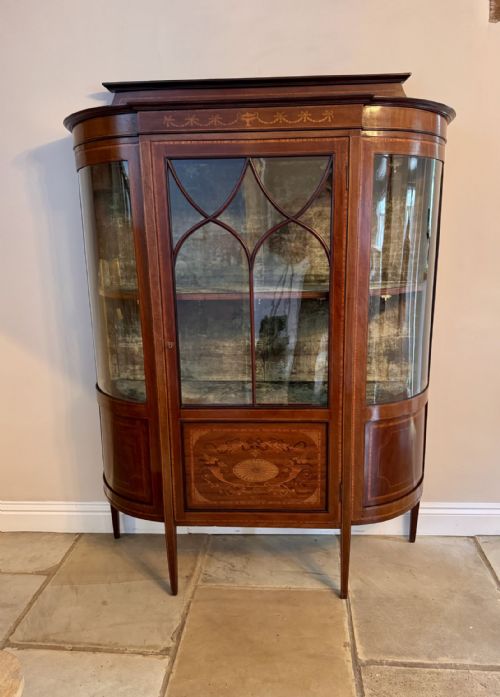
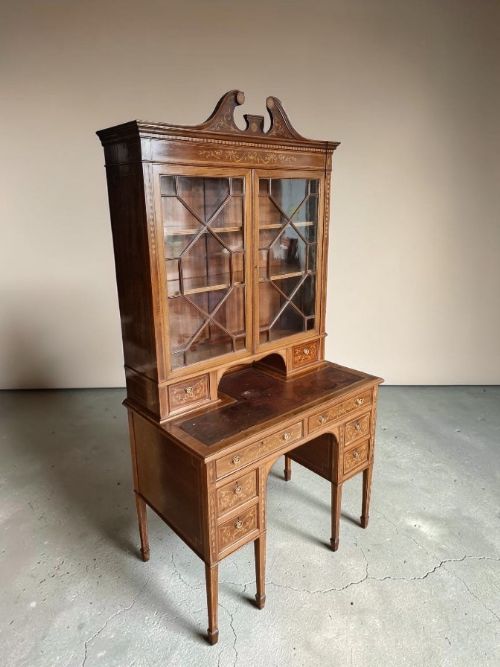
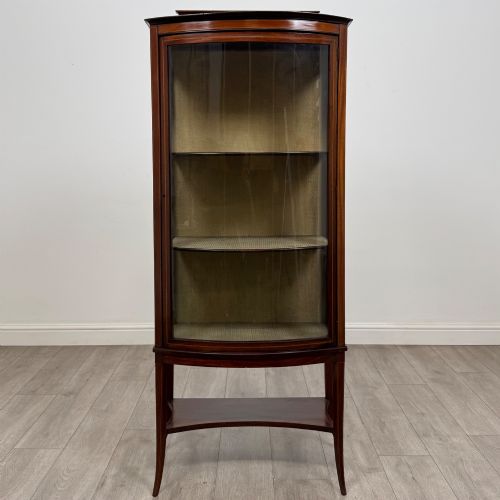
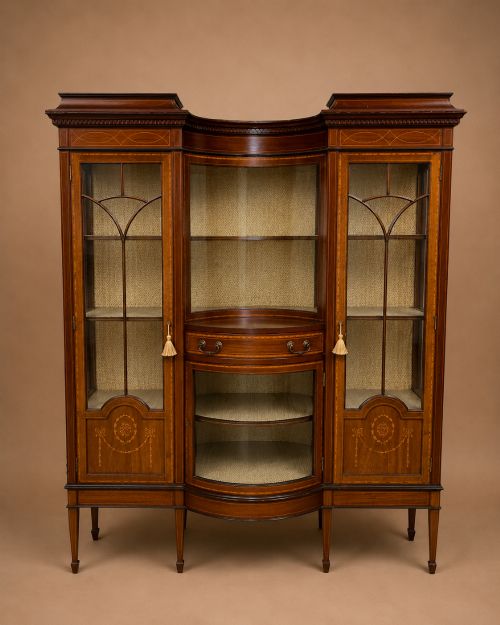
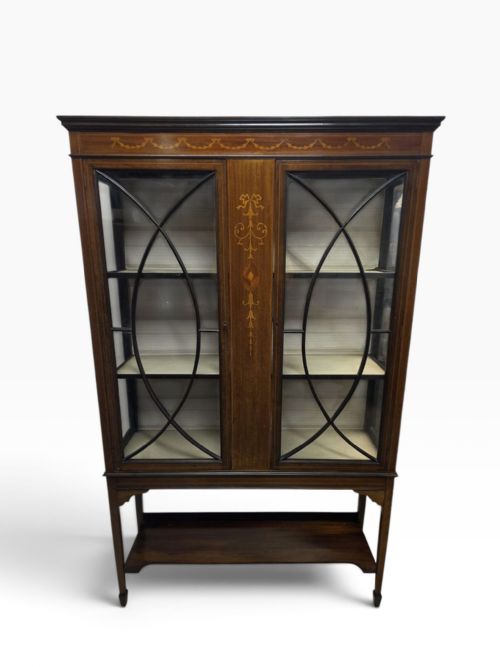
Mahogany Marquetry Glazed Bookcase
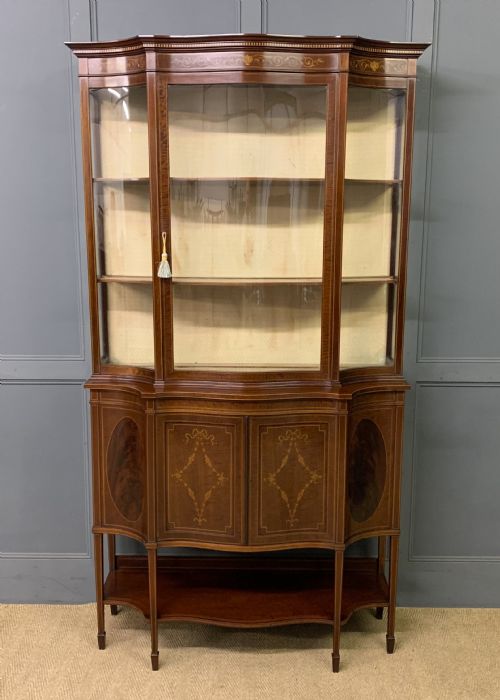
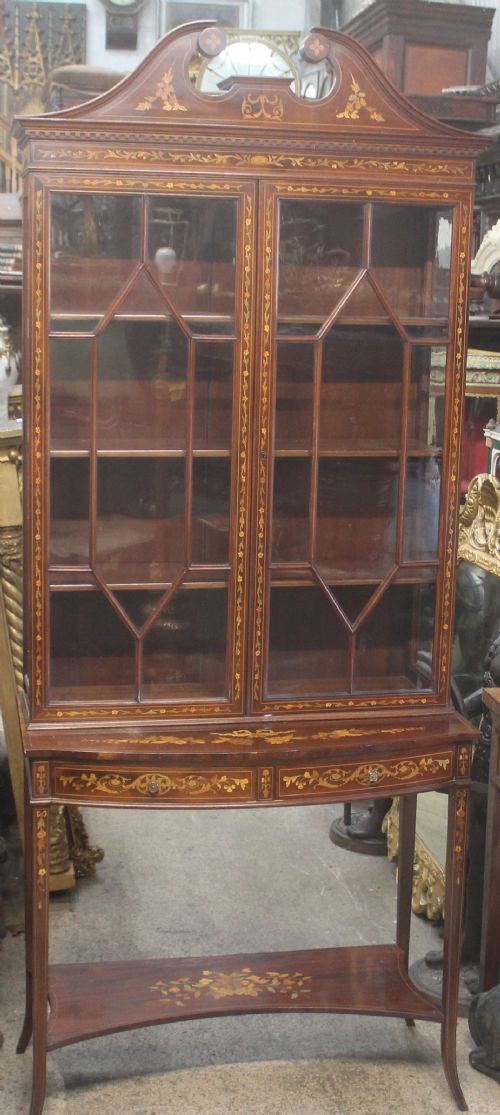
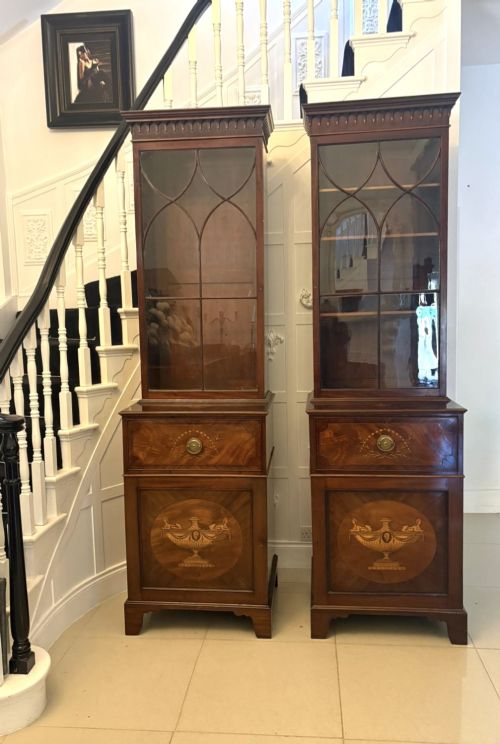
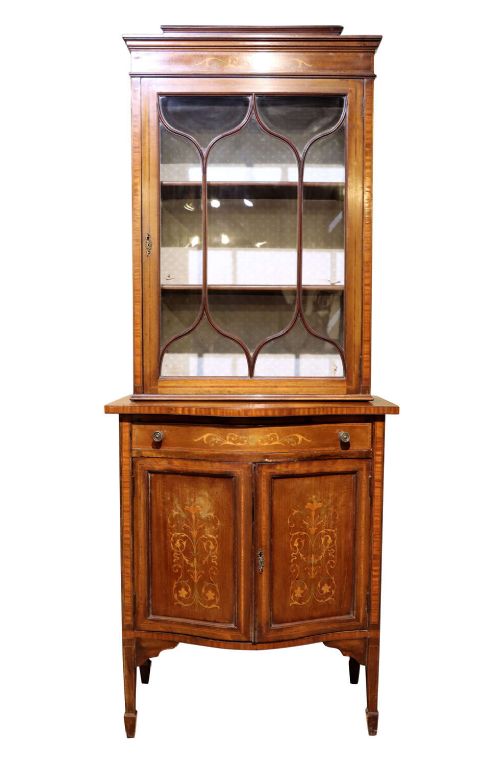
A mahogany marquetry glazed bookcase brings refined display space to a room, uniting rich timber grains with delicate inlaid floral or geometric motifs behind protective glass.
Mahogany Marquetry Glazed Bookcase
A mahogany marquetry glazed bookcase combines visible timber shelving with glass doors, offering both storage and display for volumes and decorative objects. When you search for a mahogany marquetry glazed bookcase, you encounter forms that range from upright two-part library pieces to bowfront and serpentine cabinets.
Most examples originate from the Edwardian era and the late nineteenth century, frequently drawing on Sheraton Revival and Hepplewhite design principles. Cabinet makers also produced corner cabinets, wall-hanging versions, and secretaire bookcases fitted with internal writing desks.
Victorian and Georgian workshops contributed larger breakfront structures alongside smaller vitrines and pier cabinets. The core carcass remains solid mahogany, shaped into glazed display units designed to stand prominently against a drawing room or study wall.
Materials and Technique
Carpenters constructed these cabinets using dense mahogany as the primary timber, complemented by contrasting veneers such as satinwood and amboyna for decorative borders. Craftsmen applied intricate marquetry inlay, cutting thin pieces of various woods to form floral sprays, urns, and scrolling ribbons set directly into the surface.
Glazing bars divided the glass panels into geometric panes, requiring precise joinery to support the door frames without warping. Brass hardware, including hinges, key escutcheons and drop handles, secured the doors and drawers while adding metallic contrast to the polished timber.
Mahogany Marquetry Glazed Bookcase Retail Price Guide 2026
Typical asking prices for mahogany marquetry glazed bookcase among the pieces listed under this phrase on Sellingantiques today, from the lower quarter to the upper quarter. They describe what is for sale here now, not the wider market.
Materials appearing across the inventory include solid mahogany, satinwood inlay, glass, brass, mirror plates, and decorative fabric linings.
Evaluating Execution
Quality rests upon the crispness of the marquetry and the choice of timber figurations, where finely figured mahogany and tight satinwood contrast sharply with plain grain. The complexity of the cabinet shape dictates the level of carpentry skill, distinguishing simple rectangular boxes from curved bowfront and serpentine facades.
The delicacy of the astragal glazing bars and the weight of the brass fittings reveal the maker's original investment in materials. Superior examples display seamless veneer matching across the doors and balanced proportions that reflect disciplined period design.
Edwards and Roberts·Maple and Co
The Mahogany Marquetry Glazed Bookcase Glossary
- Marquetry
- Decorative veneer work forming pictures or patterns by assembling small pieces of different coloured woods.
- Astragal
- A small moulding used to divide glass panes within a cabinet door.
- Vitrine
- A glass-fronted display cabinet intended for the exhibition of porcelain or small objets d'art.
- Serpentine
- A furniture front curving outward in the centre and inward at the sides in an undulating line.
- Secretaire
- A desk fitted with a pull-down writing flap concealing internal small drawers and pigeonholes.
Mahogany Marquetry Glazed Bookcase: Frequently Asked Questions
What is a marquetry bookcase?
A marquetry bookcase is a timber cabinet featuring glazed doors for viewing books and decorative items, adorned with decorative wood veneer patterns.
These pieces utilise contrasting timbers like satinwood inlay to create floral or geometric designs across the mahogany surfaces.
How do I date a mahogany cabinet?
Dating relies on examining the construction methods, timber choice, and stylistic influences visible in the piece.
Edwardian and late nineteenth-century examples often revive Georgian Sheraton styles, whereas mid-nineteenth-century pieces display heavier Victorian proportions and simpler internal fittings.
Where should I place a display cabinet?
Display cabinets suit principal reception rooms, libraries, or dining spaces where books and porcelain can be protected behind glass.
Positioning the cabinet away from direct sunlight preserves the mahogany polish and prevents the delicate satinwood marquetry from fading.
What is the difference between a vitrine and a bookcase?
A vitrine is primarily designed for exhibiting ornaments and porcelain through glass panels on all sides.
A bookcase focuses on housing volumes, though many Edwardian hybrid forms combine adjustable shelving with glazed display space.