



Mahogany Marble Top Washstand
A mahogany marble top washstand brings solid timber and cool stone together for practical daily use in a bedroom.
Mahogany Marble Top Washstand
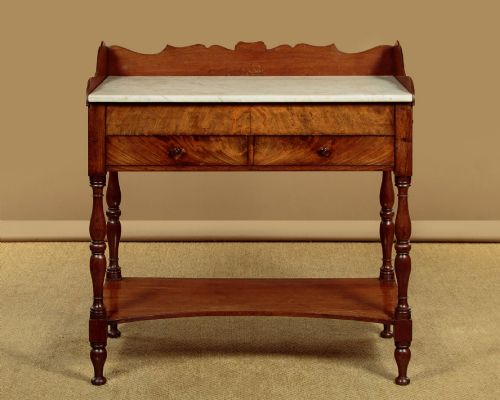
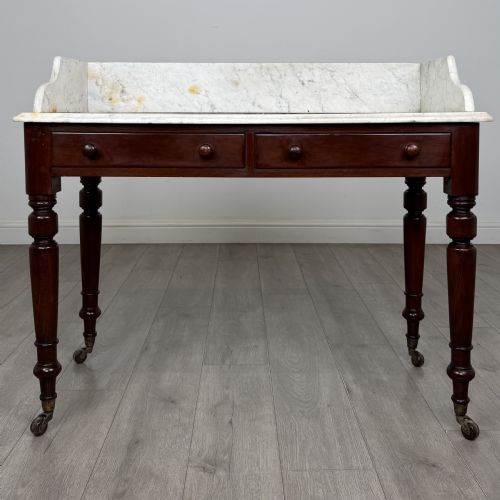
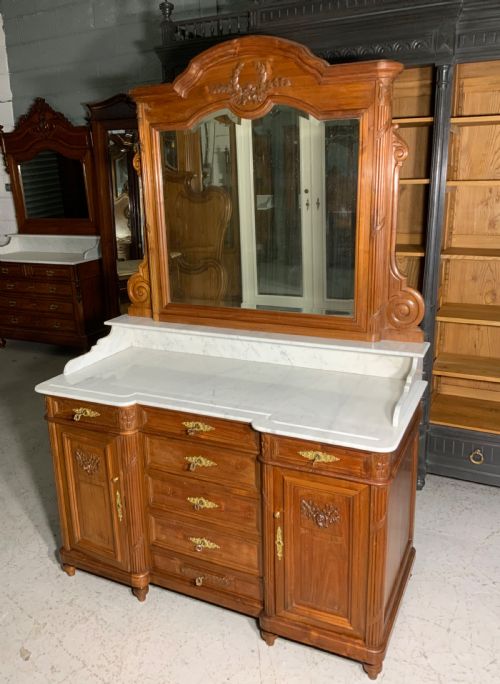
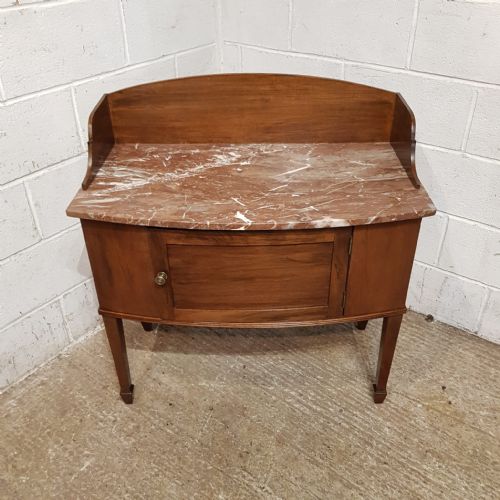
A mahogany marble top washstand is a sturdy bedroom furnishing designed to hold a basin and jug for washing before running water was common in every room. These pieces combine a timber frame with a thick stone slab, creating a durable surface that resisted splashes and stains.
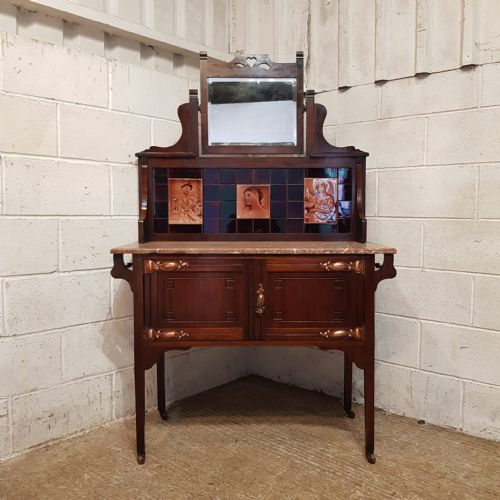
Most examples seen here belong to the Victorian and Edwardian eras, spanning the nineteenth and early twentieth centuries. Alongside straightforward washstands, buyers encounter related forms including bow fronted chests, side tables, and duchess washstands with tiled backs or mirrors.
Origins stretch from British workshops to French cabinets, incorporating styles such as Art Nouveau, Aesthetic Movement, and Sheraton Revival. The combination of dark timber and pale stone remained popular as bedroom furniture evolved towards greater hygiene and display.
How They Were Made
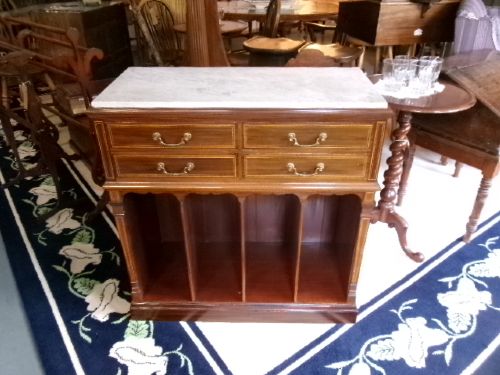
Carpenters built the primary frames from solid mahogany, sometimes adding satinwood, rosewood, or ebony banding and inlay for decorative contrast. These timbers were joined using traditional framing techniques to support the heavy weight placed upon them.
The stone surface on top typically consists of white Carrara marble or rouge marble, cut thick to withstand daily use and finished with a smooth top. Additional materials such as ceramic tiles, brass handles, copper fittings, and glass elements appear on specific regional and period variants.
Mahogany Marble Top Washstand Retail Price Guide 2026
Typical asking prices for mahogany marble top washstand among the pieces listed under this phrase on Sellingantiques today, from the lower quarter to the upper quarter. They describe what is for sale here now, not the wider market.
Some washstands hide small mirrors that rise up on secret pivots when a morning wash is done.
What Varies in Quality
The grade of timber and the selection of the marble slab establish the primary tier of craftsmanship in a mahogany marble top washstand. Finer items utilise highly figured mahogany and thick, unblemished marble with subtle veining, whilst simpler versions rely on plain stock timber and standard stone.
Detailing in the carving, inlay, and hardware separates standard production pieces from higher commissions. Elements like brass mounts, shaped galleries, and fine satinwood stringing indicate workshops that invested greater labour in the finish of the furniture.
Maples·Doveston Bird And Hull
The Mahogany Marble Top Washstand Glossary
- Carrara marble
- A type of white or blue-grey stone quarried in Italy, frequently used for the tops of these washstands because of its smooth, water-resistant surface.
- Duchess washstand
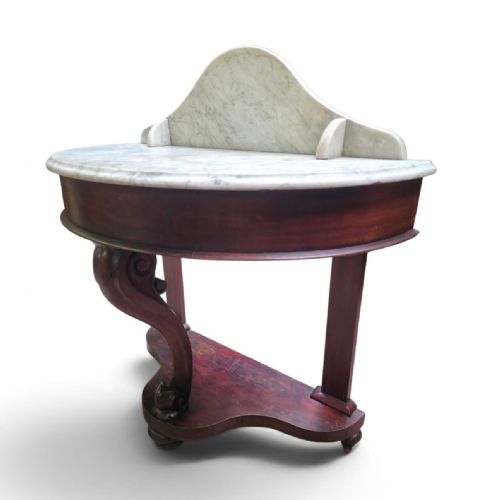
- A large style of washstand that often incorporates a raised back, mirror, or tiled splashback alongside the main marble counter.
- Gallery
- A raised wooden or brass rail fixed to the back and sides of the marble top to prevent items from sliding off and to protect the wall.
- Demi lune
- A half-moon shape used for the footprint and top of specific washstands, allowing the furniture to sit flush against a wall.
- Aesthetic Movement
- A late nineteenth-century design style focusing on visual beauty rather than narrative or moral function, seen in simpler lines and artistic detailing.
Mahogany Marble Top Washstand: Frequently Asked Questions
What was a washstand used for?
These pieces held a basin, water jug, and soap dish for morning and evening washing in the bedroom before indoor plumbing became standard.
They provided a stable, water-resistant station where personal grooming took place away from the main living areas of the home.
How do I clean the marble top?
Use a soft cloth dampened with warm water and a mild, non-acidic soap to wipe down the stone surface safely.
Avoid harsh household cleaners or vinegar, as acidic substances can etch and dull the polished finish of the marble over time.
Can I use it as a modern vanity?
Many buyers repurpose these items as bathroom sink surrounds or hallway console tables by adapting the interior for modern plumbing.
The durable stone top and lower storage make them practical for contemporary use while retaining their period character.
How do I tell Victorian from Edwardian pieces?
Victorian washstands generally feature darker mahogany, heavier proportions, and sometimes elaborate carvings or tiled splashbacks with floral motifs.
Edwardian examples tend to show lighter satinwood inlay, cleaner lines, and simpler forms influenced by Sheraton Revival designs.