



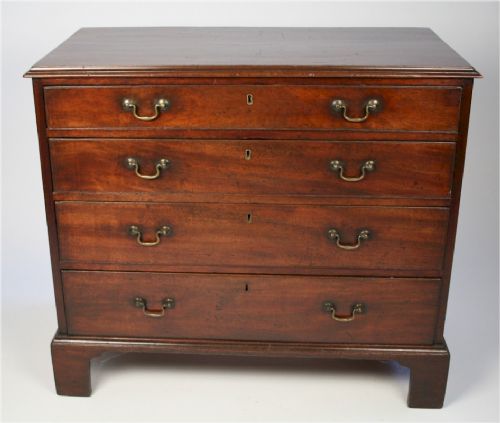
Mahogany Long Chest
These mahogany long chest pieces are substantial drawer units built from rich timber, offering serious storage and enduring presence in a room.
Mahogany Long Chest
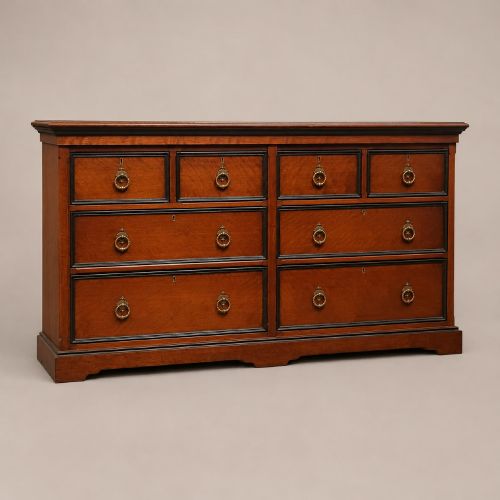
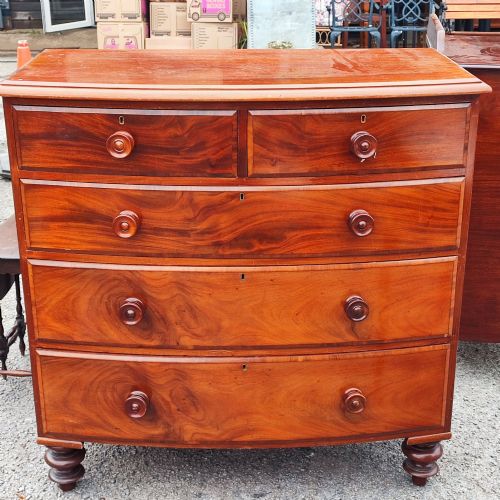
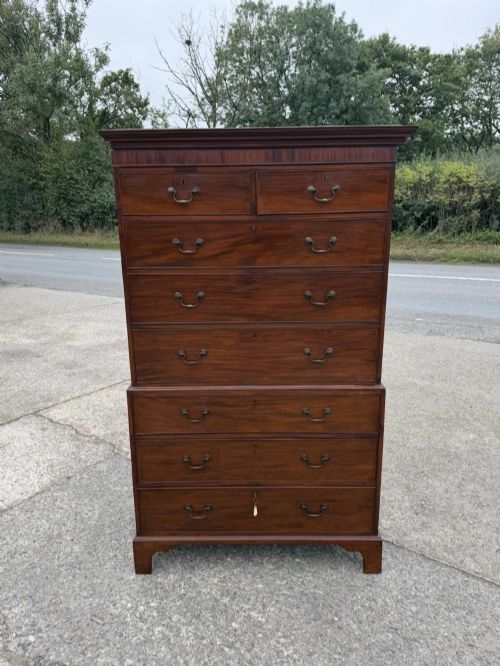
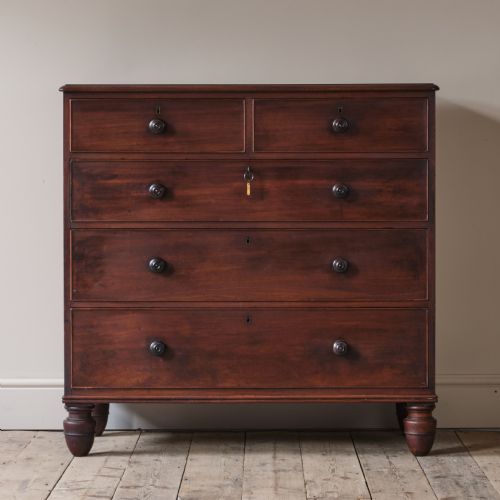
A mahogany long chest provides deep and wide storage capacity through multiple stacked drawers housed within a sturdy wooden carcass. These items appear primarily in Georgian, Victorian, and Edwardian formats, spanning flat front, bow front, and chest on chest configurations.
The versions most frequently met on this page include large Victorian flame mahogany examples alongside Georgian and Edwardian multi-drawer pieces. Makers and periods range from Chippendale influence and George III pieces through to 19th century workshops.
Buyers encounter forms featuring brass handles, ebony details, and key escutcheons accompanying the primary mahogany construction. Each piece demonstrates the functional domestic scaling developed across the eighteenth and nineteenth centuries.
How they were made
Makers constructed these carcases using solid mahogany and flame mahogany veneers applied over secondary timbers such as oak and pine. Drawer linings frequently utilise pine or oak, joined with traditional techniques suited to heavy daily use.
Details such as brass handles, ebony stringing, and turned wood elements are integrated into the primary structure. Timber selection prioritised figured grain patterns, particularly on drawer fronts where flame mahogany creates visual depth.
Mahogany Long Chest Retail Price Guide 2026
Typical asking prices for mahogany long chest among the pieces listed under this phrase on Sellingantiques today, from the lower quarter to the upper quarter. They describe what is for sale here now, not the wider market.
What varies in quality
Quality rests upon the selection of timber veneers and the preservation of original elements like brass handles and keys. Pieces retaining their original surface patination and uncompromised drawer construction stand apart from heavily restored alternatives.
The refinement of proportion and the subtlety of decorative details, such as ebony stringing or bow front curvature, distinguish standard production from exceptional cabinet work. Structural integrity in the drawer sides and runners dictates everyday utility.
DOVESTONE, BIRD & HULL·T & G Seddon
The Mahogany Long Chest Glossary
- Flame mahogany
- A veneer cut from timber fork joints that produces a distinctive flickering flame pattern across drawer fronts. This decorative wood figure marks higher tier cabinet making.
- Bow front
- A convex curved drawer front design popular in Georgian and Victorian periods. This shape softens the profile of a large chest.
- Chest on chest
- A tall storage unit formed of two distinct sections stacked vertically, offering numerous drawers. This tall format maximises storage footprint.
- Escutcheon
- A protective plate surrounding a keyhole, usually fashioned from brass. It guards the surrounding wood from wear caused by keys.
- Stringing
- Thin inlaid lines of contrasting timber, such as ebony, set into the mahogany surface for decoration. This technique defines panel edges.
Mahogany Long Chest: Frequently Asked Questions
What periods do these chests come from?
The listings span the Georgian, Victorian, and Edwardian eras, encompassing styles from Chippendale influence to William IV.
Specific dates within titles point towards the turn of the nineteenth century and mid Victorian decades.
How were these drawers used historically?
Households utilised these substantial pieces in bedrooms and dressing rooms to store heavy garments, linens, and personal items.
The inclusion of locks and keys indicates that valuable possessions were kept securely within the drawers.
What timber varieties are visible?
Construction relies heavily on mahogany and flame mahogany, often supported by secondary woods like oak and pine inside the carcases.
Details incorporate brass hardware, turned wood feet, and ebony accents.
How do I live with a large chest?
These pieces require adequate floor space and clearance for drawers to open fully within a room.
Their substantial weight and deep storage capacity make them permanent anchors for traditional or mixed interiors.