

Mahogany Library Seating
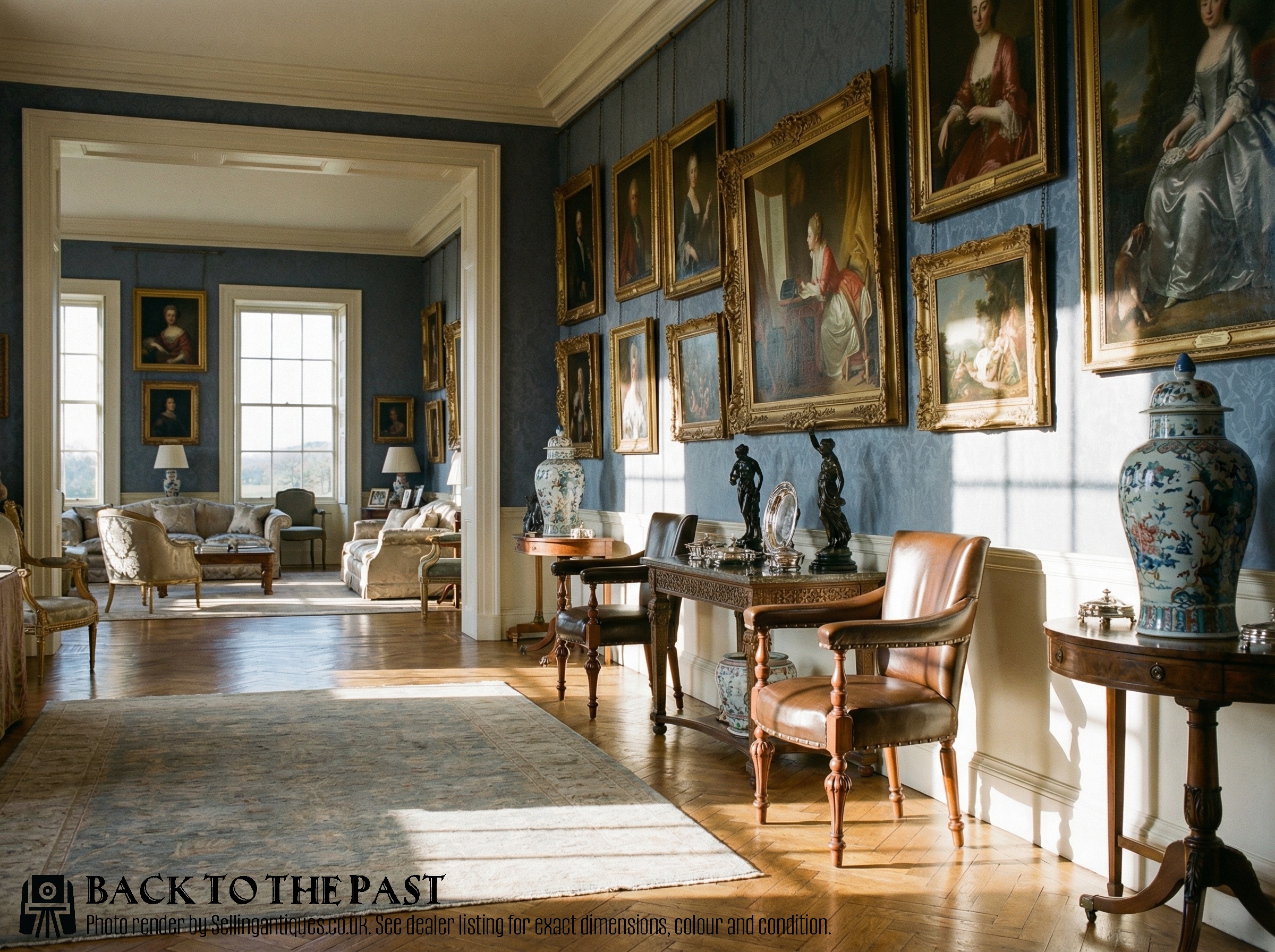
Mahogany library seating brings solid timber, leather upholstery and sturdy proportions together for reading rooms and studies.
Mahogany Library Seating
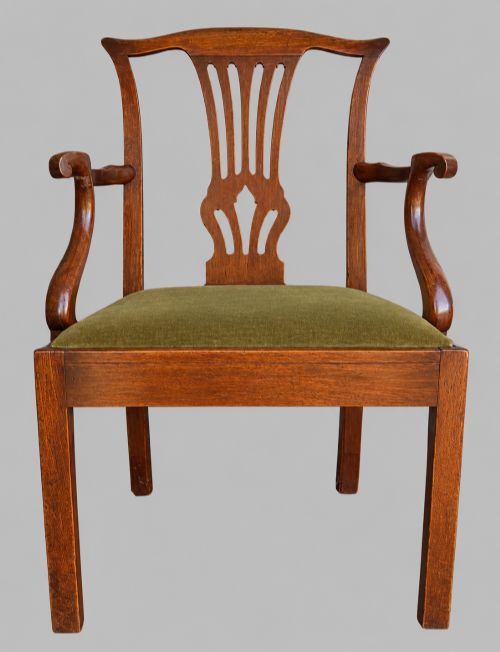
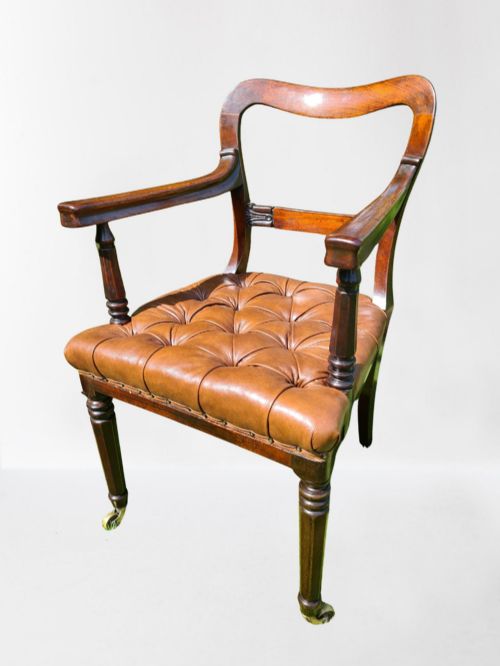
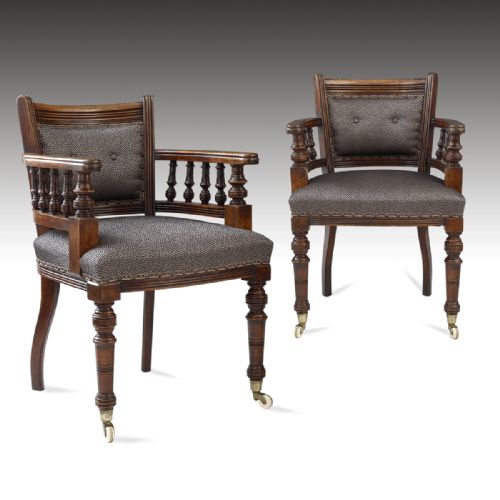
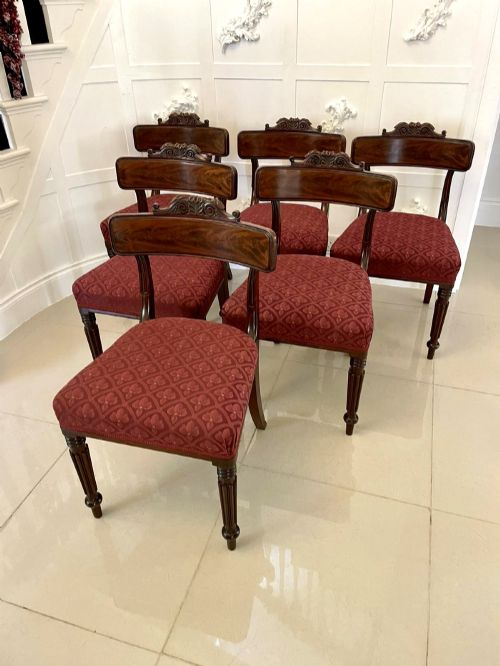
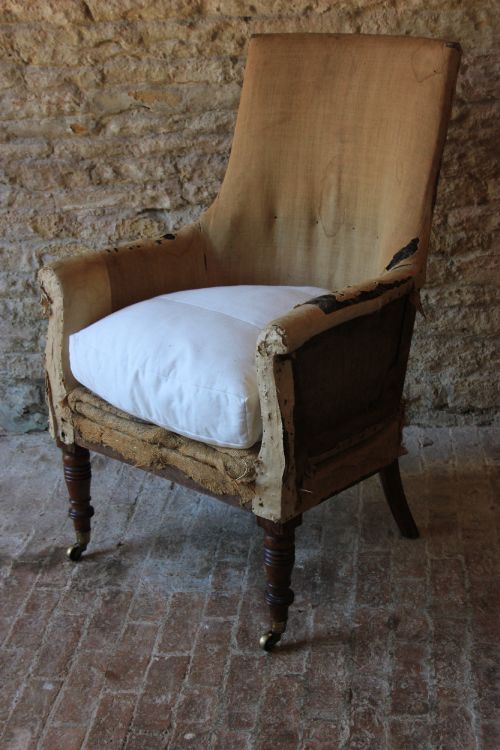
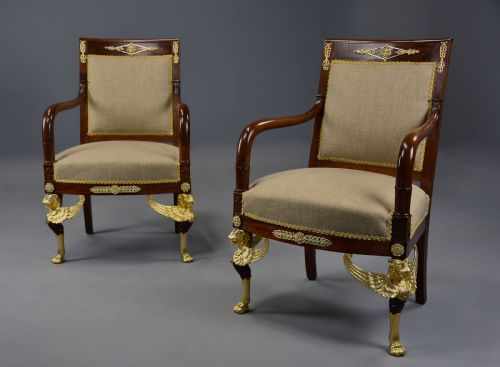
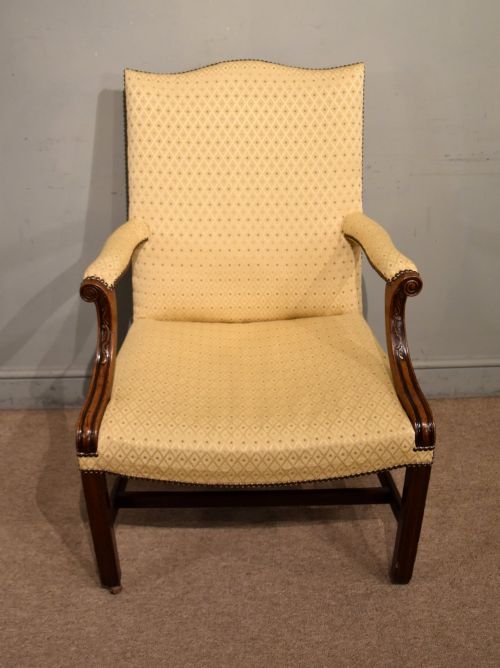
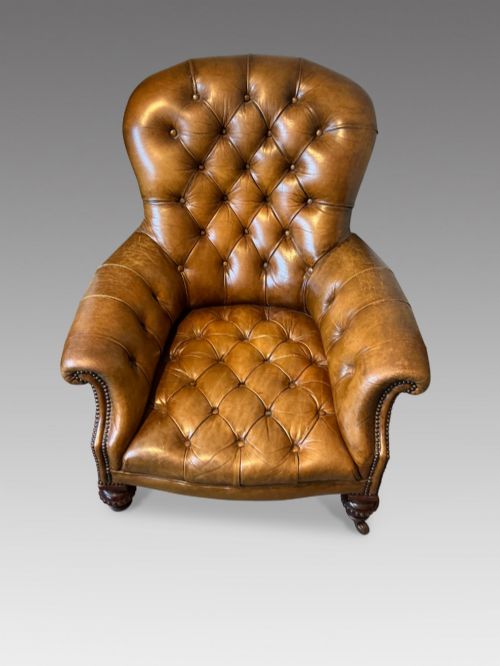
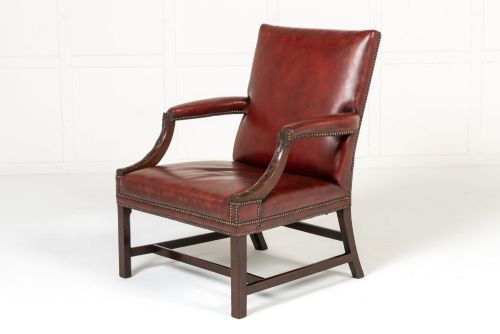
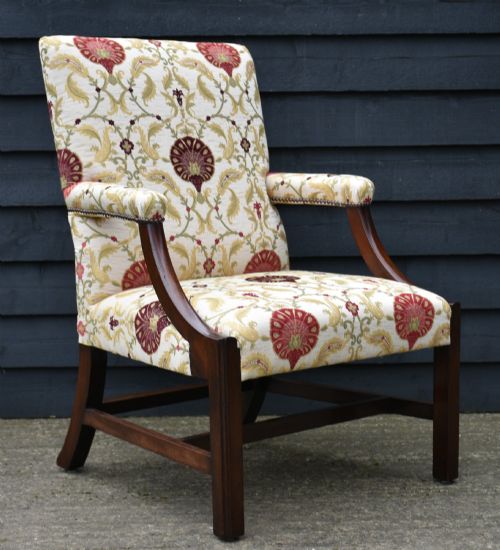
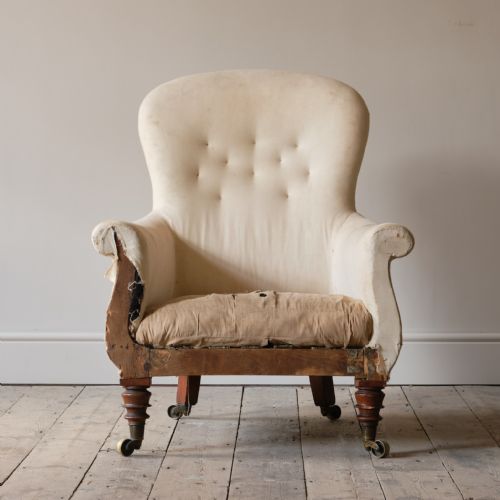
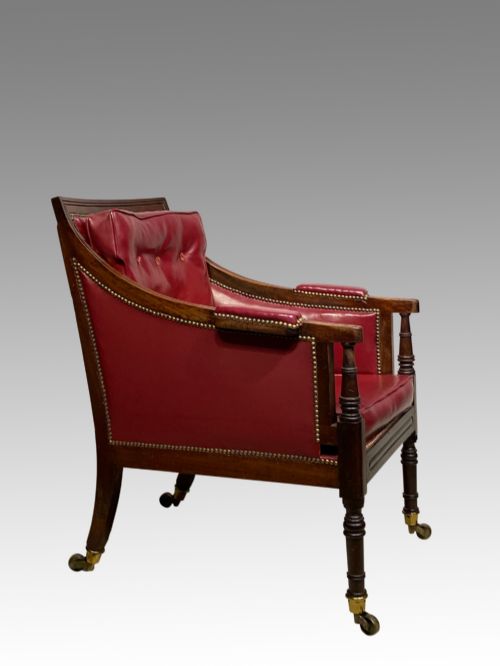
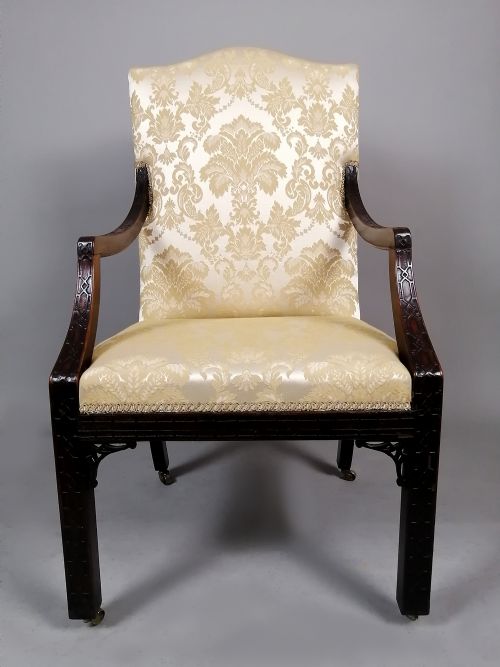
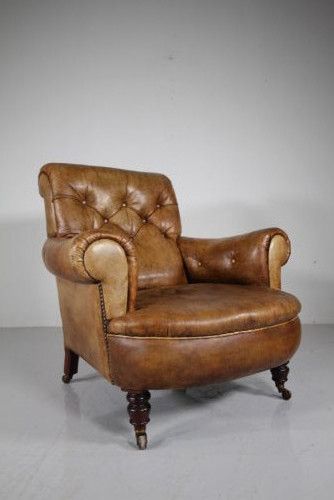
Mahogany library seating covers heavy armchairs, desk chairs, reading chairs and stools designed for study and repose. You will frequently find Georgian Gainsborough chairs, Regency library models, and Victorian leather-upholstered armchairs across these listings.
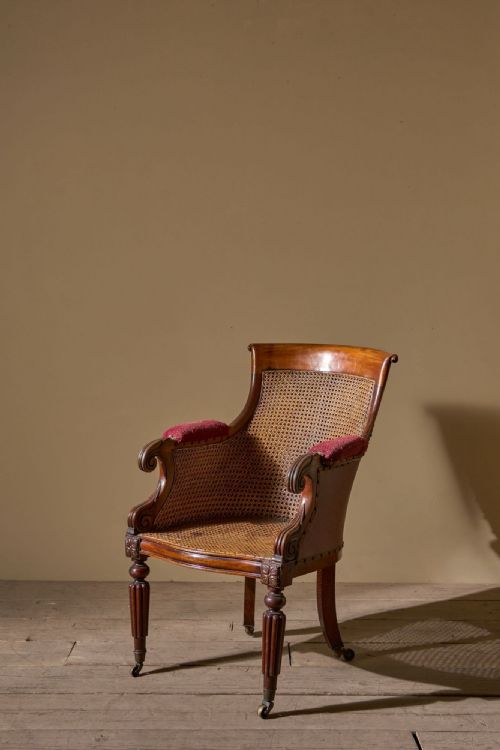
The periods represented span from the eighteenth century through the Georgian, Regency, and Victorian eras up to early twentieth-century revivals. Pieces range from formal Gainsborough chairs with blind carving to country house armchairs and caned bergères.
Makers and designers working in these styles utilised solid timbers and upholstered pads to create functional seating for bookrooms. Armchairs feature open arms, enclosed leather panels, or carved mahogany frameworks designed for long hours of reading.
Materials and construction
Makers relied on solid mahogany as the primary structural timber, chosen for its density, rich grain, and ability to hold crisp carved details. Brass fittings, including castors and inlay work, appear on Regency and Victorian examples.
Upholstery utilised leather, hide, velvet, fabric, calico, and hessian over stuffed pads, often secured with brass tacking. Caned panels formed seat bases and backs on specific bergère and reading chair formats.
Listings feature mahogany, brass, leather, fabric, velvet, calico, cane, and hessian across eighteenth and nineteenth-century forms.
Standards of execution
Quality rests in the crispness of the mahogany carving, the weight of the timber frame, and the integrity of the joinery. Superior examples display fluent hand-carved details and substantial proportions rather than mechanical factory shaping.
The treatment of the leather and the density of the underlying stuffing dictate the comfort and finish of the seat. Hand-dyed hides and traditional horsehair or webbing support separate standard production from exceptional library chairs.
Gillows·Howard and Sons
The Mahogany Library Seating Glossary
- Gainsborough chair
- A type of wide armchair with upholstered back, arms, and seat, standing on four legs, popular during the Georgian period.
- Bergère
- An enclosed upholstered armchair with a wooden frame where the sides are frequently filled with cane work.
- Chippendale
- A style of eighteenth-century English furniture named after cabinetmaker Thomas Chippendale, known for carved mahogany and elaborate details.
- Reeded
- A decorative moulding consisting of parallel convex strips resembling bundled reeds, often found on chair legs and arms.
- Gusset
- A triangular piece of material inserted to give strength or expansion, relating here to structural upholstery and frame joints.
Mahogany Library Seating: Frequently Asked Questions
What is a Gainsborough chair?
A Gainsborough chair is a wide, open-armed armchair with an upholstered back and seat designed in the Georgian period.
These pieces were originally built for writing desks and reading rooms, featuring mahogany frames and leather or fabric covers.
How do I identify a Regency library chair?
Regency library chairs date from the early nineteenth century and frequently incorporate classical motifs, brass inlay, and reeded woodwork.
They emphasise clean architectural lines and sturdy mahogany construction suited to formal study spaces.
Were these chairs used only in libraries?
While named for libraries, these armchairs served across studies, drawing rooms, and country house reading spaces.
Their robust timber frames and comfortable upholstered pads made them practical for general sitting and working.
What is a bergere armchair?
A bergère is a closed armchair featuring a wooden frame with cane panels set into the back and sides.
This French-influenced style provides a lighter visual weight while maintaining structural support for reading.