


Mahogany Library Book Stand
A mahogany library book stand brings rich timber grain and compact utility to reading spaces, offering a purposeful spot to keep working volumes close at hand.
Mahogany Library Book Stand
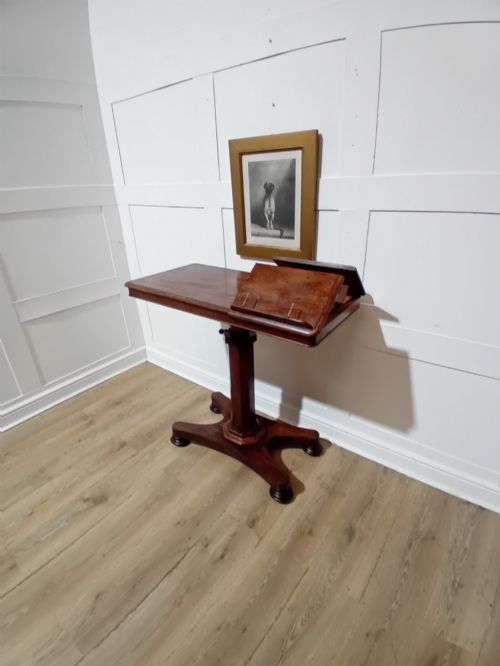
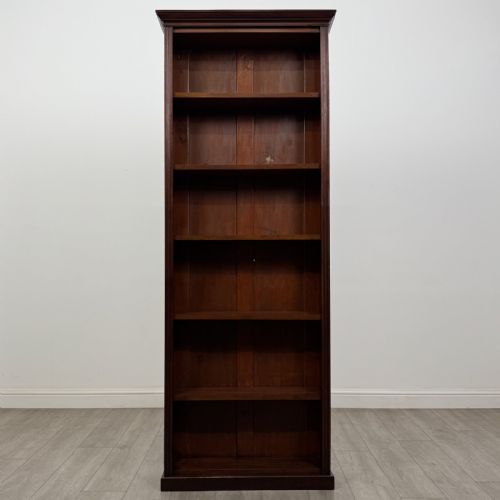
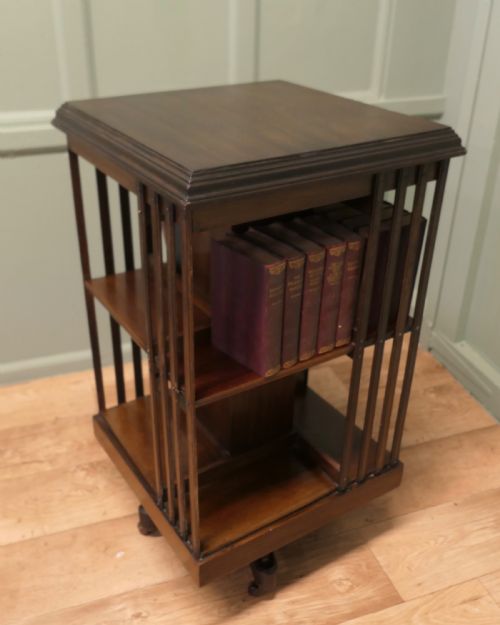
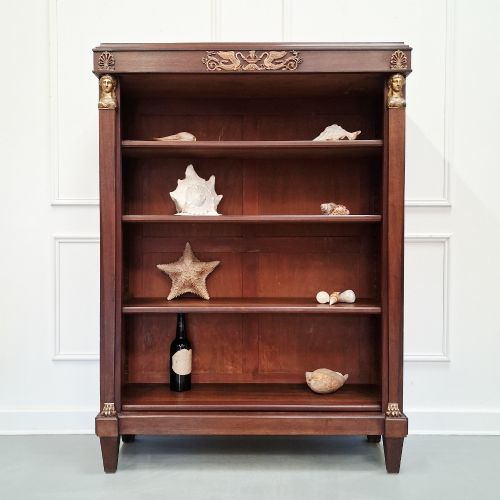
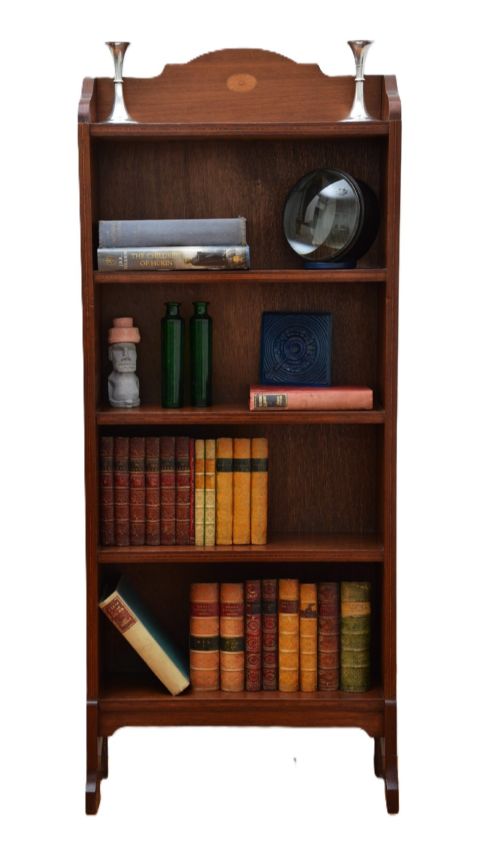
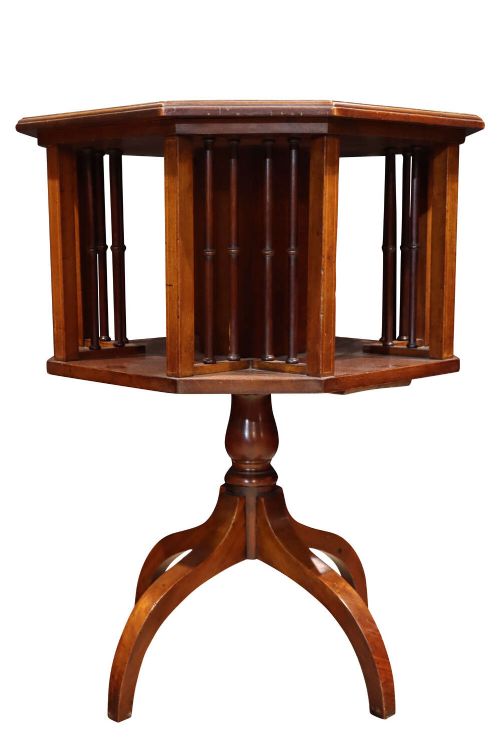
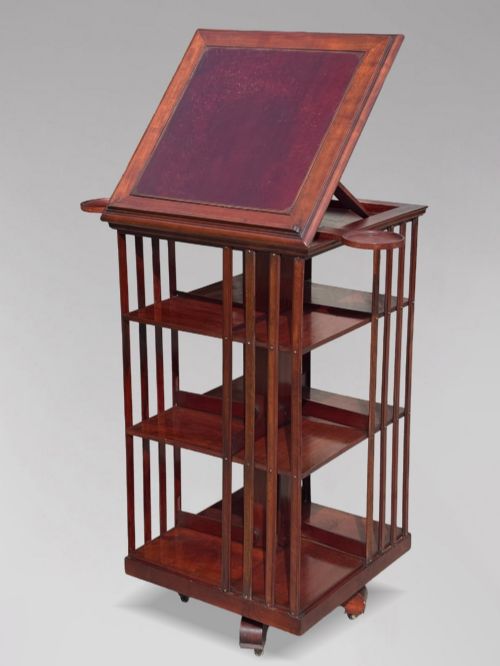
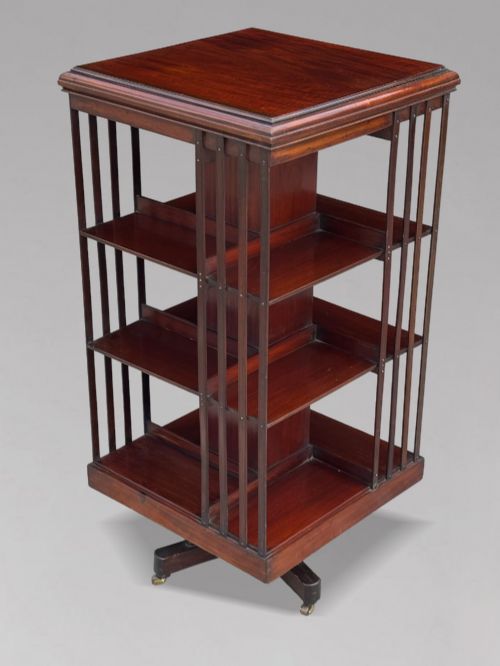
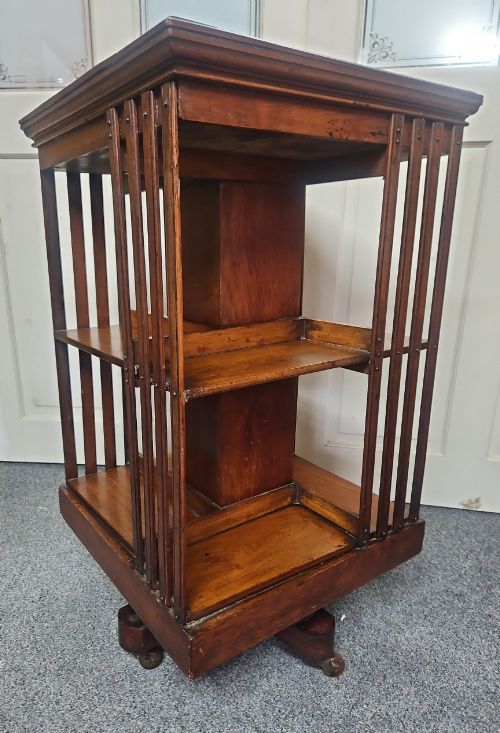
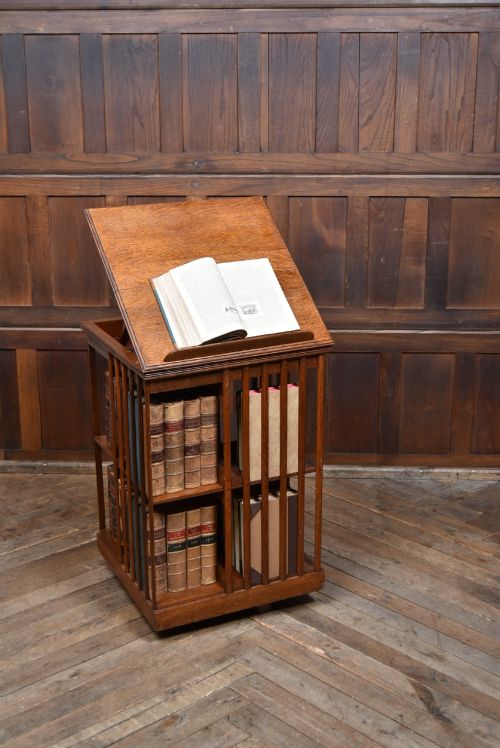
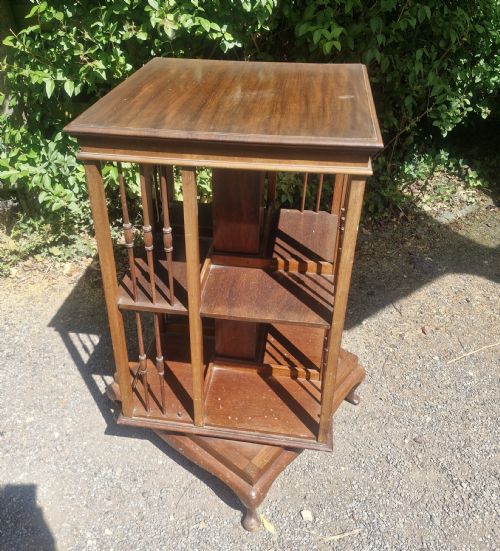
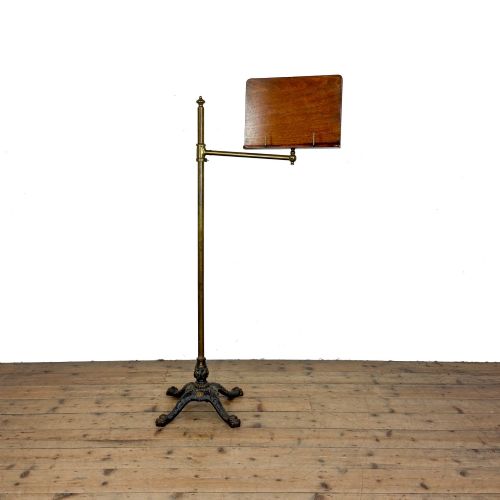
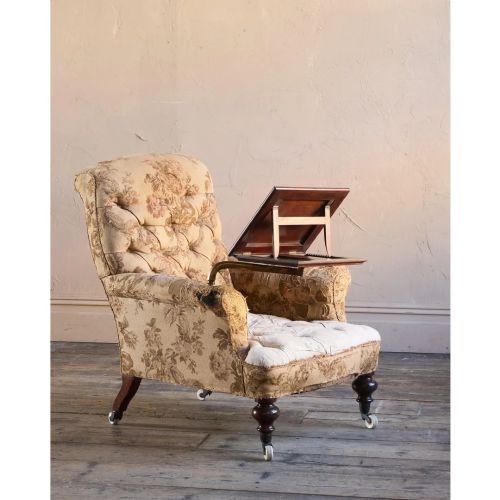
A mahogany library book stand encompasses a range of reading furniture designed to hold books accessibly in studies, drawing rooms and libraries. You will frequently encounter revolving bookcases and adjustable reading tables on this page, alongside tall open shelving and compact desk-top rests.
The material record spans centuries of cabinetmaking, with pieces originating from the Georgian period through the Victorian and Edwardian eras up to the nineteen-twenties. Revolving book stands from the late nineteenth and early twentieth centuries dominate the selection, built to sit beside an armchair or desk.
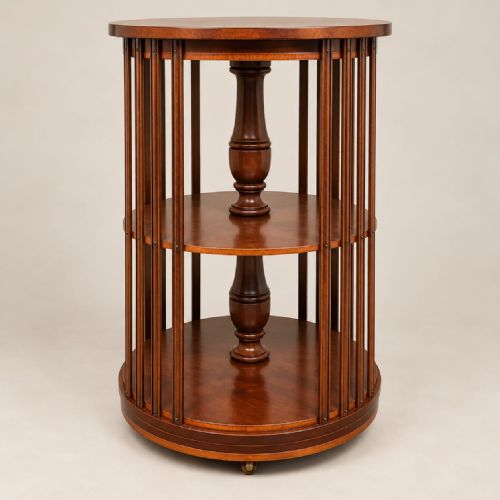
Forms vary from circular and octagonal rotating tiers to rectangular open bookcases fitted with adjustable shelves or raised galleries. Many incorporate brass castors for mobility, while others take the form of specialised reading tables with folding supports.
Materials and construction methods
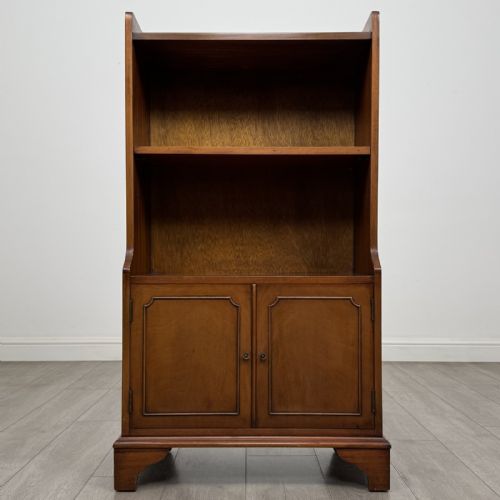
Solid mahogany and mahogany veneers form the primary structural timber, chosen for its rich dark warmth and stable grain. Cabinetmakers frequently utilised satinwood inlay to add contrasting borders and geometric motifs to Edwardian revolving stands and waterfall cabinets.
Functional hardware relied on cast iron and brass mechanisms, particularly within the revolving actions, adjustable reading stands, and protective castors. Leather inserts occasionally appear on writing surfaces, while traditional joinery secures the upright dividers and slatted sides of revolving book tiers.
Mahogany Library Book Stand Retail Price Guide 2026
Typical asking prices for mahogany library book stand among the pieces listed under this phrase on Sellingantiques today, from the lower quarter to the upper quarter. They describe what is for sale here now, not the wider market.
Listings span multiple eras, encompassing Georgian, Victorian, and Edwardian periods alongside twentieth-century revivals.
Judging execution and finish
Quality rests upon the crispness of the timber grain, the depth of the hand-polished finish, and the smooth operation of mechanical parts. Superior revolving book stands turn silently and evenly upon their internal iron and brass spiders, showing tight dovetail joints and well-figured flame mahogany veneers.
Refined examples demonstrate careful attention to detail in the inlaid satinwood stringing and the proportion of the slatted partitions. Lesser pieces rely on plain timber without inlay and may exhibit stiffer rotation or simpler structural framing that lacks the architectural presence of the finer iterations.
Gillows
The Mahogany Library Book Stand Glossary
- Revolving bookcase
- A freestanding tiered book stand designed to rotate on a central pivot, allowing multiple volumes to be accessed from a single seated position. These typically feature slatted sides to keep the structure light.
- Reading table
- A specialised piece of furniture featuring an adjustable surface or integrated book rest for consulting folios and large volumes. Many examples from the nineteenth century include pivoting mechanisms.
- Gallery
- A low decorative border surrounding the top surface of a bookcase or table to prevent items from sliding off. These can be pierced brass or shaped wooden upstands.
- Satinwood inlay
- A contrasting light-coloured timber inserted into the mahogany surface in narrow lines or decorative patterns. It is characteristic of Edwardian cabinetwork.
- Waterfall bookcase
- A tall open shelving unit where each successive tier recedes from the one below it, creating a stepped profile reminiscent of cascading water. These often stand on brass castors.
Mahogany Library Book Stand: Frequently Asked Questions
How do revolving book stands work?
A concealed internal metal or wooden pivot mechanism allows the tiers to spin freely on a weighted base. This clever engineering lets a reader access dozens of volumes without changing seats.
Most models use a spider-like iron frame beneath the shelves to distribute weight evenly and ensure smooth rotation. Regular waxing of the central spindle keeps the movement effortless.
How do I date an Edwardian revolving bookcase?
Edwardian pieces, generally dating from around eighteen-ninety to nineteen-ten, often feature satinwood inlay and lighter framing than their Victorian predecessors. Look for brighter mahogany tones and simpler lines.
Makers of this era frequently combined traditional hand-joinery with machine-sawn components. Brass castors stamped with registry marks can also help narrow down the production decade.
Can adjustable reading stands hold heavy books?
The mechanical ratchets and brass supports on nineteenth-century reading stands were engineered to bear the weight of heavy folios and atlases. The robust iron mechanisms lock securely into position at various angles.
When adjusting the height or slope, support the reading ledge firmly to protect the brass pivots. These stands were built for daily scholarly use and handle substantial volumes with ease.