





Mahogany Library Bergere
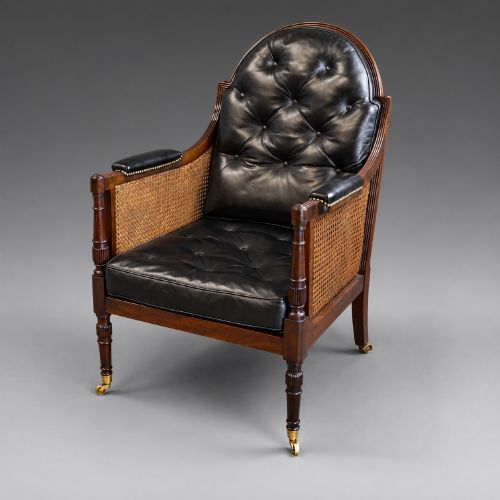
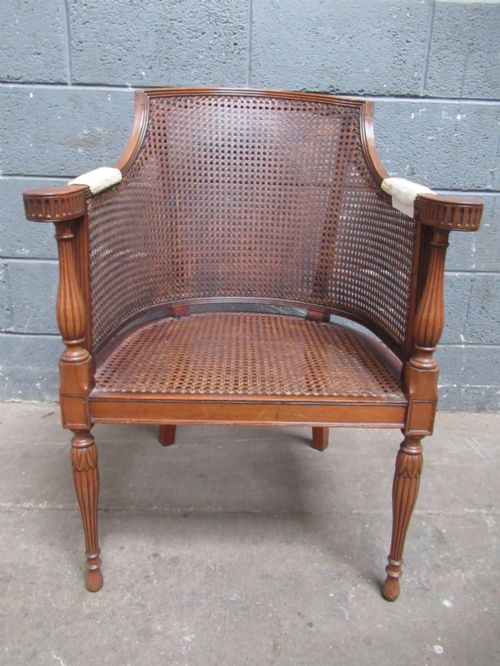
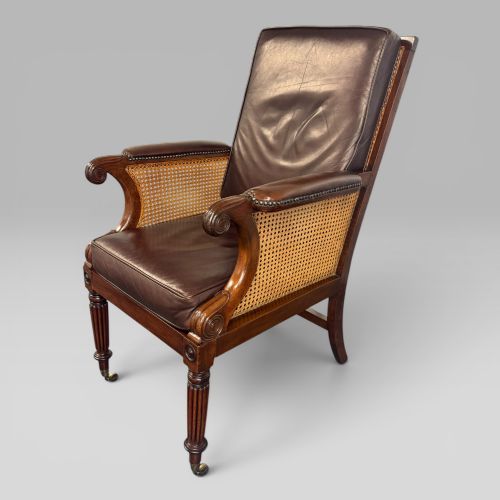
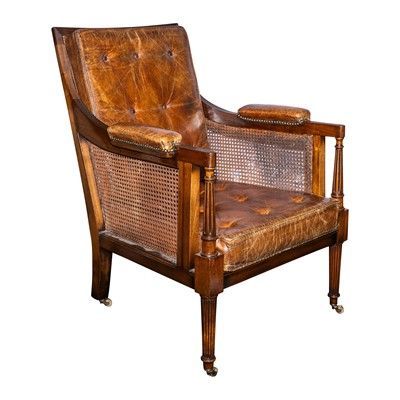
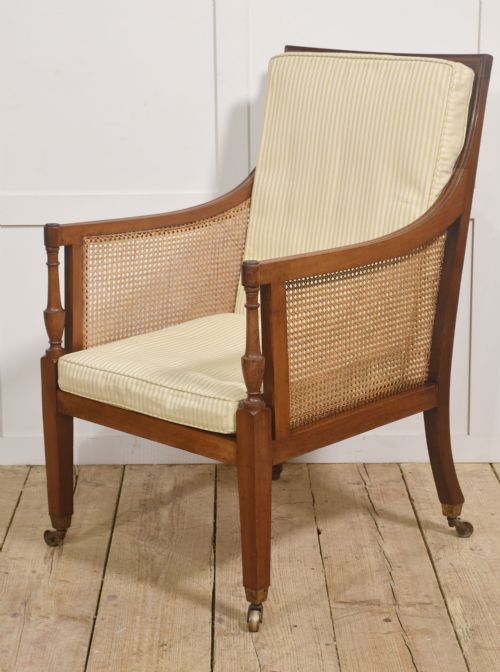
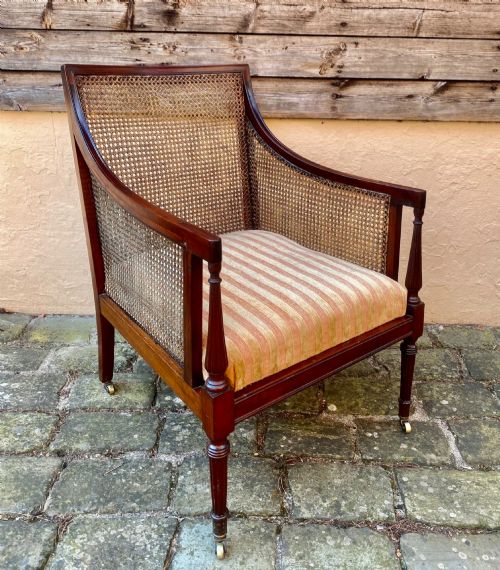
A mahogany library bergere offers deep, enclosed comfort wrapped in timber and cane, ideal for long hours of reading.
Mahogany Library Bergere
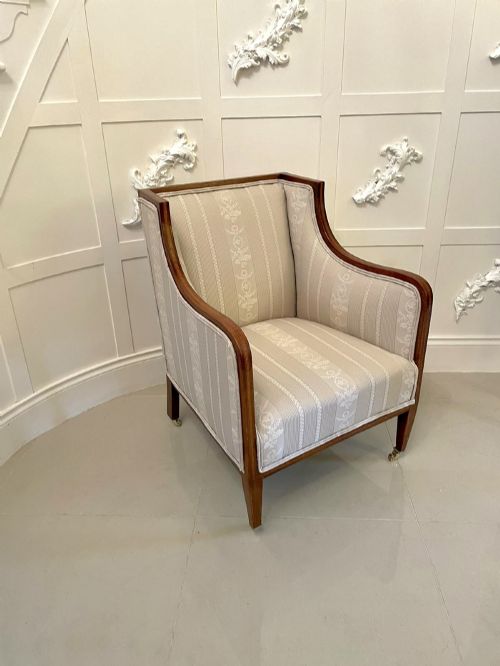
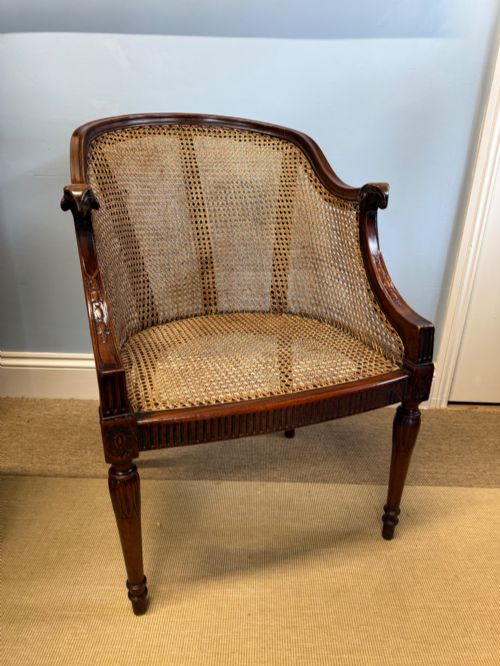
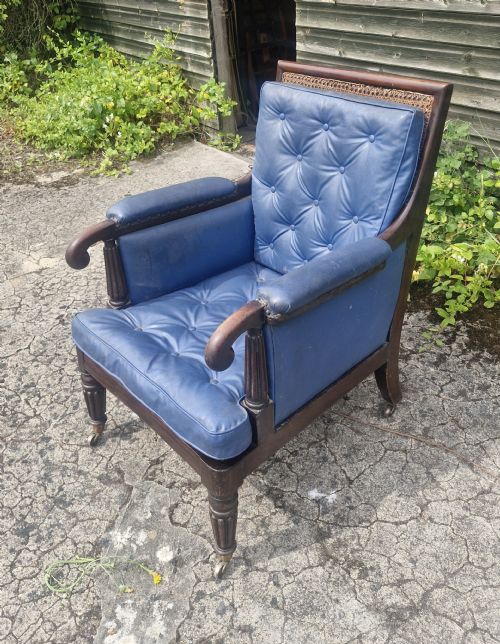
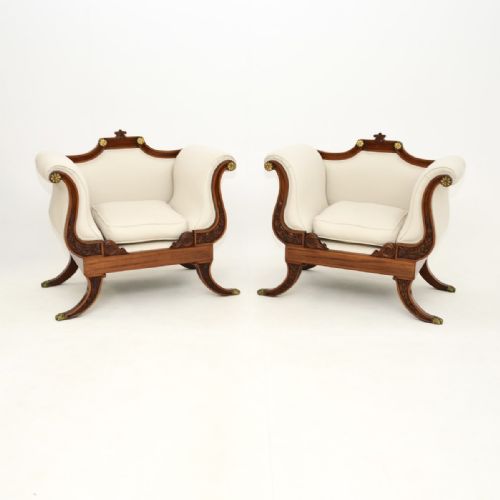
You are most likely to meet pieces originating from the Regency, William IV, and Edwardian periods on this page. These chairs range from compact tub shapes to large armchairs with generous proportions and supportive armrests.
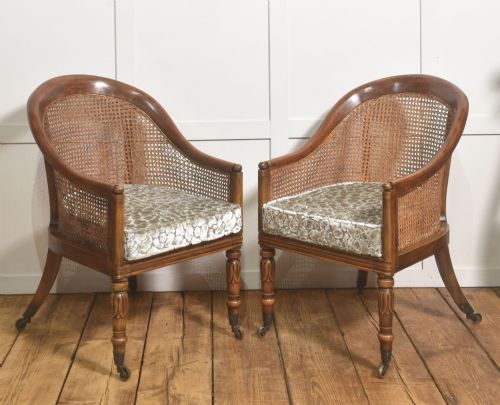
Originating primarily from nineteenth-century British workshops, these seating pieces combine functional utility with refined cabinetmaking. The survival of original caning alongside period timber defines the typical examples seen here.
How they were made
Cabinetmakers constructed the frames using solid timber alongside rich veneers, shaping the mahogany to form curved tub backs and scrolled arm supports. Brass castors frequently fitted to the feet allowed these heavy seating items to move easily across floorboards.
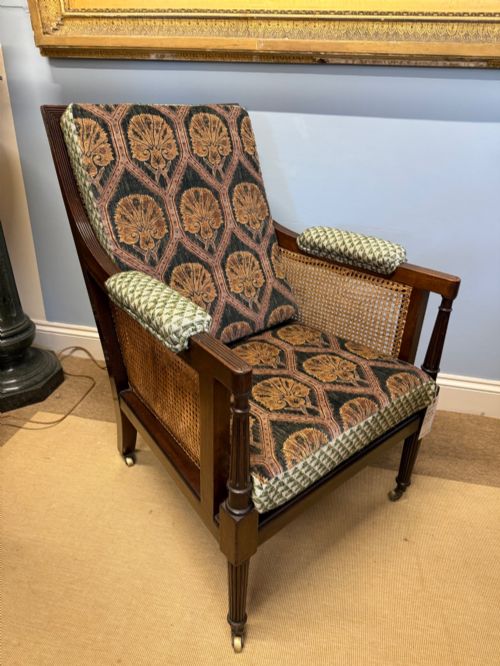
Caning formed the signature side and back panels, woven tightly through drilled holes in the wooden frame to create a resilient mesh. Additional comfort came from loose squab cushions upholstered in leather, velvet, or textile fabrics.
Mahogany Library Bergere Retail Price Guide 2026
Typical asking prices for mahogany library bergere among the pieces listed under this phrase on Sellingantiques today, from the lower quarter to the upper quarter. They describe what is for sale here now, not the wider market.
Many of these library chairs retain their original brass castors, designed so weary readers could wheel themselves closer to the fire.
What varies in quality
The distinction between ordinary and exceptional pieces rests in the handling of the timber and the crispness of the carving. Well-drawn frames possess balanced proportions, elegant curves, and fine turning that mark out superior cabinet work.
The integrity and tightness of the woven cane panels also divide the standard examples from the finest items. Original surfaces with rich patination hold greater appeal than heavily restored or stripped frames.
Gillows
The Mahogany Library Bergere Glossary
- Bergere
- An enclosed armchair with upholstered or caned sides and back panels. This seating form developed in France before becoming popular in British libraries during the Regency period.
- Caning
- A woven mesh made from rattan material used to form the sides and back of seating furniture. It provides a lightweight yet durable structural panel.
- Tub chair
- An armchair featuring a continuous curved back and arms forming a circular enclosure. This shape offers snug support for the sitter.
- Squab cushion
- A removable loose pad placed upon the seat base of a chair for comfort. These are typically filled with traditional stuffings and covered in leather or fabric.
Mahogany Library Bergere: Frequently Asked Questions
What is a mahogany library bergere?
A mahogany library bergere is a deep, enclosed armchair featuring caned or upholstered side panels set within a timber frame. These chairs were designed for reading rooms and studies.
Cabinetmakers built them to offer both structural support and comfortable seating during long hours of reading.
How were these chairs used?
These armchairs served as comfortable seats in libraries, studies, and drawing rooms. Their enclosed sides protected sitters from drafts in large, high-ceilinged rooms.
They were often positioned near bookcases or writing desks for daily use.
How do I live with one?
Place your chair away from direct sunlight and heat sources to protect the mahogany timber and prevent the cane panels from drying out. Use a soft brush to clear dust from the woven mesh.
Pair the chair with a reading lamp to recreate its traditional library setting.
How do I tell periods apart?
Regency and George IV examples often display sharp carving, reeded legs, and brass castors reflecting classical tastes. Edwardian and later revival pieces tend to show softer detailing and lighter construction.
Examining the timber grain, construction joints, and style of the frame helps determine the likely age.