




Mahogany Instrument Case
A mahogany instrument case protects precision equipment for navigation, meteorology, and science.
Mahogany Instrument Case
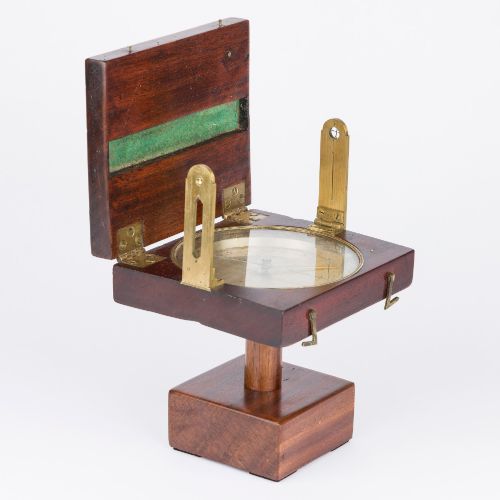
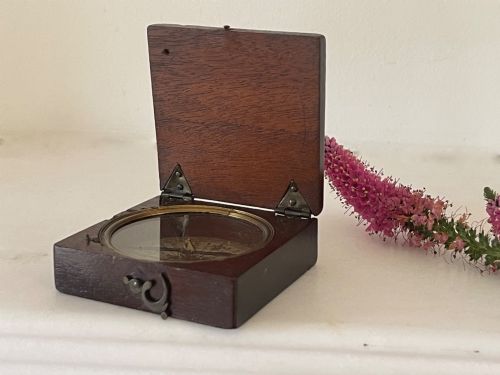
A mahogany instrument case holds scientific, medical, and navigational gear produced across the Georgian, Victorian, and Edwardian periods. Buyers searching for a mahogany instrument case encounter specialised containers built for barographs, microscopes, compasses, and drawing sets.
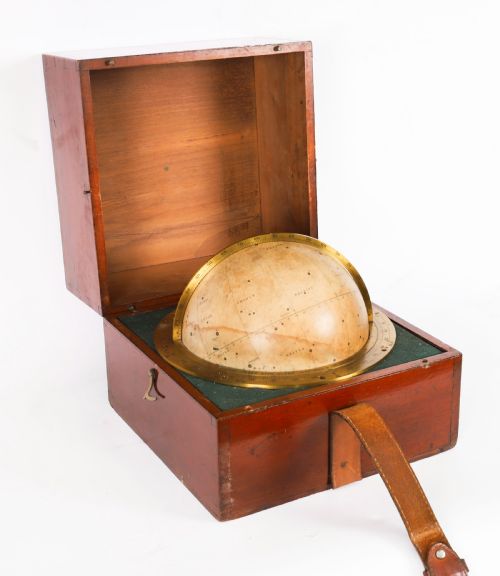
The pieces on this page span scientific instruments, medical collectables, and boxes housing barometers or celestial globes. Most examples originate from British workshops and retailers operating during the nineteenth and early twentieth centuries.
Form follows function closely, resulting in rectangular boxes, sloping barograph housings, and fitted cabinets with internal compartments. These enclosures were made to safeguard delicate glass, brass, and steel mechanisms during travel or daily use.
Materials and construction methods
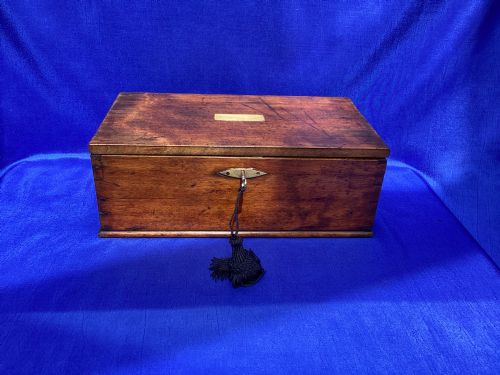
Carpenters constructed these enclosures using dense mahogany timbers, selected for stability and resistance to warping around delicate movements. Brass fittings such as hinges, carrying handles, and locking clasps reinforce the corners and lids of the boxes.
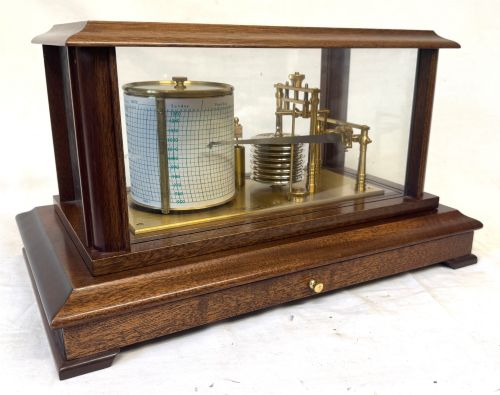
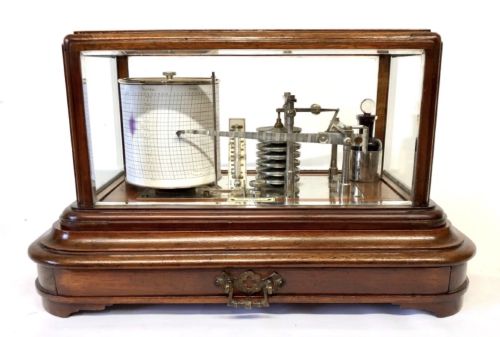
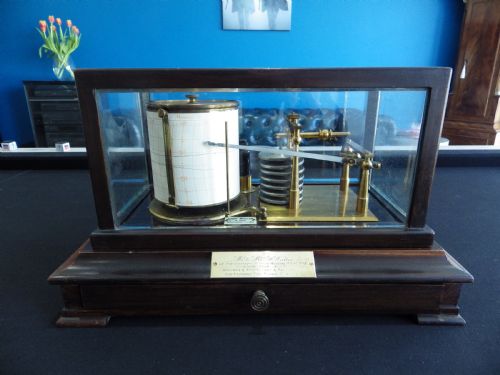
Interiors frequently feature linings of velvet, leather, or paper designed to cushion glass dials, lenses, and metal tools. Glazed panels appear on barographs and meteorological instruments to permit observation without opening the main housing.
Some nineteenth-century meteorological cases still retain ink-stained chart paper recording weather pressures from long-forgotten autumn storms.
Factors determining quality
Quality rests upon the precision of the internal fittings and the standard of the cabinetmaking. Superior examples display dovetailed joints, matched timber grains, and bespoke compartments tailored precisely to the contained apparatus.
The reputation of the instrument maker or retailer stamped onto the brass plates or paper trade labels elevates the status of the piece. Preservation of original paperwork, keys, and untouched interior linings also distinguishes finer specimens from heavily restored items.
G Davis of Leeds·Holtzapffel and Co·L Casella and Co·R and J Beck·Hughes and Son·John Millikin·George Adams·Alexander Wright·Negretti and Zambra·Short and Mason·R Fuess·Down Brothers·Cary
The Mahogany Instrument Case Glossary
- Barograph
- A self-recording meteorological instrument that charts atmospheric pressure onto paper graphs. These devices usually sit beneath five-glass mahogany covers with internal chart drawers.
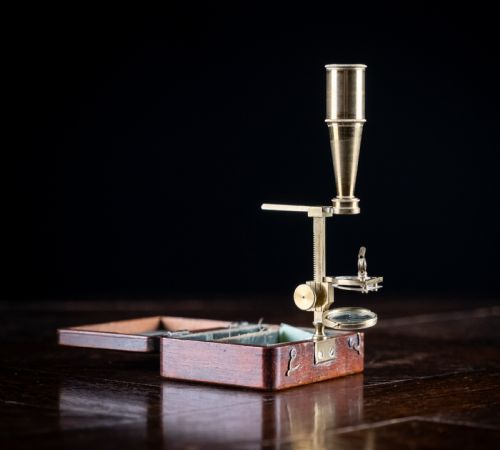
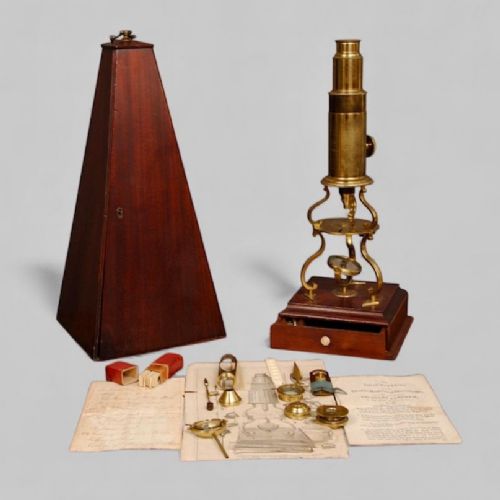
- Culpeper microscope
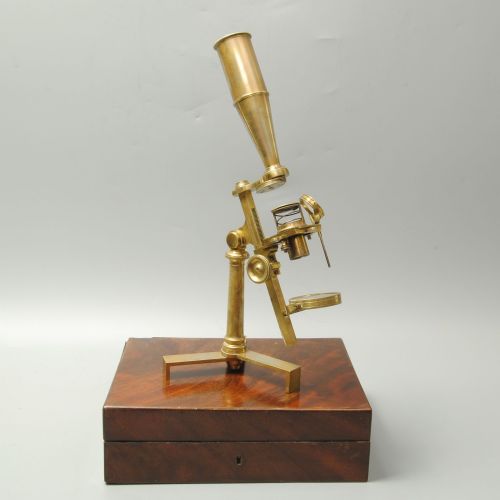
- An early form of compound microscope featuring a tripod base supporting the body tube. These scientific instruments generally survive in fitted wooden pyramids or boxes.
- Fortin stick barometer
- A precision mercury barometer equipped with an adjustable cistern to set the ivory pointer accurately. Such barometers require sturdy wooden wall mounting cases.
- Cupping set
- A medical collection utilised for bloodletting and counter-irritation therapy. These instruments are organised within partitioned wooden carrying chests lined with velvet or leather.
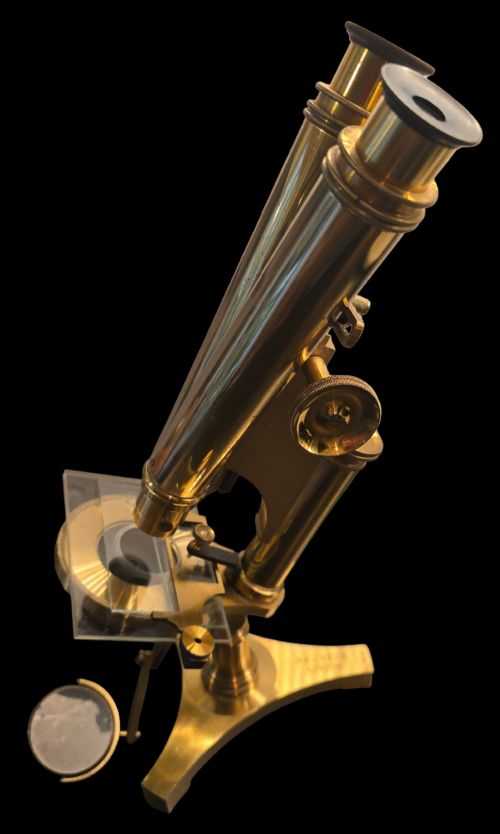
- Binocular microscope
- An optical instrument utilising two eyepieces for stereoscopic vision. These scientific devices rest in fitted mahogany transportation boxes complete with accessories.
Mahogany Instrument Case: Frequently Asked Questions
What tools go in a mahogany instrument case?
These enclosures house scientific apparatus like microscopes, compasses, and drawing sets, alongside medical tools and weather gauges.
Makers tailored the internal wooden partitions specifically to secure each individual steel, brass, and glass component during transport.
How do I identify the period?
Dating relies upon construction techniques, brass hardware styles, and any accompanying trade labels or maker signatures.
Georgian boxes tend towards simple, robust mahogany builds, whereas Victorian and Edwardian examples frequently incorporate glazed panels and complex internal mechanisms.
Were these cases made for travel?
Many examples served explorers, surveyors, and naval architects requiring portable precision equipment in the field.
Sturdy brass carrying handles and secure locking latches ensured the delicate instruments survived rugged journeys.
How should I clean the wood?
Maintain the polished mahogany surfaces by dusting gently with a dry, soft cloth and avoiding harsh modern chemical polishes.
Preserving the natural patina protects both the timber and any historic paper labels pasted inside the lids.