

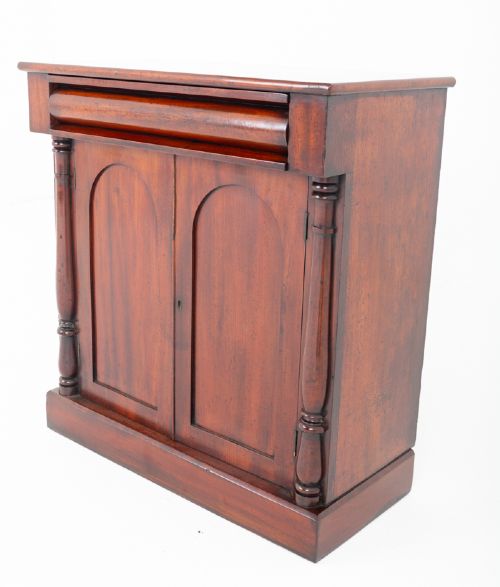
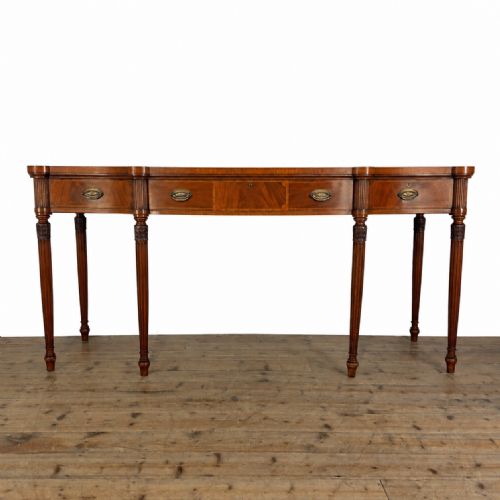
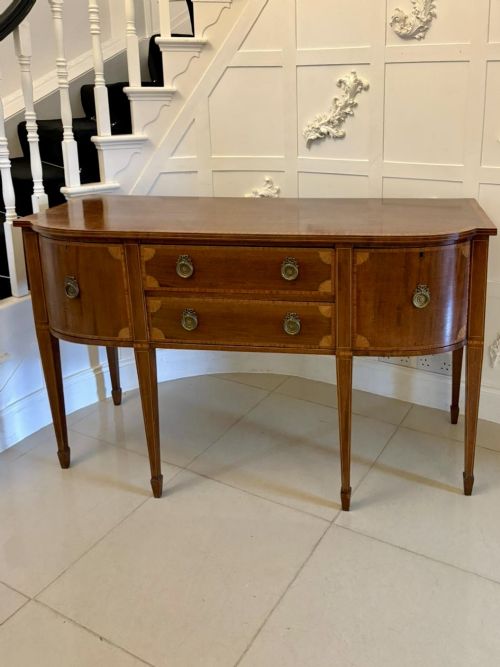
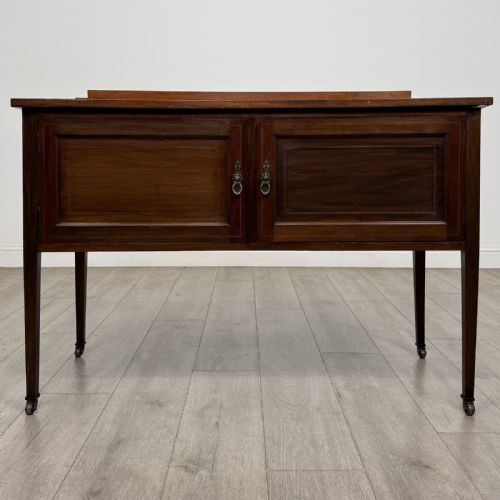
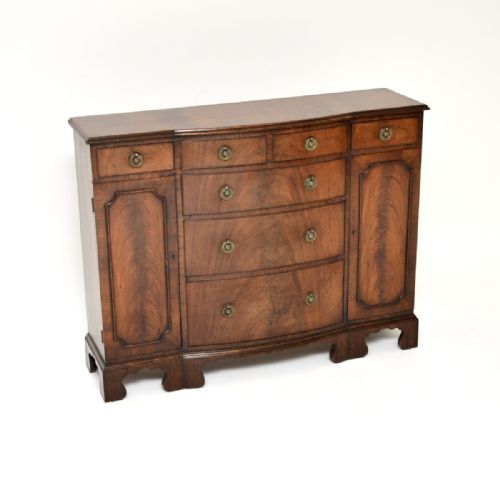
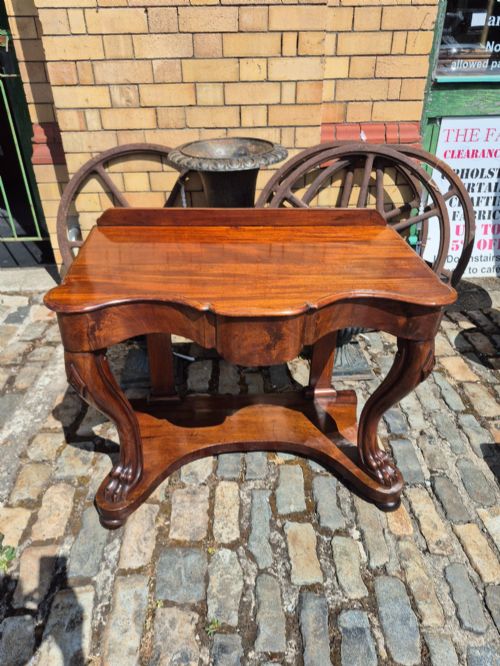
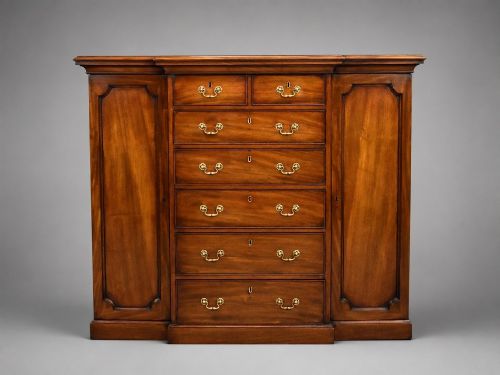
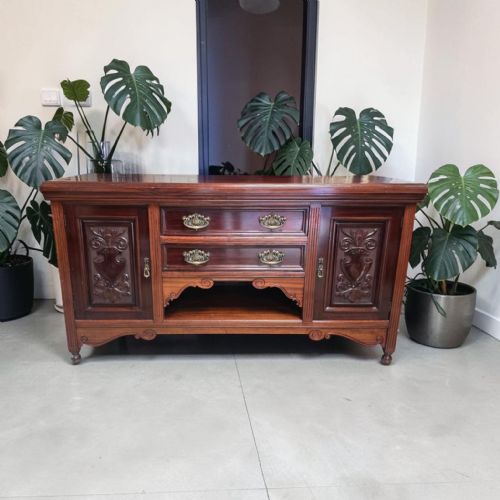


Mahogany Hallway Credenza
A mahogany hallway credenza brings rich timber and practical surface space to an entrance, offering guests an immediate impression of period character.
Mahogany Hallway Credenza
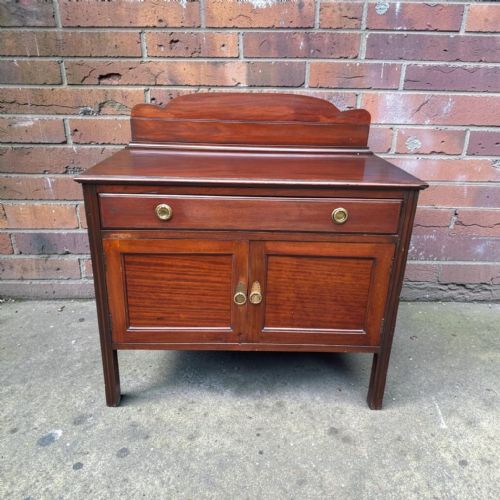
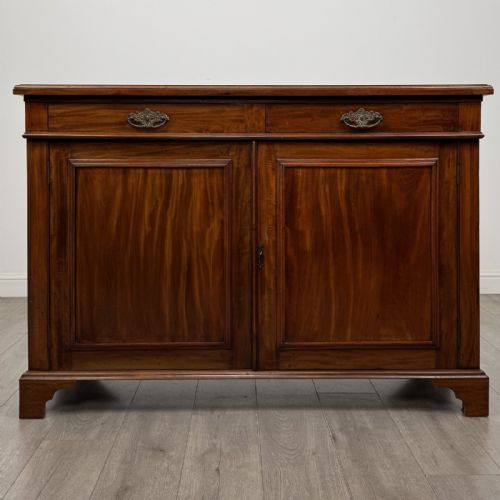
When buyers search for a mahogany hallway credenza, they typically encounter a variety of forms including sideboards, console tables, side cabinets, and chiffoniers. These pieces emerge from periods spanning the Georgian era through to the Edwardian years and the early twentieth century.
Materials and construction
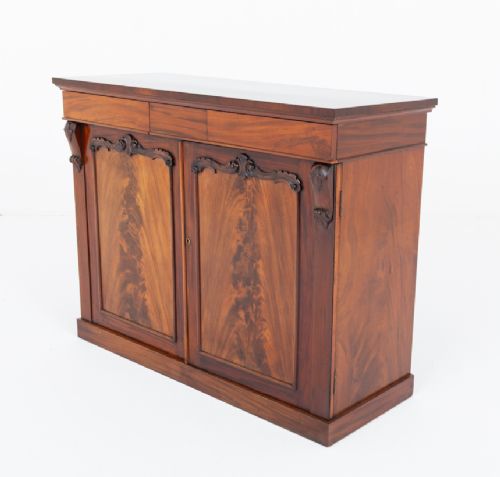
Cabinet-makers relied heavily on mahogany as the primary timber, often selecting flame mahogany veneer for figured grain patterns on doors and drawer fronts. Secondary woods and decorative accents frequently incorporated satinwood, boxwood, and brass hardware.
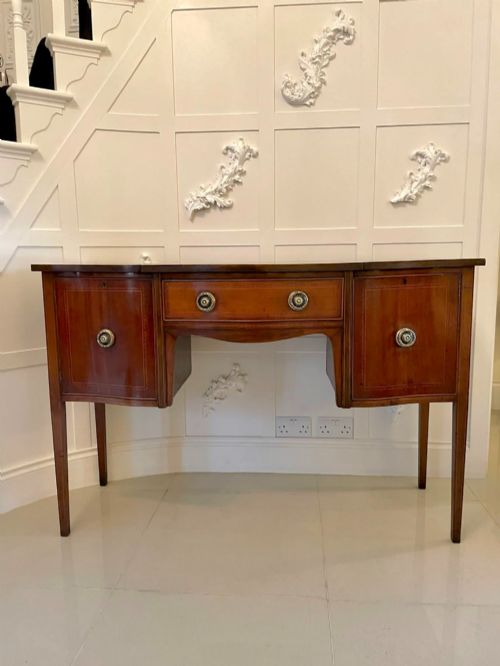
Joinery methods involved traditional techniques to build robust sideboards, serving tables, and chiffoniers designed for domestic utility. Surface ornamentation often included delicate wood inlay and carved details executed during the Victorian, Regency, and Georgian periods.
Mahogany Hallway Credenza Retail Price Guide 2026
Typical asking prices for mahogany hallway credenza among the pieces listed under this phrase on Sellingantiques today, from the lower quarter to the upper quarter. They describe what is for sale here now, not the wider market.
The listings span the Georgian, Victorian, Edwardian, and Regency periods, showcasing forms from compact chiffoniers to large breakfront sideboards.
Distinguishing quality
Quality rests upon the selection of timber, particularly the choice of richly figured flame mahogany veneer matched symmetrically across the piece. Finer examples display crisp wood inlay in contrasting satinwood and boxwood, alongside substantial brass mountings.
The standard of carving and the integrity of the original construction differentiate standard cabinet work from superior workshop production. Pieces bearing documented maker attribution or refined Georgian and Regency proportions stand at the upper end of the scale.
M. D. Miller & Sons, Nottingham·Gillows
The Mahogany Hallway Credenza Glossary
- Bow front
- A convex curved cabinet front that swells outward in the centre, popular during the Georgian and Regency periods. This shape softens the profile of a hallway piece while retaining interior storage depth.
- Chiffonier
- A low sideboard or cabinet developed in the early nineteenth century, typically featuring enclosed cupboards below and sometimes a raised shelf above. It serves as a compact storage unit for dining or living spaces.
- Flame mahogany veneer
- A thin slice of mahogany timber cut from the fork of the tree where branches meet the trunk, producing a distinctive flickering flame pattern. Cabinet-makers applied this to drawer fronts and door panels for visual impact.
- Demi-lune
- A half-moon or semicircular shape utilised for console tables and small sideboards designed to sit flush against a wall. This profile suits narrow hallways where depth must be kept to a minimum.
- Breakfront
- A cabinet design where the central section projects forward from the flanking outer sections. This architectural arrangement creates depth and shadow on larger sideboards and side cabinets.
Mahogany Hallway Credenza: Frequently Asked Questions
What is a mahogany hallway credenza?
A mahogany hallway credenza refers to low storage furniture such as sideboards, console tables, and chiffoniers placed in entranceways. These pieces provide a surface for keys and decorative objects while utilising rich timber and classic proportions.
Buyers often select antique sideboards or side cabinets from the Georgian, Victorian, and Edwardian eras to anchor an interior scheme. Their varied forms accommodate different hallway dimensions while maintaining period authenticity.
How do I date a mahogany piece?
Dating relies on observing construction methods, timber choice, hardware styles, and overall design characteristics. Pieces from the Georgian period often display restrained lines and fine boxwood stringing, whereas Victorian examples tend toward heavier proportions and deeper carving.
Examining secondary timbers inside drawers and checking for hand-cut dovetails helps confirm the era. Stylistic clues such as Regency brass mounts or Edwardian mirrorbacks provide further chronological markers.
Where should I place a credenza?
These pieces suit entrance halls, corridors, and dining rooms where surface space and low-profile storage prove useful. A shallow bow front or demi-lune console fits narrow walkways without obstructing movement.
Placing the cabinet against a clear wall allows the timber grain and inlay work to catch natural light. Pairing the piece with a mirror above creates a traditional entranceway arrangement.
How do I care for mahogany furniture?
Maintain antique mahogany by dusting regularly with a soft, dry cloth and avoiding silicone-based polishes. Occasional application of quality beeswax feeds the timber and preserves the patina.
Keep the cabinet away from direct sunlight and heat sources to prevent the wood from drying or the veneer from lifting. Stable room humidity ensures the longevity of the structure and finish.