

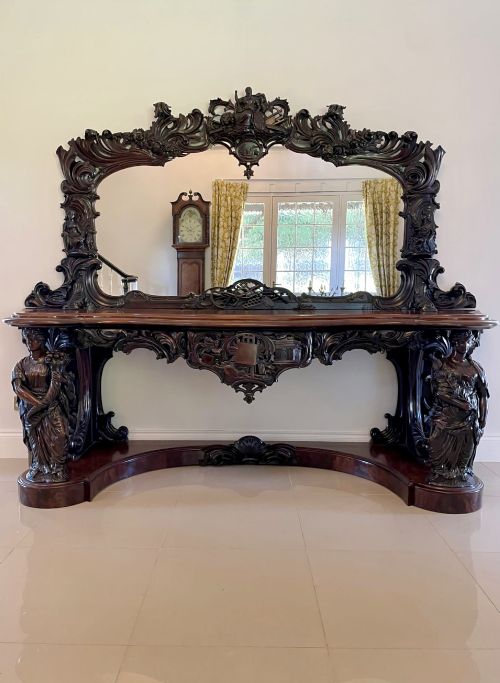
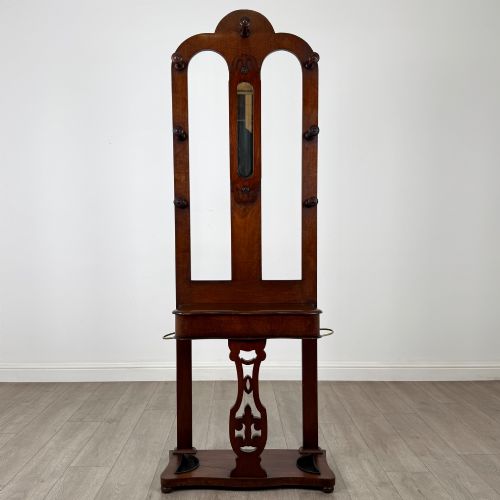


Mahogany Hall Stand Mirror
A mahogany hall stand mirror combines practical storage with a grand entrance reflection, anchoring a hallway with rich timber grain and polished glass.
Mahogany Hall Stand Mirror
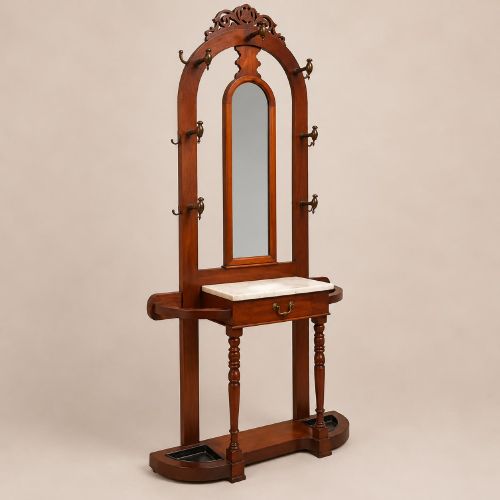
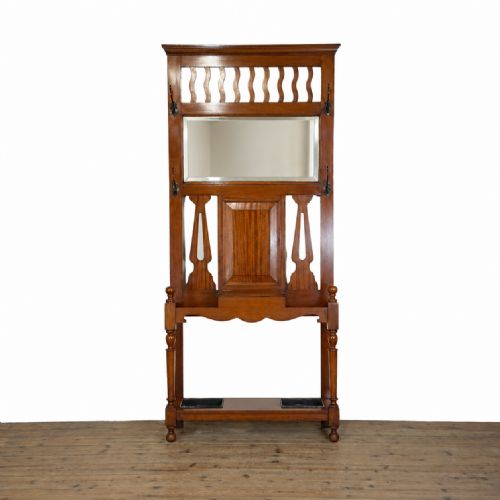
A mahogany hall stand mirror serves as the central focal point of an entrance hall, combining timber framing, integrated coat hooks, umbrella wells, and glass plates. These pieces emerge predominantly from Victorian and Edwardian periods, stretching from the mid nineteenth century into the opening decades of the twentieth century.
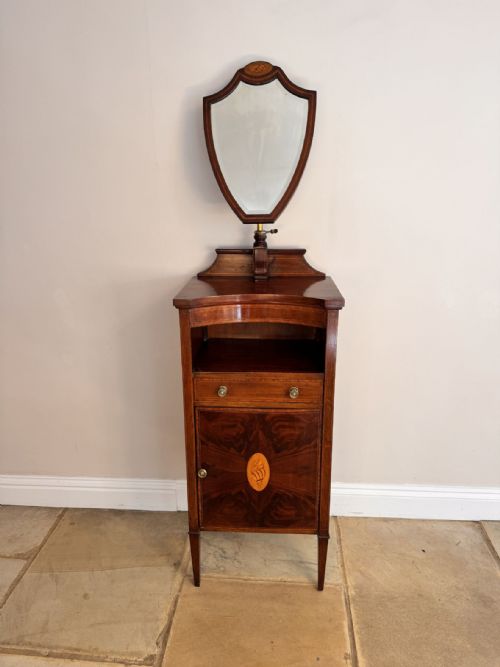
The most common form encountered on this page is the Victorian hall stand constructed from solid mahogany, frequently incorporating a central mirror plate above a marble shelf and cast iron or brass coat hooks. Alongside traditional tall stands, variations include console tables with mirror backs, cheval mirrors, and inlaid Arts and Crafts designs.
Originating across British and continental workshops, these items accommodate smaller hallway footprints or expansive entranceways depending on their scale. Pieces span architectural styles ranging from Victorian Rococo Revival and Neoclassical Revival to Biedermeier and Danish Empire.
Materials and construction methods
Cabinet makers utilised dense mahogany timbers, selected for deep reddish-brown tones and durability, paired with reflective glass mirror plates. Structural integrity relies on traditional joinery methods that support heavy overhead frames and projecting hat hooks.
Secondary materials supplement the main mahogany structure to add functional utility and decorative contrast. Marble tops provide durable surfaces for gloves or card trays, while brass and cast iron supply sturdy hooks and stick retention rails.
Mahogany Hall Stand Mirror Retail Price Guide 2026
Typical asking prices for mahogany hall stand mirror among the pieces listed under this phrase on Sellingantiques today, from the lower quarter to the upper quarter. They describe what is for sale here now, not the wider market.
Materials appearing across these pieces include mahogany, walnut, marble, brass, cast iron, and bevelled glass plates.
Distinctions in construction and detail
Quality varies through the sophistication of the carved timber ornamentation, the clarity and depth of the bevelled mirror plate, and the presence of original ceramic tiles or marquetry inlay. Finer examples display meticulous fretted woodwork and substantial marble shelves rather than plain timber surfaces.
The degree of original hardware preservation marks another tier in standard, where intact brass hooks, drip pans, and specific maker signatures elevate the historical integrity of the piece.
Ellen E. Houghton of Minton
The Mahogany Hall Stand Mirror Glossary
- Hall stand
- A composite piece of furniture designed for entrance halls, incorporating mirror plates, coat hooks, and umbrella stands. Many examples include small ledges or marble-topped shelves.
- Console table
- A wall-mounted or freestanding table often placed beneath a mirror in a hallway. These tables frequently feature marble tops and heavy timber framing.
- Cheval mirror
- A freestanding full-length mirror mounted on a rotational pivot within a floor frame. Some period variations integrate storage or cabinet bases.
- Bevelled plate
- A mirror glass whose outer edges are cut and polished at an oblique angle. This detail catches the light and adds depth to the reflection.
- Marble shelf
- An inset stone slab positioned above the base of a hall stand. It provides a durable, heat-resistant surface for everyday household items.
Mahogany Hall Stand Mirror: Frequently Asked Questions
What is a hall stand mirror used for?
A hall stand mirror provides a designated spot to check appearance before leaving the house while simultaneously storing outerwear. The incorporated hooks, shelves, and trays hold hats, coats, umbrellas, and walking sticks.
Historically placed in entranceways and reception rooms, these items kept everyday garments organised and immediately accessible for household members and visitors alike.
How do I identify a Victorian hall stand?
Victorian hall stands typically feature dense mahogany construction, dark timber patination, and substantial carved ornamentation. Many incorporate central mirror plates backed by wooden panels, combined with heavy brass or cast iron hardware.
Later Victorian and Edwardian examples often introduce contrasting design elements such as inlaid marquetry, ceramic tiles, or lighter Edwardian styling while retaining the core tall framework.
Are the mirror plates original?
Original mirror plates frequently display subtle signs of ageing, including light foxing, minor silvering loss, or slight distortion in the glass. These characteristics reflect nineteenth-century manufacturing methods.
When inspecting a piece, look at the integration of the glass within the wooden rebate and examine the backboards to determine if the plate has remained undisturbed since manufacture.
How do I care for mahogany hall furniture?
Maintain mahogany timber by applying appropriate wax polish sparingly to preserve the natural lustre and feed the wood grain. Avoid placing the furniture in direct sunlight or near heat sources to prevent timber splitting.
Marble shelves and mirror glass require simple cleaning with damp cloths, ensuring moisture does not seep into unsealed wooden joints around the frame edges.