


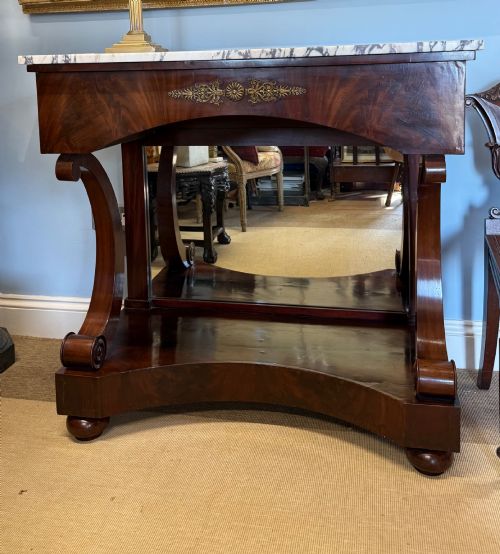


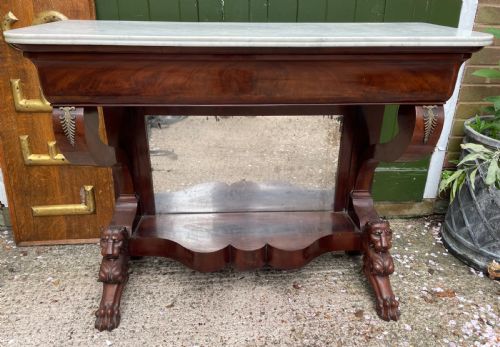


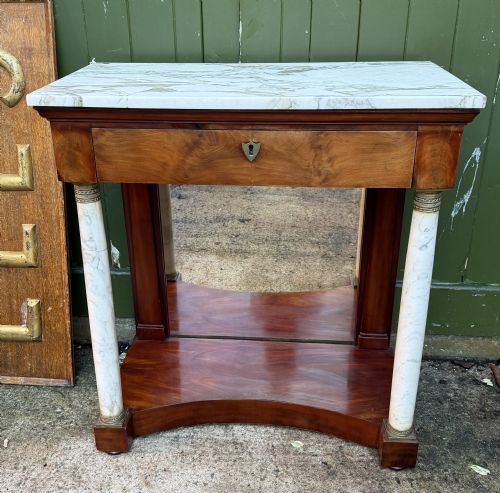

Mahogany Hall Console Mirror
These mahogany hall console mirrors bring warmth and presence to an entranceway, combining timber and glass to reflect light.
Mahogany Hall Console Mirror
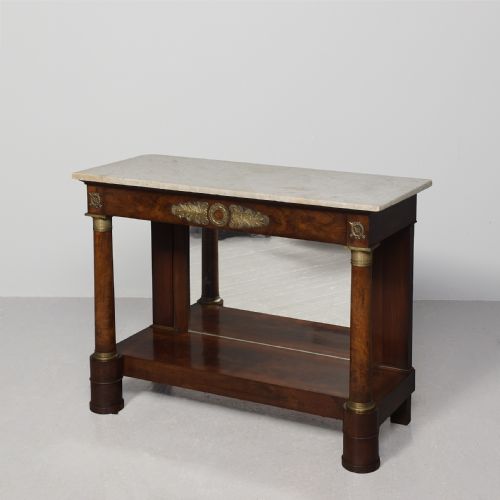
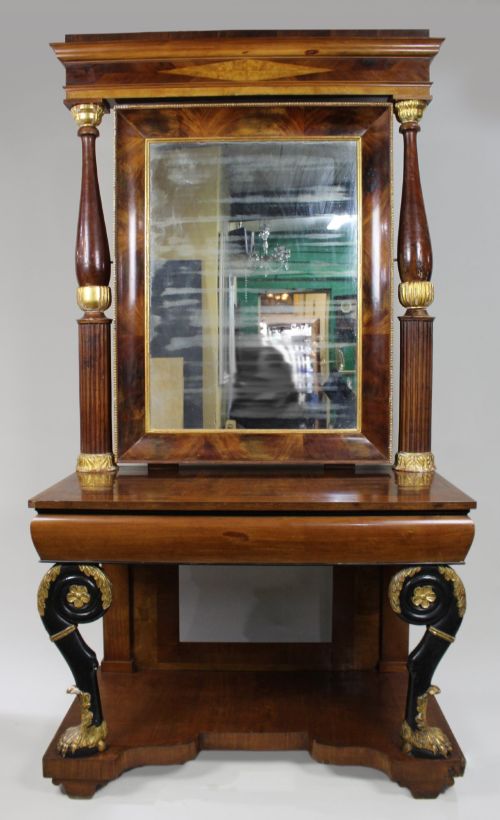
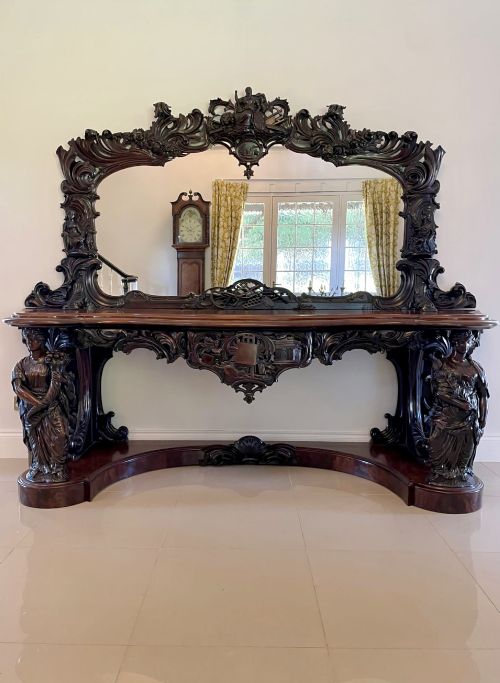
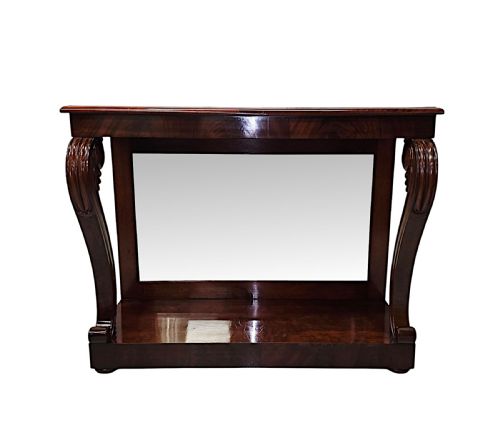
A mahogany hall console mirror pairs a timber console table with an integrated or matching wall glass, designed specifically for entrance spaces. The selection ranges from early nineteenth-century Irish and Regency pieces to Victorian mirror-back formats and later twentieth-century interpretations.
Makers combined the table and glass as a unified furnishing for the hallway, often incorporating marble surfaces or parcel gilt details. Buyers encounter tall mirror-backed console tables alongside paired console tables and wall mirrors, as well as hall stands fitted with mirrors.
Examples span the Regency, William IV, and Victorian periods, alongside continental French Empire and Biedermeier expressions. Each piece serves the dual purpose of surface utility and vertical reflection in a reception space.
How they were made
Cabinetmakers utilised solid mahogany and flame mahogany veneers over secondary timbers, often accentuating the grain with parcel gilding or inlay. French polish and traditional hand finishes brought out the deep reddish-brown tones inherent in the wood.
Heavy white marble tops, particularly carrara, were fitted to the console bases, alongside mirrored glass plates secured within carved wooden frames. Brass mounts and decorative hardware occasionally accented the structural joinery of the tables and stands.
Mahogany Hall Console Mirror Retail Price Guide 2026
Typical asking prices for mahogany hall console mirror among the pieces listed under this phrase on Sellingantiques today, from the lower quarter to the upper quarter. They describe what is for sale here now, not the wider market.
Some hall stands even feature tiled panels depicting the days of the week.
What varies in quality
The sophistication of the carved ornamentation and the depth of figure in the mahogany veneer distinguish finer examples from simpler workshops. Heavier architectural proportions and balanced mirror-to-table integration elevate the presence of a piece.
The selection of materials such as thick carrara marble tops and original mirrored glass plates influences the overall character. Details like parcel gilt accents and secondary timbers reflect the original maker's investment in time and materials.
Gillingtons of Dublin·Ellen E. Houghton of Minton
The Mahogany Hall Console Mirror Glossary
- Console table
- A table designed to stand against a wall, frequently supported by front legs or brackets and secured to the structure behind. These tables often carry heavy marble slabs.
- Pier mirror
- A tall looking glass designed to hang on the wall between windows or directly above a console table. It fills vertical space and reflects light back into the room.
- Parcel gilt
- Partially gilded surfaces where gold leaf highlights specific carved details or mouldings against the dark mahogany timber. This technique adds contrast and visual richness.
- Flame mahogany
- A veneer cut from the fork of the mahogany tree, producing a distinctive flickering flame pattern. Cabinetmakers reserved this timber for prominent surfaces.
- Biedermeier
- A central European style spanning the nineteenth century characterised by utilitarian comfort and clean lines. It favoured native timbers and restrained ornamentation over heavy revivalism.
Mahogany Hall Console Mirror: Frequently Asked Questions
Where should a console mirror go?
These pieces suit entrance halls and reception rooms where floor space permits a shallow table and vertical glass. They anchor an empty wall while providing a surface for daily essentials.
Positioning them opposite or adjacent to a light source maximises the reflective qualities of the mirror plate.
How do I care for mahogany?
Maintain the timber by dusting with a dry, soft cloth and avoiding silicone-based polishes that build up over time. Keep the furniture away from direct heat sources and strong sunlight to protect the polish.
Marble tops benefit from immediate wiping of spills to prevent staining on the porous stone surface.
Are the mirrors original?
Many nineteenth-century pieces retain their original mercury or early silvered glass plates, which often display light foxing and age spots. Replacements do occur where historical glass has suffered breakage or heavy degradation.
Close inspection of the silvering and the rear boards helps determine the age of the glass relative to the frame.
How do I distinguish Regency from Victorian pieces?
Regency and early nineteenth-century examples tend to display restraint, drawing on classical architectural motifs with clean lines and balanced proportions. Victorian pieces often embrace heavier carving, more elaborate mirror frames, and bolder revival styles.
Examining the construction methods and secondary woods helps confirm the manufacturing period.