





Mahogany Gentleman Cabinet
A mahogany gentleman cabinet is a disciplined piece of storage and grooming furniture designed for the private quarters.
Mahogany Gentleman Cabinet
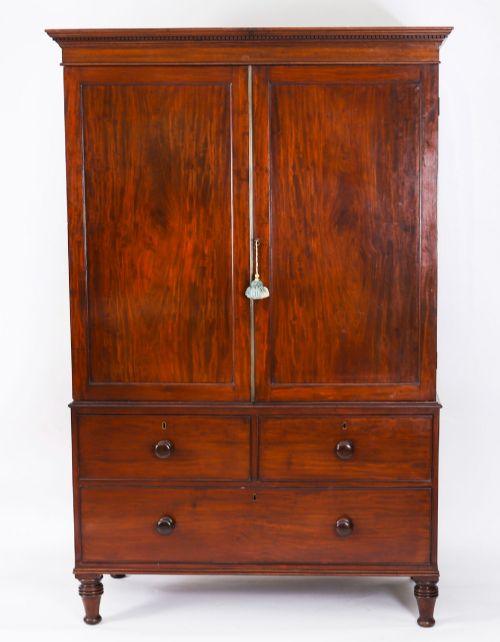
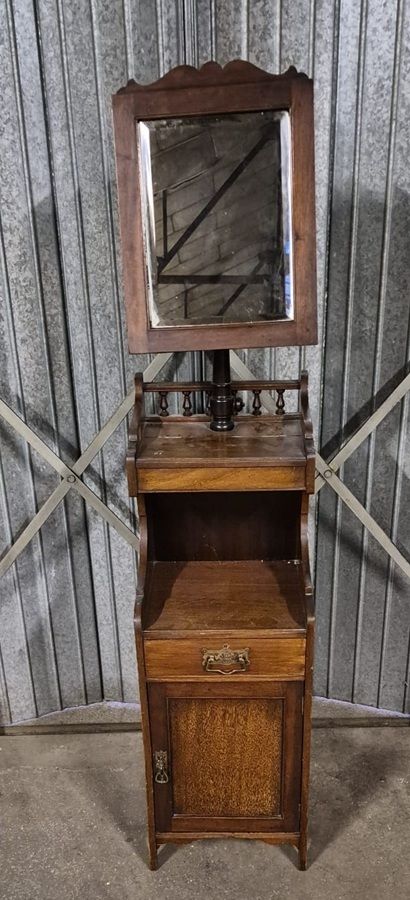
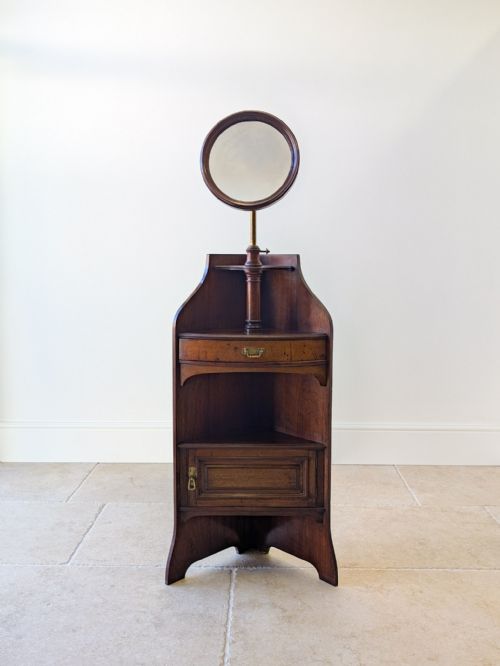
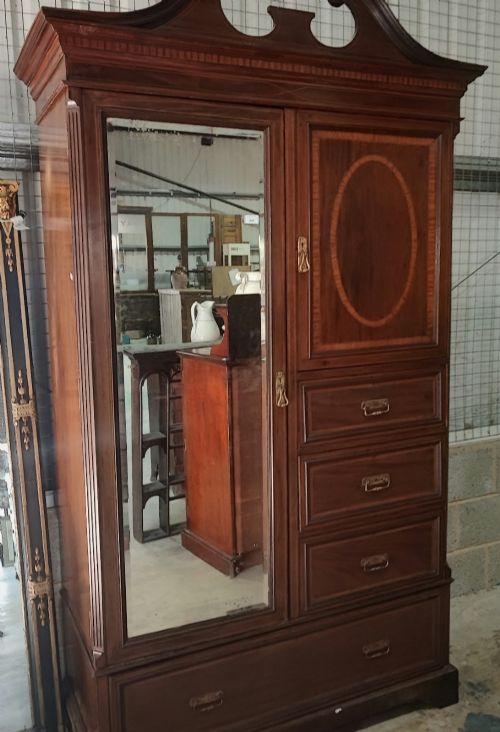
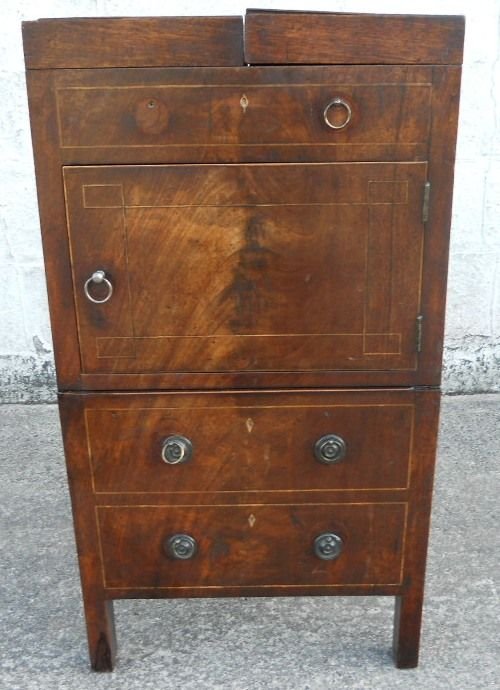
A mahogany gentleman cabinet serves as a sophisticated domestic station, encompassing forms from linen presses and wardrobes to specialised shaving stands and dressing chests. When searching for a mahogany gentleman cabinet, buyers encounter diverse iterations spanning the Georgian, Regency, and Victorian periods.
The objects listed on this page range from early George III cabinet on chest designs to late Victorian compactum wardrobes and Edwardian vanity tables. These pieces combine utilitarian storage with refined cabinetmaking, reflecting the domestic habits of gentlemen across multiple centuries.
How they were made
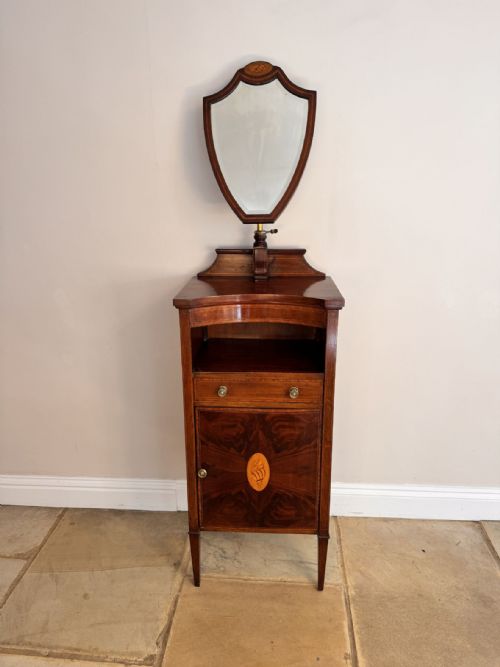
Cabinetmakers utilised solid mahogany and flame mahogany veneer over structural timbers, often incorporating contrasting satinwood inlay to define drawer fronts and door panels. Brass hardware, including drop handles and key escutcheons, provides functional articulation alongside glass elements where appropriate.
Construction techniques evolved from the joinery of the eighteenth century into the more varied production methods of the Victorian and Edwardian eras. Surface preparation relied on traditional polishing methods that emphasised the natural figuring of the mahogany grain.
Mahogany Gentleman Cabinet Retail Price Guide 2026
Typical asking prices for mahogany gentleman cabinet among the pieces listed under this phrase on Sellingantiques today, from the lower quarter to the upper quarter. They describe what is for sale here now, not the wider market.
Listings include mahogany, satinwood, brass, and glass across Georgian, Regency, and Victorian periods.
What varies in quality
Quality in these cabinets rests upon the selection of timber, particularly the choice of figured flame mahogany veneer and the precision of satinwood inlay. Superior examples display thoughtful proportion and harmonious integration of internal fittings such as sliding trays or specialised compartments.
The execution of secondary woods and the refinement of brass mounts further distinguish workshop production. Pieces bearing documented maker attributions demonstrate higher standards of construction and design cohesion.
Wilkinson and Son·Flashman and Co·Edwards and Roberts·Morison and Co·Maple and Co
The Mahogany Gentleman Cabinet Glossary
- Linen press
- A large storage cabinet featuring upper sliding trays or shelves enclosed by doors, positioned above a base of drawers. This form was essential for storing folded textiles and garments.
- Compactum wardrobe
- A multi-compartment wardrobe combining hanging space, drawers, and shelving within a single unified structure. It represents a more complex evolution of bedroom storage.
- Shaving stand
- A specialised small-scale table or stand, often featuring adjustable mirrors and receptacles for washing equipment. These pieces served the morning grooming rituals of gentlemen.
- Satinwood inlay
- A decorative technique involving contrasting light timber inserted into the mahogany surface in geometric or floral motifs. It highlights the borders and panels of finer case pieces.
- Flame mahogany veneer
- A thinly sliced timber veneer selected for its dramatic, flickering grain pattern resembling flames. Cabinetmakers applied this to prominent surfaces to create visual movement.
Mahogany Gentleman Cabinet: Frequently Asked Questions
What is a gentleman cabinet?
A gentleman cabinet is a specialised piece of antique furniture designed for personal storage, grooming, and wardrobe management.
These pieces typically combine compartments for folded linens, hanging garments, or washing apparatus within a single case.
How do I date a mahogany cabinet?
Dating involves examining the construction methods, timber selection, brass hardware, and stylistic details characteristic of periods like George III or Victorian.
Changes in drawer linings, veneer thickness, and decorative vocabulary provide reliable chronological indicators.
Where were these cabinets placed?
These cabinets were historically kept in private dressing rooms, bedrooms, or personal studies rather than public entertaining spaces.
Their form was dictated by the morning grooming and dressing routines of the household.
How do I care for mahogany?
Mahogany furniture requires stable indoor humidity and protection from direct sunlight to prevent timber movement and fading.
Regular dusting with a dry cloth and occasional application of appropriate wax maintains the polished surface.