

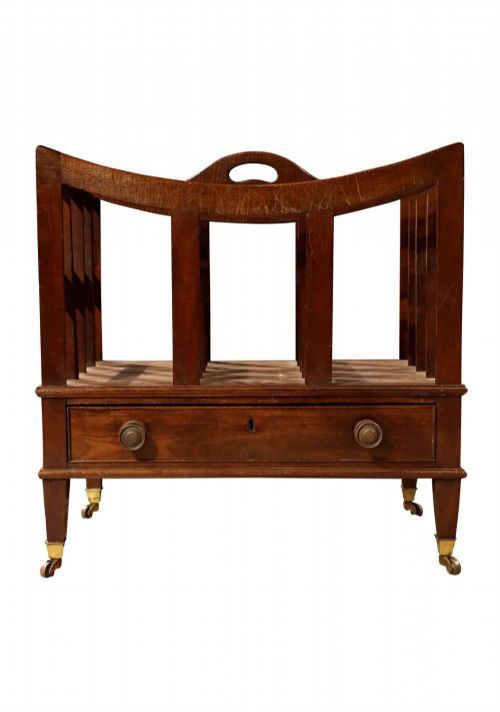
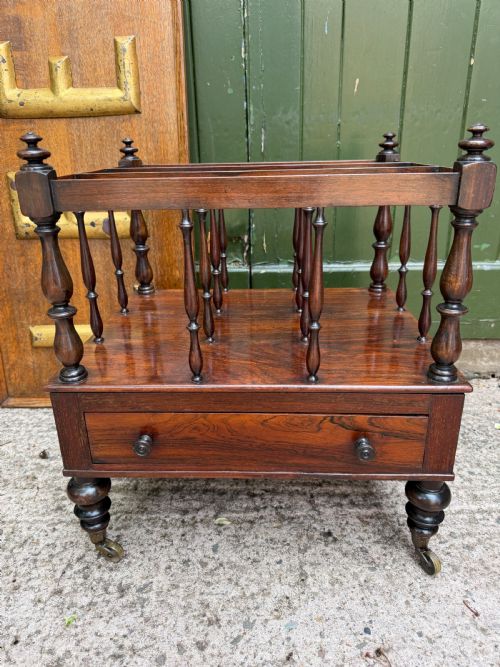


Mahogany Furniture Magazine Rack
These mahogany furniture magazine racks and canterburys bring orderly grace to a room, holding papers and folios with period craftsmanship.
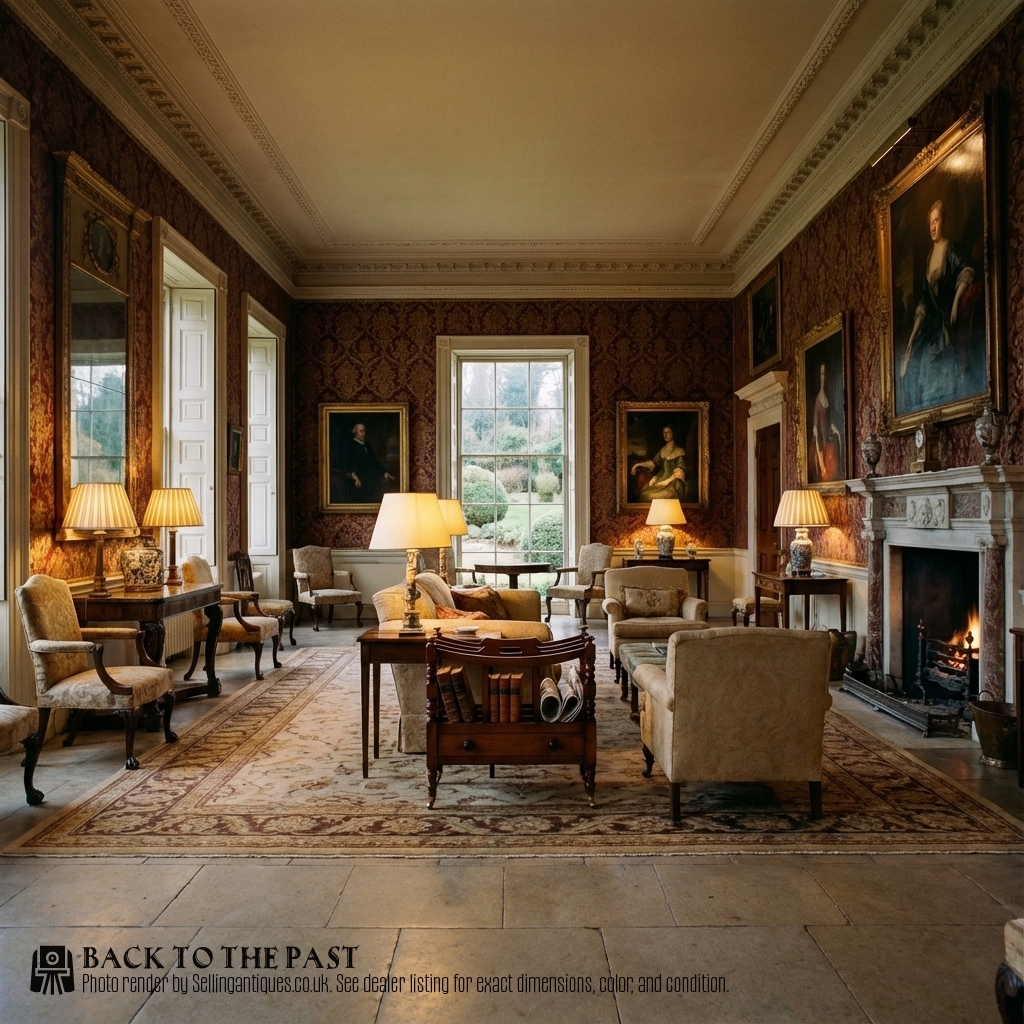
Mahogany Furniture Magazine Rack
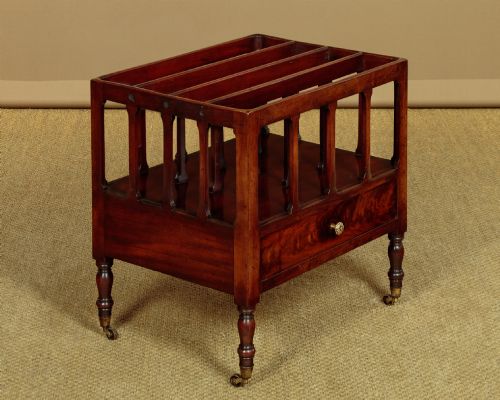
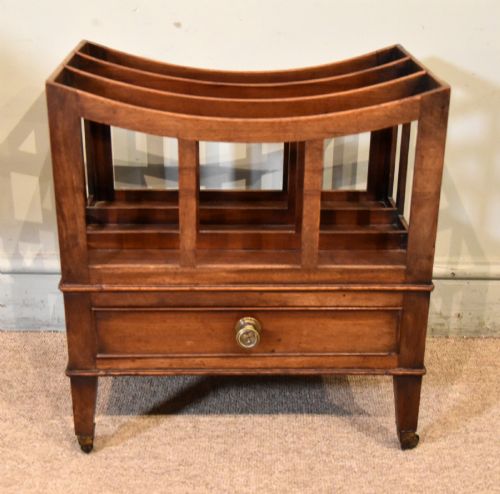
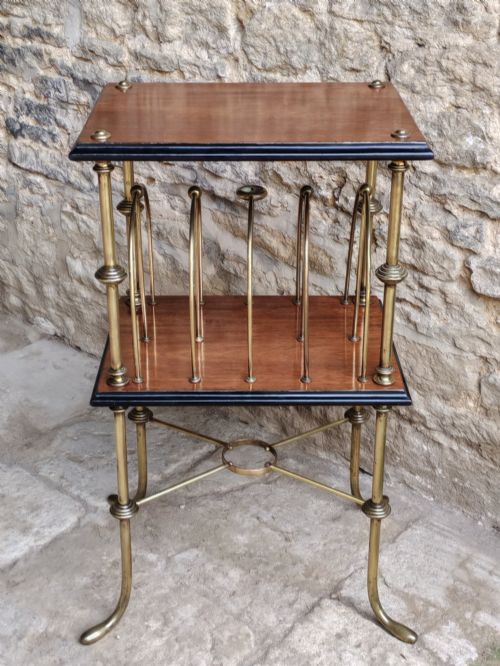
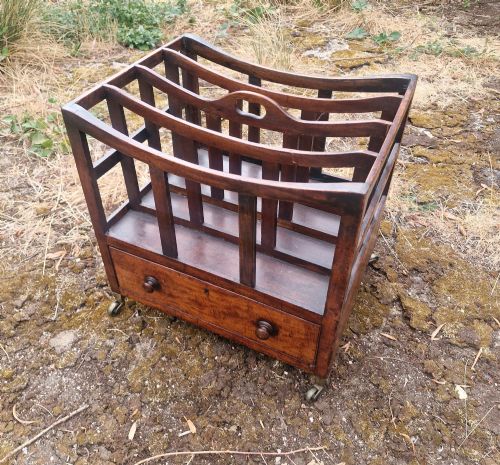
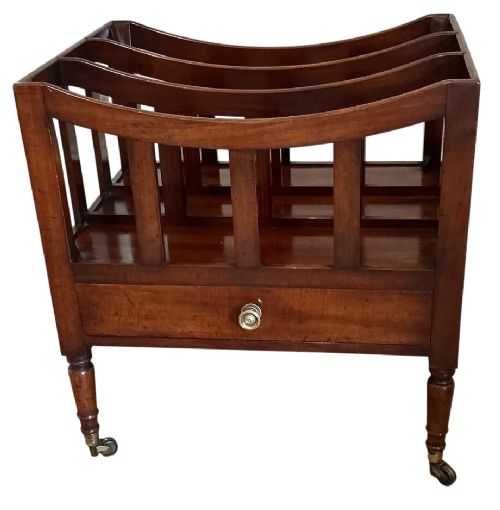
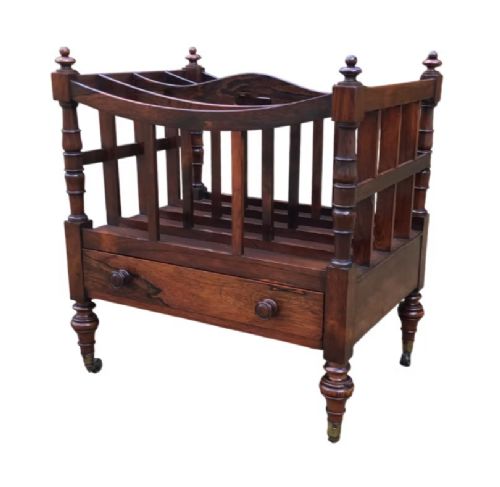
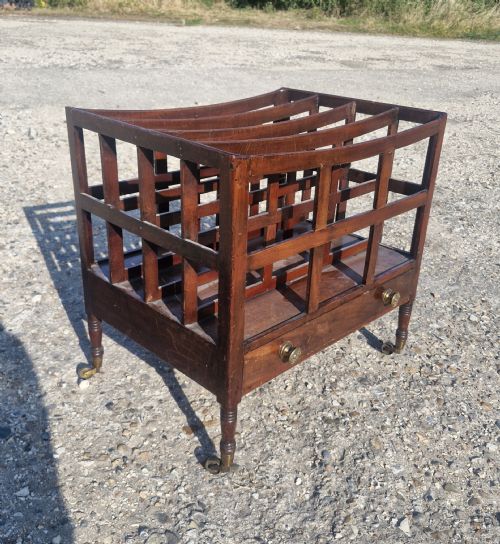
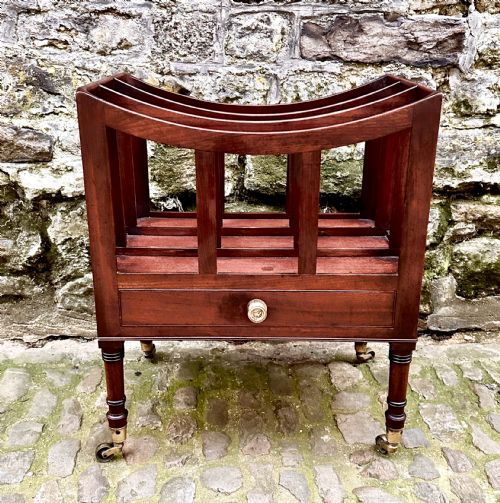
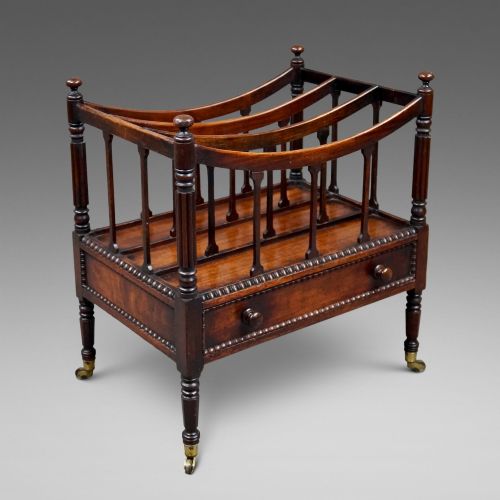
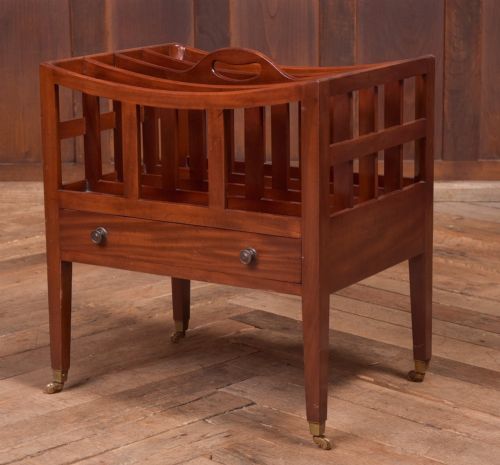
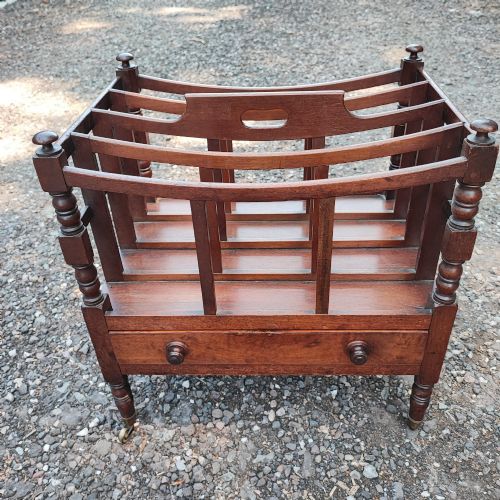
When you search for a mahogany furniture magazine rack, you meet pieces built originally as canterburys, music stands, and folio stands. These domestic items span from the Georgian and Regency eras through the Victorian and Edwardian periods.
Originating as stands for sheet music and newspapers, these pieces transition easily into modern living spaces for contemporary magazines. The materials centre on solid mahogany and Cuban mahogany, sometimes accented with satinwood inlay.
How they were made
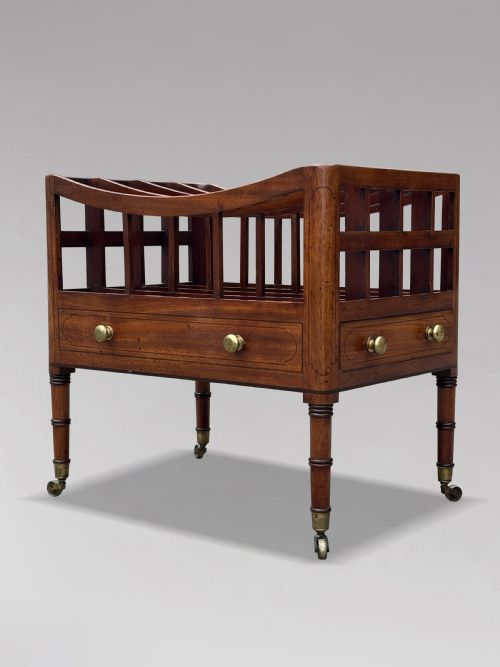
Cabinet makers utilised dense timbers such as mahogany and Cuban mahogany, selecting boards with rich grain patterns for visible surfaces. Rosewood and satinwood appear as contrasting inlay elements to define borders and panels.
Brass fittings, including castors and carrying handles, provide functional detail alongside turned wooden legs. Joinery relies on traditional methods to support the weight of divisions and loaded compartments without sagging.
Mahogany Furniture Magazine Rack Retail Price Guide 2026
Typical asking prices for mahogany furniture magazine rack among the pieces listed under this phrase on Sellingantiques today, from the lower quarter to the upper quarter. They describe what is for sale here now, not the wider market.
Listings feature pieces spanning from the 18th century through to the Edwardian period, utilising mahogany, Cuban mahogany, and rosewood.
What varies in quality
The refinement of the turning on the legs and the crispness of any inlay set the standard for each piece. Pieces from the Regency and George III periods often display superior proportion and hand-carved detailing compared to later variants.
Hardware originality, such as brass castors and handles, contributes significantly to the integrity of the object. The choice between standard mahogany and figured Cuban mahogany alters the visual weight and presence in a room.
Gillow’s
The Mahogany Furniture Magazine Rack Glossary
- Canterbury
- A low stand with divisions for holding sheet music, newspapers, or periodicals. It typically includes a single drawer below and rests on castors.
- Regency
- A style and period spanning the early nineteenth century characterised by classical restraint and neoclassical motifs. Pieces from this era often feature sabre legs or delicate turned supports.
- Cuban Mahogany
- A dense, dark timber prized for its rich grain and deep colour. Cabinet makers utilised this material for high-status furniture.
- Inlay
- A technique where contrasting woods like satinwood or ebony are inserted into recesses to form decorative patterns. This work highlights the borders and panels of finer tables.
- Folio Stand
- A large rack designed specifically for holding loose prints, maps, or large books. These pieces reflect the scholarly pursuits of grand houses.
Mahogany Furniture Magazine Rack: Frequently Asked Questions
What is a canterbury used for?
Originally designed to hold sheet music and folios near a piano or seating area, these stands kept documents tidy and upright. Today they serve identically for contemporary magazines and newspapers.
Their compartmentalised structure prevents papers from slumping while allowing easy selection by hand.
How do I date a mahogany canterbury?
Dating relies on observing leg styles, timber selection, and construction methods across different design periods. Regency examples often display neat turned legs with brass castors, while Edwardian pieces introduce lighter inlay work.
硬件 and secondary woods inside drawers also offer clues to the decade of manufacture.
Where should I place a magazine rack?
These low stands suit placement beside a sofa, armchair, or reading desk where periodicals accumulate. Because many are finished on all sides, they sit comfortably freestanding in a room rather than pressed against a wall.
Keep them away from direct heat sources to protect the polished mahogany finish.
What distinguishes Georgian pieces?
Georgian and George III items typically exhibit heavier timber weights, precise joinery, and restrained classical proportions. The mahogany used in these earlier examples often possesses a deep, warm patina developed over centuries.
Carved details remain sharp yet subtle, prioritising structural balance over excessive ornamentation.