
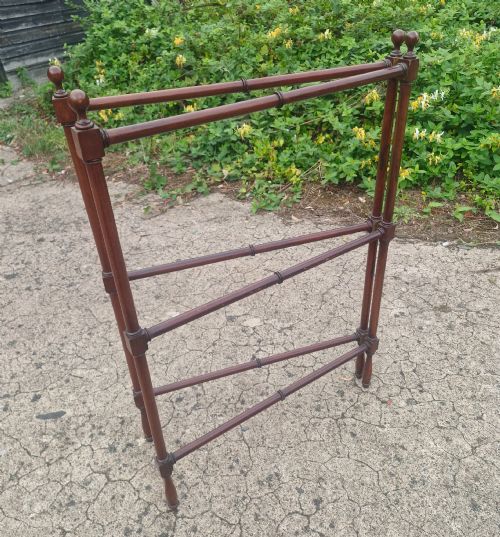
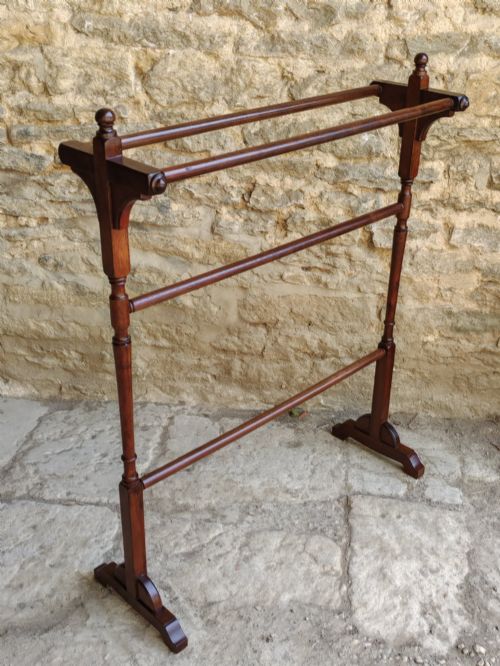
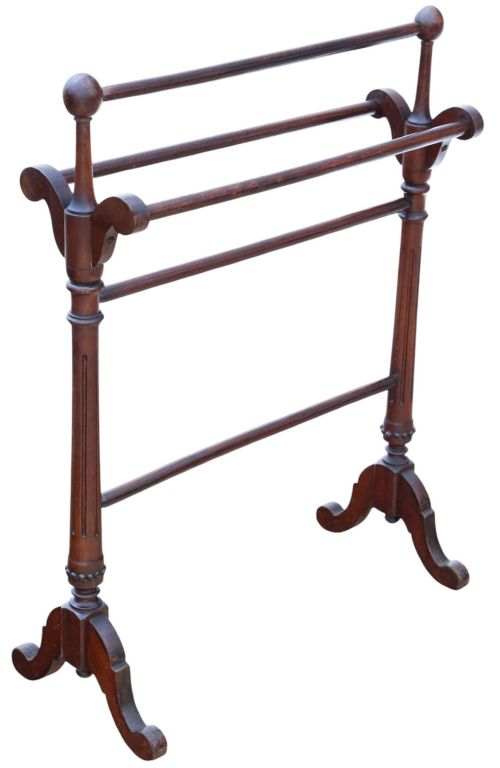
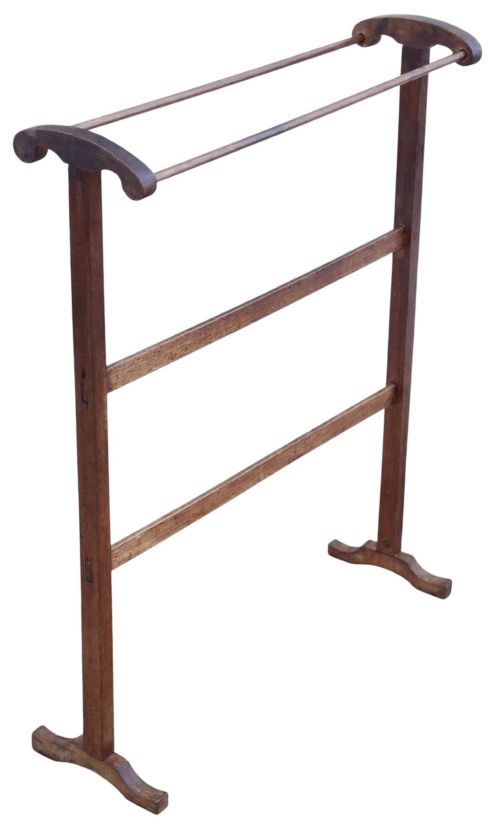
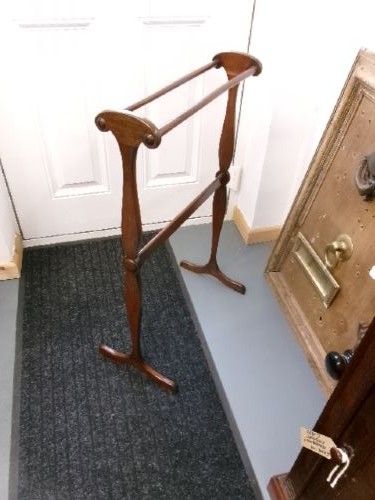
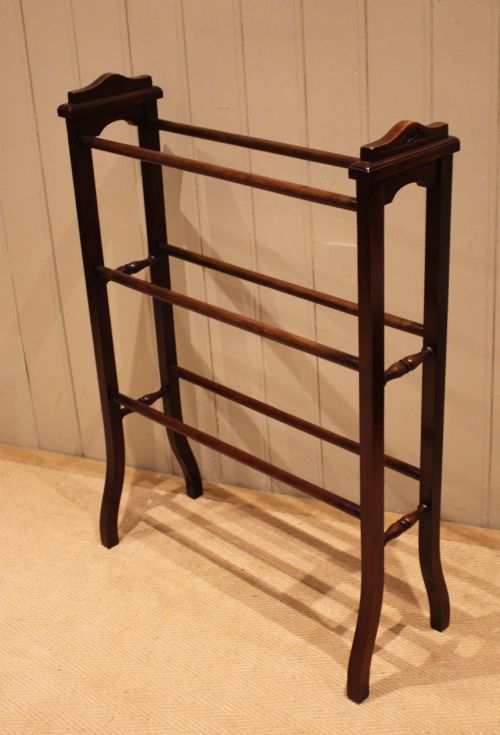
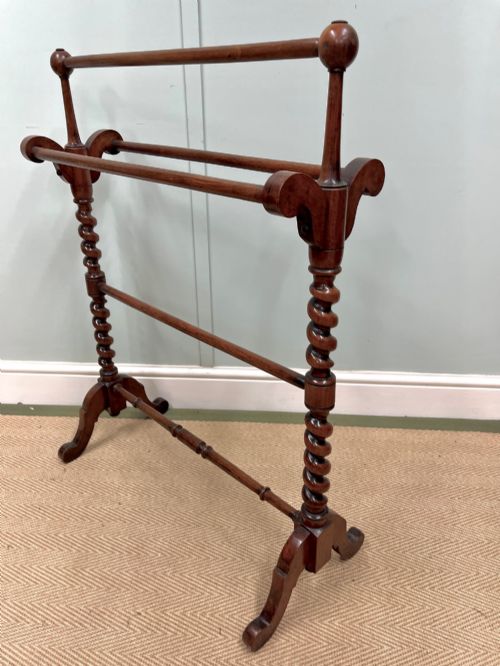
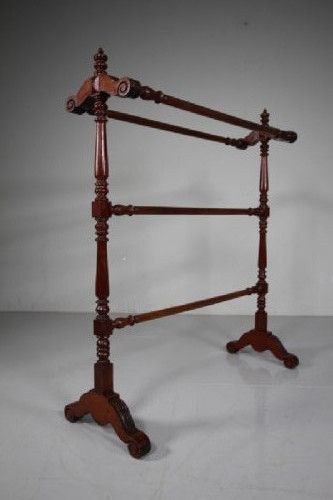

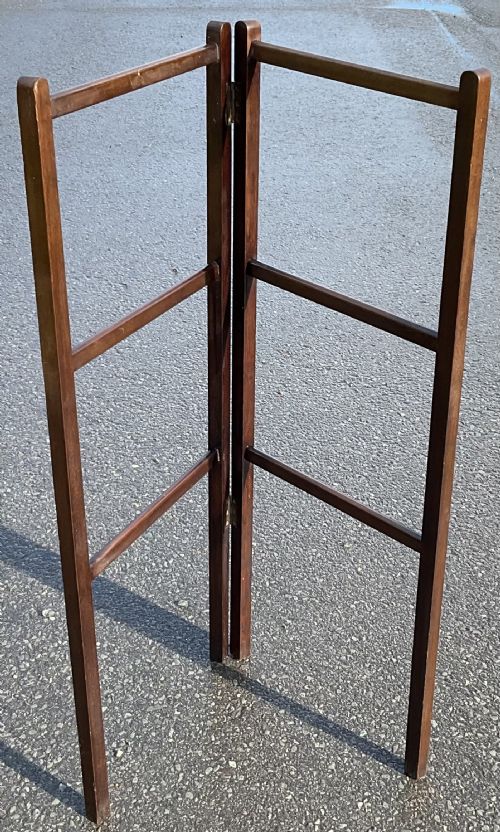


Mahogany Freestanding Towel Rail
These mahogany freestanding towel rail pieces combine utility with rich timber, offering a practical way to display linens whilst adding warmth to a room.
Mahogany Freestanding Towel Rail
A mahogany freestanding towel rail serves as both a practical household accessory and a handsome piece of furniture, designed to hold textiles without requiring wall fixings. When searching for a mahogany freestanding towel rail, buyers encounter items ranging from simple floor-standing frames to larger folding designs intended for bedrooms and bathrooms.
The pieces listed here span the Regency, Victorian, and Edwardian periods, stretching from eighteen-eighty to nineteen-ten. You will find standard single stands alongside larger William IV clothes rails and multi-bar configurations.
Edwardian and Victorian examples dominate the selection, often featuring folding mechanisms or multiple rails to accommodate various household linens. These items reflect the domestic habits of their eras, when designated furniture was used to air and store fabrics.
How they were made
Cabinet makers constructed these rails primarily from mahogany, occasionally incorporating secondary timbers such as oak and hardwood for structural strength. Selected pieces utilise boxwood for subtle inlay work, adding decorative contrast to the deep brown grain of the main timber.
Brass fittings appear on folding and cheval mechanisms, providing durable hinges and pivots that allow the frames to expand or collapse smoothly. Joinery techniques from the nineteenth and early twentieth centuries ensure the uprights and crossbars remain rigid under the weight of damp or heavy textiles.
Listings span the Regency, Victorian, and Edwardian eras, utilising mahogany alongside brass, oak, hardwood, and boxwood.
What varies in quality
The calibre of a mahogany freestanding towel rail rests on the selection of timber and the sophistication of its construction. Superior examples display carefully matched mahogany veneers or solid cuts with rich figuring, whereas simpler items utilise plain hardwood.
Proportion and stability separate standard utility pieces from finer productions. Generous proportions, such as oversized William IV frames or multi-bar Edwardian rails with inlaid details, demonstrate a higher standard of design and cabinet making.
The Mahogany Freestanding Towel Rail Glossary
- Cheval towel rail
- A pivoting frame design that swings on side supports, allowing the rails to angle outward. This configuration often appears in larger Victorian bedroom furnishings.
- Folding towel rail
- A multi-section piece connected by hinges, enabling the frame to fold flat for storage or adjust its span in use. These versions commonly date from the Edwardian period.
- Inlay
- A decorative technique where contrasting materials such as boxwood are inserted into recesses within the mahogany surface. This method creates geometric or floral patterns.
- William IV
- A stylistic period spanning the eighteen-thirties, characterised by robust proportions and classical influences. Pieces from this era often feature heavy, substantial timber framing.
Mahogany Freestanding Towel Rail: Frequently Asked Questions
How were these towel rails originally used?
These rails stood in bedrooms, dressing rooms, and nurseries to air, dry, and display household textiles and clothing. They provided a moveable place for linens before built-in radiators and heated towel rails became common.
Larger versions accommodated blankets and heavier garments, whilst smaller stands held hand towels and daily wash linens close to washstands.
Can I use an antique rail in a modern bathroom?
These pieces function well in contemporary bathrooms for holding dry towels, provided they are kept away from direct, constant moisture. Mahogany withstands humid environments reasonably well, though excess water should be wiped away promptly.
Many buyers place them in bedrooms or guest spaces where their decorative timber grain and traditional form can be fully appreciated.
How do I distinguish a Victorian rail from an Edwardian one?
Victorian examples generally exhibit darker, heavier timber and simpler, sturdier framing built for robust daily use. They often date from eighteen-eighty or earlier, showing solid proportions without excessive ornamentation.
Edwardian pieces, dating around nineteen-hundred to nineteen-ten, frequently introduce lighter construction, folding mechanisms, and decorative elements like boxwood inlay across multiple rails.
What does a folding cheval design mean?
A folding cheval design incorporates hinged sections that allow the vertical frames to pivot and angle outward from a central support. This construction offered greater hanging space while maintaining a compact footprint when closed.
Such mechanisms relied on sturdy brass pivots and hinges to support the movement of the wooden bars.