

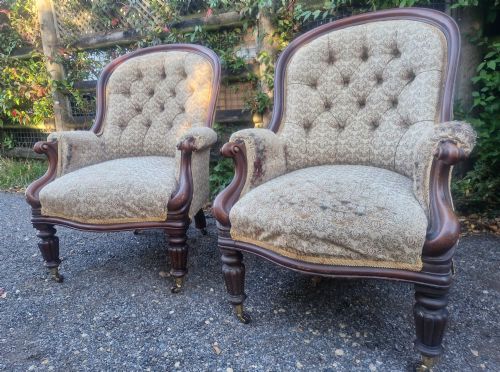
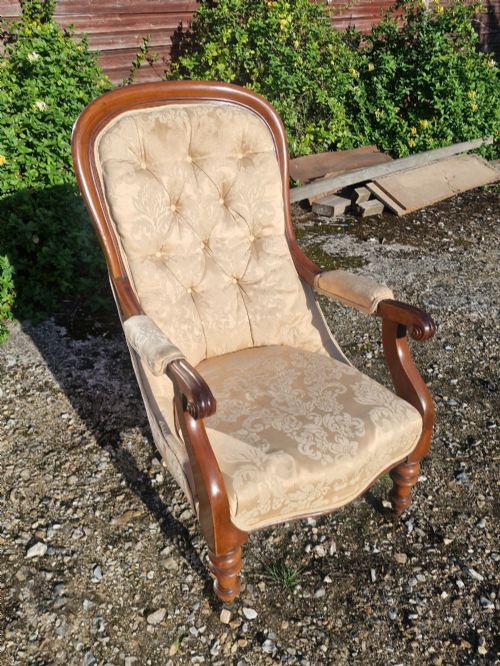
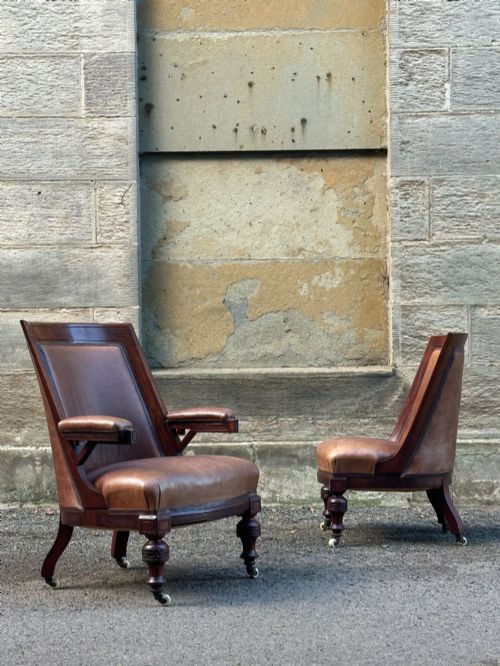
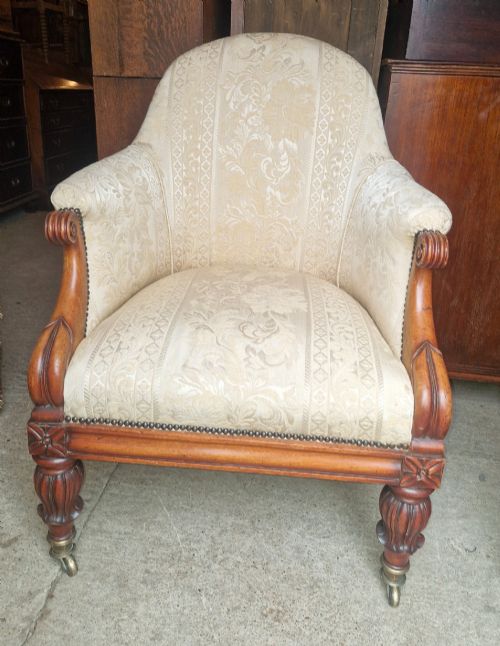
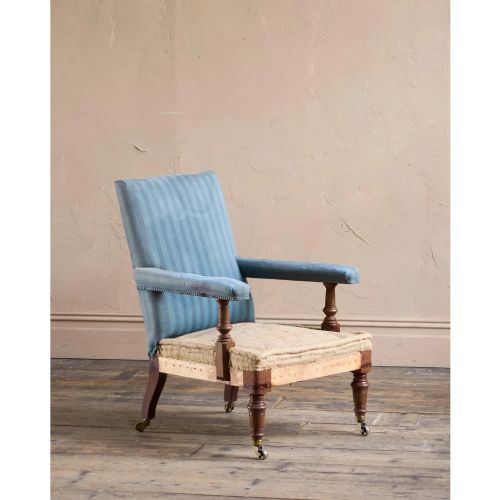

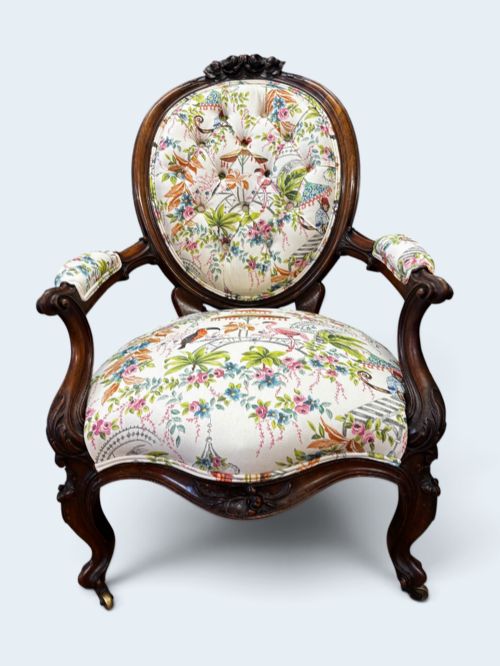
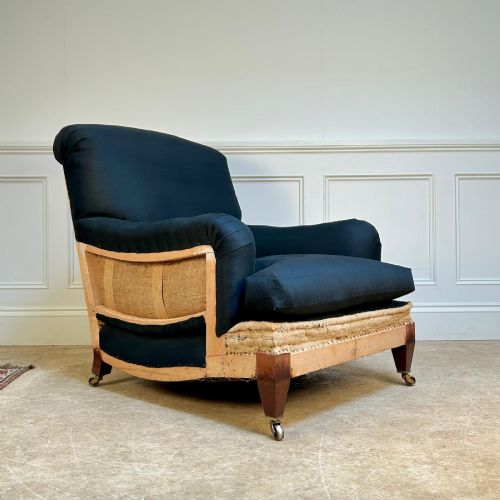
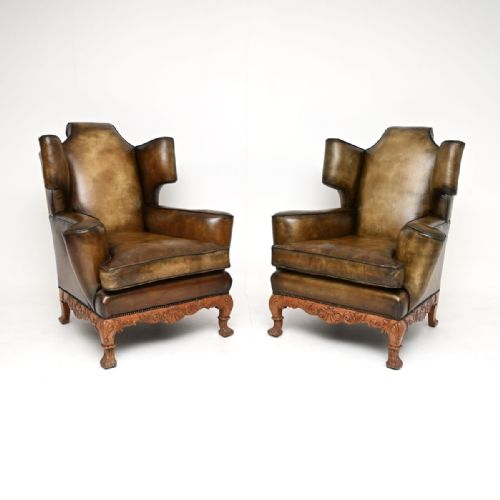
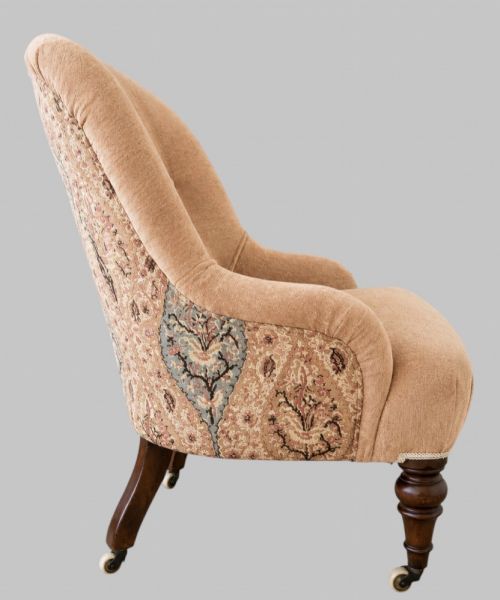
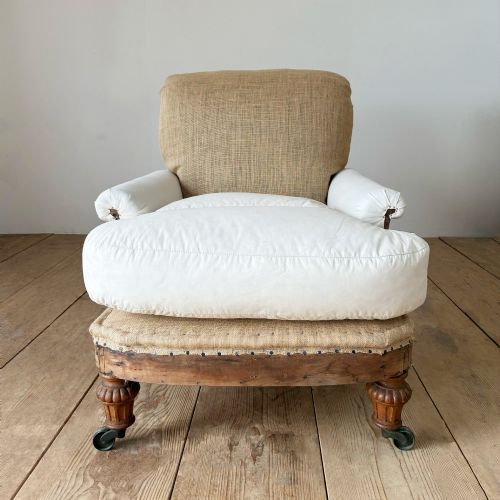

Mahogany Framing Armchair
A mahogany framing armchair brings solid timber structure and deep upholstery together for a traditional seat.
Mahogany Framing Armchair
A mahogany framing armchair is a substantial seat built around a visible timber skeleton, spanning periods from the Georgian era through the Victorian years and into the Edwardian period. The most common examples on this page are Victorian library armchairs and Regency forms, which place structural timber on the outside while supporting the sitter with soft padding.
Makers utilised dense tropical hardwood for the primary structure, shaping open arms, high backs, and low fireside profiles. Forms range from library chairs and desk chairs to nursing chairs and tub backs, reflecting how different domestic spaces required specific seating postures over the centuries.
The underlying timber frame dictates the silhouette, whether curved in the manner of Greek Revival designs or straight-legged following Georgian traditions. Buyers encounter these chairs in pairs or as single statements, often retaining historic show-frames beneath newer layers of textile.
How they were made
Cabinetmakers constructed the main skeleton from solid mahogany, joining components with traditional joinery before applying decorative carving or polished finishes to the exposed woodwork. This dense timber provided the structural rigidity needed to support wide armrests and raked backrests without warping over decades of daily use.
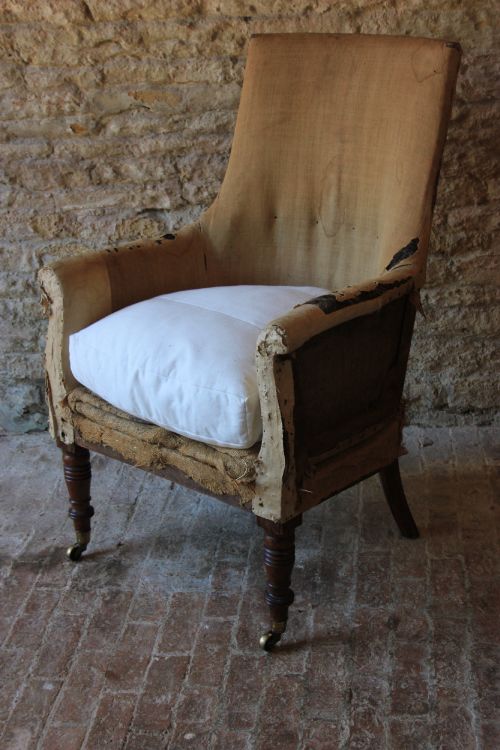
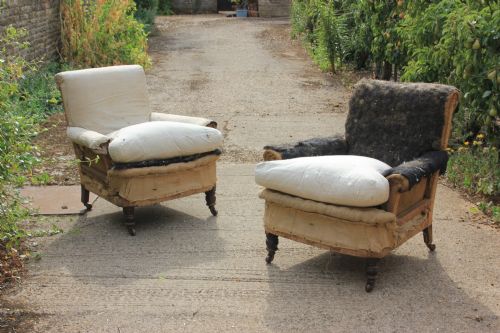
Interior upholstery relied on natural stuffings held in place by hessian webbing and secured with iron or steel springs in later periods. Craftsmen then layered fabrics such as velvet, leather, calico, or heavy upholstery textiles over the core, finishing the edges with brass tacks or tight stitching.
Mahogany Framing Armchair Retail Price Guide 2026
Typical asking prices for mahogany framing armchair among the pieces listed under this phrase on Sellingantiques today, from the lower quarter to the upper quarter. They describe what is for sale here now, not the wider market.
Listings feature mahogany framing armchairs spanning the Georgian, Regency, Victorian, and Edwardian periods, utilising leather, velvet, and hessian.
What varies in quality
The degree of refinement in the timber chassis separates standard production pieces from exceptional workshop outputs. Superior examples display crisp hand-carving along the show-frame, tight joinery at the stress points, and carefully selected mahogany grain that has retained a deep, warm patina.
The integrity of the internal stuffing and the weight of the covering materials also determine the grade of the piece. Chairs built with thick leather, heavy velvet, or traditional buttoning over robust internal springing demonstrate a higher standard of original craftsmanship than lighter, more utilitarian variants.
Morison and Co·Howard And Sons·Gillows
The Mahogany Framing Armchair Glossary
- Show-frame
- The exposed timber structure of an upholstered chair that remains visible around the padded sections. It is typically carved from mahogany and defines the exterior silhouette of the seat.
- Gainsborough chair
- A wide, open-armed library armchair with a padded back and seat, standing on short legs. This eighteenth-century form continued to be revived in later periods.
- Sabre leg
- A concave, outwardly curving leg shape tapering toward the foot, commonly found on Regency furniture. This profile added stability and a sense of neoclassical movement.
- Tub back
- A semicircular chair design where the back and arms form a continuous, enclosed curve. It provides a snug, supportive posture for the sitter.
Mahogany Framing Armchair: Frequently Asked Questions
What is a Gainsborough chair?
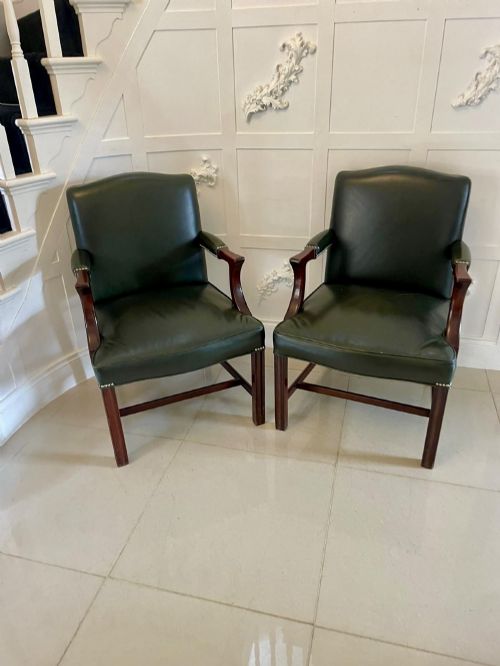
A Gainsborough chair is a wide, open-armed seat with a square padded back and upholstered armrests designed for writing desks or libraries. The wooden frame is predominantly exposed on the arms and legs.
Original eighteenth-century forms inspired numerous nineteenth- and twentieth-century revivals using similar mahogany framing and leather coverings.
Where should I place a mahogany framing armchair?
These armchairs suit studies, libraries, and drawing rooms where their dark timber frames and textured upholstery can anchor the spatial layout. Pairing them with a reading lamp or low table highlights the exposed woodwork.
Because the rear and sides feature finished mahogany, they can also sit away from walls rather than being pushed strictly into corners.
How do I care for the mahogany frame?
The exposed timber frame requires occasional dusting with a dry cloth and sparing application of traditional wax polish to nourish the grain. Avoiding direct sunlight prevents the mahogany from bleaching and keeps the polish stable.
Leather and fabric upholstery demand separate maintenance according to their specific textile properties, keeping moisture away from the internal webbing.