
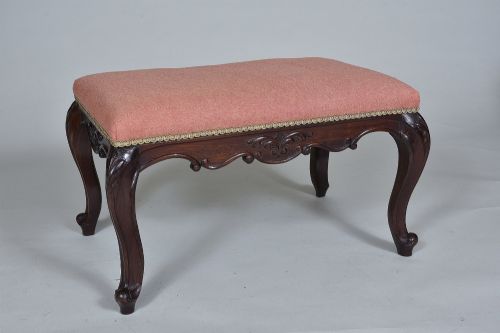
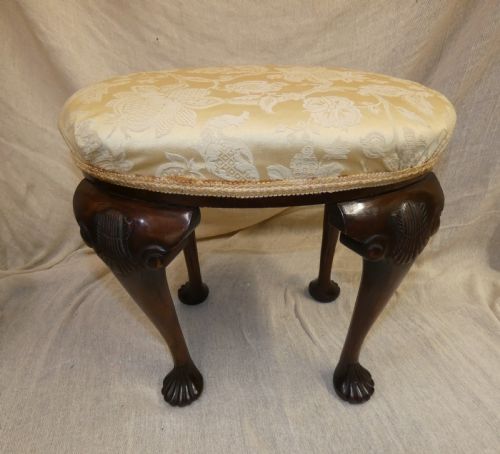
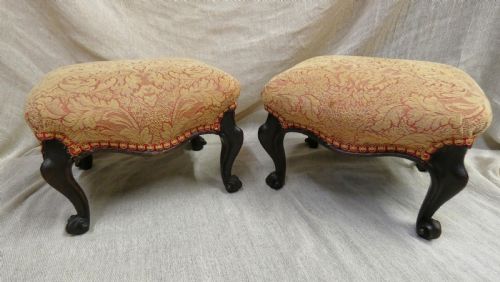
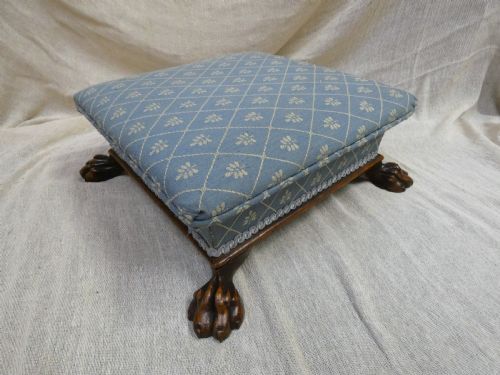
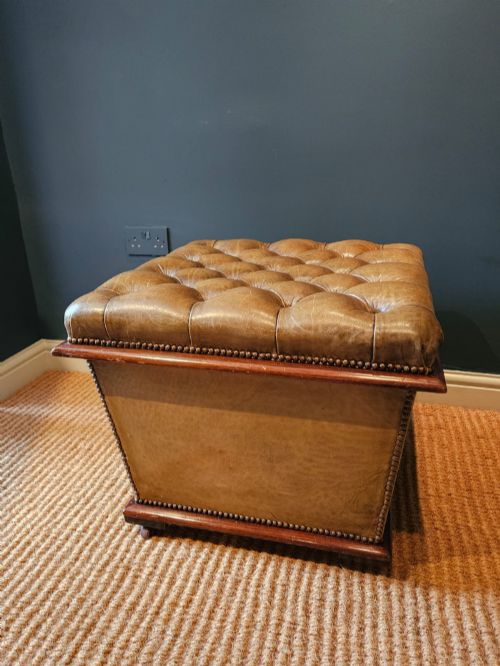


Mahogany Footrest Stool
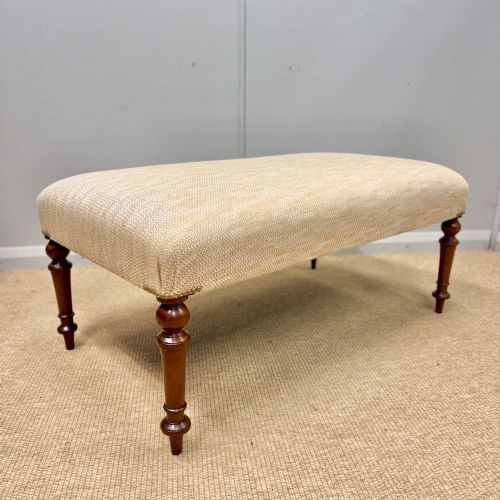
These mahogany footrest stool examples combine sturdy timber frames with traditional upholstery to support tired legs by the fire.
Mahogany Footrest Stool
A mahogany footrest stool serves as a low platform for resting feet, appearing in forms ranging from compact squabs to long ottomans. When you search for a mahogany footrest stool, you find items designed for fireside comfort and dressing room use across multiple centuries.
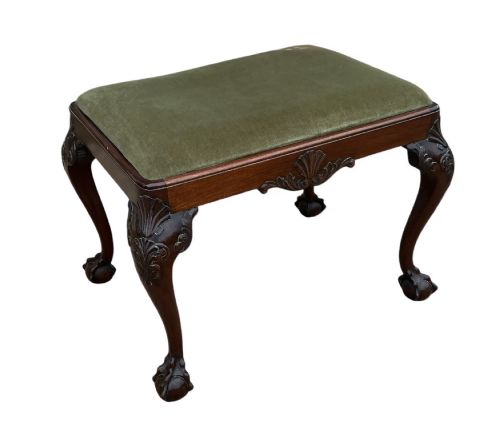
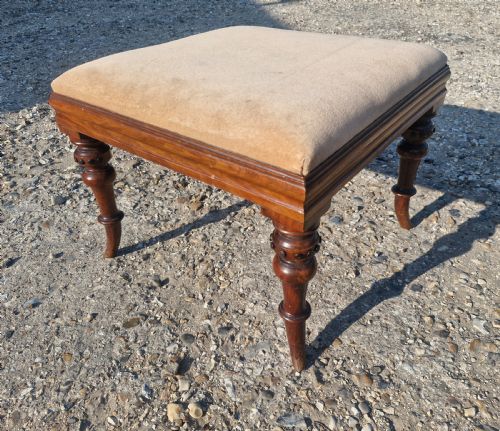
Victorian and nineteenth century pieces dominate the selection, often featuring upholstered tops paired with dark timber frames. Examples span simple square frames to elaborate designs with carved details, cabriole legs, or brass castors.
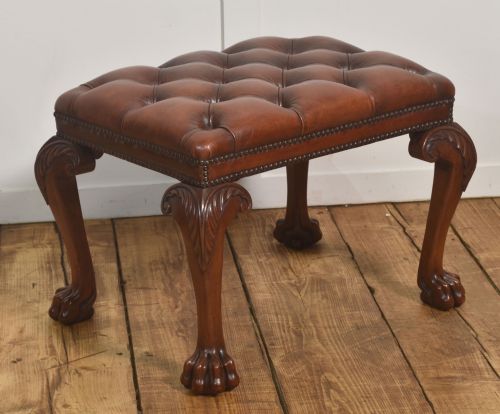
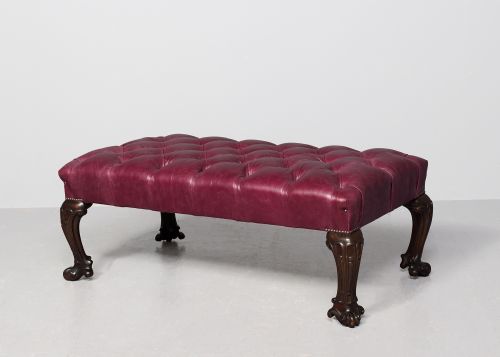
Revival styles emulate earlier eras, including Georgian and Chippendale aesthetics alongside Edwardian and Regency interpretations. These pieces function equally well as low seats or static rests before armchairs.
Materials and construction methods
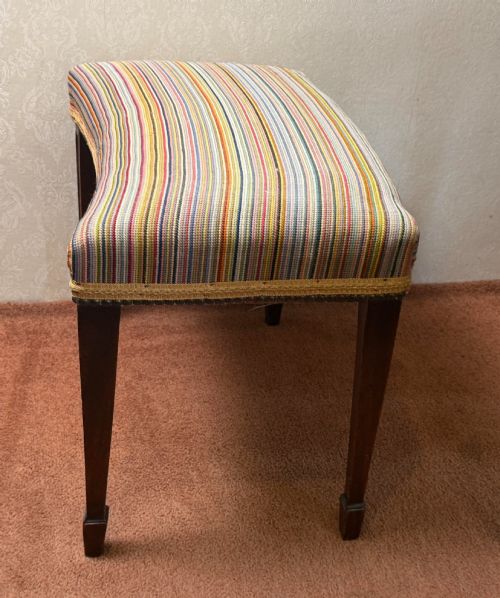
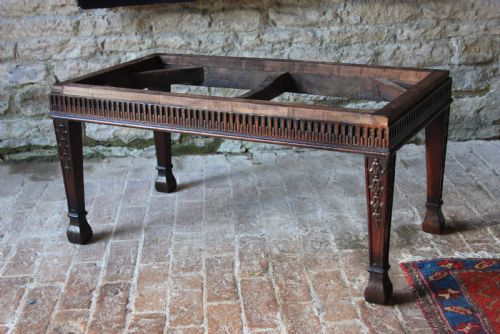
Makers built the structural frames primarily from dense mahogany, occasionally shaping the wood with square tapering legs, cabriole profiles, or decorative carving. Brass hardware appears frequently in the form of castors, feet, or structural accents.
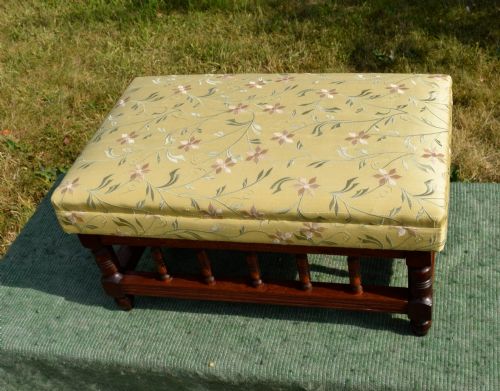
Upholstered surfaces utilise a variety of coverings including leather, velvet, needlepoint, tapestry, kilim, and tweed over padded interiors. Some specialised variants incorporate elements like woven cane bergere panels or metamorphic mechanisms for adjustable reclining angles.
Listings feature mahogany footrest stool examples spanning the Georgian, Regency, Victorian, and Edwardian periods.
Assessing quality in timber and upholstery
Quality reveals itself in the crispness of the timber carving and the weight of the mahogany frame. Superior examples demonstrate thoughtful proportions, whether in the sweep of a scroll top or the precise turn of a leg.
The integrity of the upholstery foundation and the selection of covering textiles, from hand-stitched needlepoint to supple leather, reflect the original tier of production. Integration of quality hardware like original brass castors elevates the piece.
Howard and Sons·Mathew Gregson·Thonet
The Mahogany Footrest Stool Glossary
- Cabriole leg
- A furniture leg that curves outward at the knee and tapers inward to an ankle, common on eighteenth and nineteenth-century seating.
- Bergere
- A traditional enclosed upholstered armchair or stool featuring woven cane panels set within a wooden frame.
- Metamorphic
- Describing furniture designed to transform or adjust its form for alternative functions, such as an extending gout stool.
- Needlepoint
- Hand-stitched canvas embroidery utilising wool or silk yarn, frequently used to cover historical footstools.
- Kilim
- A flatwoven textile originating from the Middle East or Eastern Europe, often repurposed for antique upholstery.
Mahogany Footrest Stool: Frequently Asked Questions
What is a gout stool?
A gout stool is an adjustable rest designed to elevate and support a foot afflicted with joint pain. These pieces often feature a mechanical angle adjustment to maintain a comfortable elevation.
They appear in Edwardian and nineteenth-century forms, sometimes incorporating specialised woven panels or plush padding to relieve pressure.
How do I date an antique stool?
Dating relies on examining the timber grain, construction joints, and stylistic motifs associated with periods like the Regency or Victorian eras. Secondary woods and fastener types provide further chronological clues.
Upholstery materials can also indicate age, though most surviving pieces have undergone re-covering over the decades.
Are these stools sturdy enough for daily use?
Solid mahogany frames provide substantial durability, making these stools well-suited for regular placement by a fireplace or armchair. Traditional joinery ensures the base structures withstand everyday weight loads.
Buyers should inspect the internal webbing and padding condition if intending heavy use, as vintage upholstery may require reinforcement.
What is an ottoman stool?
An ottoman stool is a fully upholstered piece that functions simultaneously as a seat, a footrest, and occasionally a storage compartment. Victorian examples often include internal boxes accessed by lifting the padded lid.
They provide a larger surface area than standard footrests and sit low to the floor on castors or short wooden legs.