

Mahogany Fitted Desk
A mahogany fitted desk brings together rich timber and clever internal compartments for writing and storage.
Mahogany Fitted Desk
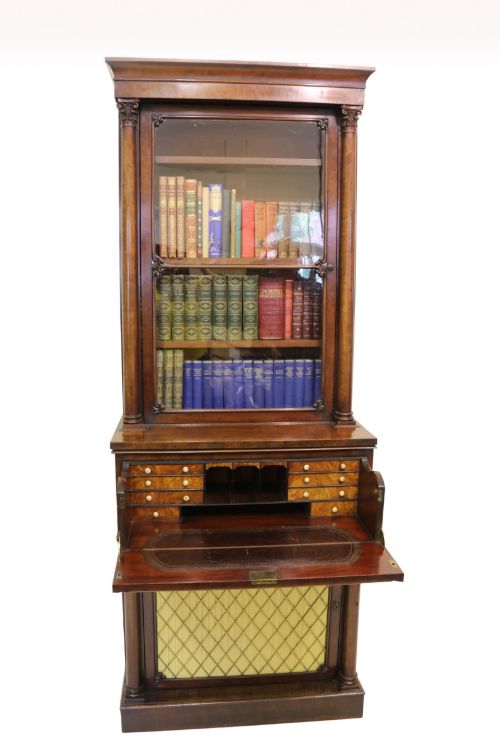
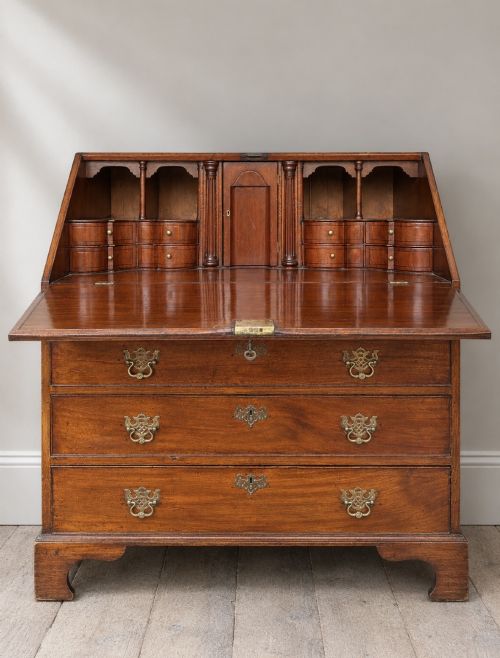
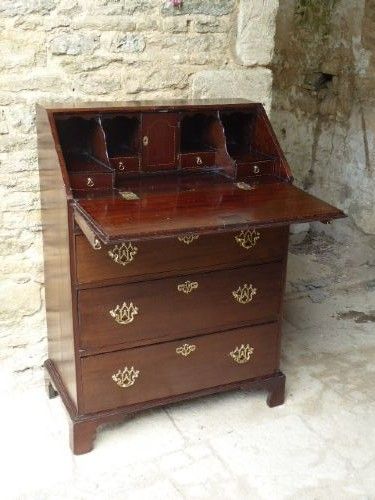
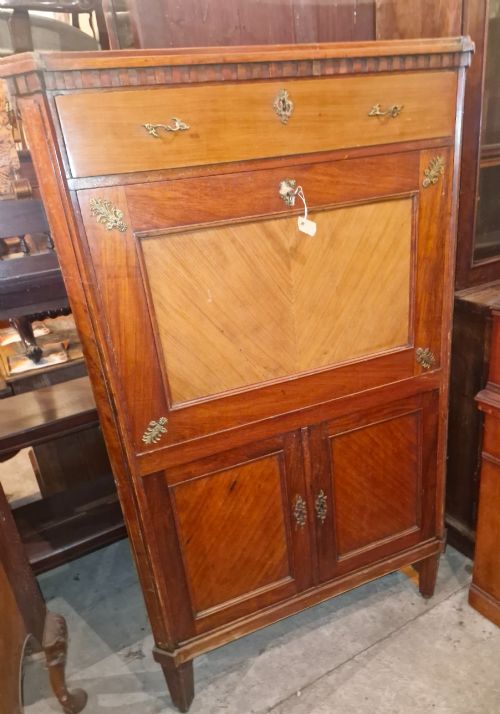
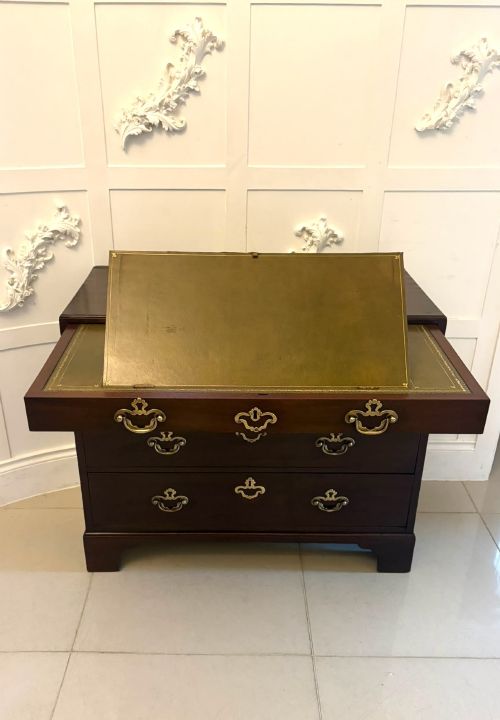
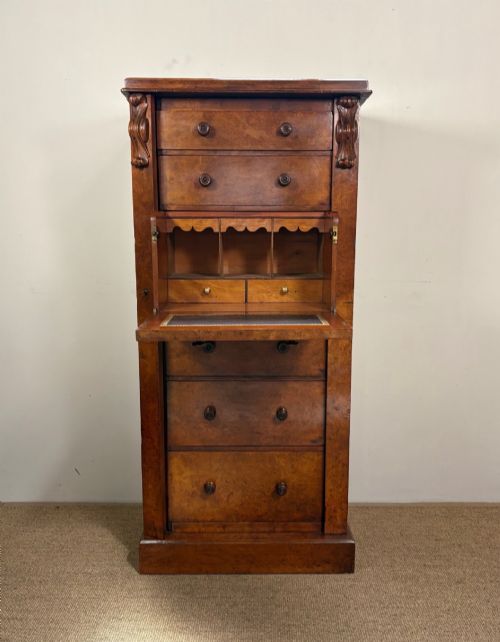
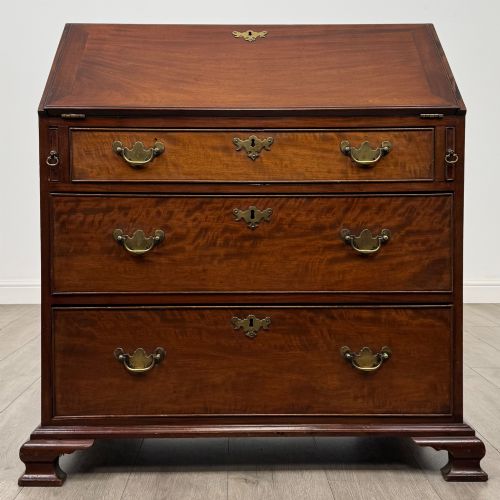
A mahogany fitted desk comprises a variety of writing furniture built with internal compartments, drawers, and pigeonholes designed for correspondence and paperwork. The selection spans distinct eras from the eighteenth century through the Edwardian period, encompassing styles such as Georgian, Regency, and Victorian.
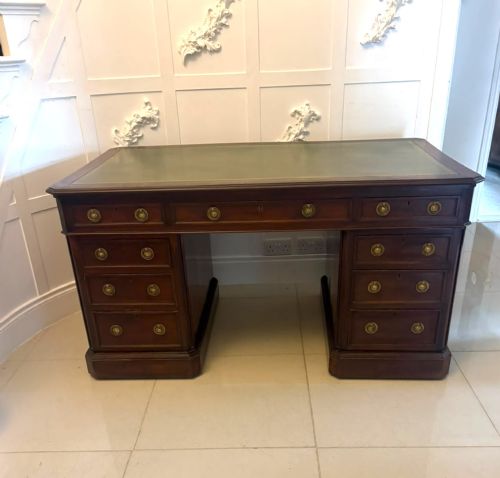
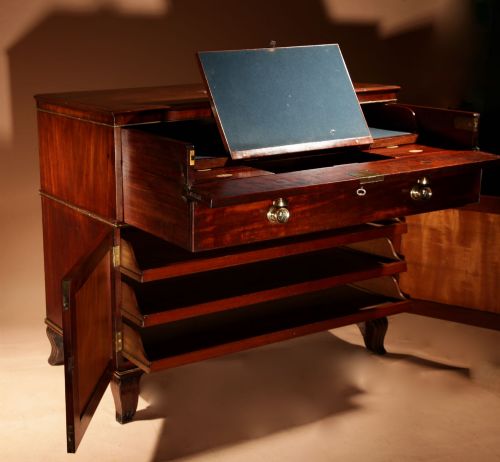
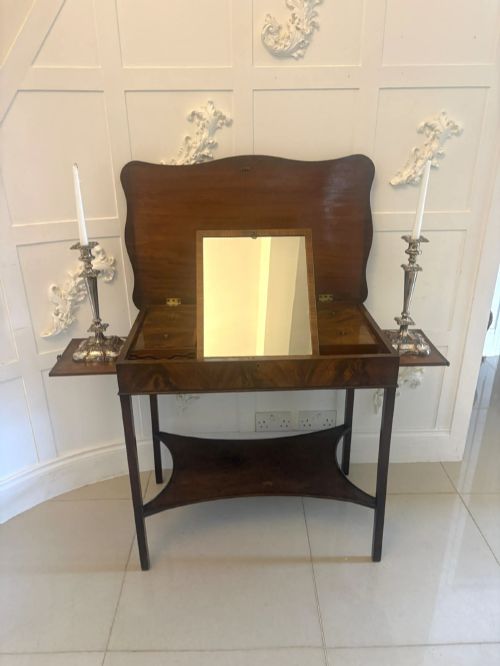
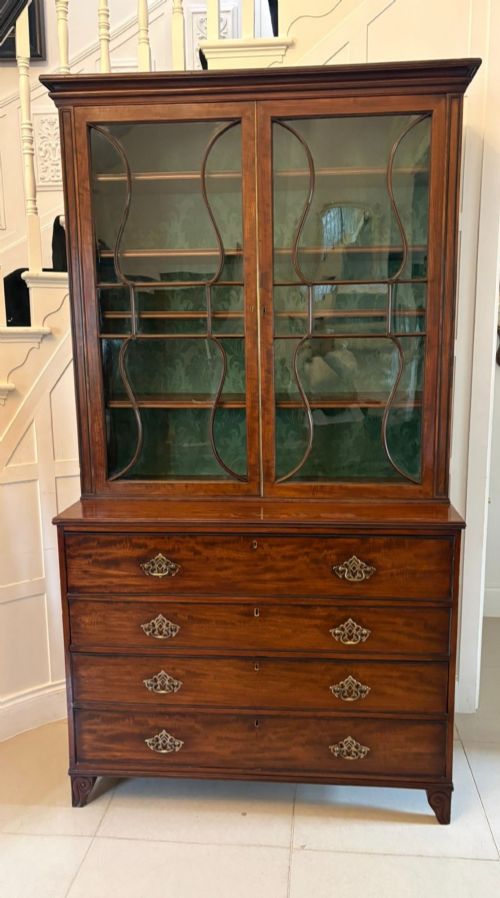
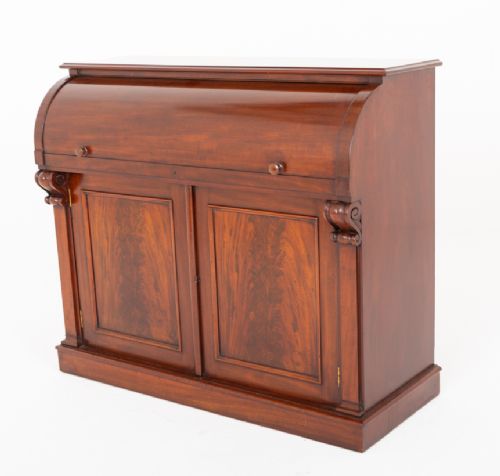
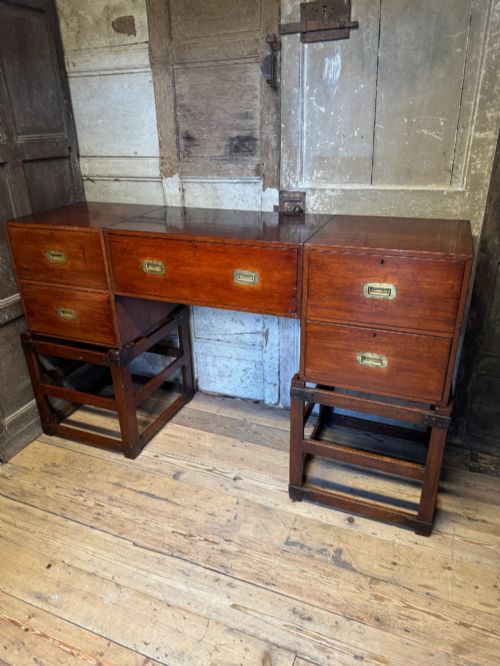
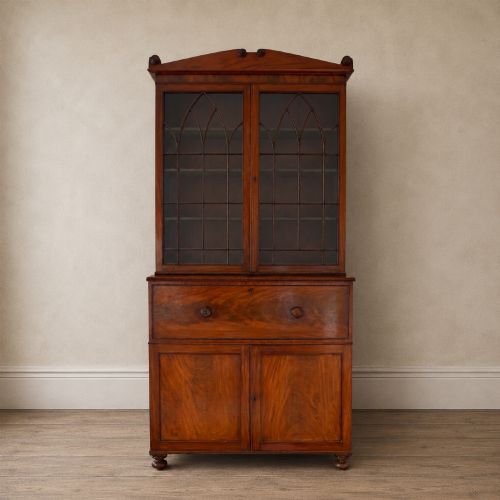
Buyers will encounter multiple forms ranging from freestanding kneehole pedestals and cylinder top desks to bureau bookcases, secretaire chests, and smaller portable writing slopes. Many incorporate secondary timbers and specific stylistic details such as brass handles, bracket feet, or inlaid satinwood.
The evidence shows examples created for different settings, including domestic writing rooms and portable campaign use. Pieces date from the mid-eighteenth century up to the early twentieth century, showing shifts in domestic workspace design over those periods.
What varies in quality
The quality of a piece is determined by the selection of the timber, particularly the grain figuration on the primary drawer fronts and fall fronts, along with the precision of the cabinetwork in the hidden compartments. Superior examples display seamless dovetailing, matching grain patterns across multiple drawers, and well-integrated internal mechanisms.
Fittings also dictate the standing of an item, distinguishing between standard commercial production and pieces commissioned from prominent workshops. The weight and finish of the brass hardware, the condition of the leather or baize writing surface, and the complexity of the interior stationery arrangement all contribute to the overall execution.
Listings feature mahogany, walnut, oak, and satinwood alongside brass hardware and leather inserts across pieces spanning the Georgian, Regency, and Victorian eras.
Gillows of Lancaster·Tudor and Burrey
The Mahogany Fitted Desk Glossary
- Secretaire
- A piece of furniture featuring a pull-down or sliding front that conceals a fitted writing interior with drawers and pigeonholes. This form allows a chest of drawers or bookcase to double as a writing desk.
- Kneehole desk
- A freestanding desk featuring a central recess for the user's legs, flanked by pedestals of stacked drawers. They are often finished on all sides to allow placement in the centre of a room.
- Writing slope
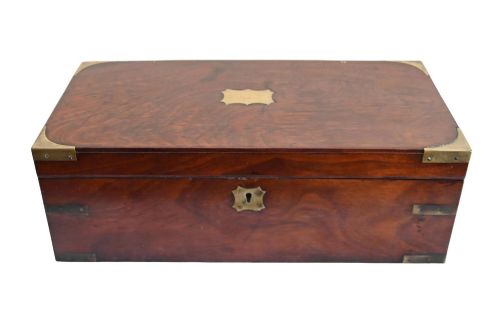
- A portable box with a hinged sloping lid that opens to reveal a slanted writing surface and internal compartments for ink and paper. Victorian and Georgian versions frequently include secret drawers.
- Bracket feet
- A simple form of foot used on case furniture, shaped like a bracket and sweeping outward towards the corners. They are commonly found on eighteenth-century chests and bureaux.
- Figured mahogany
- Timber cut to highlight natural patterns in the wood grain, such as flame or fiddleback effects. Cabinetmakers reserved these decorative veneers for the most prominent exterior surfaces.
Mahogany Fitted Desk: Frequently Asked Questions
What is a secretaire chest?
A secretaire chest appears as a standard chest of drawers from the outside, but the top drawer pulls down or drops forward to reveal a fitted writing surface and small internal compartments.
This clever dual-purpose design provided writing storage without taking up the floor space of a full-sized bureau or partner desk.
Where were writing slopes used?
Writing slopes were portable boxes designed for correspondence while travelling or moving between rooms in large houses. Their internal compartments stored inkwells, pens, and paper securely.
Many examples feature brass bindings and side handles to withstand transport, alongside secret compartments triggered by hidden wooden catches.
What is a partner desk?
A partner desk is a large pedestal desk built with cupboards and drawers accessible from both sides, allowing two people to work opposite each other. Edwardian and Victorian examples often feature leather-lined writing surfaces.
These substantial pieces were traditionally used in libraries, studies, and administrative offices.