
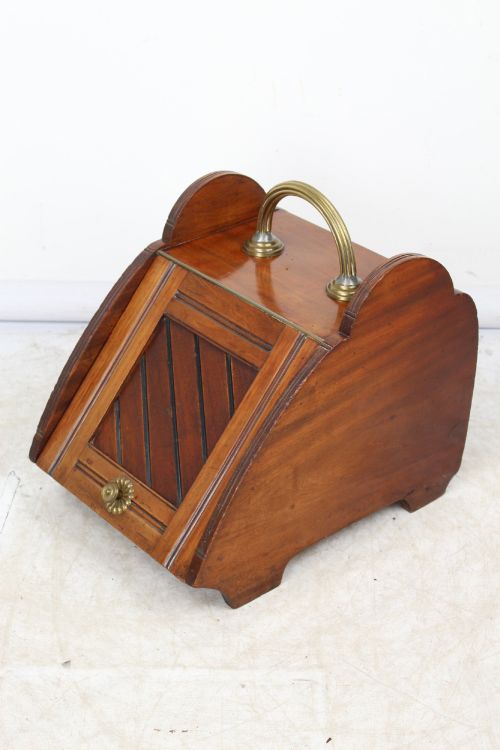
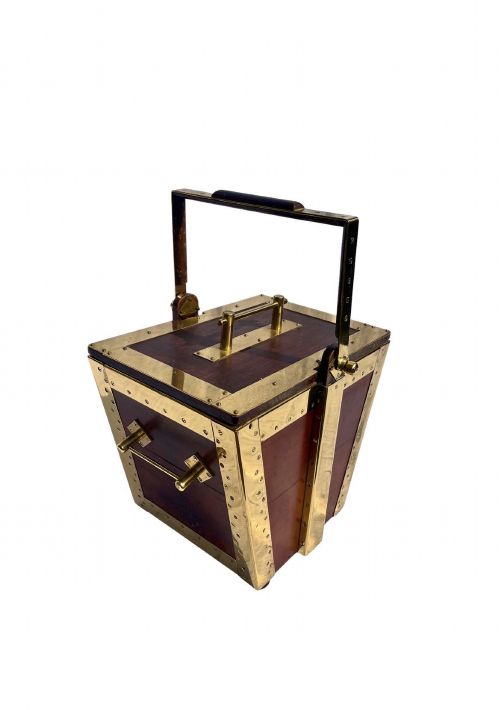


Mahogany Fireside Scuttle
These mahogany fireside scuttles are practical hearth containers designed to store fuel near the fire with style.
Mahogany Fireside Scuttle
A mahogany fireside scuttle is a functional wooden container built to hold coal, peat, or logs beside an open fireplace. Buyers searching this phrase will encounter various historical forms designed for hearth use.
The selections available here span multiple eras, most frequently featuring Victorian and Edwardian examples alongside Georgian pieces. Forms range from traditional lidded boxes and purdoniums to handled buckets and peat bins.
Origin details in the evidence show English and Irish craftsmanship, with occasional continental European pieces like Dutch buckets. Each object combines sturdy utility with the polished appearance characteristic of period domestic furniture.
What varies in quality
Quality in a mahogany fireside scuttle rests upon the grade of the timber used and the crispness of any carved or inlaid ornamentation. Superior pieces display carefully matched wood grain and robust structural joinery designed to bear heavy weights.
The presence of original hardware, such as brass liners and matching shovels, distinguishes better examples from those lacking original components. Refined proportions and restrained decorative mounts elevate certain items above standard utilitarian boxes.
Some Dutch buckets carried foot-warming coals rather than hearth fuel, keeping toes toasted in chilly parlours.
The Mahogany Fireside Scuttle Glossary
- Purdonium
- A specialised coal cabinet featuring a sloping drop-front door and an interior metal liner for holding fuel. These freestanding units often incorporate a compartment on top for a fireside shovel.
- Peat bucket
- A deep stave-built wooden container traditionally used for holding dried peat turf for fuel. They typically feature vertical wooden staves bound by metal hoops and sturdy carrying handles.
- Ormolu
- Gilded bronze ornamentation applied to furniture and decorative objects for enrichment. It provides a bright metallic contrast against dark mahogany surfaces.
- Boxwood inlay
- Contrasting light-coloured wood inserted into shallow recesses in the mahogany surface to form geometric or floral patterns. This decorative technique highlights Edwardian and Georgian cabinetwork.
- Teestoof
- A traditional Dutch foot warmer or small fuel container often constructed with wooden staves and metal liners. These compact vessels served to warm rooms or individual occupants.
Mahogany Fireside Scuttle: Frequently Asked Questions
What is a purdonium?
A purdonium is a specific type of coal container designed with a sloping front door that opens to reveal a removable metal liner. This layout made it easier to scoop fuel without lifting heavy lids.
Such cabinets often included brackets to hold a matching shovel neatly out of sight.
How were these scuttles used?
They sat beside the hearth to keep coal, logs, or peat close at hand for tending the fire. The enclosed design kept fuel dust contained while maintaining a tidy appearance in the room.
Metal liners prevented damp fuel from damaging the surrounding mahogany structure.
Are original liners common?
Original metal liners survive in a portion of surviving examples, though many have been replaced over decades of use. Finding a piece retaining its original liner and matching shovel adds historical completeness.
Replacements do not diminish the decorative appeal of the outer wooden cabinet for daily display.
How do I care for mahogany?
Mahogany benefits from occasional dusting with a soft cloth and minimal exposure to direct heat sources like open fires. Avoiding excessive moisture prevents the timber and interior linings from warping over time.
Applying gentle beeswax polish helps maintain the natural lustre of the polished wood.