
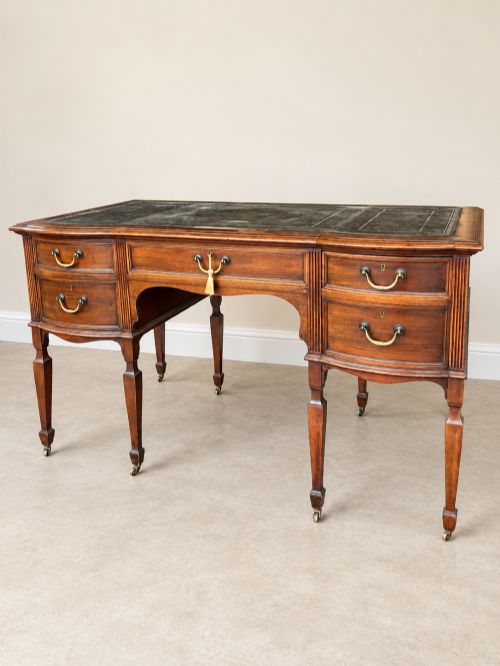
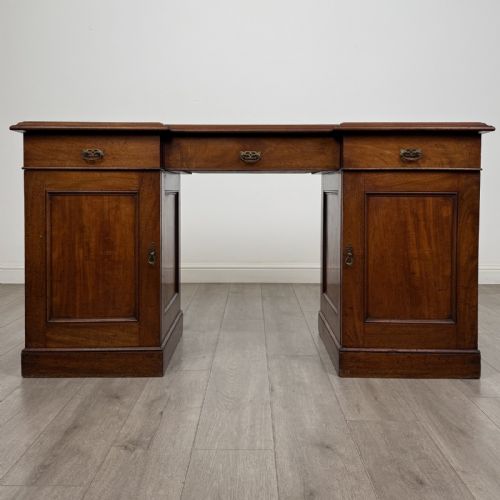
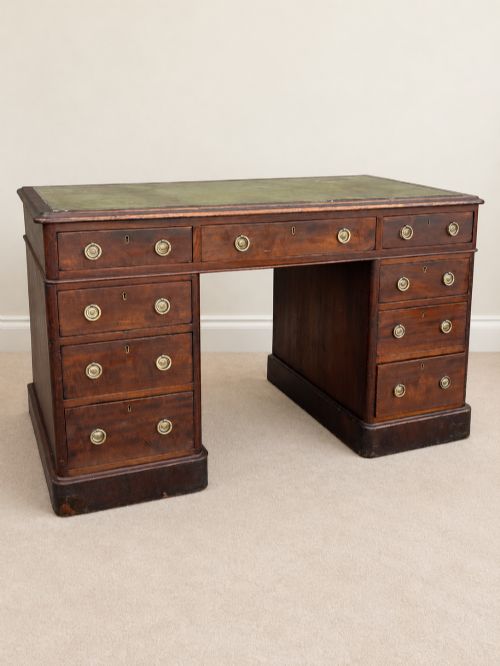
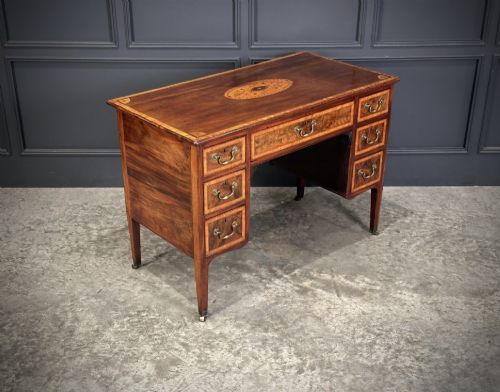
Mahogany Executive Office Desk
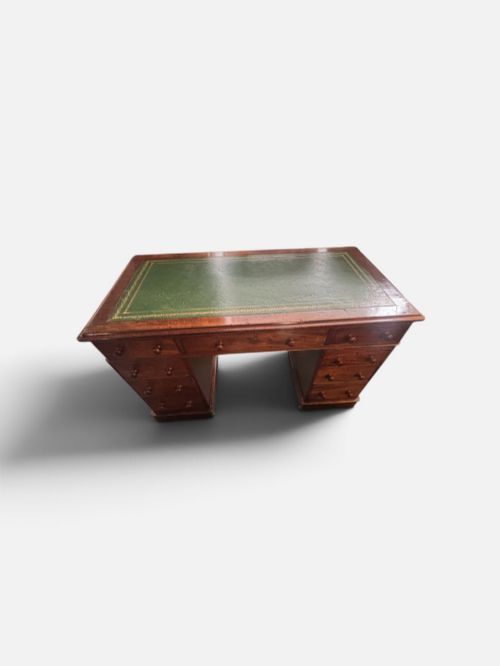
A mahogany executive office desk brings heavy timber and leather to the workspace, offering deep pedestals and broad writing surfaces for daily administrative work.
Mahogany Executive Office Desk
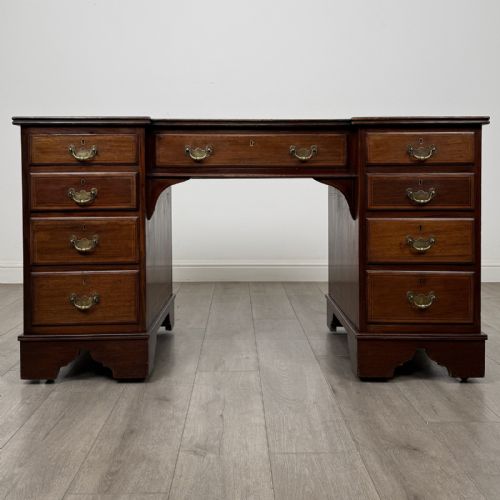
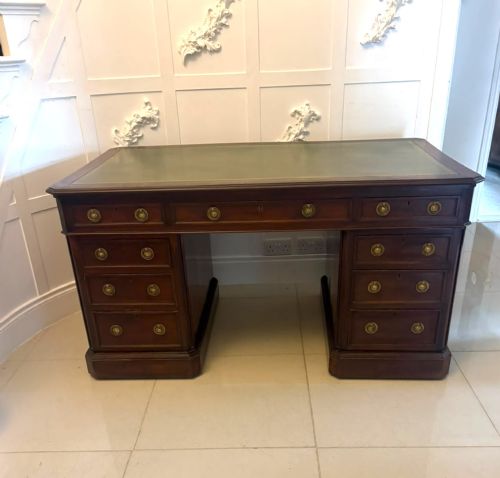
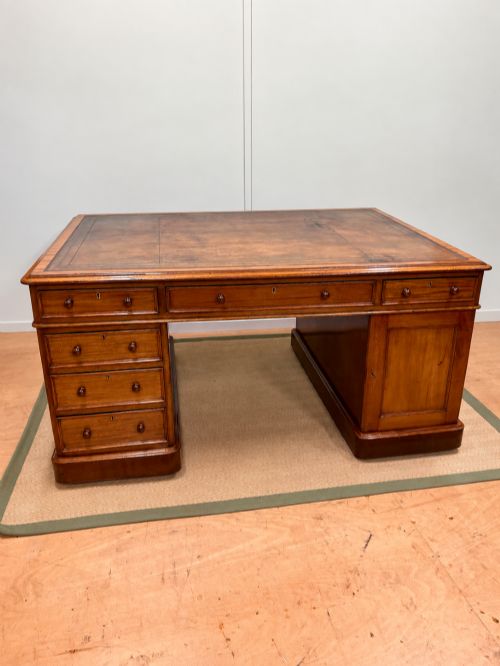
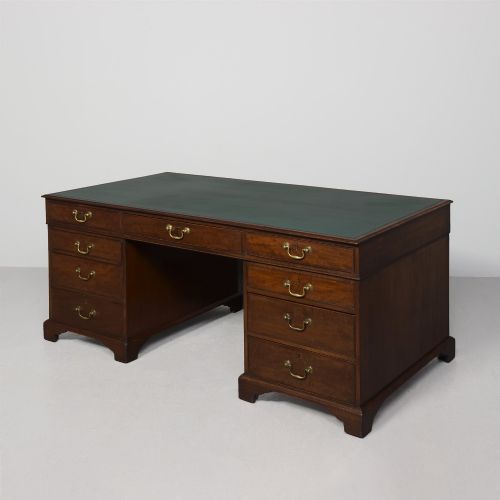
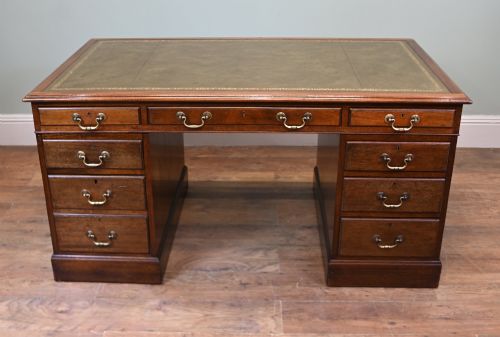
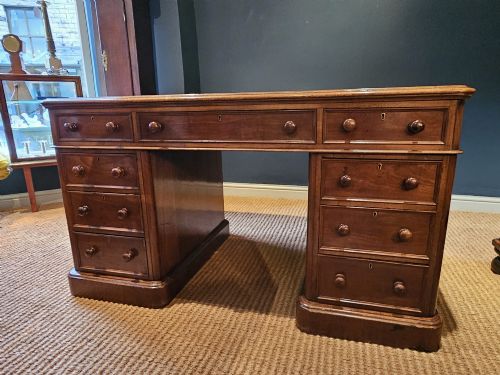
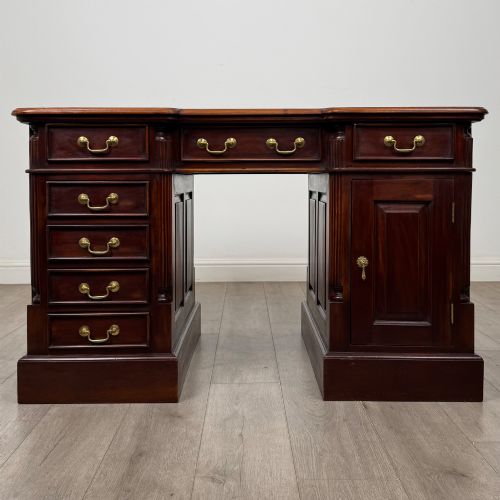
A mahogany executive office desk is a substantial working piece designed for administrative tasks, primarily appearing in pedestal and partners formats across this selection. These large items provide extensive drawer storage beneath twin pedestals, supporting formal office layouts and double-sided use.
The pieces on this page span the Victorian and Edwardian eras, alongside earlier Georgian and Regency examples and later revival styles. Buyers encounter roll-top, cylinder, and kneehole variants built for serious paperwork and book storage.
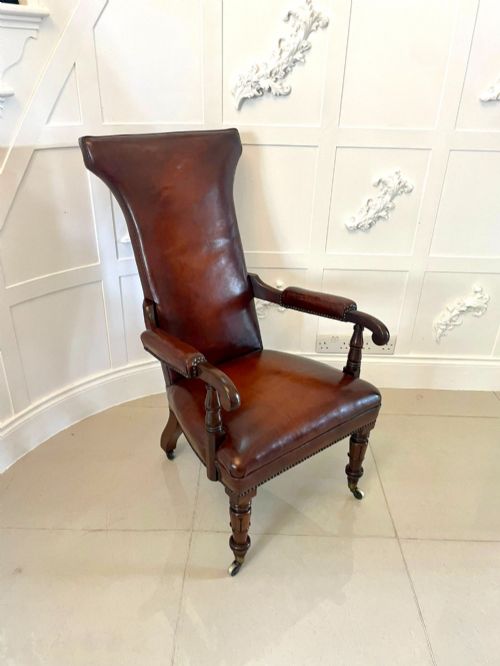
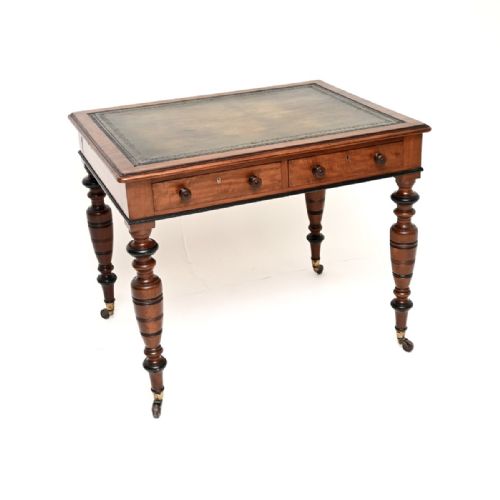
Makers and cabinet-makers of the nineteenth century shaped these forms using dense tropical hardwoods, often mounting them on castors for mobility within large rooms. The survival of fitted stationery drawers and pull-out writing slides indicates how these desks functioned in period studies and offices.
Construction and materials
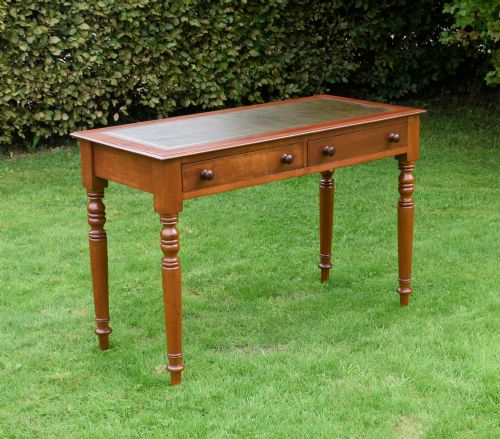
Makers constructed these desks predominantly from solid and veneered mahogany, frequently incorporating secondary woods for drawer linings and internal dividers. Leather inserts, often tooled with gilt borders, provide the primary writing surface across pedestals and writing tables.
Brass hardware, including original drop handles and escutcheons, secures the drawers, while marquetry inlay and satinwood banding decorate the finer surfaces of revival and late nineteenth-century pieces. Ebonised wood and canvas details appear selectively to accent specific structural elements.
Listings feature mahogany, satinwood, and ebonised wood across Victorian, Edwardian, and Georgian revival periods.
The spectrum of quality
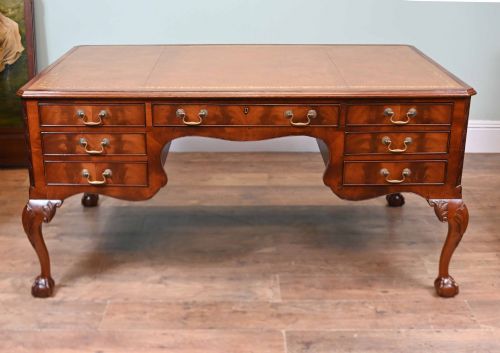
Quality in these desks rests on the selection of timber figure, the crispness of carved details such as Chippendale-style brackets, and the integrity of internal mahogany framing. Desks retaining their original brass handles, leather inserts, and fitted stationery interiors command greater attention from collectors.
The presence of maker signatures or stamps from established cabinet-makers separates standard workshop production from high-end urban manufacture. Freestanding partners desks finished with fully polished backs represent a higher tier of construction than those intended strictly for placement against a wall.
Trollope & sons·Edwards & Roberts·Johnstone & Jeanes·Charles Andrea Nosotti·Hobbs & Co.
The Mahogany Executive Office Desk Glossary
- Partners desk
- A large double-sided pedestal desk designed for two people to work opposite one another, featuring banks of drawers on both sides. These pieces often incorporate cupboards or dummy drawers.
- Pedestal desk
- A heavy freestanding desk comprising a rectangular top resting upon two separate pedestals or columns of drawers. Each pedestal typically contains three graduated drawers.
- Kneehole desk
- A compact desk featuring a central recessed space for the legs, flanked by single or multiple stacks of drawers. This form allows the user to sit directly facing the centre of the writing surface.
- Writing slide
- A pull-out wooden shelf integrated beneath the main desk top to provide auxiliary workspace. Users extend these slides to hold inkwells or temporary papers without cluttering the primary surface.
- Marquetry inlay
- Decorative patterns formed by fitting contrasting veneers into prepared cavities within the primary mahogany surface. This technique creates floral, geometric, or pictorial motifs across drawer fronts and tops.
Mahogany Executive Office Desk: Frequently Asked Questions
What is a partners desk?
A partners desk is a large two-sided workspace built with drawers and cupboards on both faces so two people can sit opposite each other.
These heavy pieces traditionally stood in the middle of a library or study rather than against a wall.
How do I tell a partners desk from a standard pedestal desk?
You can distinguish a partners desk by checking the reverse side for matching drawer fronts or cupboards instead of a plain panel.
Standard pedestal desks are finished on the front and sides while the back remains plain for wall placement.
What are writing slides used for?
Writing slides provide temporary pull-out surfaces beneath the main desk top to hold papers or writing implements.
They push back flush into the cabinet frame when not needed for daily work.
Where should I place a large pedestal desk?
Large pedestal desks require ample floor space, particularly freestanding versions finished with polished mahogany on all four sides.
Positioning them away from direct sunlight and heat sources protects the timber finish and leather writing surface.