



Mahogany Envelope Card Table
A mahogany envelope card table folds out with clever rotating leaves to reveal a baize-lined surface, combining practical ingenuity with elegant period craftsmanship.
Mahogany Envelope Card Table
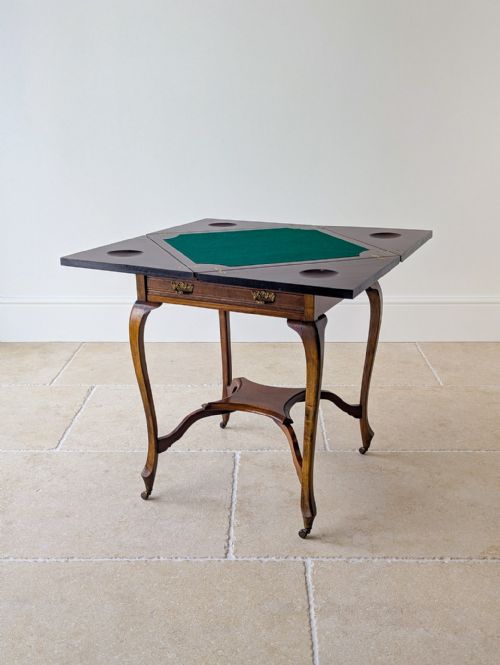
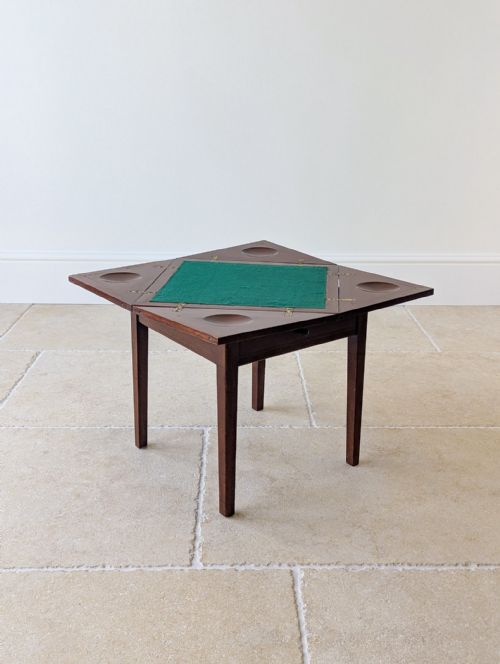
When you search for a mahogany envelope card table, you are looking at a specialised piece of folding furniture designed for parlour games and social gatherings. These tables typically feature a square top that rotates and unfolds like an envelope to expose a baize-lined playing surface and interior gaming wells.
The versions you are most likely to meet on this page span the Edwardian and Victorian eras, alongside 18th century, Georgian, and Regency examples. They function as versatile occasional tables when closed, adapting easily to modern living spaces while retaining their traditional charm.
How they were made
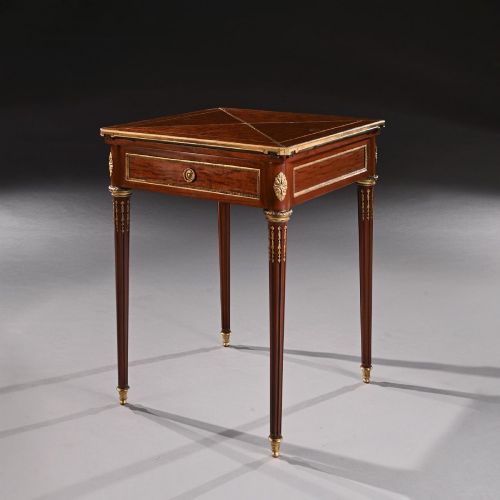
Cabinet makers utilised solid mahogany and rich veneers, often enhancing the timber with delicate satinwood inlay, brass mounts, or ormolu details. The sophisticated folding mechanism relies on precision hinges and pivoting leaves that operate in unison.
Surfaces inside the folding tops are traditionally fitted with wool baize to provide a smooth playing area for cards. Marquetry and polished finishes further demonstrate the refined techniques employed by period workshops.
Mahogany Envelope Card Table Retail Price Guide 2026
Typical asking prices for mahogany envelope card table among the pieces listed under this phrase on Sellingantiques today, from the lower quarter to the upper quarter. They describe what is for sale here now, not the wider market.
Some Victorian examples feature hidden wells designed specifically to keep stray poker chips from rolling onto the parlour rug.
What varies in quality
The distinction between standard examples and the finest pieces lies in the crispness of the cabinet work and the sophistication of the timber selection. Marquetry details and intricate satinwood inlay elevate the visual depth of the woodwork.
Mechanical precision also dictates worth, as top-tier tables operate with seamless movement when the leaves rotate and unfold. The choice of secondary materials, such as heavy brass hardware and fine baize, separates ordinary utility items from masterworks.
Antoine Lampre
The Mahogany Envelope Card Table Glossary
- Envelope card table
- A folding games table with four triangular flaps that swivel and open outwards to form a square top.
- Baize
- A coarse woollen material, traditionally green, used to line the playing surfaces of gaming furniture.
- Marquetry
- Decorative veneer work arranged in intricate patterns across the wooden surfaces of the table.
- Ormolu
- Gilded bronze used for decorative mounts and furniture embellishments during various revival periods.
- Gaming wells
- Small recessed compartments built into the corners of the table interior to hold counters or coins.
Mahogany Envelope Card Table: Frequently Asked Questions
What is an envelope card table?
An envelope card table is a compact occasional table with a square folding top. The four triangular leaves rotate and open outwards to create a larger surface lined for games.
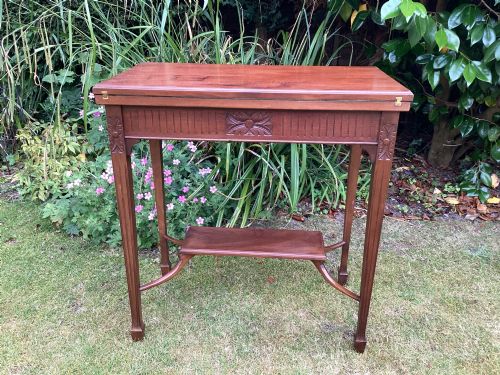
When closed, the table takes up minimal space and serves as a regular side or console table in a room.
How do the folding leaves work?
The clever mechanism relies on a central pivot system linked to the four triangular flaps. As you rotate the top section, the leaves unfold automatically to reveal the baize interior.
Internal linkages ensure the movement remains smooth and balanced during the transformation.
What periods do these tables come from?
The selections available span multiple centuries, ranging from 18th century Georgian and Regency pieces to later Victorian and Edwardian examples.
Edwardian and late 19th century interpretations appear most frequently, reflecting changing domestic fashions for versatile parlour furniture.
How should I care for the baize?
The baize lining requires gentle maintenance to preserve its texture and colour over time. Avoid exposing the interior to direct sunlight and moisture to prevent fading.
Regular light brushing keeps the wool clean and free from dust without damaging the traditional fabric.