




Mahogany Drop in Chairs
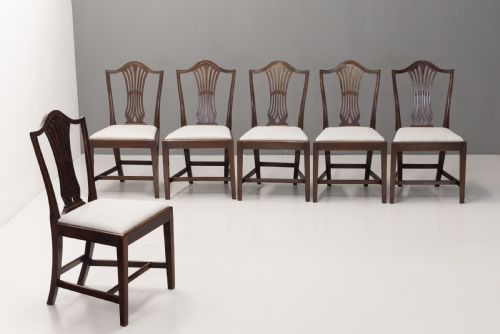
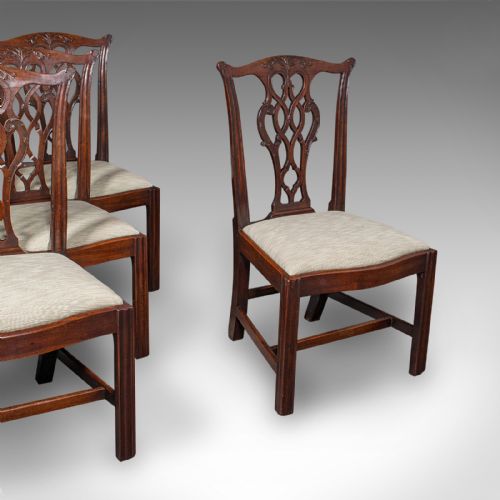
Mahogany drop in chairs bring timber frames and removable upholstered seats together for dining rooms.
Mahogany Drop in Chairs
When you search for mahogany drop in chairs, you look at dining chairs, armchairs, side chairs, and corner armchairs designed with wooden frames and separate upholstered seat pads that lift out of the rail. The forms span the mid eighteenth century through to the early twentieth century, taking in Georgian, Victorian, Regency, and Edwardian periods.
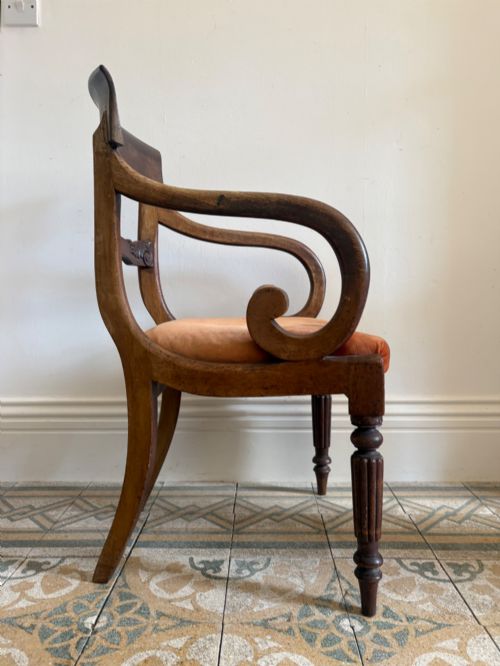
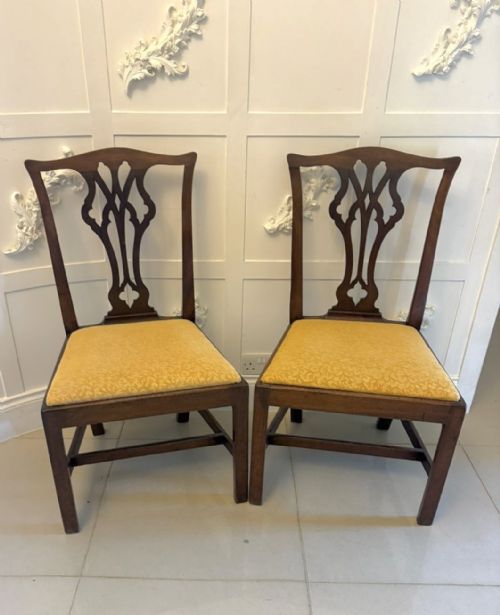
The most common examples on this page are sets of dining chairs and individual carver armchairs made in the Georgian style or during the George III and Victorian eras. These pieces pair dark timber frames with drop in seats covered in fabric, leather, velvet, or needlework.
Makers and workshops produced these seating forms across England and Ireland, utilising classic timber framing techniques. Revival styles such as Chippendale and Queen Anne appear frequently alongside original eighteenth century pieces.
Materials and construction methods
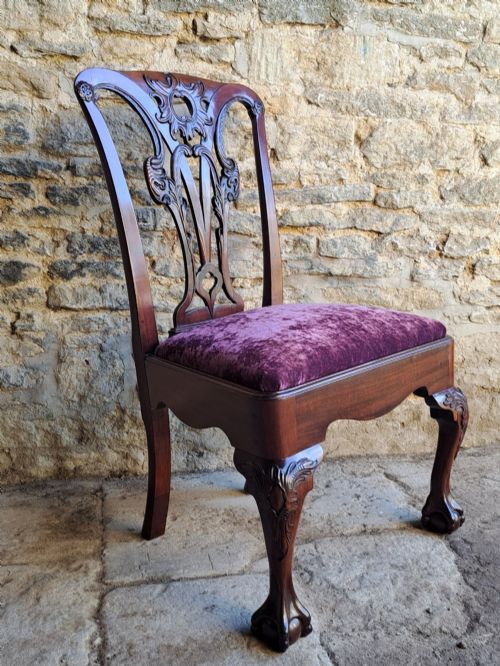
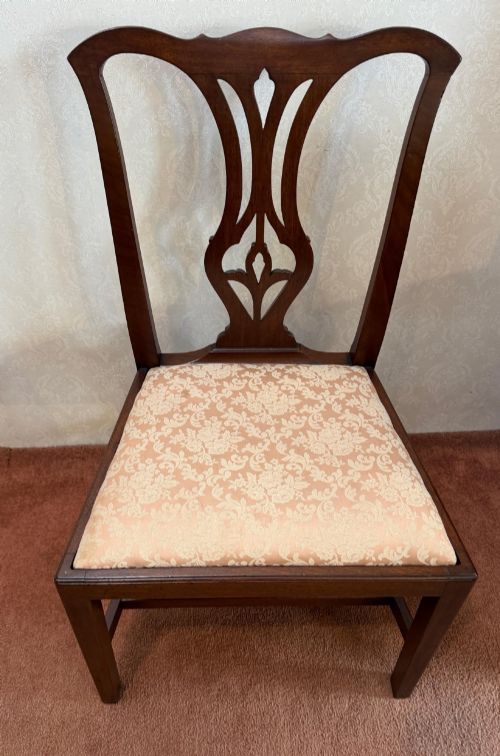
Cabinet makers constructed the frames primarily from solid mahogany, with occasional examples in red walnut. Timber components were shaped into vase splats, ladder backs, scroll backs, and cabriole legs.
The drop in seat frame relies on a wooden slip seat that fits neatly into the rebated seat rail of the chair. Upholsterers then layered webbing, stuffing, and textile covers including wool, leather, and velvet over the drop in frame.
Listings feature mahogany, walnut, and various upholstery fabrics including leather, wool, and velvet across Georgian and Victorian periods.
Distinctions in quality and execution
The grade of mahogany timber and the crispness of the carving on splats, knees, and legs define the upper tier of pieces. Substantial timber thickness and precise joinery at the frame corners distinguish better workshop output.
Proportion and stance play a major part in visual success, where well balanced cabriole or turned legs support the seat frame harmoniously. Original or period appropriate upholstery materials maintained on the drop in pad add integrity.
William Walker & Sons
The Mahogany Drop in Chairs Glossary
- Drop in seat
- A removable upholstered frame that rests within the rebated wooden seat rails of a chair. This construction allowed seats to be easily reupholstered without dismantling the timber frame.
- Splat
- The vertical wooden strip down the centre of a chair back. Common variations include vase shapes and ladder slats.
- Cabriole leg
- A furniture leg that curves out in a convex arc and tapers inward in a concave arc, ending in a pad or claw foot. This form derives from seventeenth and eighteenth century furniture design.
- Carver armchair
- An open armchair designed to match a set of dining side chairs. These pieces usually stood at the head of a dining table.
- Corner armchair
- A chair designed to fit into a room corner, featuring a semicircular back rail supported on turned columns and a central leg at the front.
Mahogany Drop in Chairs: Frequently Asked Questions
What is a drop in seat?
A drop in seat consists of a separate wooden frame that holds the padding and upholstery covering. This removable pad sits inside the rebated wooden ledge of the chair seat rail.
This method made it simple to update textiles over time or carry out repairs to the padding without disturbing the structural frame of the chair.
How do I date a mahogany chair?
Dating relies on observing the combination of timber choice, leg style, back splat design, and construction methods. Georgian pieces often feature simpler joinery and specific splat contours, while Victorian and revival items show heavier proportions.
Comparing the stretcher arrangement and the profile of the seat rail helps separate eighteenth century originals from later nineteenth and twentieth century revival pieces.
Are these chairs suitable for daily dining?
These wooden chairs were built for dining rooms and function well for everyday use when the timber frame and joints remain stable. Regular checks on the underframe ensure the joints stay firm during use.
The removable seat pads also make it straightforward to refresh the upholstery if fabric wears out from regular sitting.
What is the difference between a side chair and a carver?
A side chair is built without armrests, designed to slide neatly beneath a dining table or line up against a wall. A carver armchair includes wooden arms integrated into the back support.
Carvers were traditionally placed at the ends of a dining table for the head of the household while matching side chairs filled the remaining spaces.