




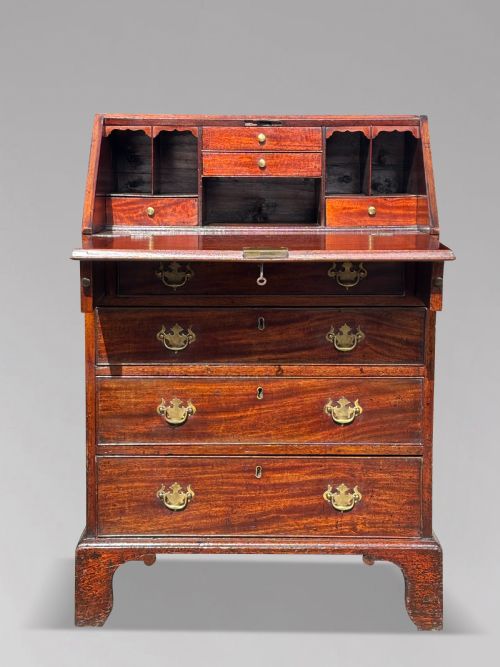

Mahogany Drop Front Drawers
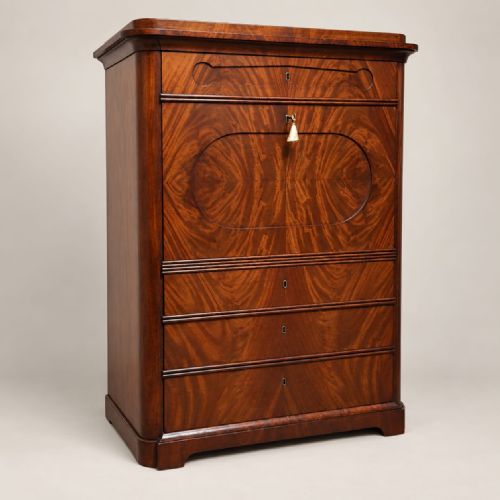
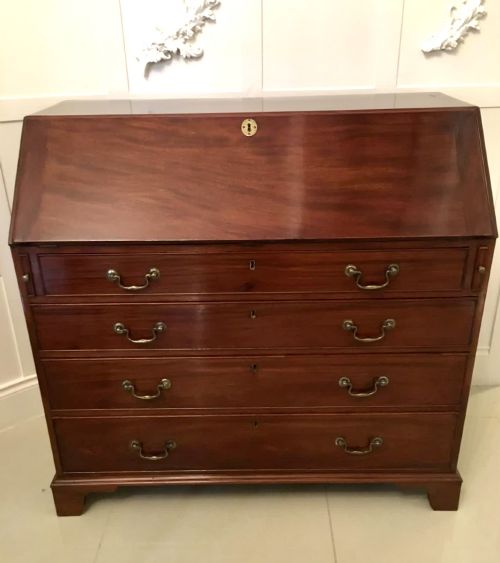
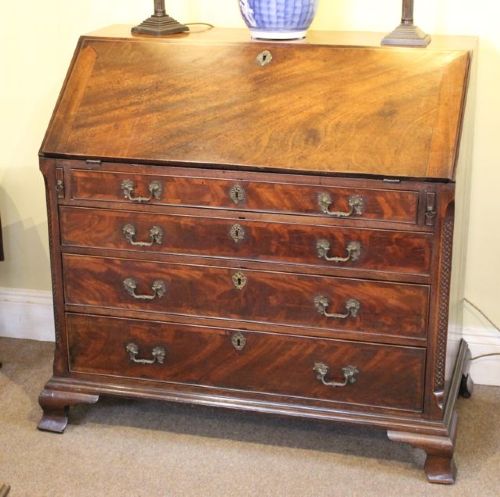
Mahogany drop front drawers encompass architectural bureaux, secretaire chests and music cabinets designed for practical storage and writing.
Mahogany Drop Front Drawers
Mahogany drop front drawers primarily span Georgian, Regency, and Victorian periods, alongside Edwardian examples built for sheet music. These pieces range from compact falls and tall secretaire bookcases to specialised cabinets equipped with interior compartments.
The user searching for mahogany drop front drawers meets bureaux with fitted pigeonholes, secretaire chests displaying top drawers that fold down as writing surfaces, and music cabinets housing multiple drop fronts. Georgian and nineteenth-century iterations dominate the selection.
Origins stretch across English workshops and French cabinets, incorporating pieces influenced by Sheraton designs or Arts and Crafts makers. Proportions vary from diminutive eighteenth-century dimensions to tall pharmacy cupboards.
Materials and Construction
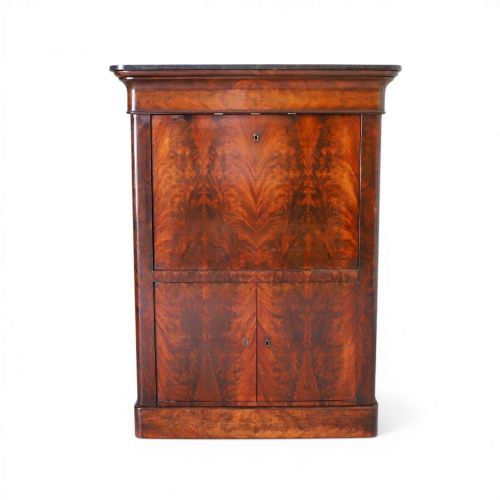
Construction relies heavily upon solid mahogany and flame mahogany veneers laid over secondary timbers such as oak, combined with brass handles, locks, and occasional marble tops. Satinwood inlay provides decorative contrast on Edwardian and Sheraton-influenced surfaces.
Interior architecture utilises small drawers, secret compartments, and pigeonholes framed within drop front writing flaps or locking vertical mechanisms. Glass doors appear on bookcase top sections, while brass drop handles and escutcheons secure the exterior.
Listings feature mahogany, oak, satinwood inlay, brass, glass, marble, and leather across Georgian, Victorian, Regency, and Edwardian periods.
Evaluating the Pieces
Quality rests upon the selection of timber grain, particularly the depth of flame mahogany veneer and the precision of satinwood stringing. Well-executed cockbeading around drawers and original brass hardware elevate an individual piece.
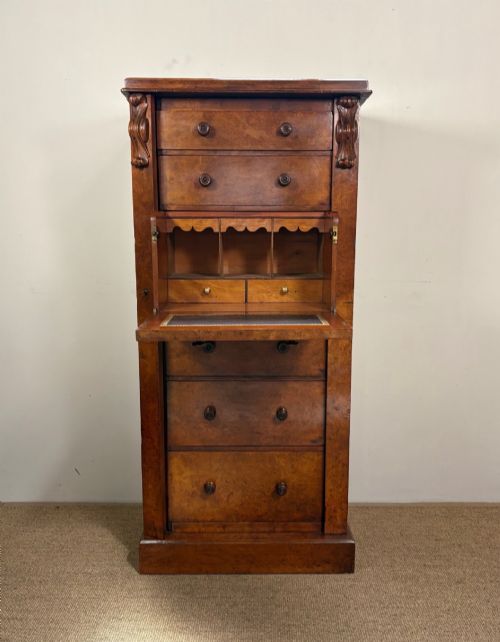
Structural integrity depends on the interior mechanism of the drop front, whether a fall-front desk flap, a Wellington locking flap, or stacked music cabinet drawers. Original oak linings and intact pigeonhole fitments distinguish superior cabinetmaking from later alterations.
Gregory and Co of London·Gillows of Lancaster
The Mahogany Drop Front Drawers Glossary
- Bureau
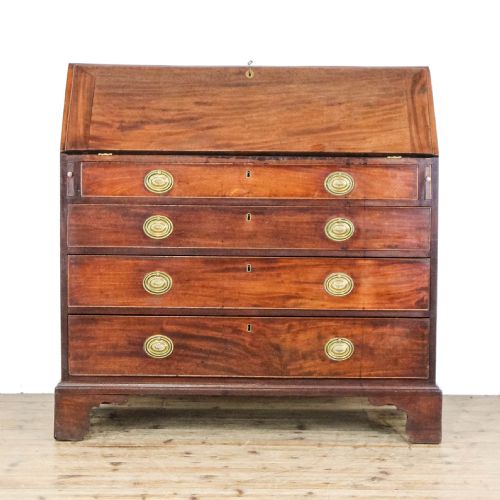
- A sloping drop front desk enclosing small drawers and pigeonholes. It typically sits upon bracket feet or chest drawers.
- Secretaire
- A piece of furniture containing a drawer or compartment with a drop down front for writing. This term often applies to chests and bookcases.
- Escritoire
- A writing cabinet featuring a fall front or drop front mechanism. Examples date from the nineteenth century.
- Wellington chest
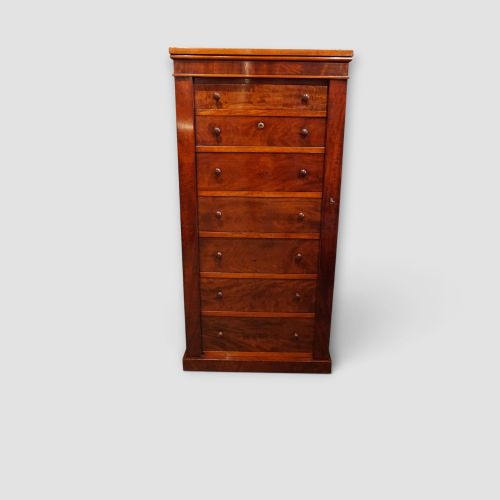
- A tall, narrow chest of drawers secured by a hinged vertical locking flap on one side. It frequently incorporates a secretaire drawer.
- Cockbeading
- A narrow rounded moulding projecting around the edges of drawer fronts. It protects the drawer margins from impact.
Mahogany Drop Front Drawers: Frequently Asked Questions
What is a drop front drawer?
A drop front drawer pulls out and folds down to create a writing surface or access interior compartments. It conceals smaller pigeonholes and drawers behind a single exterior facade.
These mechanisms appear on bureaux, secretaire chests, and music cabinets across Georgian and Victorian periods.
How do I date a mahogany bureau?
Dating relies on secondary timbers, handle styles, and construction traits visible inside the drawers. Georgian pieces often feature hand-cut dovetails and oak linings.
Later Victorian and Edwardian examples introduce machine-sawn elements and different veneer thicknesses.
What is a secretaire chest?
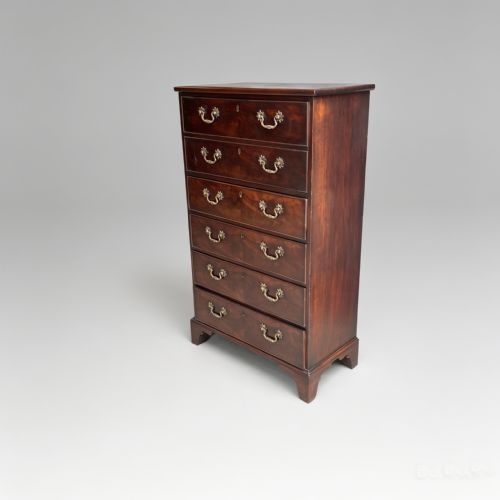
A secretaire chest resembles a standard chest of drawers from the exterior. The top drawer conceals a drop front writing desk fitted with small compartments.
This design provides workspace without requiring a separate, full-sized desk in a room.
How are music cabinets used?
Music cabinets feature multiple shallow drop front drawers designed to store sheet music flat. Edwardian iterations often include inlaid satinwood decoration.
Today these compartments suit letters, papers, or small flat collections.