

Mahogany Dished Top Table
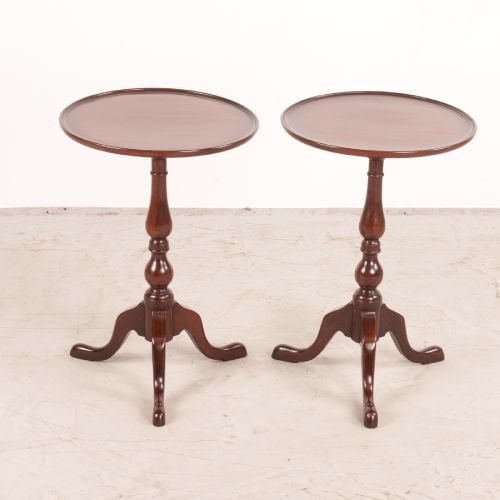
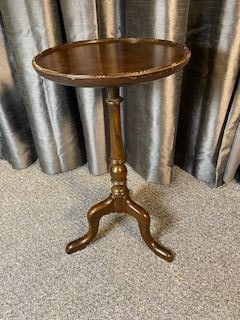
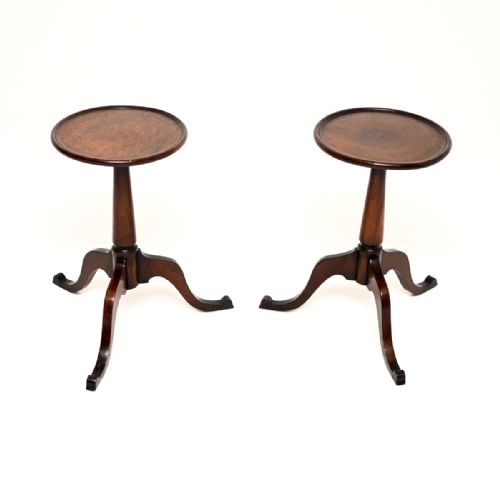
A mahogany dished top table brings solid timber surfaces and neat tripod bases together for practical use in any room.
Mahogany Dished Top Table
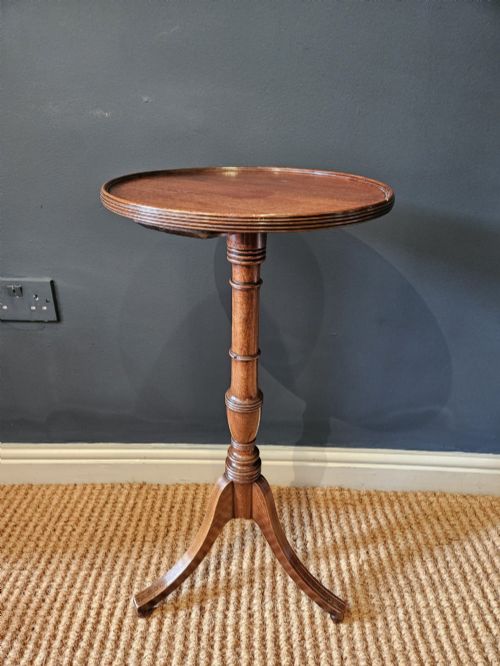
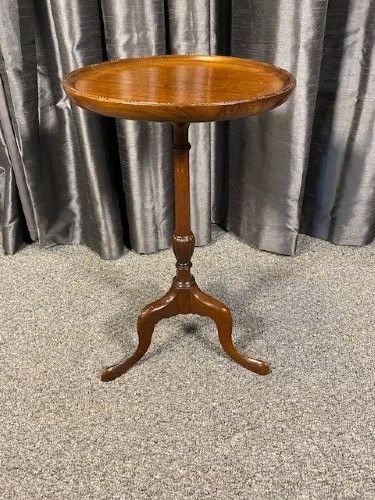
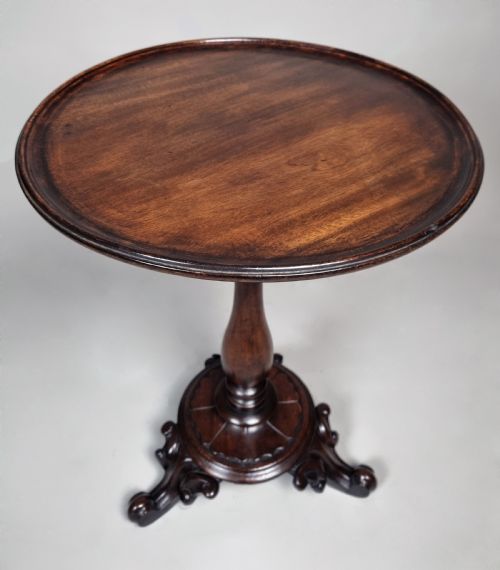
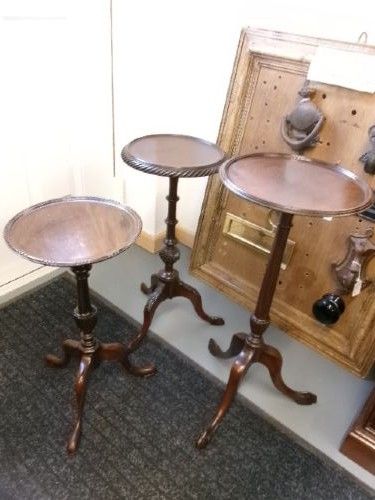
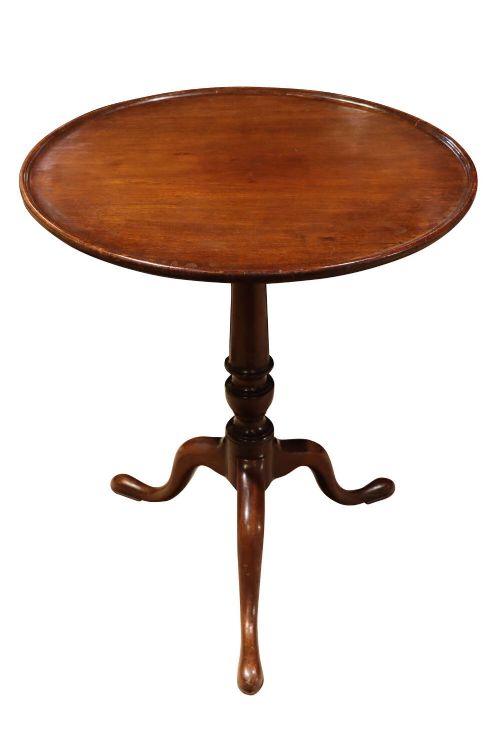
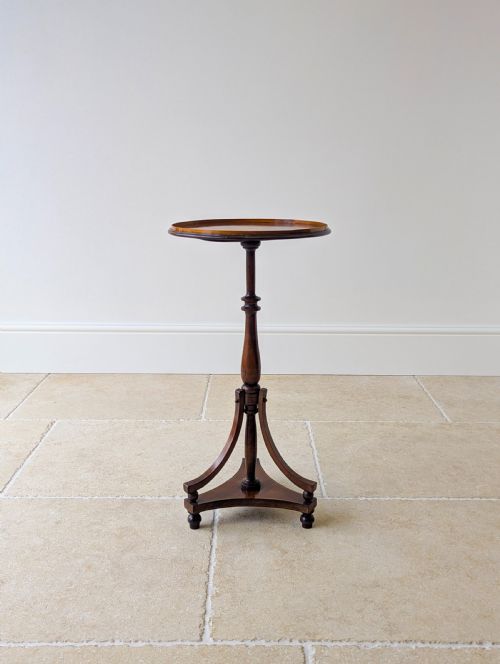
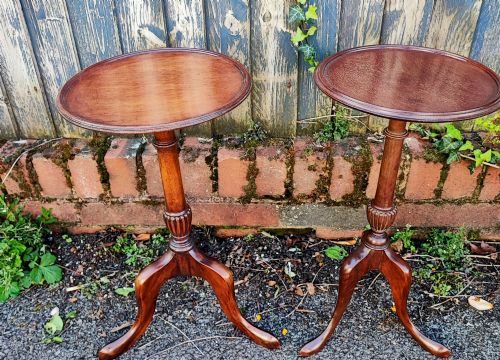
A mahogany dished top table is a compact timber piece designed to hold small items, most commonly appearing as a wine table, candle stand, or occasional table.
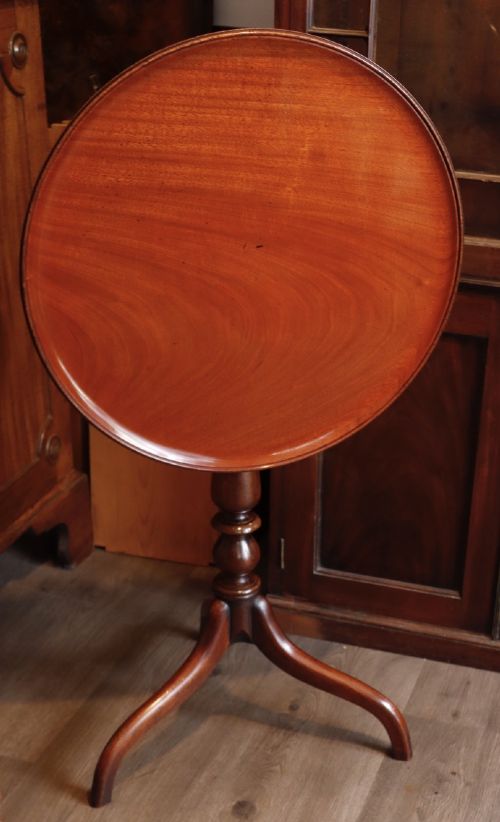
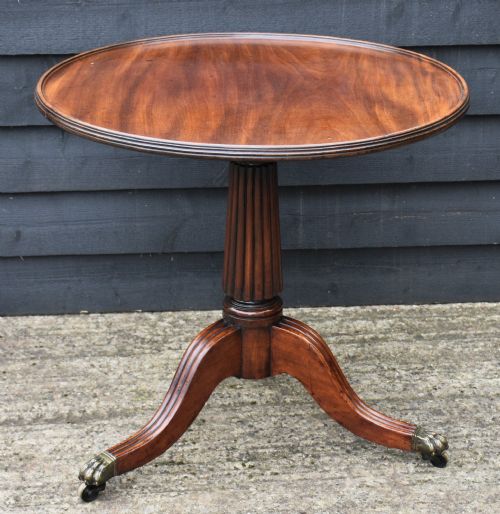
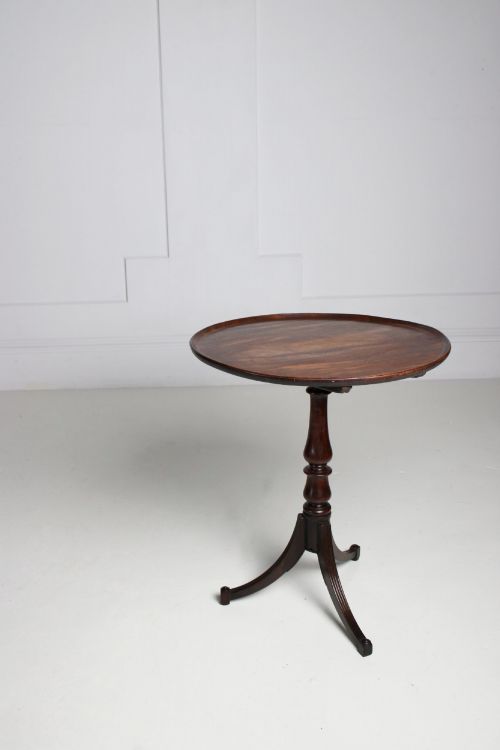
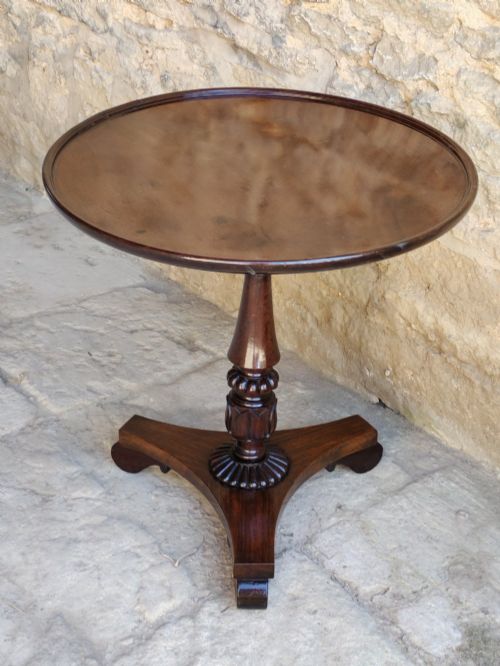
The defining characteristic is the circular top with a raised, concave rim carved directly from the solid wood to prevent items from sliding off.
Most examples found on this page date from the Georgian and 19th Century periods, featuring sturdy tripod bases that slide easily beside seating.
How they were made
Cabinet makers constructed these tables primarily from solid mahogany, occasionally incorporating rosewood, boxwood, and burr wood for contrasting inlay work.
The distinctive dished top was meticulously turned on a lathe from a single thick timber board, leaving the perimeter higher than the centre.
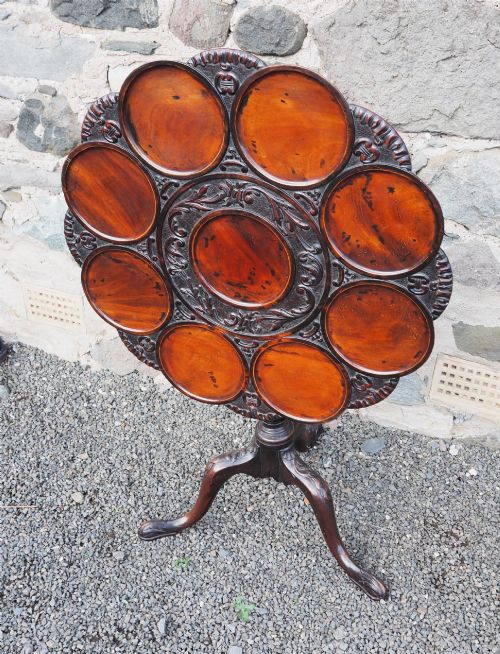
Tripod bases connect to the central pillar via pegged joints or tilting mechanisms, allowing the top to tilt vertically when not in use.
Some tilt tops feature clever wooden latches so secret that diners spent minutes fumbling just to set down a glass of wine.
What varies in quality
Quality rests upon the selection of timber grain, the crispness of the turned moulding on the dished rim, and the proportions of the tripod legs.
Superior pieces display fine carving on the pillar and knees, alongside tight joinery that keeps the top level and stable without wobble.
Gillows
The Mahogany Dished Top Table Glossary
- Dish top
- A table top with a concave perimeter carved from solid wood. This raised edge stops small objects from rolling off the surface.
- Tripod base
- A support structure utilising three curved legs radiating from a central pillar. This design ensures stability on uneven older floors.
- Tilt top
- A hinged mechanism allowing the table top to pivot to a vertical position. It enabled historical owners to store the furniture flat against a wall.
- Bird cage
- A rotating wooden block beneath the table top that permits both rotation and tilting. It connects the surface smoothly to the central column.
- Snap top
- A spring catch mechanism securing a tilting table top in the horizontal position. It prevents accidental tipping during daily use.
Mahogany Dished Top Table: Frequently Asked Questions
What were these tables used for?
These small tables served practical purposes in historic homes as stands for wine glasses, candles, or tea service. Their compact proportions allowed servants to move them easily around the room.
Today they function effectively as lamp tables or side tables next to armchairs, holding drinks or books without occupying excessive floor space.
How do I identify a Georgian period table?
Georgian examples typically display dense, dark mahogany timber with hand-cut joinery and subtle patination developed over centuries. The carving on the knees and feet tends to follow classical motifs like ball and claw or pad feet.
Examining the underside reveals tool marks and timber shrinkage consistent with eighteenth-century hand woodworking methods rather than later machine production.
Why does the top tilt?
The tilting mechanism was an original space-saving device designed for rooms that served multiple functions throughout the day. When dining or entertaining finished, the top flipped vertically so the piece could slide out of the way against the wall.
This feature distinguishes traditional occasional tables from fixed-top variants and demonstrates how historical furniture adapted to domestic routines.
How do I care for a mahogany surface?
Mahogany responds best to regular dusting with a soft, dry cloth to prevent grit accumulation. Avoiding direct sunlight and sudden temperature shifts protects the polish and the underlying timber joints from drying out.
Occasional application of traditional wax feeds the wood and maintains the natural lustre without building up heavy chemical layers.