


Mahogany Desktop Cupboard
These mahogany desktop cupboards are compact repositories of woodcraft, offering small-scale storage and period charm for a modern desk.
Mahogany Desktop Cupboard
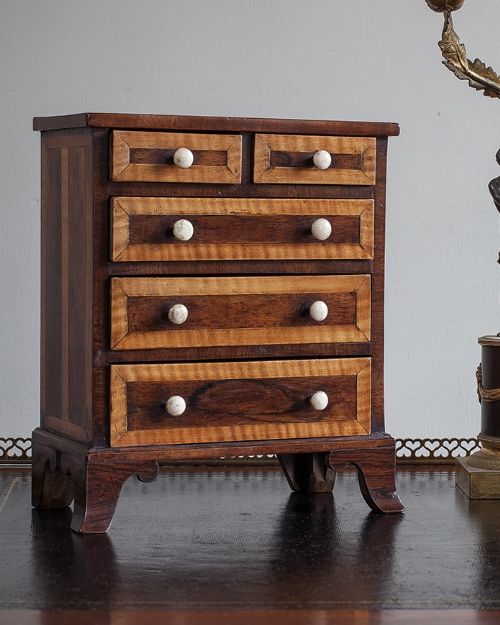
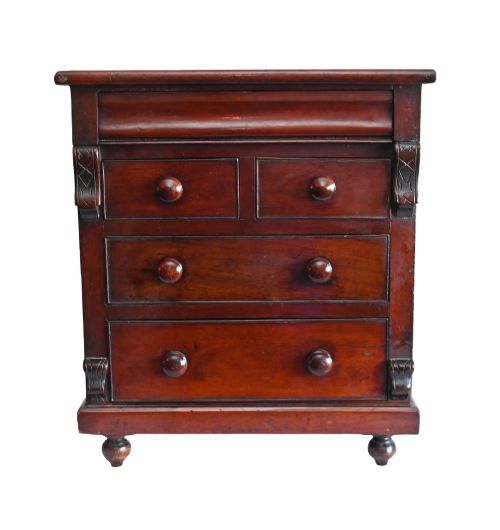
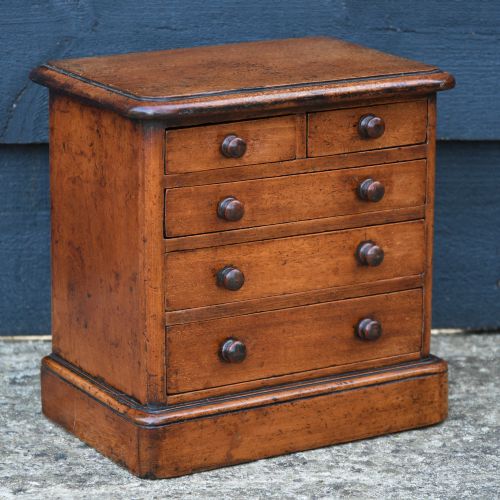
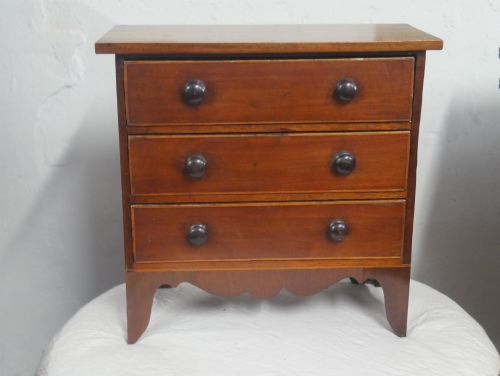
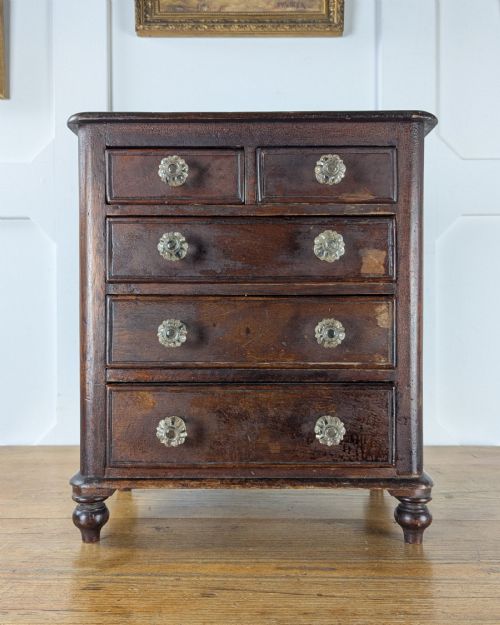
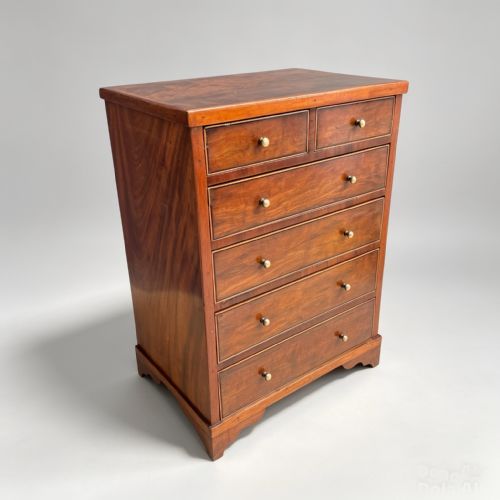
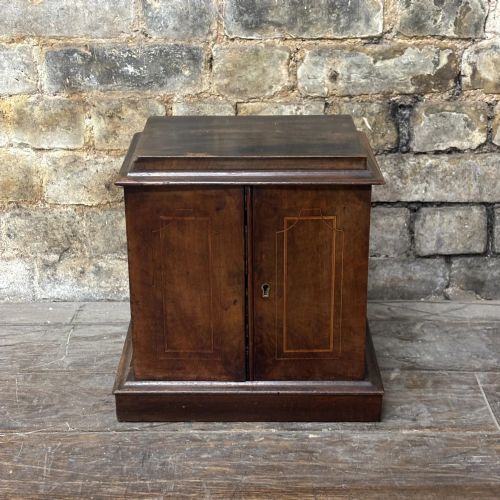
When you search for a mahogany desktop cupboard, you encounter a variety of small-scale furniture designed for tabletop use. These pieces include miniature chests of drawers, stationery cabinets, collectors cabinets, and jewellery boxes originating from Georgian, Victorian, and Edwardian periods.
You are most likely to meet miniature apprentice chests of drawers and small tabletop cabinets on this page. These items reflect the domestic and professional storage needs of past centuries, executed in rich woods.
The assortment spans diverse styles such as Regency, William IV, and 19th Century Scottish designs. Each object provides a glimpse into historical woodworking traditions adapted for personal desktop utility.
How they were made
The primary material across these pieces is mahogany, frequently paired with secondary woods like pine or oak for interior framing and drawer linings. Craftsmen utilised brass for drop handles and key escutcheons, adding functional hardware to the exterior.
Decorative elements involve subtle stringing and inlay using materials such as boxwood to define drawer fronts and panel borders. Turning techniques produced elements like turned feet and small knobs on miniature chests.
Glass appears in specific cabinet doors to display contents, while structural joinery relies on traditional woodworking methods suited to small-scale furniture.
Listings feature pieces from the Georgian, Victorian, and Edwardian eras constructed primarily in mahogany with brass and boxwood details.
What varies in quality
The sophistication of the timber figure and the crispness of the secondary wood selection distinguish finer examples from simpler workshops. Grain alignment across drawer fronts and the precision of boxwood stringing indicate the maker's hand.
Hardware originality and quality also set pieces apart, where heavy brass drop handles and working locks with keys elevate an object. The finesse of turned feet and internal drawer construction reveal the underlying standard of manufacture.
The Mahogany Desktop Cupboard Glossary
- Apprentice piece
- A small-scale item demonstrating a craftsman's skill to attain master status. These often take the form of miniature chests of drawers.
- Escutcheon
- A protective plate surrounding a keyhole, commonly cast in brass on these cabinets. It guards the wood from wear around the lock.
- Stringing
- A thin strip of contrasting wood inlay used as a decorative border on furniture surfaces. Boxwood is frequently utilised for this purpose against mahogany.
- Collectors cabinet
- A small storage unit featuring multiple shallow drawers designed to hold specimens or small objects. They often secure contents behind a locking door.
Mahogany Desktop Cupboard: Frequently Asked Questions
What were mahogany desktop cupboards used for?
These small cabinets served various practical functions in past centuries, ranging from storing stationery and keeping account books to holding personal jewellery and small valuable items.
Collectors also used specific drawer configurations to organise botanical or geological specimens on a desk or table.
How do I date a mahogany tabletop cabinet?
Dating relies on observing stylistic markers, construction methods, and hardware types that align with specific eras like the Georgian or Victorian periods.
Secondary woods inside drawers and the presence of hand-cut dovetails or specific brass handles provide clues to the approximate decade of manufacture.
Are these considered antique miniature furniture?
Many items listed under this search phrase belong to the category of miniature furniture, traditionally created as apprentice pieces or travel-sized amenities.
Their smaller dimensions allowed them to sit comfortably upon desks, tables, or chests while offering functional internal storage compartments.
How should I care for mahogany desktop furniture?
Maintenance involves keeping the wood away from direct sunlight and extreme humidity fluctuations to prevent timber movement or fading.
Light dusting and occasional application of traditional wax help preserve the polished finish and natural lustre of the mahogany surface.