

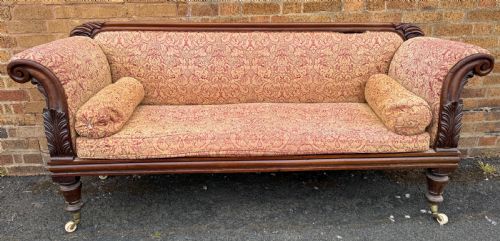


Mahogany Damask Couch
A mahogany damask couch brings warmth and tactile richness to a room, offering sturdy seating shaped by centuries of cabinet-making tradition.
Mahogany Damask Couch
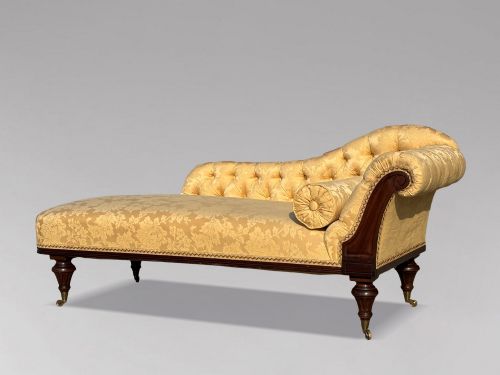
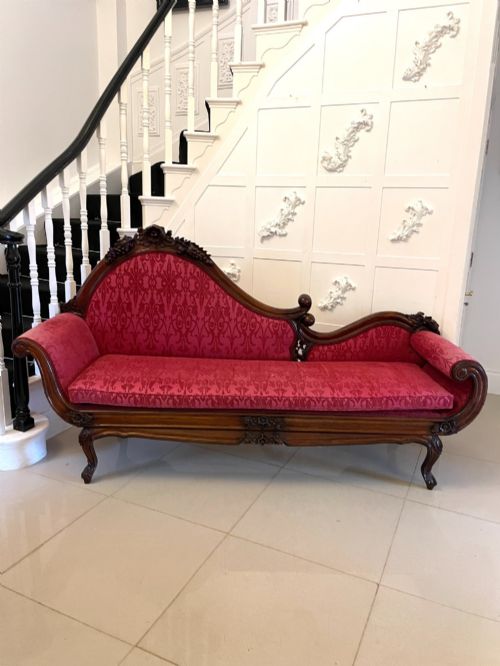
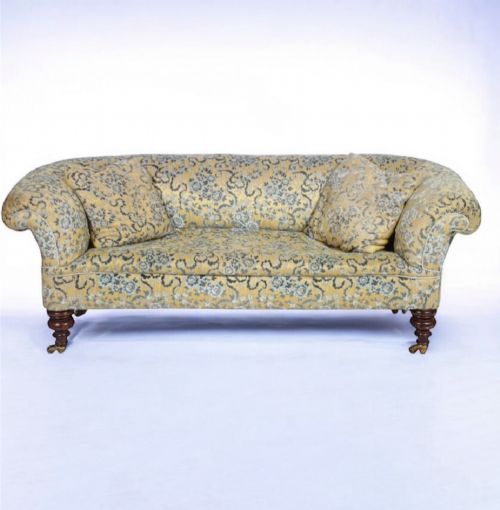
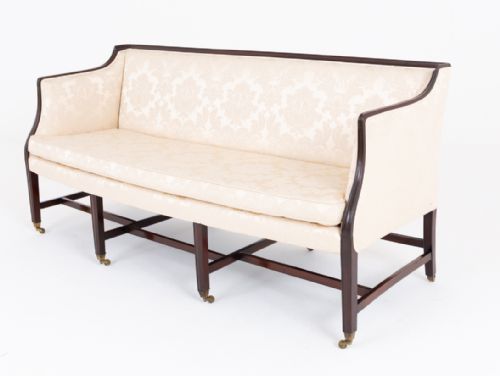
A mahogany damask couch encompasses a variety of substantial seating forms, ranging from long scroll-end sofas and double-ended settees to elegant chaise longues and camel-backed couches. When searching for this combination, a buyer encounters pieces primarily shaped during the Georgian, Victorian, and Edwardian eras, alongside revival periods like the William IV and French Empire styles.
The most common iterations on this page feature rich mahogany frames paired with patterned fabric upholstery, specifically damask. These seating pieces were built for drawing rooms and formal reception spaces, combining structural timber with decorative textile finishes that have survived across generations.
How they were made
Cabinet-makers constructed the structural frames of these couches using dense mahogany, occasionally enhanced with satinwood inlay or brass mounts. The timber was carved, polished, and joined to support deep upholstery and sprung or stuffed bases.
Textiles like patterned damask and silk were secured over stuffing to provide the tactile surface characteristic of these formal seats. Artisans matched the grain of the wood to the curves of the frame, particularly on scroll ends and showwood backs.
Mahogany Damask Couch Retail Price Guide 2026
Typical asking prices for mahogany damask couch among the pieces listed under this phrase on Sellingantiques today, from the lower quarter to the upper quarter. They describe what is for sale here now, not the wider market.
The furniture forms span double-ended settees, camel-backed sofas, and nineteenth-century chaise longues.
What varies in quality
The refinement of the timber carving and the complexity of the frame construction determine the standing of a couch. Pieces featuring intricate showwood detailing, inlaid satinwood, or ormolu mounts sit at a higher level than plain structural frames.
The integrity of the original proportions and the sophistication of the styling, such as Hepplewhite lines or crisp Regency scrolling, separate standard seating from exceptional period examples.
Miles & Edwards
The Mahogany Damask Couch Glossary
- Mahogany
- A durable, reddish-brown tropical hardwood utilised extensively for furniture framing throughout the eighteenth and nineteenth centuries. Its strength allowed makers to carve slender yet robust supports.
- Damask
- A reversible figured fabric traditionally woven on a loom with patterns formed by contrasting warp and weft threads. It provides a subtle sheen and textured surface to period upholstery.
- Chaise Longue
- An upholstered long chair or daybed designed for reclining, featuring a backrest and typically one raised end. Nineteenth-century examples often display elaborate scroll-end woodwork.
- Showwood
- Furniture framing where the polished timber is intentionally left visible around the upholstered sections rather than being entirely covered in fabric. This highlights the quality of the mahogany frame.
- Scroll-end
- A furniture arm or terminal curved into a spiral shape resembling a scroll. This design element appears frequently on Regency and William IV sofas.
Mahogany Damask Couch: Frequently Asked Questions
What is a mahogany damask couch?
A mahogany damask couch is a period seating piece featuring a wooden frame made from mahogany and upholstered in patterned damask fabric. These items include settees, sofas, and chaise longues dating from the eighteenth to the early twentieth century.
They serve as both functional seating and decorative centrepieces, reflecting the cabinet-making styles of eras such as the Georgian, Victorian, and Edwardian periods.
How do I date a mahogany couch?
Dating relies on examining the structural style, wood characteristics, and upholstery framing methods. Georgian and Hepplewhite pieces display lighter, restrained lines, whereas Victorian and William IV examples often feature heavier showwood frames and scroll ends.
Secondary woods, carving techniques, and hardware like brass mounts also help narrow down the decade of manufacture within the broader nineteenth or eighteenth-century spans.
Where were these couches used?
These seating pieces were designed primarily for formal reception rooms, drawing rooms, and large country house parlours. They provided comfortable lounging and conversational seating for guests in fashionable households.
Today, they function similarly in domestic interiors, anchoring a living room or study with period character and traditional craftsmanship.
Are damask fabrics original?
Damask upholstery on antique couches is rarely original due to the natural wear of textiles over generations. Most surviving pieces have been re-upholstered at least once to preserve their usability and appearance.
Upholstery choices often mimic historical patterns to maintain the aesthetic integrity of the period style while ensuring the furniture remains practical for modern living.