



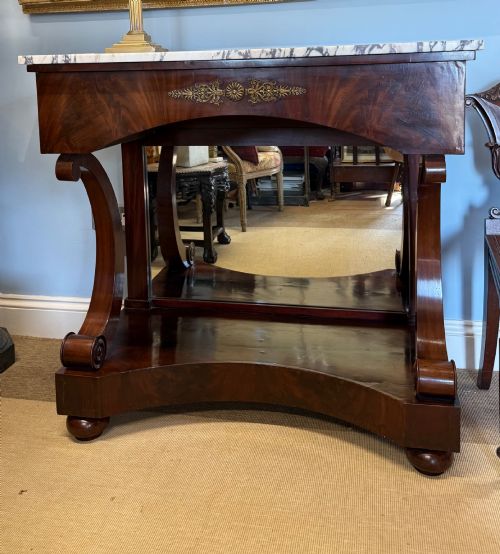


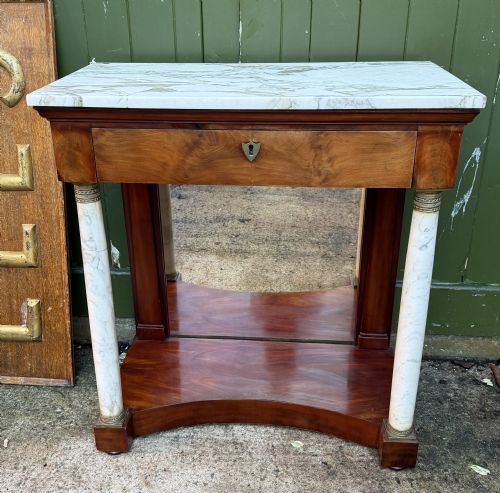


Mahogany Console Mirror
A mahogany console mirror combines deep timber warmth with reflective glass to anchor a grand hallway or reception room.
Mahogany Console Mirror
A mahogany console mirror unites a sturdy timber base table with a tall accompanying looking glass, designed to stand flat against an interior wall. You will encounter these pieces chiefly from the nineteenth century, including Victorian, William IV, and Edwardian iterations.
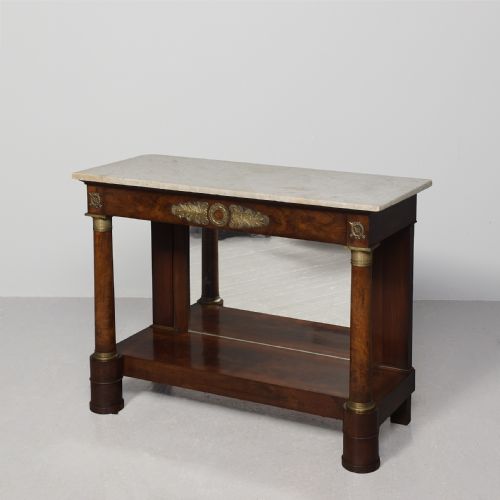
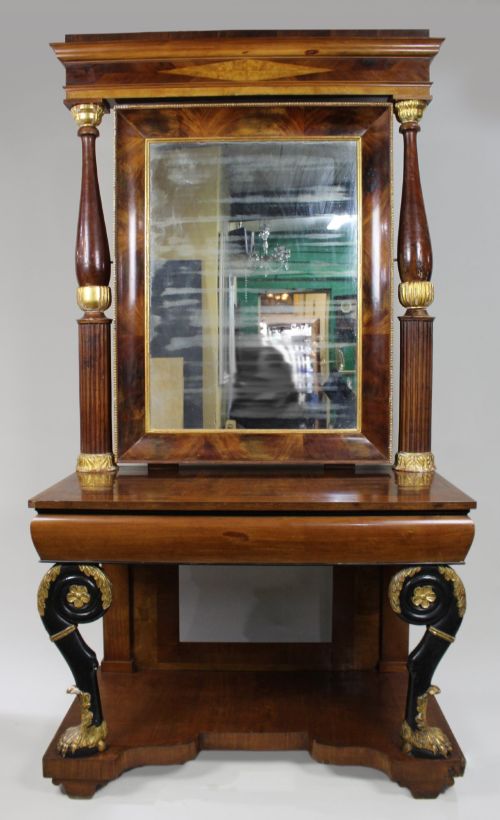
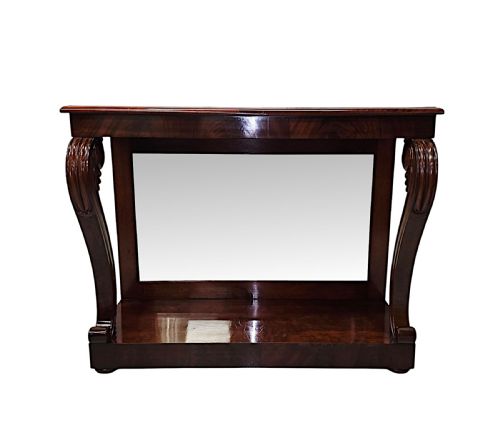
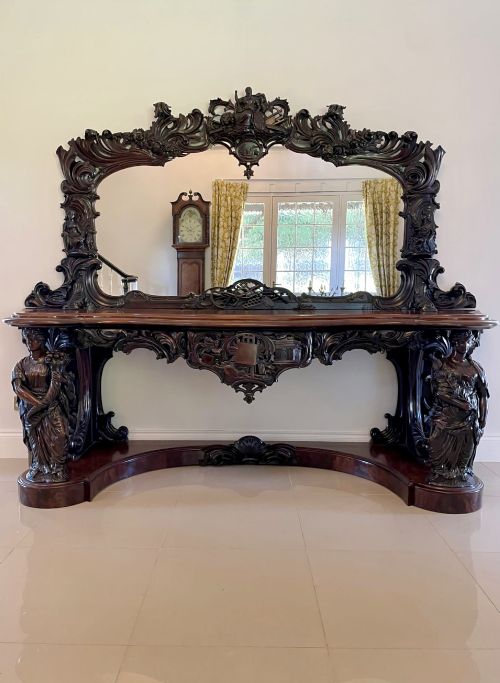
The form spans straightforward wall-mounted shelves and tall pier tables fitted with integrated mirror backs, alongside matching pairs of separate console tables and independent wall mirrors. Many incorporate marble tops in white or coloured stone to contrast against the dark timber grain.
Makers drew upon various regional aesthetics, producing items aligned with French Empire, Regency, and Rococo Revival tastes. These configurations serve both functional dressing purposes and grand decorative statements in entrance halls and principal reception rooms.
Materials and construction
Cabinetmakers utilised dense solid timber and figured veneers, selecting flame mahogany and parcel gilt highlights to catch the light. Marble slabs formed heavy, durable counter surfaces, while brass mounts and mirror glass completed the structural assembly.
Carpenters joined the frames using traditional cabinetry methods, supporting heavy stone slabs and tall reflective plates above carved console legs and Dolphin bases. Giltwood accents were applied by hand to specific mouldings and carved architectural details.
Mahogany Console Mirror Retail Price Guide 2026
Typical asking prices for mahogany console mirror among the pieces listed under this phrase on Sellingantiques today, from the lower quarter to the upper quarter. They describe what is for sale here now, not the wider market.
The listings span the nineteenth and early twentieth centuries, uniting Victorian, Edwardian, and French Empire styles in mahogany and marble.
Assessing quality and craftsmanship
Distinction lies in the selection of the wood veneer, where richly figured flame mahogany displays deeper visual movement than plain stock timber. The crispness of carved details, from dolphin motifs to floral scrolls, separates standard production from exhibition work.
Heavy carrara marble tops and substantial original mirror glass with clean bevelling indicate superior original commissioning. The integration between a table and its matching mirror reveals whether the pairing was conceived as a unified suite or assembled later.
Gillingtons of Dublin·Ellen E. Houghton of Minton
The Mahogany Console Mirror Glossary
- Pier table
- A low table designed to stand against the wall between two windows, frequently paired with a tall mirror above. It often forms the base structure for a console mirror combination.
- Flame mahogany
- A highly decorative wood grain pattern created by slicing through burls or fork joints in the timber. This produces a flickering flame effect prized in high-end nineteenth-century furniture.
- Giltwood
- Timber that has been coated with a thin layer of gold leaf or metallic paint. It provides bright contrast against dark mahogany surfaces.
- Chiffonier
- A low cabinet featuring shelving or doors, sometimes topped with a mirror. It shares functional similarities with nineteenth-century console tables.
- Parcel gilt
- A decorative treatment where only specific carved elements or mouldings are highlighted in gold while the rest of the timber remains natural. This technique accentuates structural highlights on empire and Victorian frames.
Mahogany Console Mirror: Frequently Asked Questions
Where should I place a console mirror?
These pieces suit entrance halls, reception rooms, and principal living spaces where they bounce light from windows and provide an immediate focal point.
Position them against a solid wall of sufficient width to balance the proportion of the table base and the vertical height of the glass.
Are the mirrors original to the tables?
Many nineteenth-century console tables were manufactured as unified pier mirrors with fixed glass backs, while others were paired with matching wall mirrors.
Examining the rebate, backing boards, and silvering wear helps determine whether the glass has remained with the timber base since manufacture.
How do I distinguish Victorian from Regency pieces?
Regency items generally exhibit cleaner classical lines influenced by ancient Greek and Roman forms, often featuring simpler mahogany surfaces.
Victorian and Rococo Revival examples lean towards heavier carved decoration, exuberant scrolling, and elaborate mirror frames.