

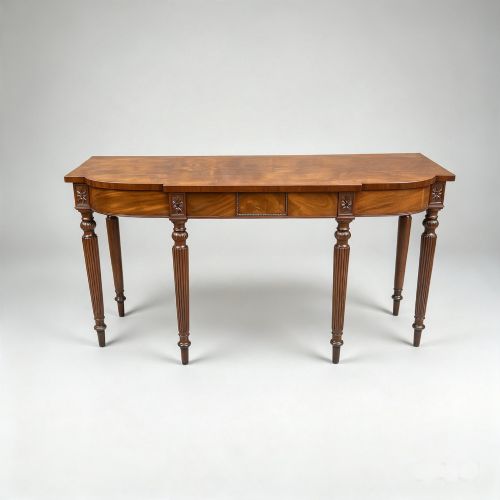
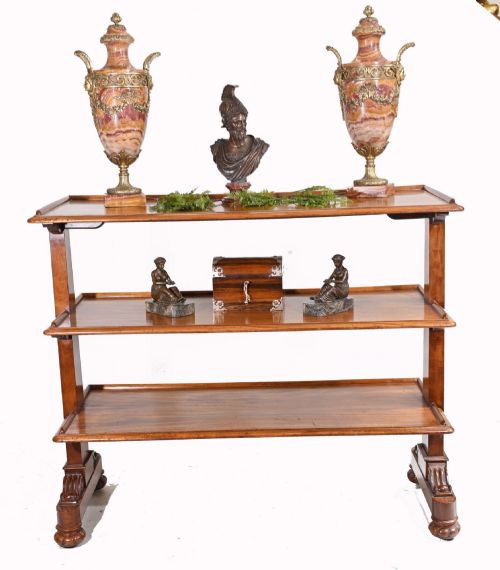
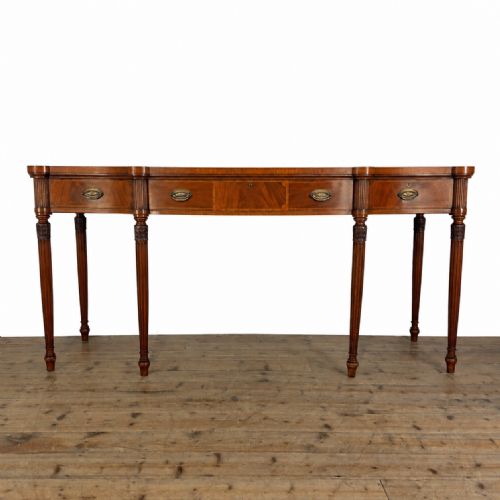
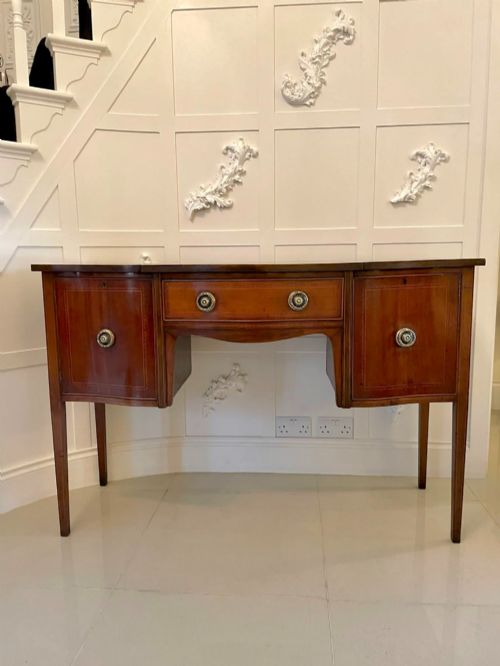

Mahogany Console Buffet
A mahogany console buffet brings solid timber presence and formal dining storage into a room.
Mahogany Console Buffet
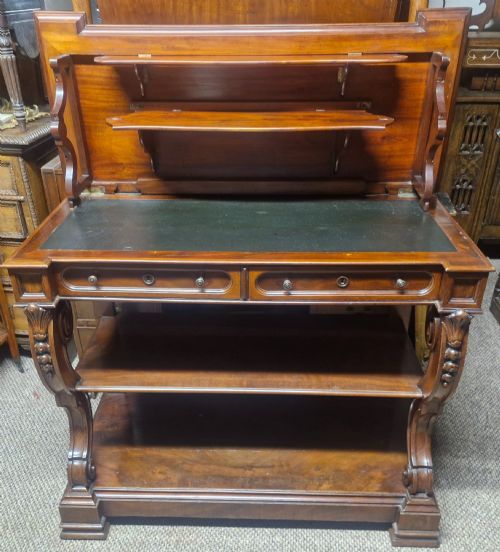
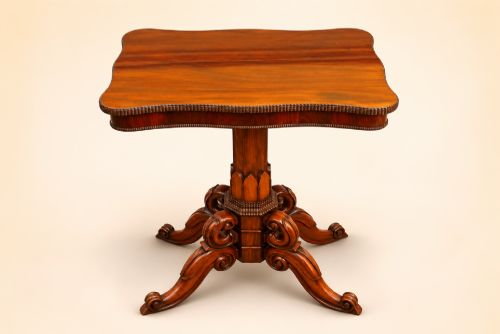
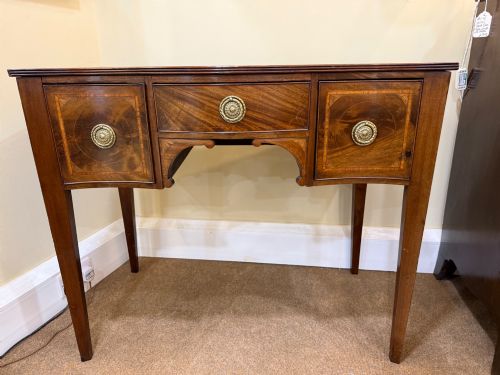
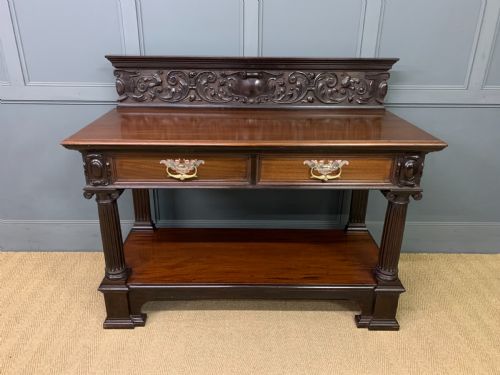
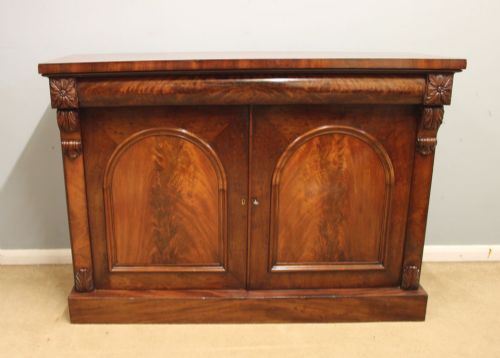
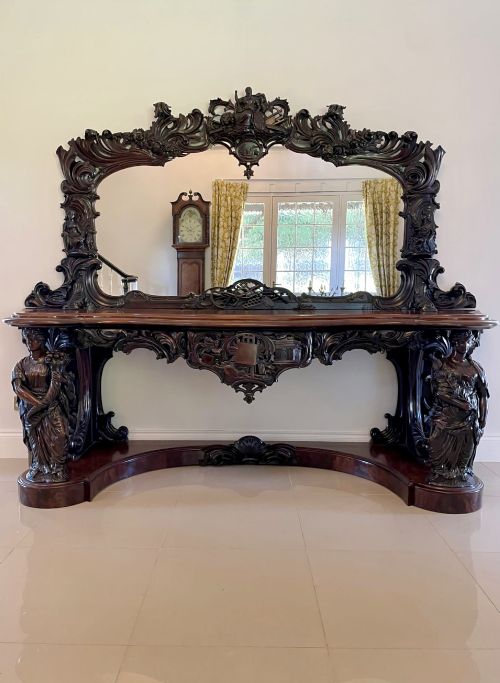
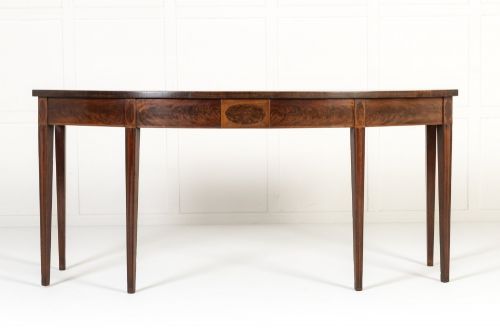
A mahogany console buffet combines the linear profile of a serving table with the enclosed storage of a sideboard, appearing across Georgian, Regency, and Victorian periods. These pieces serve dining rooms and large halls as functional furniture designed to hold silver, linen, and serving dishes.
The versions most frequently met on this page range from George III bow front designs to later Edwardian and revival iterations. Makers utilised mahogany, flame mahogany veneer, and satinwood inlay to create formal serving tables, sideboards, and tiered console pieces.
How they were made
Cabinet makers constructed these pieces using solid mahogany and applied mahogany veneer over secondary timbers, often selecting flame mahogany veneer for figured drawer fronts and tops. Structural stability relied on tight joinery, while decorative impact came from contrasting wood inlay in boxwood and satinwood.
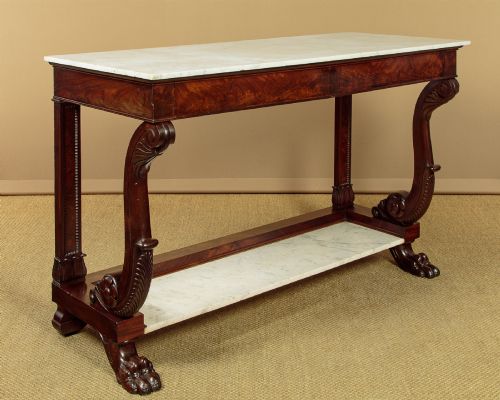
Carving and gilding required skilled hand work, seen in neoclassical details, parcel gilt accents, and giltwood highlights on Regency and Victorian examples. Brass fittings such as handles, gallery rails, and castors finished the construction of these heavy serving tables and buffets.
Mahogany Console Buffet Retail Price Guide 2026
Typical asking prices for mahogany console buffet among the pieces listed under this phrase on Sellingantiques today, from the lower quarter to the upper quarter. They describe what is for sale here now, not the wider market.
Listings span the eighteenth, nineteenth, and twentieth centuries, featuring Georgian, Regency, Victorian, and Edwardian periods alongside revival styles.
What varies in quality
Quality rests upon the selection of timber veneers, where highly figured flame mahogany and crisp boxwood or satinwood inlay denote superior cabinet work. The depth and sharpness of hand carving on friezes and legs separate standard production from exhibition pieces.
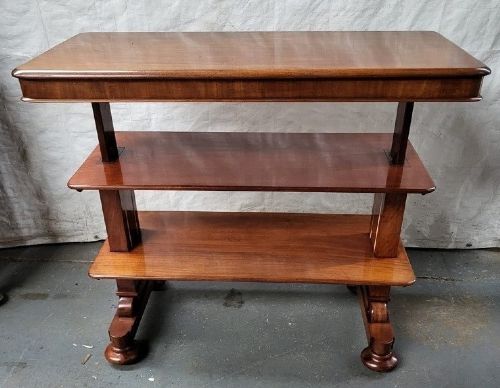
Construction methods dictate longevity, marked by well-fitted drawer linings, sturdy secondary woods, and original brass hardware. Pieces associated with notable workshops demonstrate finer proportions and more ambitious design, such as metamorphic mechanisms in buffets.
Gillows of Lancaster and London·Robert Strahan & Co
The Mahogany Console Buffet Glossary
- Bow front
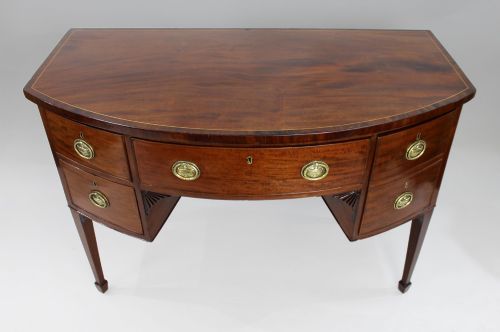
- A convex curved front contour popular on Georgian and Regency sideboards and serving tables. This curved shape softens the heavy rectangular mass of large timber furniture.
- Serpentine
- A rhythmic front edge that curves outward at the ends and inward at the centre. It demands advanced cabinet-making skill to execute cleanly in solid mahogany or veneer.
- Chiffonier
- A low sideboard or cabinet equipped with shelves or drawers, commonly produced during the Victorian period. It serves as a compact storage unit for dining rooms and drawing rooms.
- Metamorphic
- Describing furniture designed to transform its form or function, such as a buffet with adjustable tiers or rising sections. These mechanical pieces display clever nineteenth-century engineering.
- Inlay
- A decorative technique where contrasting woods like boxwood and satinwood are embedded into the mahogany surface. It creates geometric borders and classical motifs.
Mahogany Console Buffet: Frequently Asked Questions
What is a mahogany console buffet?
A mahogany console buffet is a substantial timber serving piece designed for dining rooms and grand halls. It combines flat surface display space with enclosed storage for tableware.
These items appear across Georgian, Regency, and Victorian periods in various formats including sideboards, servers, and tiered console tables.
How do I date a mahogany buffet?
Dating relies on stylistic markers, construction traits, and timber characteristics. Georgian and Regency examples exhibit classical proportions and restrained inlay, while Victorian pieces often feature heavier carved details or mirror backs.
Secondary woods inside drawers and the cut of the timber provide further clues to the manufacturing decade.
Where should I place a console buffet?
These pieces suit dining rooms, long hallways, and large reception spaces where their length and depth can be accommodated. They function effectively against a primary wall as a serving station or display surface.
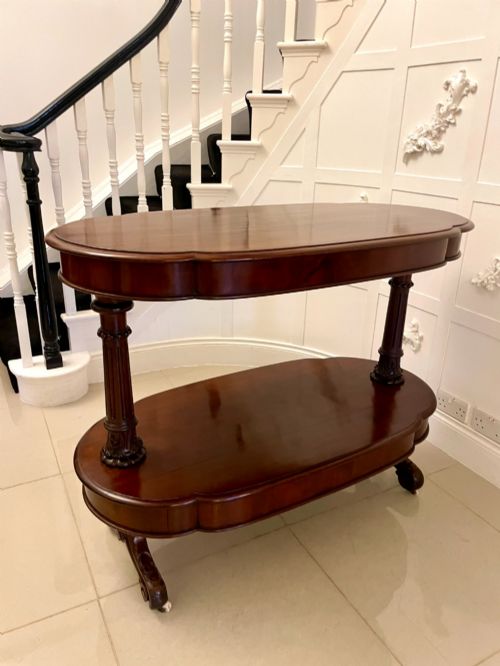
Freestanding oval and console variants also allow placement away from walls in spacious rooms.
How do I care for mahogany surfaces?
Mahogany requires stable room humidity and protection from direct sunlight to prevent timber splitting and veneer fading. Regular dusting with a soft cloth maintains the finish.
Occasional application of appropriate wax polish preserves the sheen of the grain without building up heavy residue.