
Mahogany Club Armchairs
Mahogany club armchairs are sturdy, leather-bound seats designed for comfort, offering solid construction and traditional proportions.
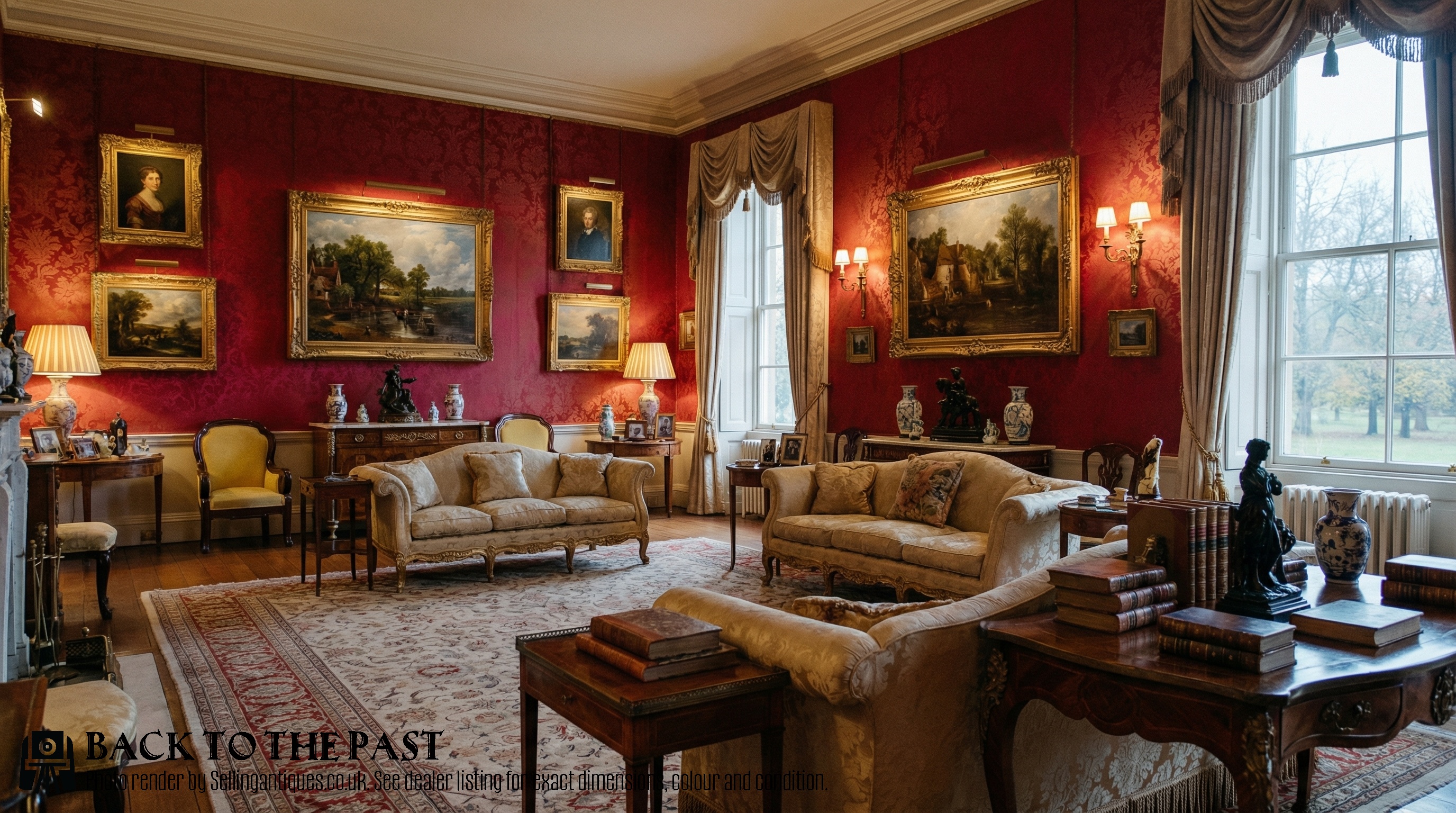
Mahogany Club Armchairs
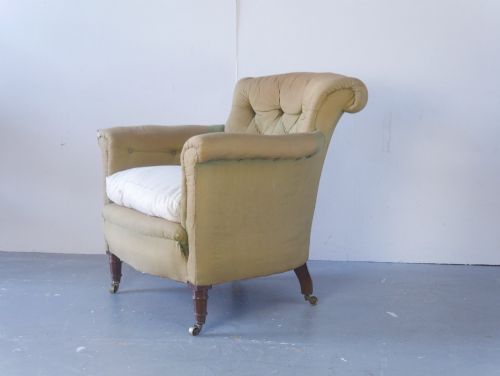
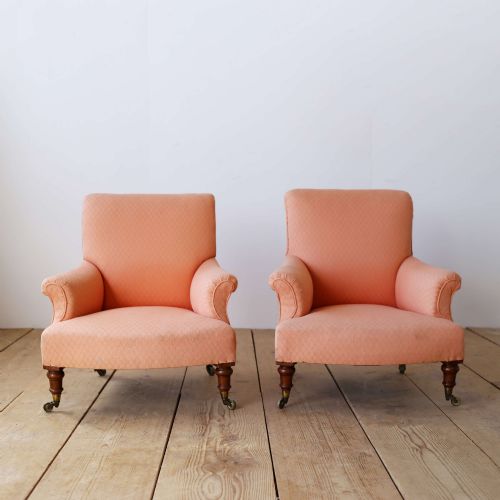
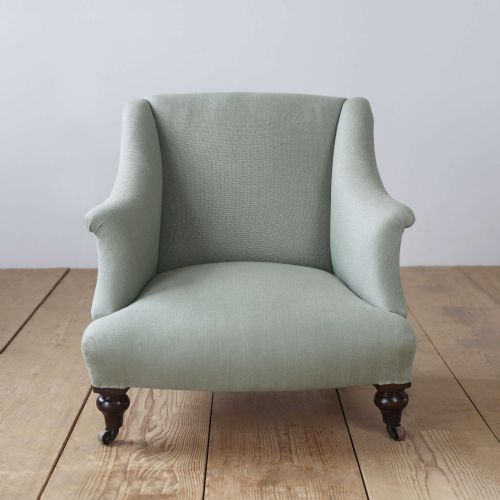
When you search for mahogany club armchairs, you encounter heavy, substantial seating designed primarily for libraries, studies, and country houses. These pieces span periods from the Georgian era through the Victorian, Edwardian, and into the early twentieth century.
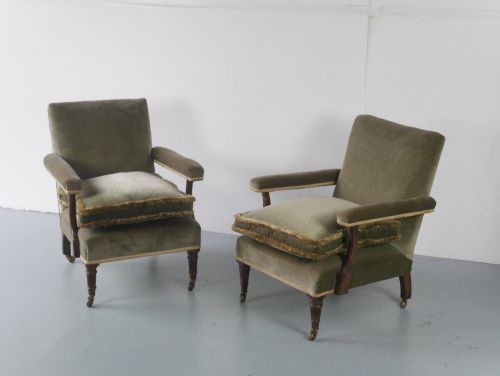
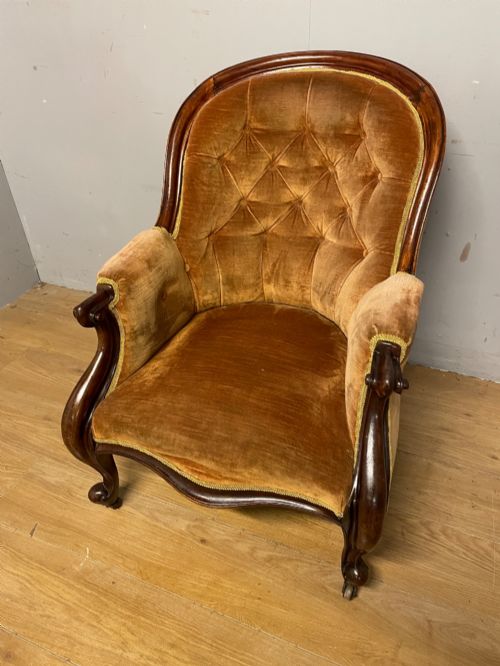
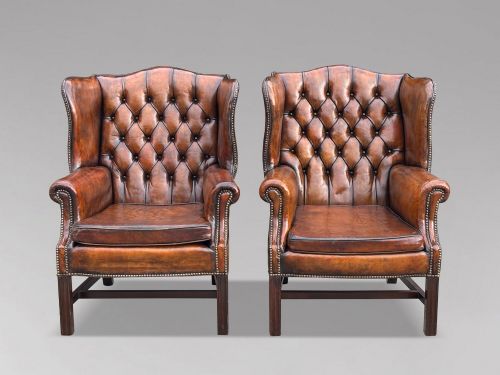
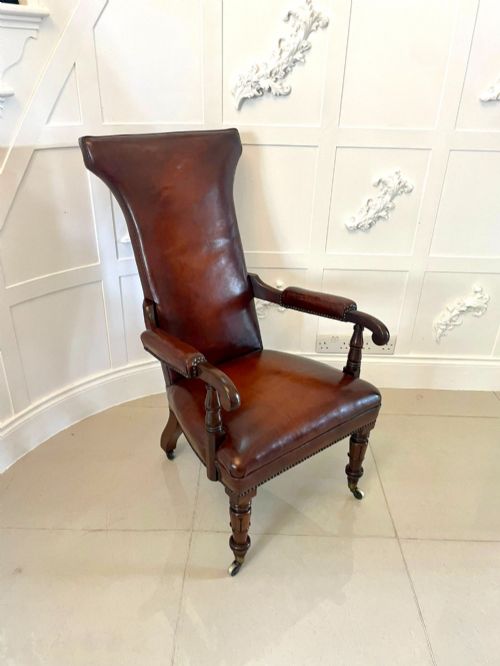
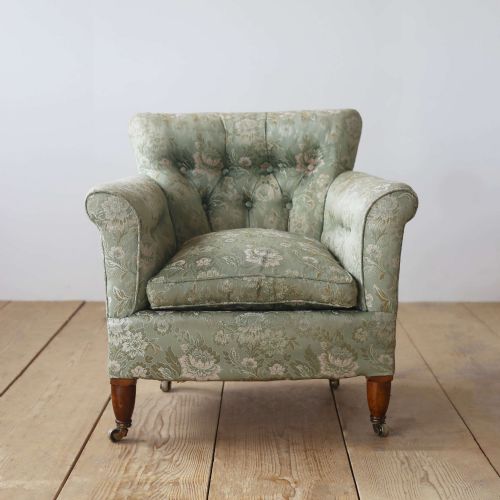
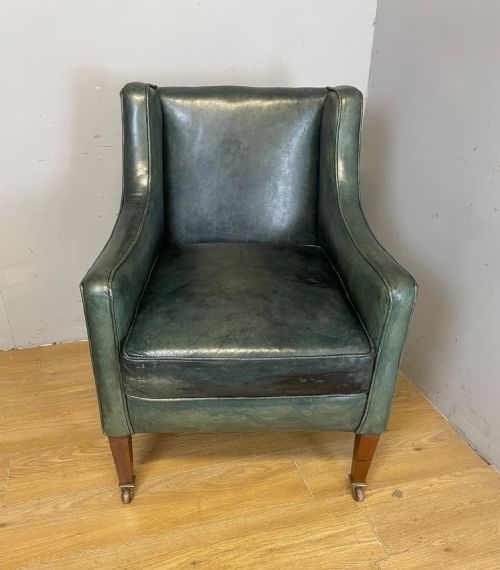
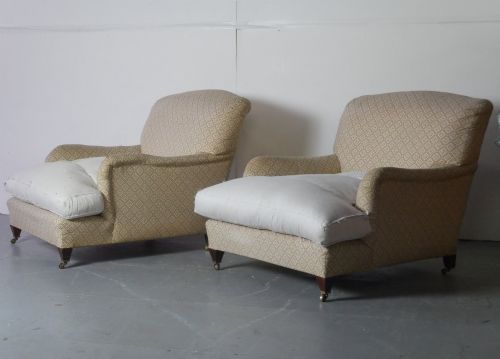
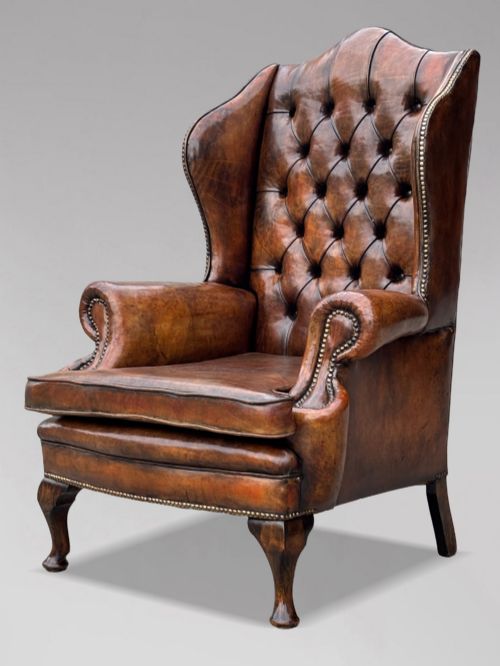
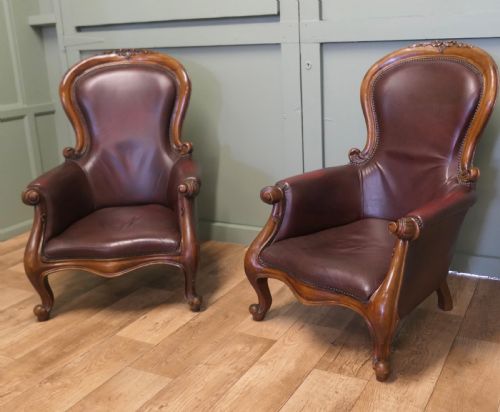
The most common examples on this page are nineteenth-century library and club armchairs upholstered in brown leather, frequently featuring deep seats, buttoning, and mahogany frames. Styles range from plain library chairs to wingbacks, tub chairs, and pieces bearing the influence of makers like Howard and Sons.
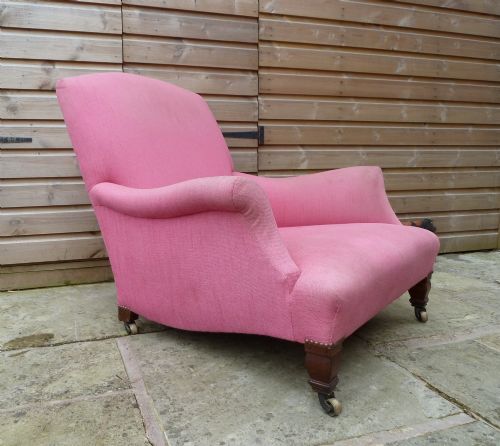
Makers and workshops including Holland and Sons, Hampton and Sons, Whytock and Reid, and Morris and Co appear alongside unassigned country house furniture. Forms vary from open armchairs to fully upholstered spoon backs and reclining chairs.
Materials and construction
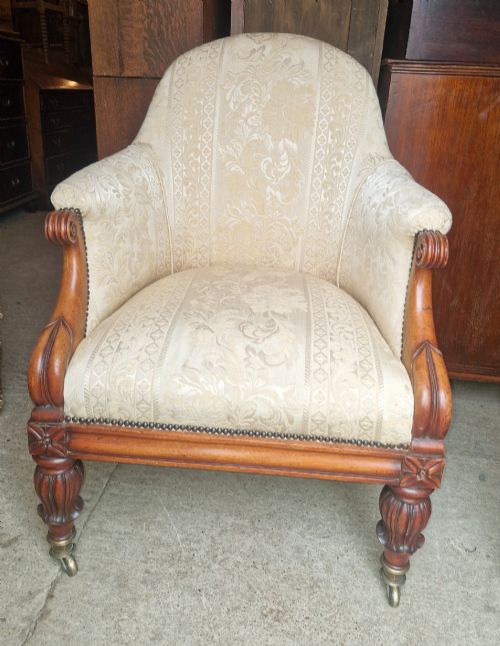
These armchairs rely on solid mahogany for their structural frames, legs, and exposed woodwork, sometimes accented with cane panels. Joinery is robust to support large-scale, deep-seated forms intended for sustained daily use.
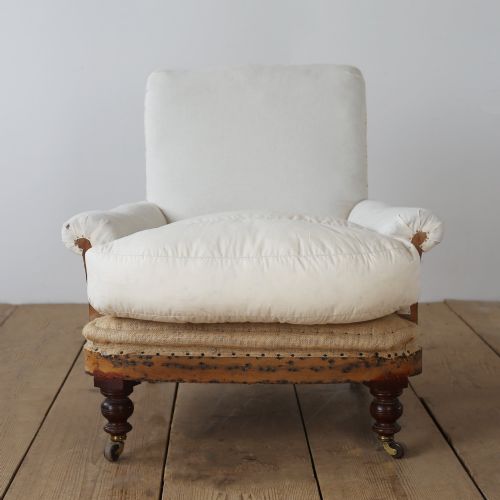
Upholstery materials include brown leather, fabric, velvet, hessian, and calico, often secured with brass studs along the borders. Interior padding incorporates traditional stuffing supported by springs or webbing, creating the characteristic deep seat.
Several pieces come equipped with matching footstools, ensuring nineteenth-century readers could achieve maximum horizontal relaxation.
Assessing quality and finish
Quality in these armchairs rests upon the calibre of the mahogany timber, the depth and figure of the wood grain, and the execution of any carved details. Superior pieces display substantial proportions and balanced frames that maintain stability.
The standard of upholstery and leather selection distinguishes better examples, particularly where hand-stitched buttoning, brass studding, and durable hide are employed. Original frames paired with sympathetic reupholstery retain higher integrity than heavily altered pieces.
Howard and Sons·Whytock and Reid·George Jack For Morris and Co·Holland and Sons·Hampton and Sons
The Mahogany Club Armchairs Glossary
- Mahogany
- A durable, reddish-brown tropical hardwood used extensively for furniture framing and decorative library chairs. It takes a fine polish and provides structural strength.
- Bergere
- An enclosed armchair with cane or wicker work sides and back panels set within a wooden frame. This French style gained popularity in British interiors during the nineteenth century.
- Wing back
- An armchair featuring protective side panels attached to the arms and back to block draughts. These upholstered seats often appear in leather for library and study use.
- Tub chair
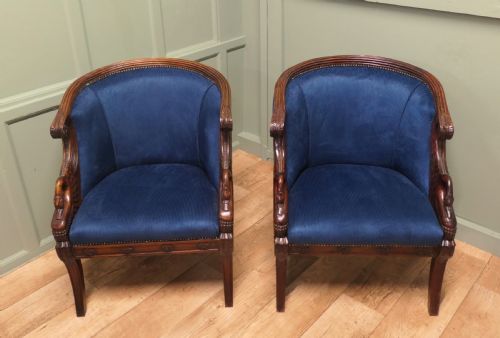
- A compact, curved armchair where the back rail flows continuously into the arms. These seats frequently incorporate mahogany frames with leather or cane inserts.
- Buttoning
- An upholstery technique where indentations are formed in the padding by pulling twine tightly through to the frame. This secures the filling and creates a patterned surface.
Mahogany Club Armchairs: Frequently Asked Questions
What defines a club armchair?
A club armchair is a deep, comfortable seat traditionally upholstered in leather and built on a sturdy wooden frame for heavy daily use.
These chairs originated as heavy study and library seating designed to offer maximum support during long periods of reading or relaxation.
How do I identify a Victorian armchair?
Victorian armchairs typically feature dark mahogany frames, substantial proportions, and often incorporate buttoned leather upholstery or carved wooden details.
They span the mid to late nineteenth century, encompassing styles from plain library chairs to elaborately upholstered spoon backs and wingbacks.
Where were these armchairs used?
These armchairs were placed in studies, libraries, drawing rooms, and country house smoking rooms where durable, comfortable seating was required.
Their robust construction made them suitable for communal spaces and private retreats alike throughout the nineteenth and early twentieth centuries.
Are these chairs suitable for modern rooms?
Their classic proportions and neutral leather or fabric tones allow these armchairs to integrate easily into contemporary living spaces.
Deep seats and traditional padding provide functional everyday comfort alongside historical character.