

Mahogany Clothing Storage
Mahogany clothing storage pieces are timber presses, wardrobes and chests built to hold garments, bringing dense grain and formal warmth to a room.
Mahogany Clothing Storage
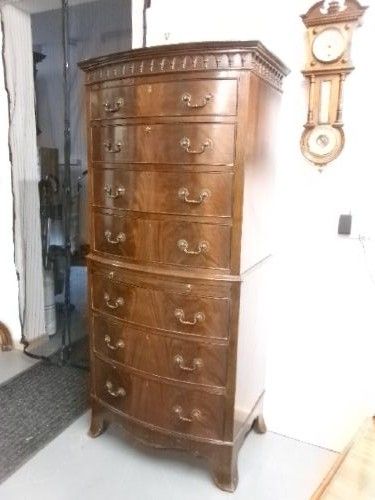
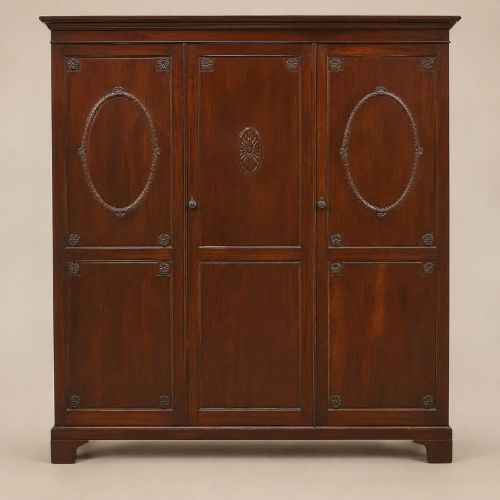
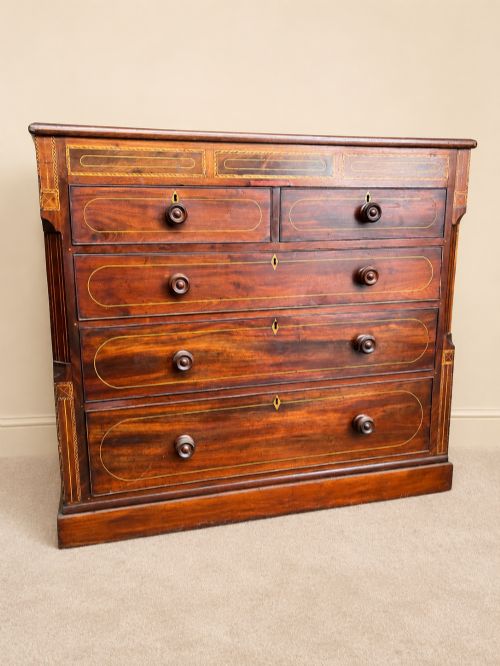
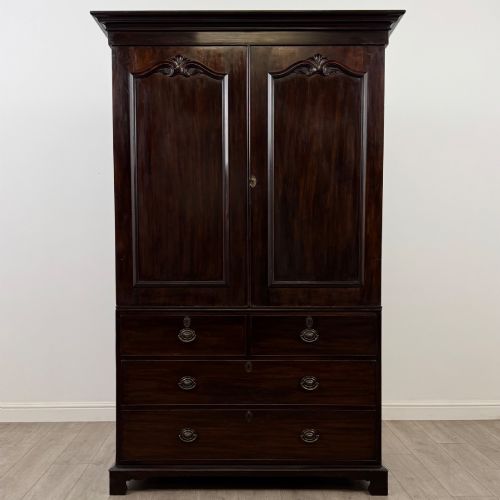
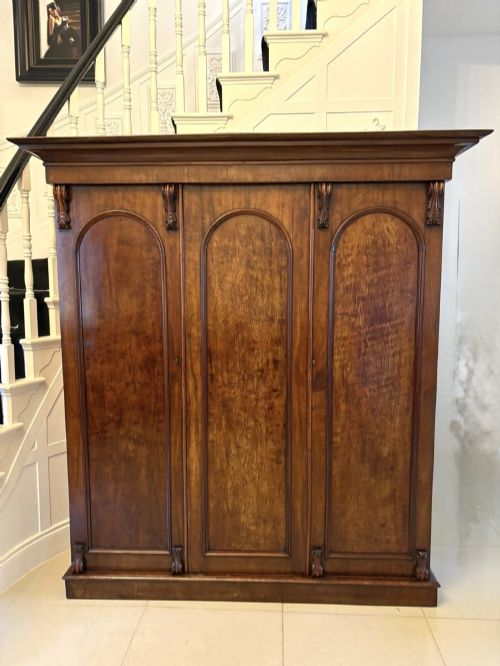
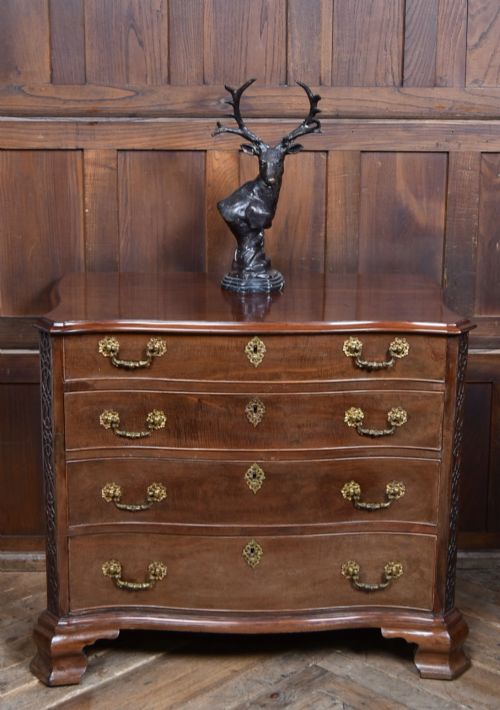
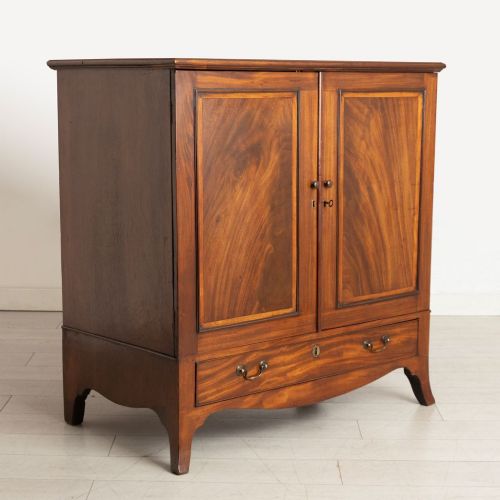
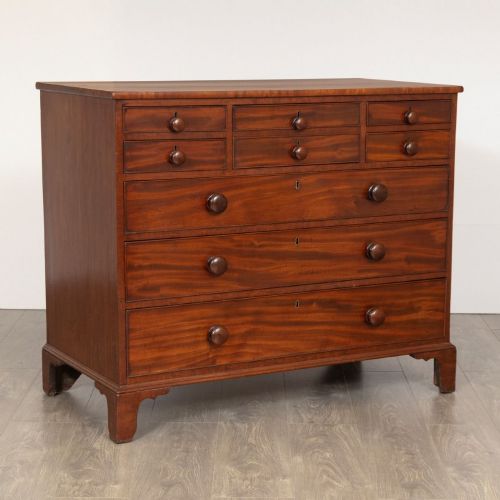
Mahogany clothing storage spans Georgian, Regency, Victorian and Edwardian periods, covering forms such as linen presses, wardrobes, tallboys and chests of drawers. A buyer searching this phrase encounters large clothes cupboards with panelled doors above drawer bases alongside simpler drawer chests.
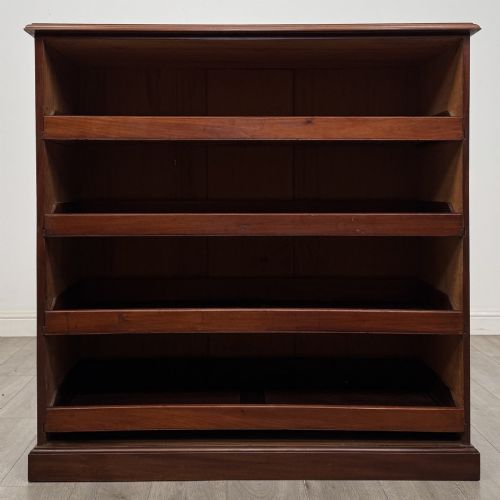
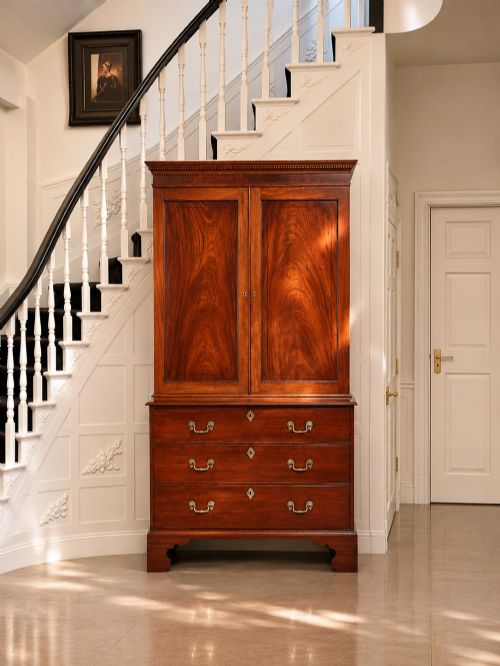
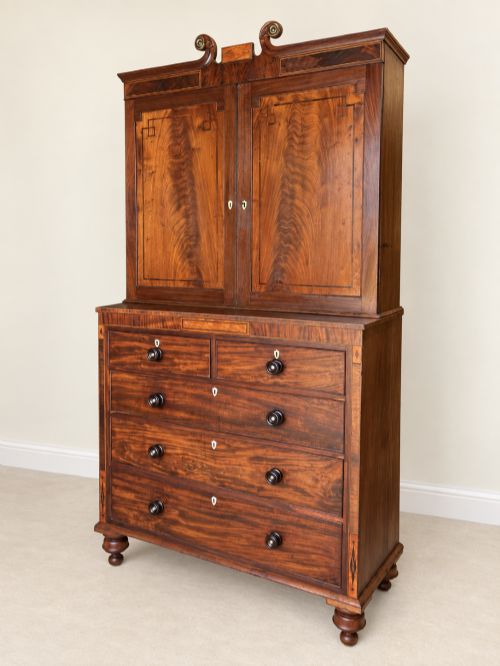
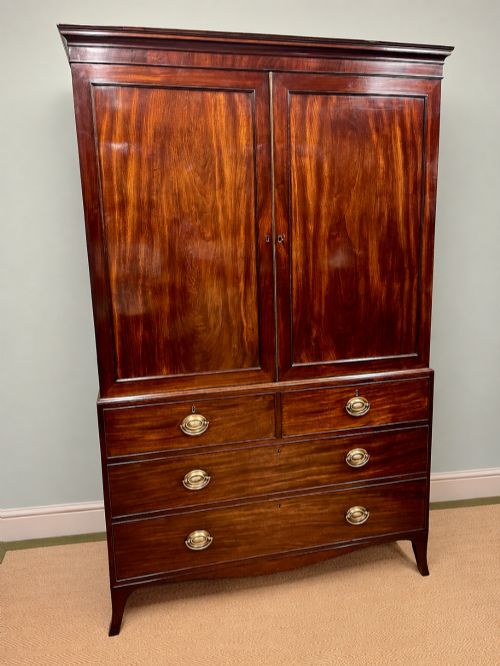
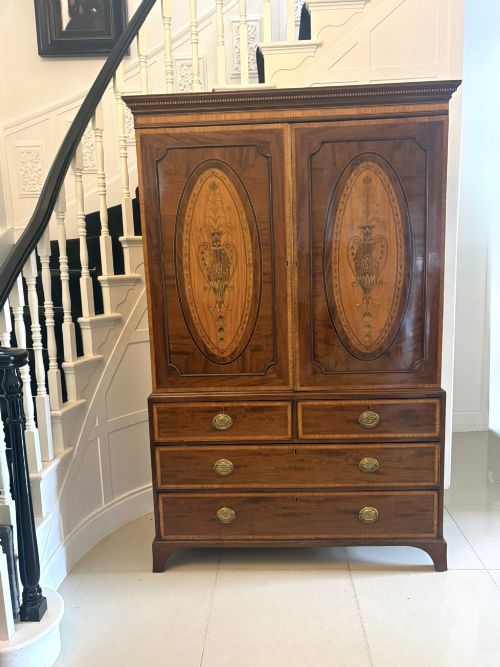
The linen press represents a frequent form on this page, combining upper sliding trays or hanging space with lower drawers. Wardrobes and compactum units also appear, offering dedicated hanging capacity from the 18th century through to the early 20th century.
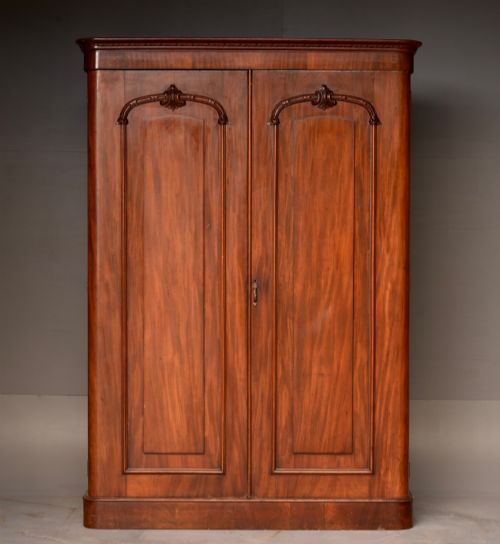
Georgian and Regency examples tend to feature architectural cornices and bracket feet, while Victorian and Edwardian pieces scale upwards into multi-door wardrobes with deep figured grain and satinwood inlay.
Materials and construction
Cabinetmakers built these pieces primarily from solid mahogany and flame mahogany veneer over secondary timbers such as oak and pine, applying boxwood, satinwood and rosewood for inlay and crossbanding. Brass hardware, including drop handles and escutcheons, secures the structural points and doors.
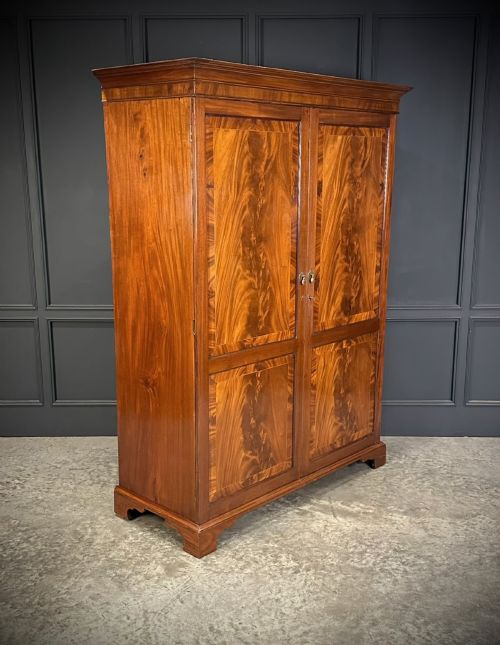
Techniques relied on hand-cut dovetails for drawer construction and pegged tenon joints for heavy carcases. Workshops utilised figured veneer sliced thin from burr or flame sections of timber to create mirrored grain patterns across large cupboard doors.
Mahogany Clothing Storage Retail Price Guide 2026
Typical asking prices for mahogany clothing storage among the pieces listed under this phrase on Sellingantiques today, from the lower quarter to the upper quarter. They describe what is for sale here now, not the wider market.
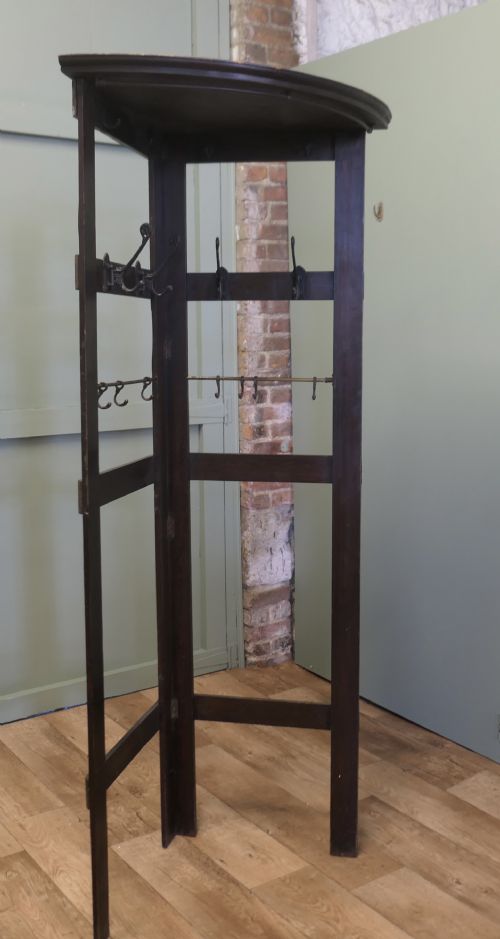
Portable folding sports wardrobes remind us that even Edwardians packed travel clothes racks when heading away for the weekend.
Gradations of craftsmanship
Quality rests upon the selection of timber figures, where symmetrical flame mahogany and precise satinwood stringing elevate a piece above plain stock. The depth of carved detail, such as blind fretwork cornices, separates standard utilitarian furniture from high workshop productions.
Interior execution dictates the standard, distinguishing pieces with carefully fitted sliding linen trays and secondary oak linings from those assembled with simpler pine internals and plain drawer sides.
Druce & Co.·Heals
The Mahogany Clothing Storage Glossary
- Linen Press
- A tall cupboard featuring upper doors enclosing sliding trays or shelves, positioned above a base of lower drawers. Originally designed for storing household linens flat before hanging space became standard.
- Compactum
- A large multi-compartment wardrobe combining hanging sections, banks of drawers and shelves within a single fitted unit. These pieces offer comprehensive clothes storage for larger bedrooms.
- Flame Mahogany
- A veneer cut from the fork of a mahogany tree where the grain twists into a fiery, undulating pattern. Cabinetmakers matched these symmetrical figures across large cupboard doors for decorative impact.
- Crossbanding
- A narrow strip of veneer laid across the main grain direction around the border of a drawer front or table top. It creates a neat visual frame using contrasting timbers such as rosewood.
- Blind Fretwork
- Carved ornamentation applied to flat timber surfaces to mimic traditional open fretwork joinery without piercing through the wood. It often decorates the cornices of Georgian linen presses.
Mahogany Clothing Storage: Frequently Asked Questions
What is a linen press?
A linen press is a tall piece of furniture featuring upper doors that enclose sliding wooden trays, sitting above a chest of drawers. They were built to store folded textiles flat.
Over time, many of these presses have had their internal trays removed and converted into hanging wardrobes for modern clothing storage.
How do I tell a Georgian press from a Victorian one?
Georgian pieces typically display restrained proportions, architectural cornices, bracket feet and subtle string inlay. They often utilise solid timber or fine flame veneers with hand-cut dovetails.
Victorian wardrobes and presses tend to be larger, heavier and feature more pronounced figured mahogany, applied carved mouldings and arched door panels.
Will modern coat hangers fit inside these wardrobes?
Many older wardrobes and linen presses feature shallower internal depths than modern built-in units because historical garments were narrower. It is wise to check internal hanging depths if you plan to use standard modern wooden hangers.
How should I care for mahogany furniture?
Mahogany benefits from placement away from direct heat sources and strong sunlight, which can dry out the timber and fade the rich colour. Regular dusting with a dry, soft cloth keeps the surface clean without needing heavy polishes.