

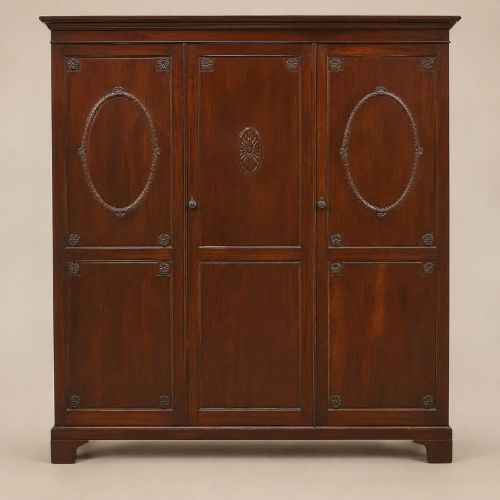
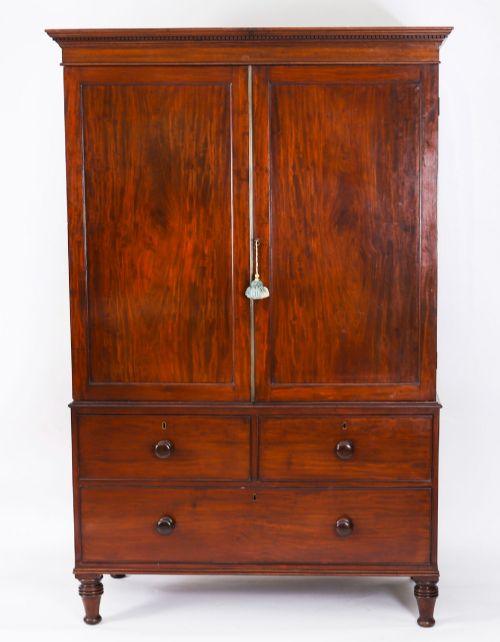
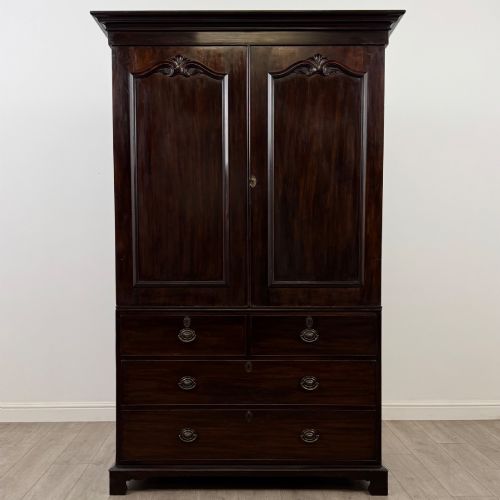
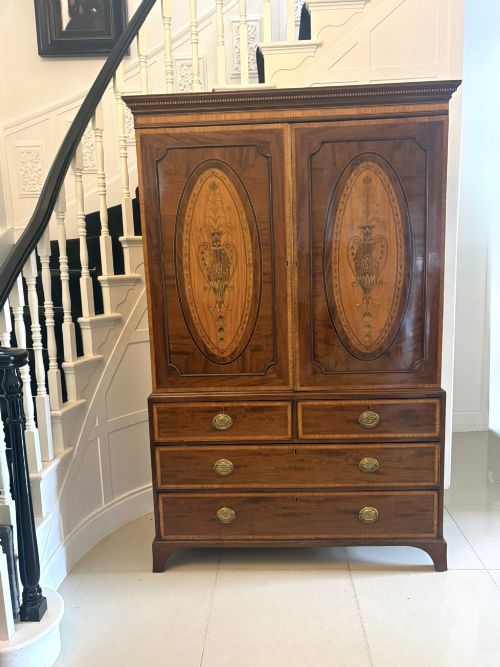
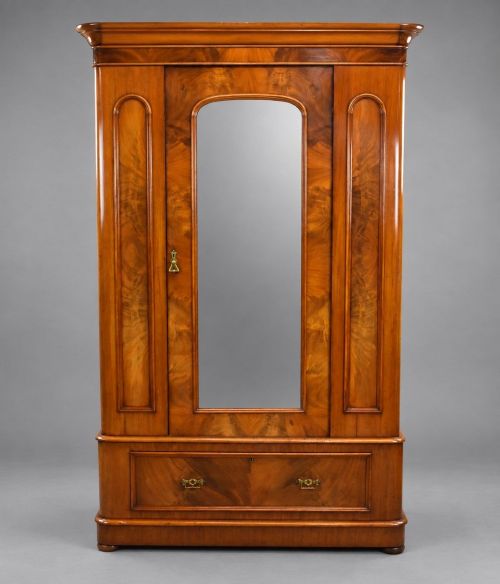
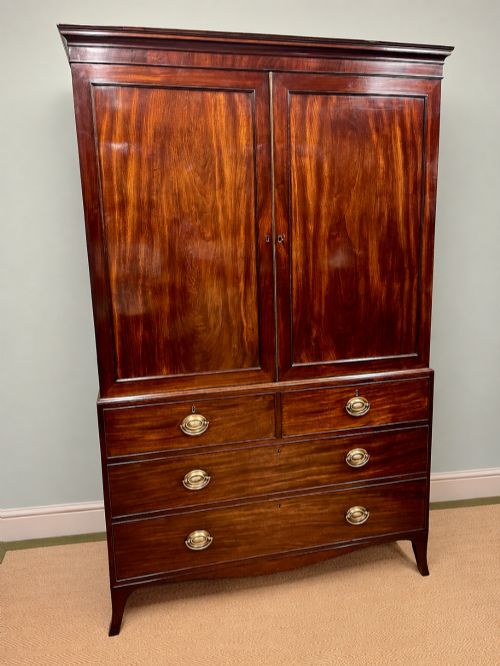
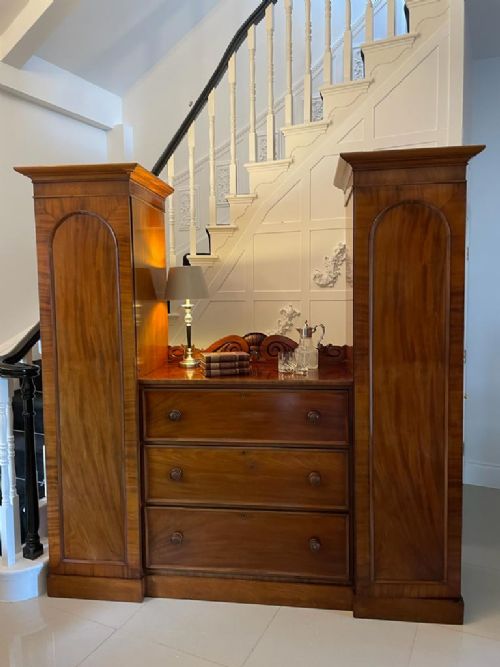
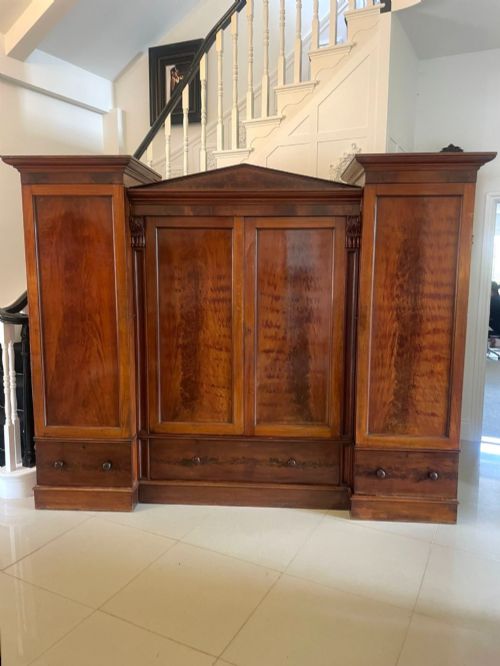
Mahogany Clothing Armoire
Mahogany clothing armoires bring substantial timber presence and considered storage into the bedroom.
Mahogany Clothing Armoire
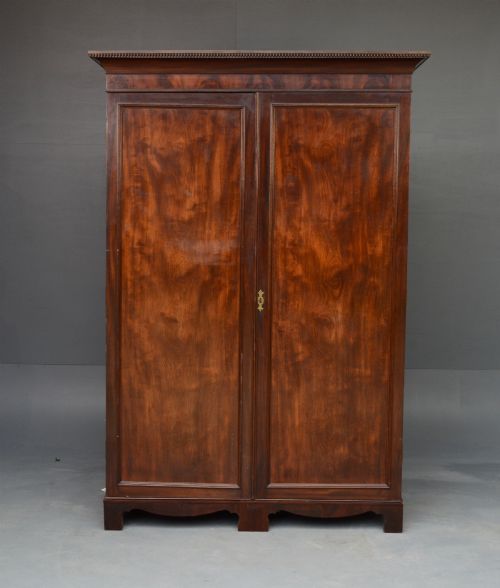
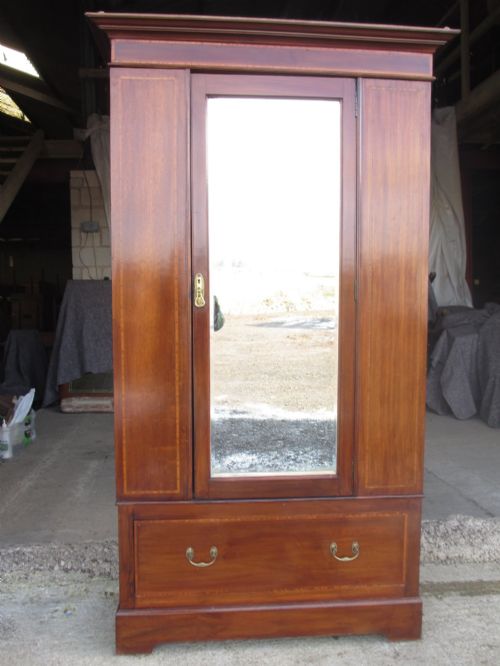
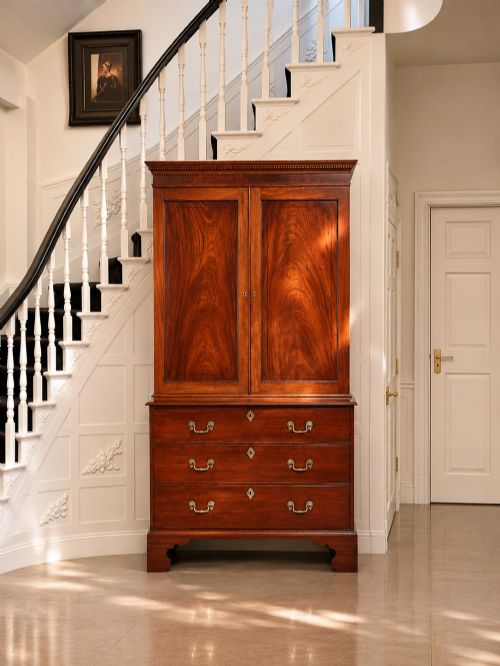
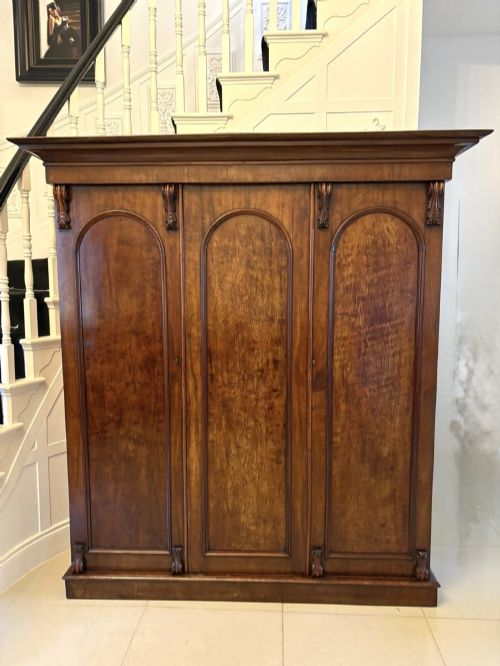
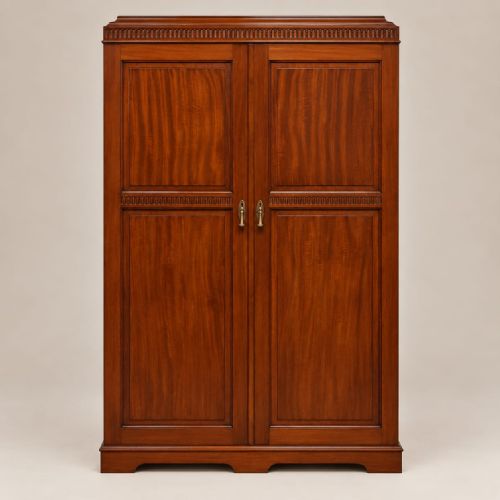
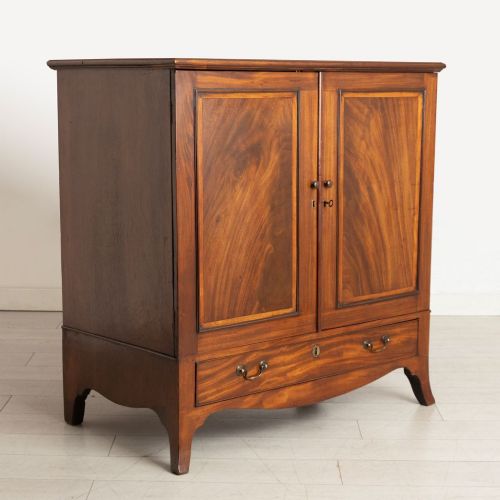
A mahogany clothing armoire functions primarily as a substantial storage piece, encompassing wardrobes, linen presses, and combination cupboards found across Georgian, Victorian, and Edwardian periods. Buyers searching for a mahogany clothing armoire will encounter double, triple, and single door formats, alongside dwarf press cupboards and housekeepers wardrobes.
The selection ranges from early Georgian and Regency iterations to late Victorian and Edwardian examples, including Sheraton Revival designs and specific forms like bowfront or inverted breakfront linen presses. Most pieces met on this page date from the nineteenth century, utilising dense tropical timber and fitted internal sliding trays or hanging space.
Makers such as Gillows, Druce and Co, and S & H Jewell appear among the listed items, marking high workshop output. The overarching category spans simple hanging spaces to complex combination compactum wardrobes featuring internal drawers and blind fretwork cornices.
What varies in quality
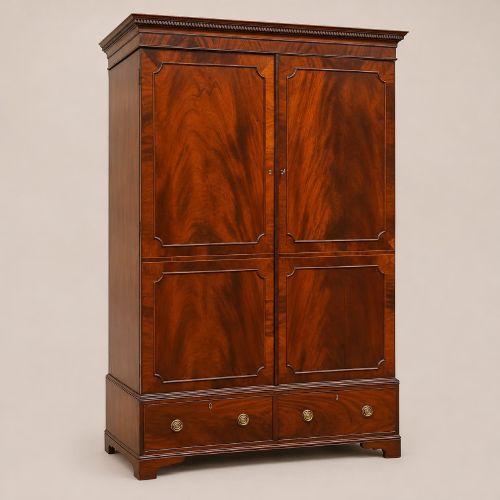
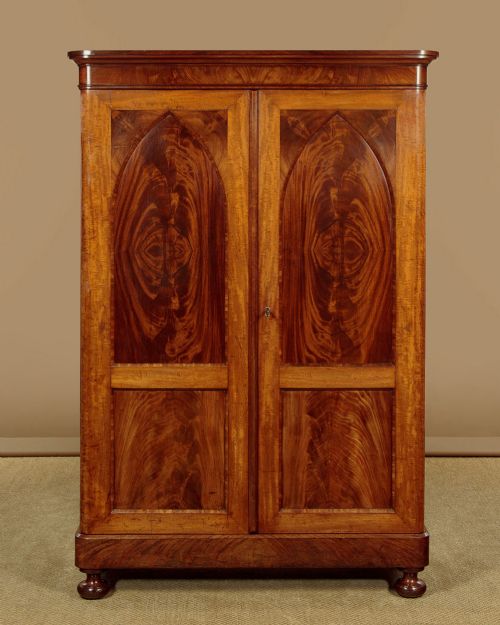
The depth of figure in the timber dictates visual distinction, with highly figured flame mahogany veneer marking pieces from superior workshops over plain stock. Construction complexity also separates standard double wardrobes from grander breakfront combination compactums with fitted interior drawers.
Cabinetmaking pedigree elevates certain examples, particularly documented pieces bearing maker stamps or attribution to notable firms like Gillows. The crispness of inlaid satinwood stringing and the integrity of original brass fittings further distinguish top-tier examples from utilitarian utility cupboards.
Mahogany Clothing Armoire Retail Price Guide 2026
Typical asking prices for mahogany clothing armoire among the pieces listed under this phrase on Sellingantiques today, from the lower quarter to the upper quarter. They describe what is for sale here now, not the wider market.
Some Georgian wardrobes arrived with built-in flat-pack flexibility, proving that dismantling heavy timber furniture for house moves is hardly a modern invention.
Gillows·Druce and Co·S and H Jewell
The Mahogany Clothing Armoire Glossary
- Linen press
- A large storage cabinet featuring upper sliding trays for folded textiles above a base of deep drawers. These pieces often doubled as gentlemen wardrobes in period homes.
- Flame mahogany veneer
- A decorative wood slicing chosen for its distinctive rippled pattern resembling flickering flames. Cabinetmakers laid this thin timber layer over stable secondary woods.
- Compactum
- A multi-functional wardrobe designed to combine hanging space, sliding trays, and drawers within one unified carcass. They represent some of the most complex organizational furniture of the nineteenth century.
- Blind fretwork
- Carved ornamentation applied to a solid background without piercing right through the timber. This technique frequently decorates the cornices of Georgian and revival pieces.
- Breakfront
- A cabinet facade where the central section projects forward from the flanking wings. This architectural shaping creates depth and shadow across large multi-door wardrobes.
Mahogany Clothing Armoire: Frequently Asked Questions
How do I fit a large wardrobe?
Many period wardrobes and linen presses were constructed to dismantle into sections, cornices, and base plinths for transport and installation.
Buyers should check if a specific armoire utilises modular assembly or flat-pack design to ensure it navigates domestic stairwells and doorways safely.
What is a linen press?
A linen press is a tall storage cabinet traditionally used to store folded sheets and garments on internal sliding wooden trays.
Over time, many of these pieces were converted internally to provide modern hanging space while retaining their characteristic press cupboard exterior.
How do I date an armoire?
Stylistic markers such as Regency flame veneers, Georgian bracket feet, or Edwardian satinwood inlay provide initial chronological indicators for each piece.
Construction methods, secondary timbers like oak or pine, and overall proportions further help narrow the decade of manufacture across the eighteenth and nineteenth centuries.
Can I hang long coats inside?
Internal layouts vary significantly between traditional linen presses with shallow trays and dedicated wardrobes built with full-length hanging drops.
Combination pieces often balance hanging space with drawers, so verifying internal depth and rail placement ensures long garments fit without bottom creasing.