
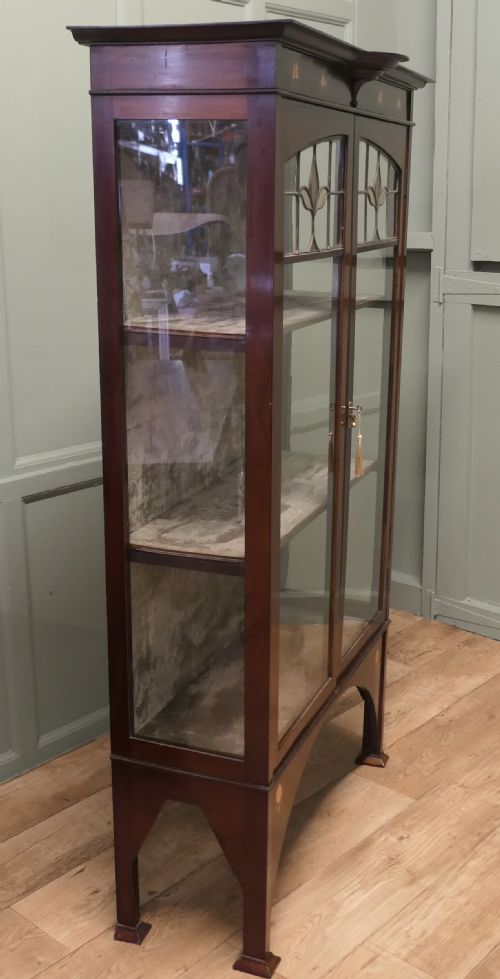
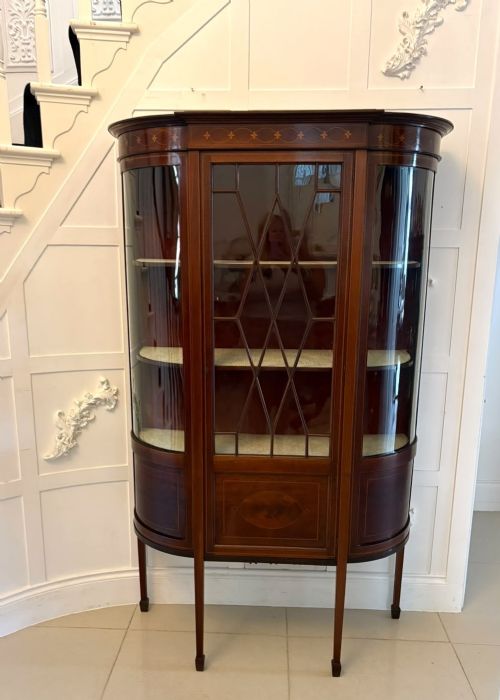
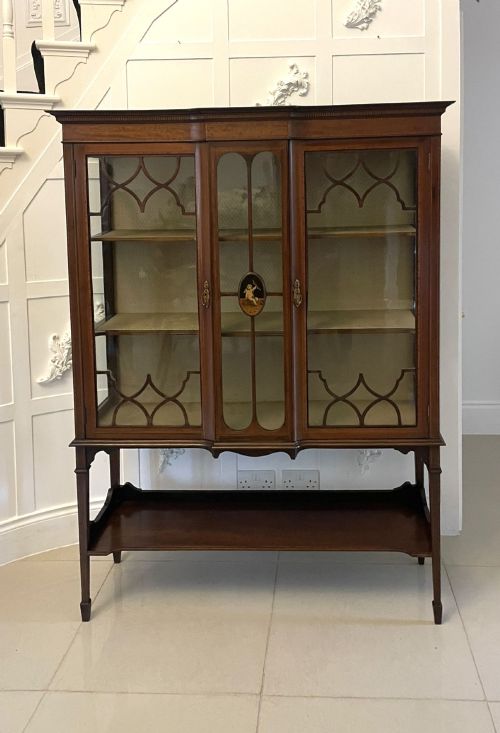
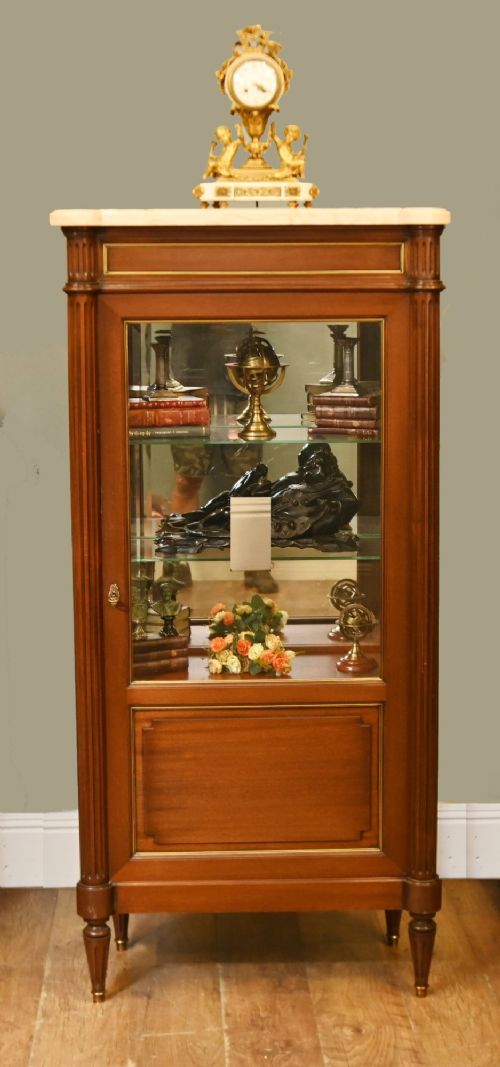
Mahogany China Display Cabinet
A mahogany china display cabinet provides an elegant stage for porcelain and glassware within a room, combining warm timbers with glazed protection.
Mahogany China Display Cabinet
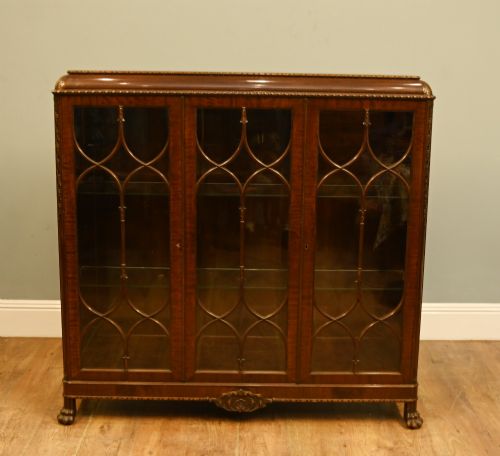
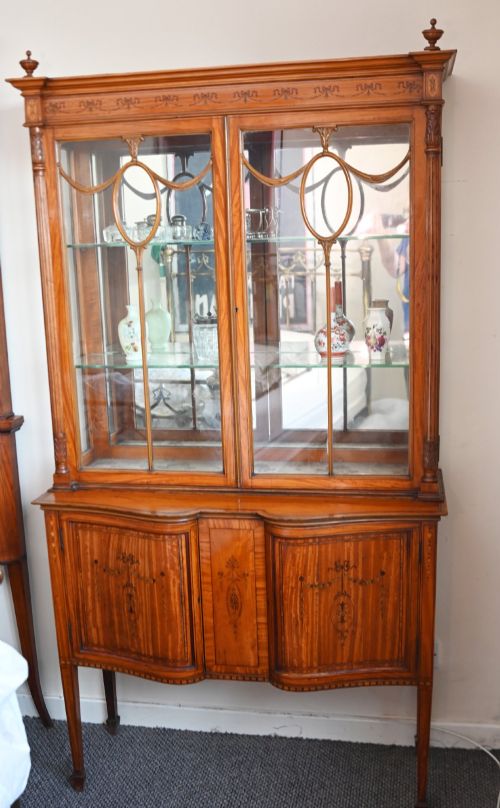
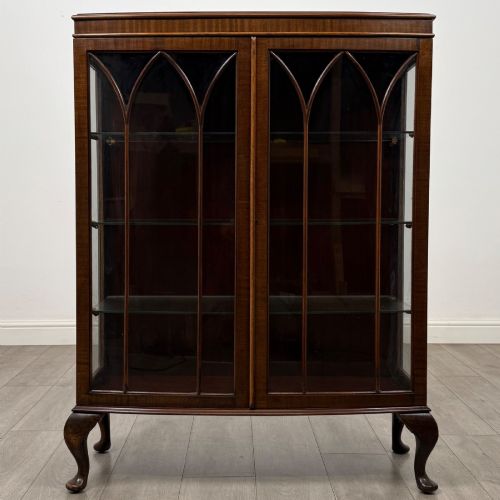
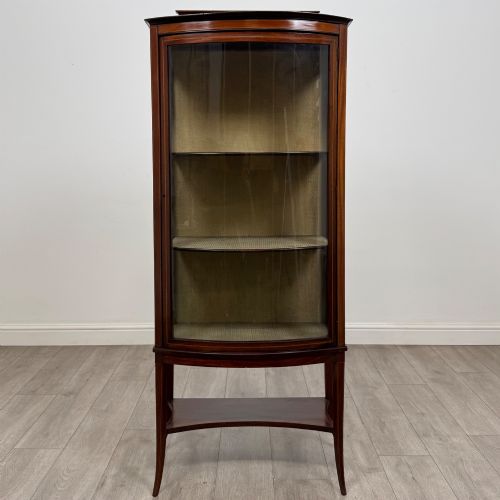
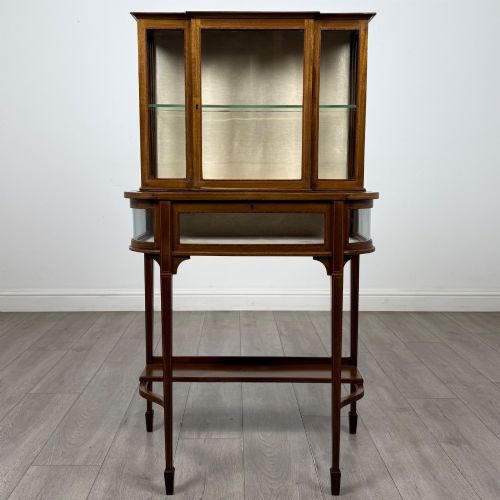
A mahogany china display cabinet appears across several distinct eras, with Edwardian and Victorian examples forming the bulk of what is seen here.
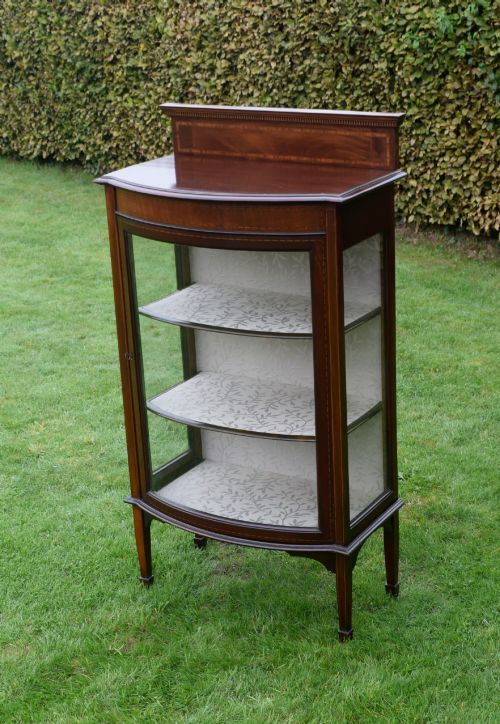
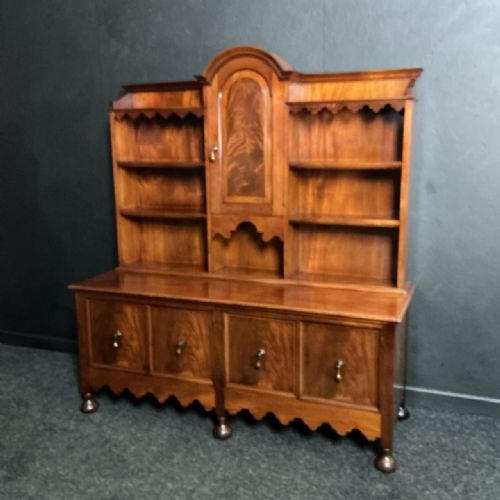
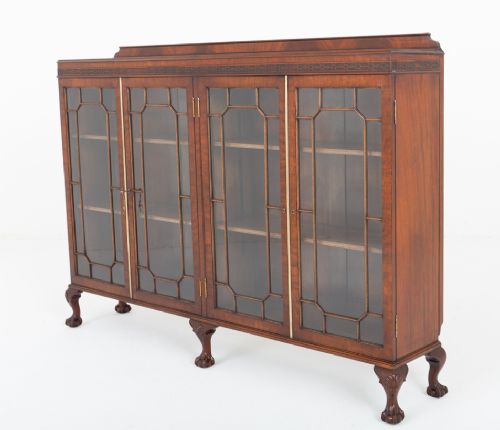
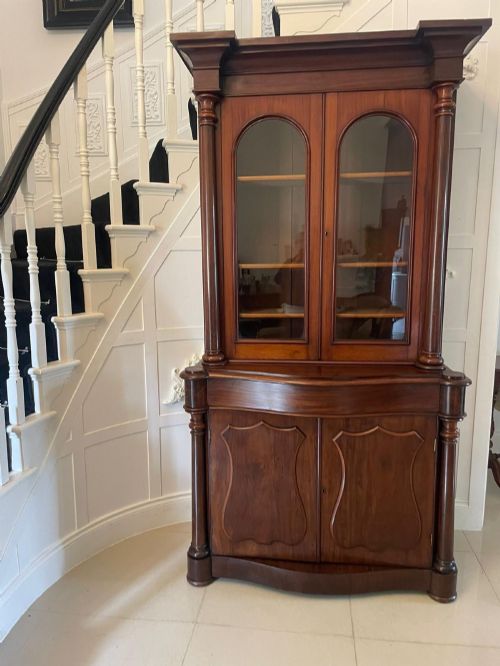
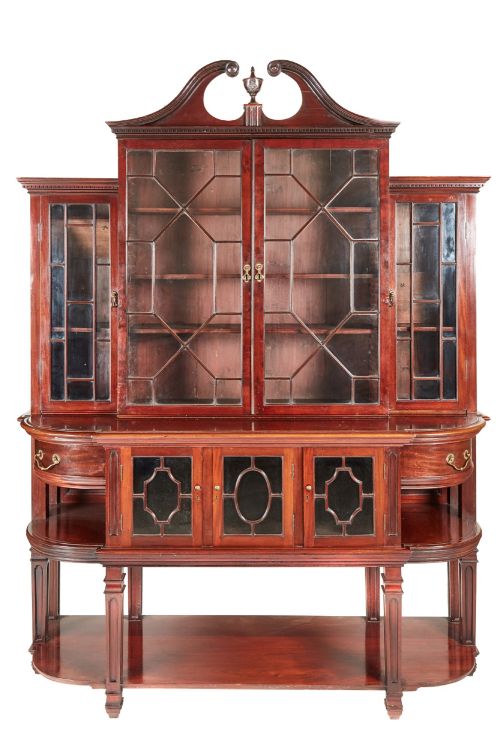
Makers shaped these pieces into diverse formats, ranging from freestanding breakfront bookcases and slim corner cupboards to bow front cabinets and vitrines.
The phrase encompasses versatile storage furniture that integrates glazed doors with timber carcases to protect ceramics from dust while exhibiting them.
Materials and Technique
Cabinetmakers built the carcases using solid and veneered mahogany, frequently embellishing the surfaces with satinwood inlay, marquetry, and brass hardware.
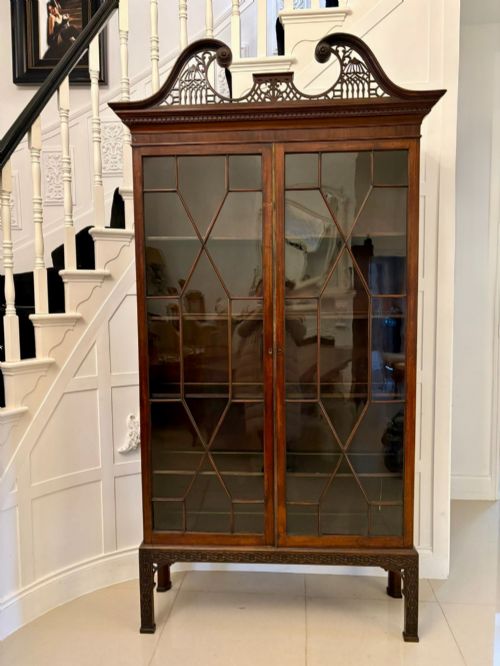
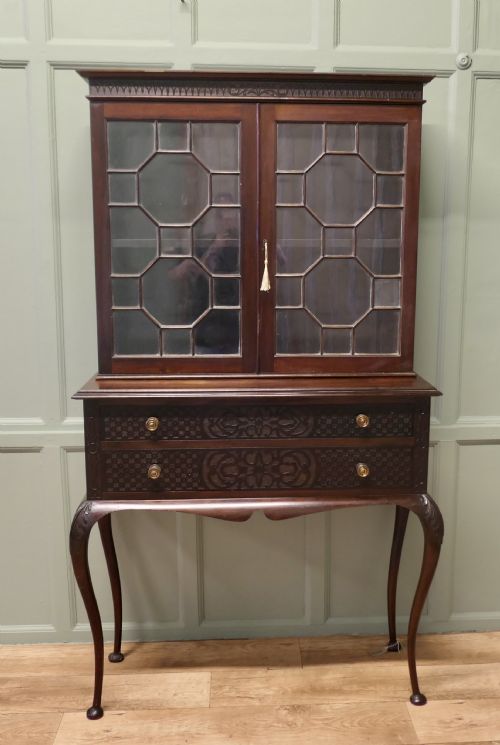
Glazing bars divided the glass panels into geometric or astragal patterns, while mirrored backs and fabric-lined interiors reflected light onto the displayed porcelain.
Listings feature mahogany, glass, satinwood, and brass across Edwardian and Victorian periods.
Craftsmanship and Proportion
Superior examples distinguish themselves through finely figured timber veneers, precise wood inlay, and balanced architectural proportions rather than sheer scale.
The refinement of the glazing bars, the crispness of any carved ornamentation, and the integration of original painted decoration mark the separation between standard production and exceptional cabinet work.
Jas Shoolbred·Edwards & Roberts·Maple & Co
The Mahogany China Display Cabinet Glossary
- Astragal glazed
- Glass doors divided into smaller panes by narrow wooden mouldings called astragals. This technique was favoured in Georgian and revival pieces to create a lighter visual effect.
- Breakfront
- A cabinet design where the central section projects forward from the flanking wings. This architectural arrangement adds depth and shadow to large bookcases and display units.
- Bow front
- A convex curved cabinet front that swells outward. This shape softens room corners and provides expanded interior space for display.
- Satinwood inlay
- Contrasting pale yellow-brown satinwood inserted into mahogany surfaces to create decorative borders and motifs. It became particularly popular during the Sheraton Revival period.
- Vernis Martin
- A simulated Japanese lacquer technique developed in France, using translucent resin layers over metallic leaf or painted decoration. It appears on select continental-influenced cabinets.
Mahogany China Display Cabinet: Frequently Asked Questions
What periods do these cabinets date from?
The pieces span from the late eighteenth century through the Victorian and Edwardian eras up to the early twentieth century. Most examples belong to the Edwardian period and the later decades of the nineteenth century.
Revival styles such as Sheraton Revival and Chippendale Revival also draw on earlier Georgian design traditions.
How were these cabinets used originally?
They were designed for formal reception rooms and drawing rooms to showcase prized porcelain sets, glass, and collectibles. The glazed doors kept dust away while allowing family collections to remain visible to guests.
Lower wooden cupboards often provided additional concealed storage for household linens or supplementary dining items.
How do I tell Edwardian pieces from Victorian ones?
Victorian cabinets often feature heavier carved mahogany and darker timber tones with robust proportions. Edwardian pieces generally display lighter frames, delicate satinwood inlay, and refined Sheraton Revival influences.
Inlaid stringing and marquetry motifs became especially prominent around nineteen hundred.
How should I care for mahogany and glass?
Keep timber cabinets away from direct sunlight and steady heat sources to prevent the mahogany veneer from drying out or warping. Dust the carved surfaces and glazing bars gently with a dry cloth.
Use standard glass cleaner on the panes while taking care to keep moisture away from the timber frames.