
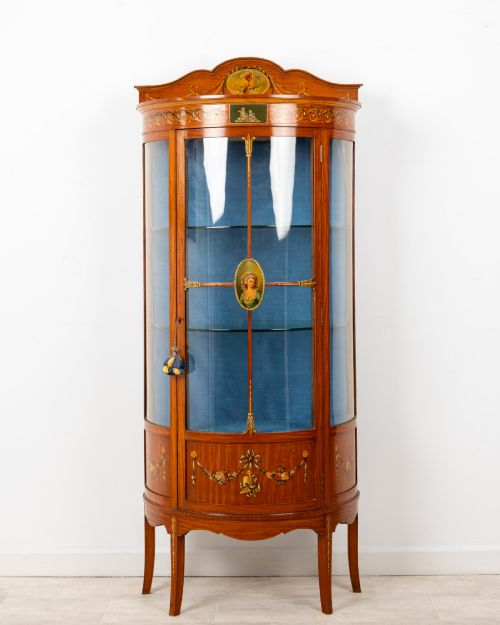
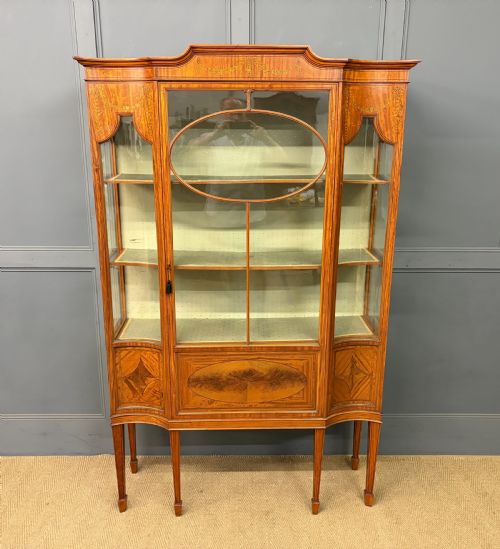
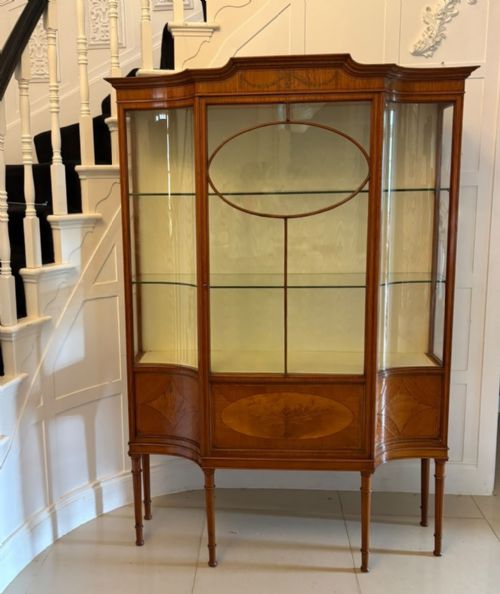
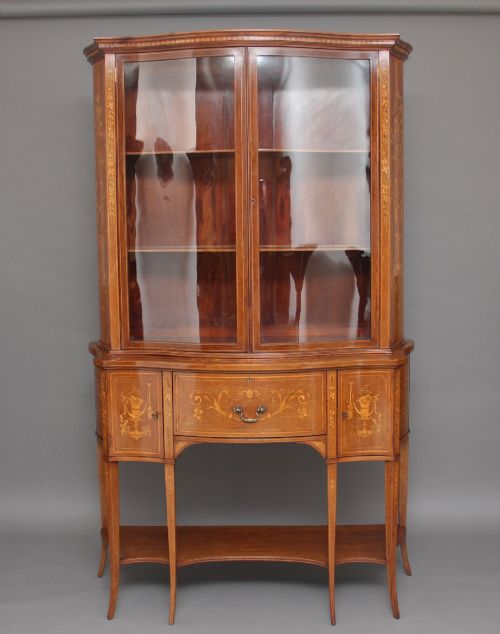

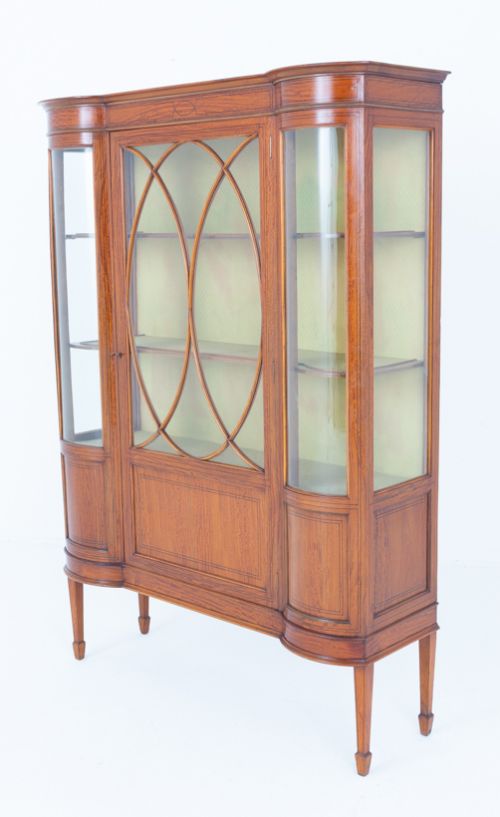


Bow Fronted China Cabinet
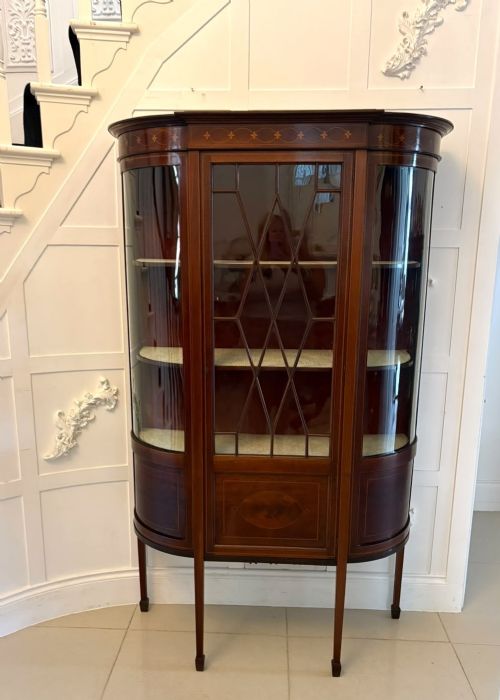
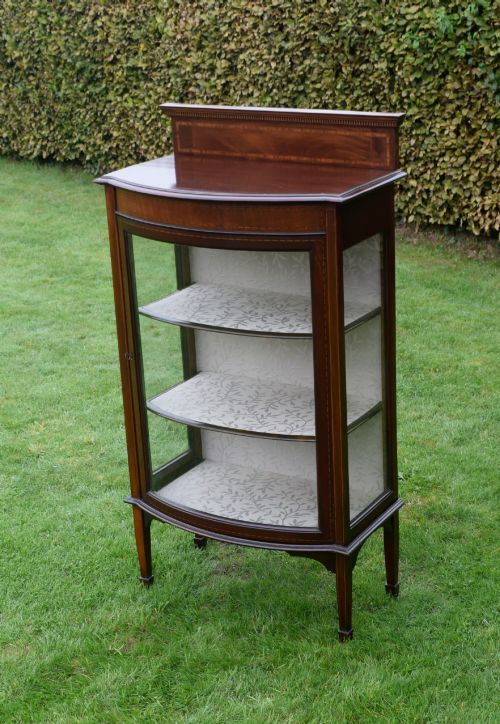
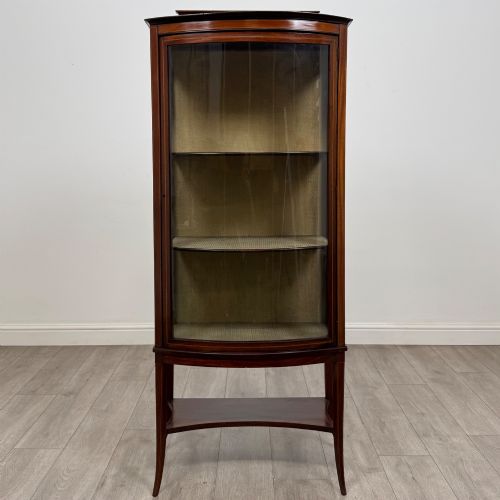
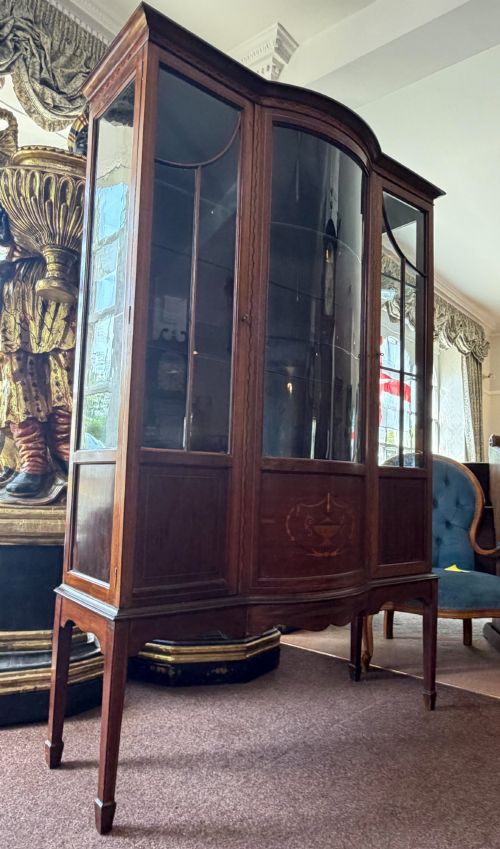
A bow fronted china cabinet brings curved glass and refined timber into a room to hold porcelain and curios.
Bow Fronted China Cabinet
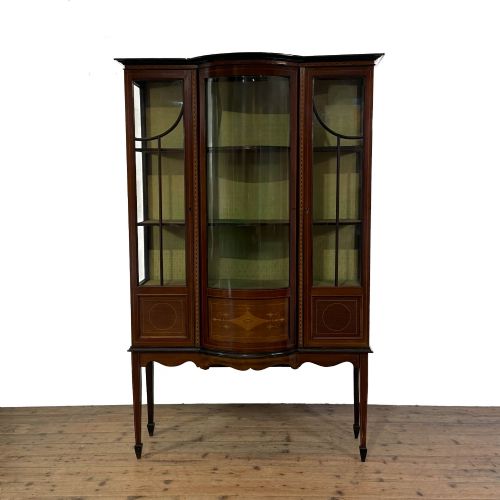
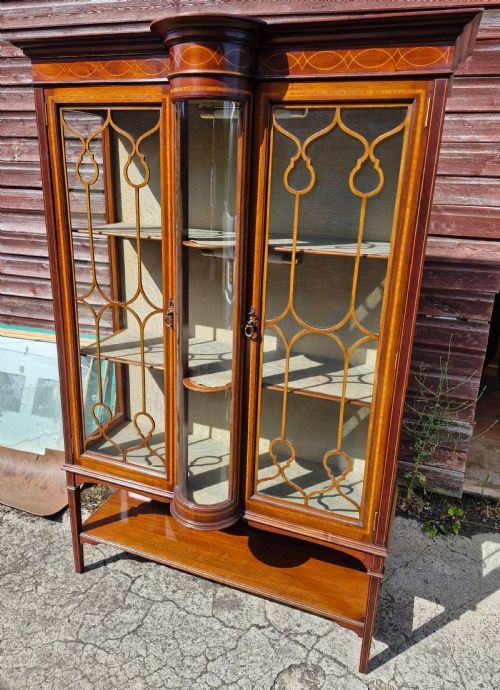
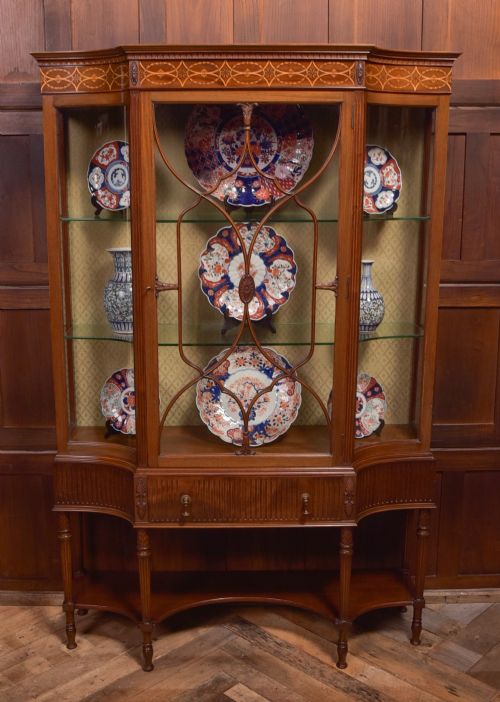
A bow fronted china cabinet provides enclosed display space with a characteristic convex curve to the front elevation. Buyers searching this phrase encounter pieces predominantly from the Edwardian era and the late Victorian period, alongside occasional examples from the nineteenth century and the nineteen-thirties.
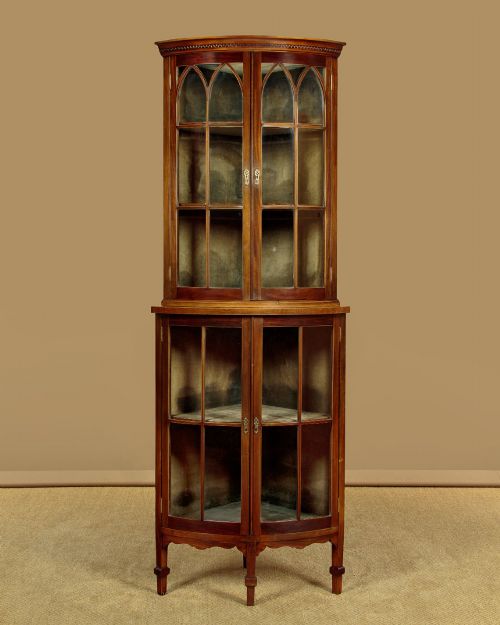
The dominant forms on this page include freestanding display cabinets, corner cabinets, and library bookcases with glazed doors. These pieces serve to showcase china and glass while protecting contents behind timber and glass panels.
How they were made
Cabinet makers constructed these pieces primarily using mahogany and satinwood, often embellishing surfaces with delicate satinwood or fruitwood inlay, and occasionally burr walnut. Glazing relies on fitted glass panels, sometimes curved to match the bowed doors, set within wooden frames alongside brass hardware and interior fabric linings.
Joinery techniques united structural timbers with decorative veneers and inlay work, creating stable carcases capable of supporting heavy glass doors and internal shelving. Workshops applied polished finishes to highlight the grain of the mahogany and satinwood.
One Edwardian display cabinet carries later sign-writing listing the names of various perfume brands.
What varies in quality
The standard of a bow fronted china cabinet depends upon the refinement of its timber selection and the precision of its inlay work. Finer examples exhibit carefully chosen mahogany or satinwood paired with intricate, well-executed floral or classical fruitwood inlay.
Structural harmony also distinguishes better pieces, visible in the smooth operation of bowed doors and the clarity of the glass. The integration of painted details or burr walnut adds further distinction to the design.
Maple & Co
The Bow Fronted China Cabinet Glossary
- Bow front
- A convex curved front on a cabinet or chest that projects outward in an arc. This shape softens the corners of furniture and allows for wider internal space.
- Inlay
- Decorative pieces of contrasting timber, such as satinwood or fruitwood, fitted into depressions carved into the primary wood surface. It creates flat ornamental patterns across the front of the cabinet.
- Vitrine
- A glass-fronted display cabinet designed specifically for showing porcelain, glassware, or objects of vertu. The term often denotes pieces with extensive glass panels on the sides as well as the front.
- Sheraton Revival
- A late nineteenth and early twentieth century design style inspired by the late eighteenth-century furniture maker Thomas Sheraton. It utilises light timbers, symmetrical proportions, and delicate inlay.
- Bijouterie cabinet
- A specialised display case with a glass top or upper section intended for small precious items and jewellery. These pieces often feature fabric-lined interiors to protect delicate objects.
Bow Fronted China Cabinet: Frequently Asked Questions
What periods do these cabinets come from?
The pieces listed span the Victorian and Edwardian eras, with examples dating from the late nineteenth century through to the nineteen-thirties. Edwardian and late Victorian pieces predominate.
Craftsmen of these periods drew inspiration from earlier Sheraton designs, applying traditional woodworking methods to create curved display furniture.
How do I care for the timber?
Maintain the mahogany and satinwood surfaces by dusting regularly with a soft, dry cloth and avoiding direct sunlight. Proper humidity levels prevent the timber and inlay from warping.
Occasional polishing with traditional wax helps nourish the wood and preserve the lustre of the polished finish.
Can these cabinets hold heavy items?
These cabinets suit the display of china, porcelain, and glassware on their internal shelves. The structure is built for lighter decorative collections rather than heavy books.
Uneven weight distribution should be avoided to protect the shelves and the interior fabric linings.
Where should I place a corner cabinet?
A freestanding corner cabinet fits directly into room junctions to utilise otherwise empty space. The curved bow front projects outward to catch the light from nearby windows.
Placing the piece away from direct heat sources protects the timber joints and glass settings.