

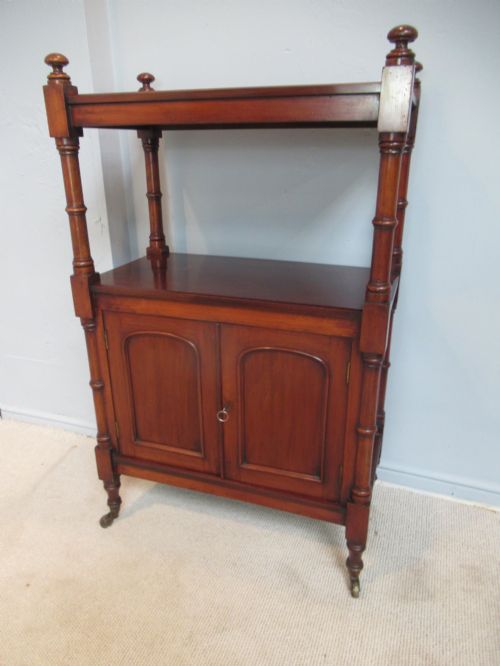


Mahogany Chiffonier Buffet
A mahogany chiffonier buffet brings practical storage and architectural presence to a room, spanning periods from Regency to late Victorian.
Mahogany Chiffonier Buffet
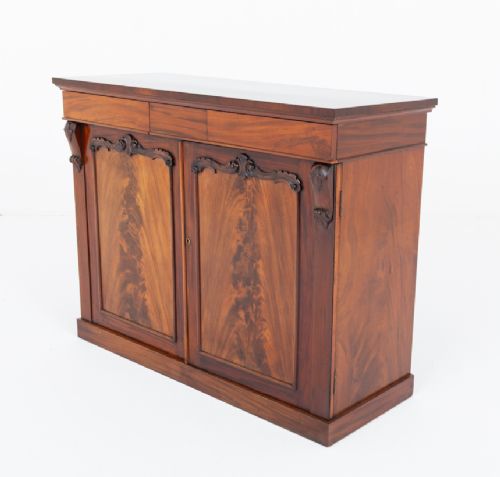
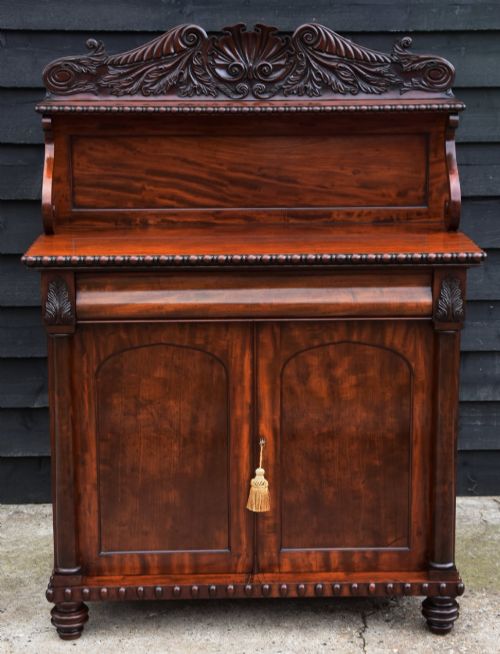
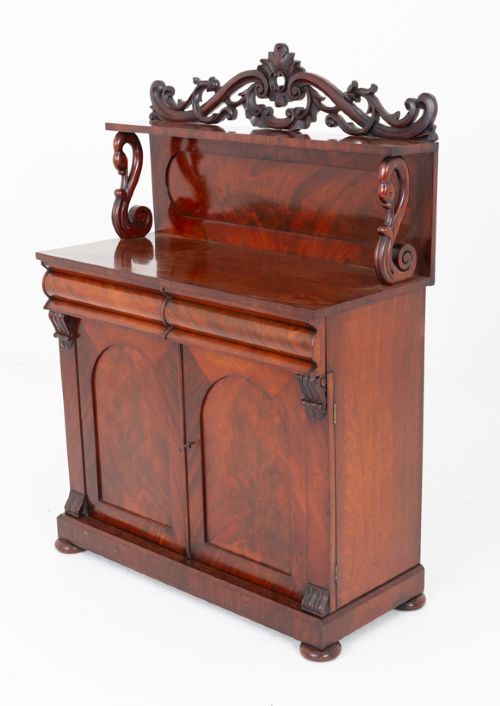
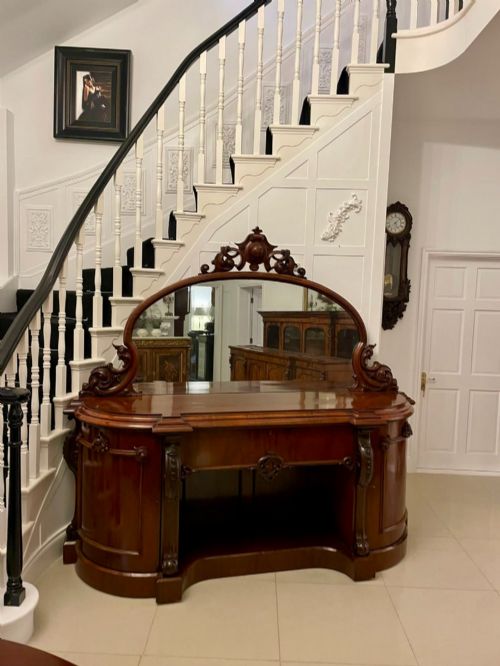
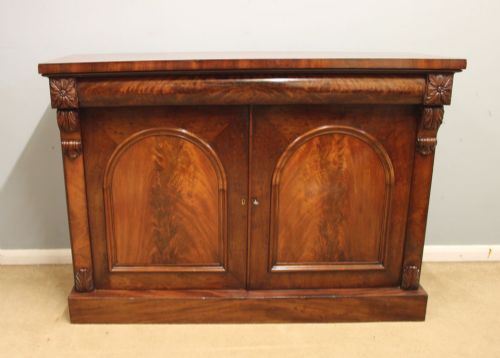
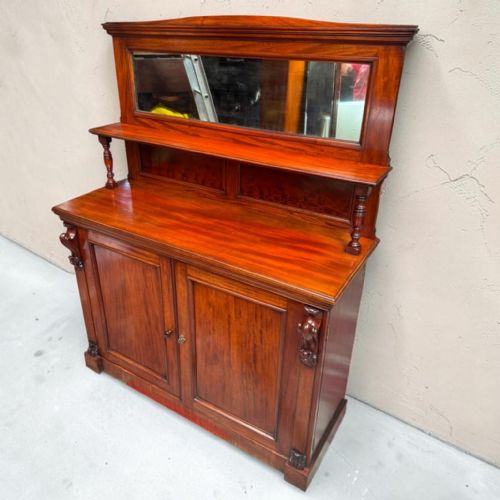
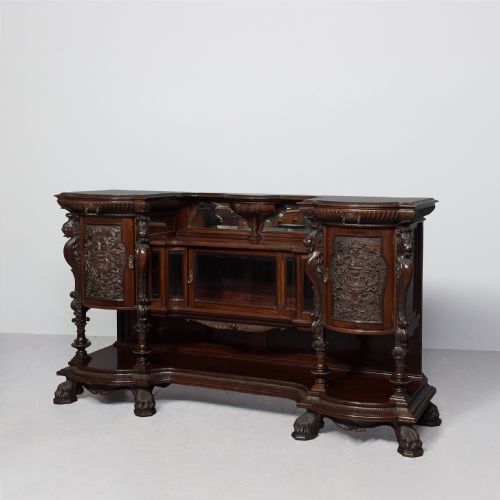
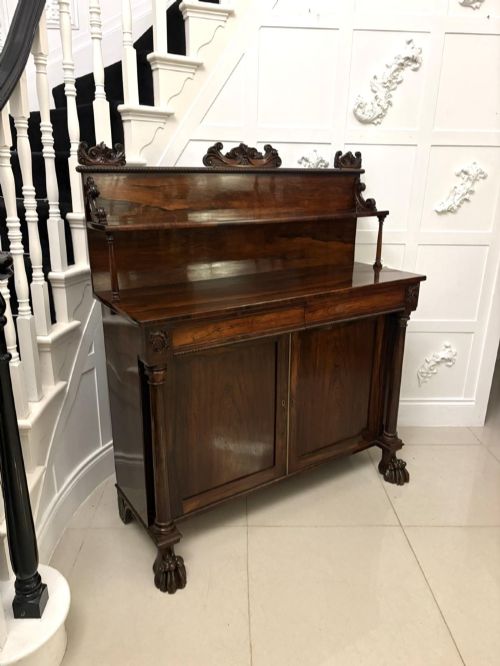
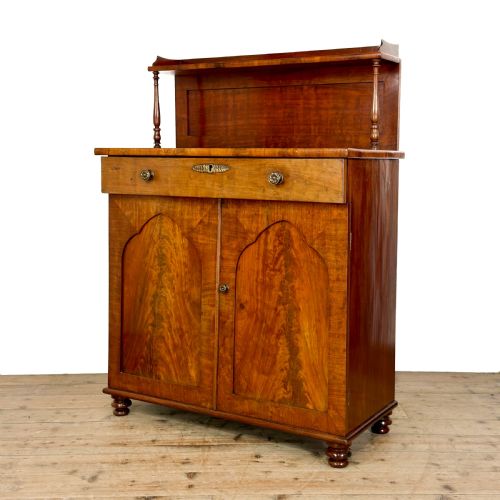
A mahogany chiffonier buffet combines the enclosed cupboard storage of a sideboard with upper shelving or mirror-backs, designed for dining rooms and parlours. These pieces function primarily as serving surfaces and storage units, often featuring lower doors flanked by columns, pilasters or carving.
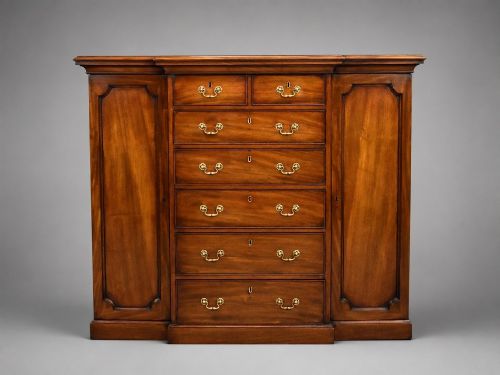
The versions most commonly met on this page belong to the Victorian and Regency periods, spanning the nineteenth century alongside examples from the eighteenth century. Makers constructed them in various proportions, ranging from petite small chiffoniers to large pedestal sideboards and breakfront cabinets.
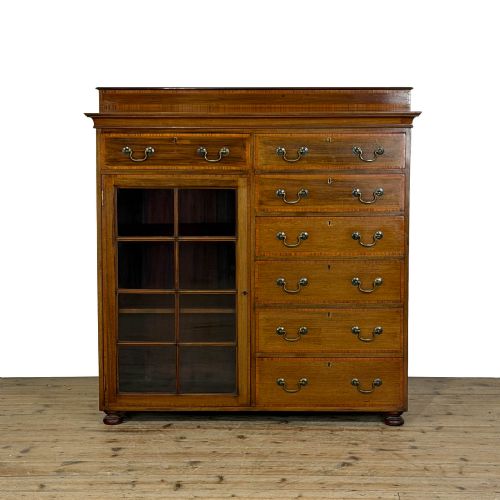
Formations include pieces with glass doors, fabric panels, mirror glass and open display shelves, sometimes styled as side cabinets or credenzas. Each variant adapts the basic buffet structure for holding silver, linen or serving dishes while displaying decorative objects.
Materials and construction methods
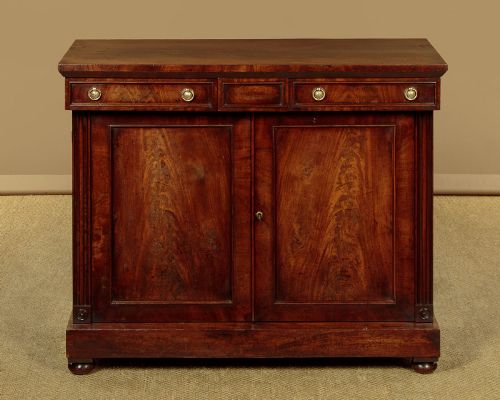
Cabinet makers relied heavily on solid mahogany and flame mahogany veneer applied over secondary timbers, selecting figured grains for visual depth on doors and drawer fronts. They incorporated brass for hardware, grills and decorative mounts, particularly on Regency and early nineteenth-century pieces.
Workshop construction frequently utilised mirror glass for upper back panels to reflect light, alongside fabric insertions behind wooden or brass fretted door grilles. Structural joints employed traditional cabinet-making techniques to support the heavy weight of solid timber tops and internal shelving.
Mahogany Chiffonier Buffet Retail Price Guide 2026
Typical asking prices for mahogany chiffonier buffet among the pieces listed under this phrase on Sellingantiques today, from the lower quarter to the upper quarter. They describe what is for sale here now, not the wider market.
Materials recorded across the inventory include flame mahogany veneer, solid mahogany, brass, mirror glass and fabric panels.
Distinctions in grade and execution
Quality separates pieces through the selection of timber veneers, where highly figured flame mahogany demonstrates superior material choice compared to plain grain boards. The crispness of carved details, such as console scrolls, applied moulding and architectural pediments, marks the skill of the original workshop.
Internal construction standards differentiate standard utility furniture from high-status commissions, visible in the thickness of secondary timbers, drawer linings and the precision of joint work. The integration of original brass fixtures, bevelled mirror glass and well-fitted doors preserves the integrity of the piece.
Gillows
The Mahogany Chiffonier Buffet Glossary
- Chiffonier
- A low sideboard or cabinet, typically featuring enclosed cupboards below and sometimes a shelf or mirror-back above. This form evolved during the Regency period and remained popular throughout the Victorian era.
- Buffet
- A side table or cabinet used for serving food and storing dining ware. These pieces provide a broad top surface and generous lower storage.
- Flame mahogany veneer
- A decorative wood slice cut from the fork of a mahogany tree where the branch joins the trunk. This produces a distinctive flickering, flame-like grain pattern prized by cabinet makers.
- Breakfront
- A cabinet design where the central section projects forward from the flanking sections. This configuration adds architectural depth to sideboards and bookcases.
- Pedestal sideboard
- A heavy sideboard style featuring central drawers flanked by two enclosed pedestal cupboards resting on the floor. These large forms suit spacious dining rooms.
Mahogany Chiffonier Buffet: Frequently Asked Questions
What is a chiffonier buffet?
A chiffonier buffet is a low storage cabinet combining a serving surface with lower cupboards and often an upper shelf or mirror. They served utilitarian and display purposes in dining rooms and sitting rooms.
These pieces hold tableware, linens and bottles while providing a surface for lamps or decorative objects. Their enclosed lower sections keep contents dust-free and secure.
How do I date a mahogany chiffonier?
Dating relies on stylistic markers, timber characteristics and construction details. Regency examples feature cleaner architectural lines and brass inlays, whereas Victorian pieces often incorporate heavier carvings and mirror-backs.
Secondary woods inside drawers and the cut of the mahogany veneer offer further clues. Earlier pieces from the eighteenth century show distinct joinery methods compared to mid-nineteenth-century factory production.
Where should I place a chiffonier in my home?
A chiffonier fits naturally in a dining room, hallway or living room where surface space and enclosed storage are useful. Their shallow depth allows them to sit against walls without encroaching heavily on floor space.
Placing them away from direct sunlight and radiators protects the mahogany timber and veneer from splitting. The top surface supports lamps, books or decorative ceramics safely.
Are Regency and Victorian chiffoniers different?
Regency chiffoniers generally display restrained classical proportions, brass grilles and simpler columns, drawing inspiration from ancient Greek and Roman design. Victorian versions tend to be heavier with elaborate carving, scrollwork and larger mirror-backs.
Victorian makers also experimented with breakfront configurations and varying door materials like glass and fabric. Both eras utilised high-grade mahogany but applied different decorative vocabularies.