


Mahogany Carving Trolley
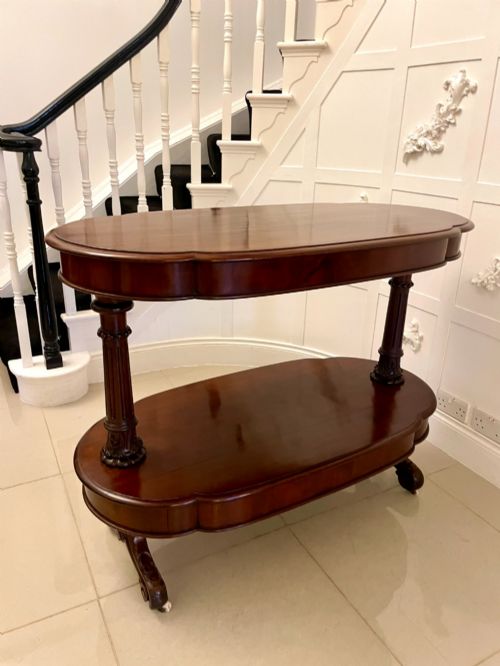
These mahogany carving trolley pieces are sturdy Victorian and Georgian servers built for dining rooms, offering tiered utility for food and drink.
Mahogany Carving Trolley
A mahogany carving trolley search brings up heavy dining room servers, buffet furniture, and tiered stands designed to assist with heavy service during meals. Most pieces found here take the form of multi-tiered buffets, dumb waiters, and stands dating from the Victorian and Georgian eras.
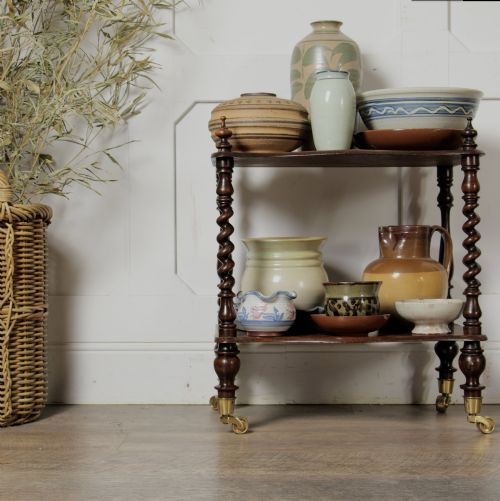
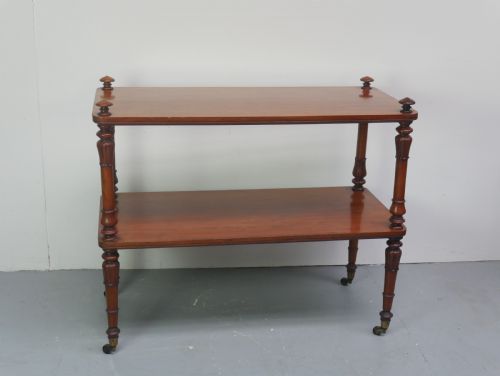
The dominant examples on this page are three-tier mahogany dumb waiters and buffets originating from the nineteenth century, often equipped with shelves supported by turned columns. Alongside these large servers, buyers encounter smaller items like tray tables, cheese coasters, and afternoon tea trolleys.
How they were made
Makers built these items primarily using solid mahogany, frequently combining oak and brass for internal framing and structural hardware. Turned wooden supports such as barley twists and column legs distribute the weight of the heavy shelves.
Movable elements include removable serving trays, glass inserts, and ceramic components integrated into the tiered stands and drinks cabinets. Joinery relies on traditional cabinet-making techniques to support multiple heavy tiers without sagging.
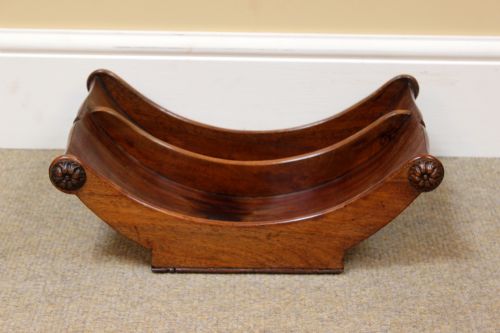
Several pieces double as cheese coasters, proving that Victorians took their post-dinner dairy very seriously indeed.
What varies in quality
Quality separates simple utility furniture from grander pieces through the choice of timber grain and the precision of the turned supports. Finer examples display carefully matched mahogany veneers and robust structural joinery on every tier.
The distinction in the range also rests on the complexity of the design, moving from basic tiered stands to elaborate dumb waiters with multiple shelves and functional brass or ceramic fittings.
Maple & Co
The Mahogany Carving Trolley Glossary
- Buffet
- A sideboard or serving table used for food and drink presentation. These pieces typically feature multiple tiers for holding dishes in a dining room.
- Dumb Waiter
- A tiered stand with revolving or fixed shelves used to serve meals without servants present. They appear frequently in nineteenth-century dining spaces.
- Cheese Coaster
- A small tray or container, often made of mahogany, designed to hold a cheese wheel on the dining table. Some examples double as fruit bowls.
- Etagere
- A piece of furniture consisting of a set of open shelves for displaying small objects or serving items. These stand on slender upright supports.
- Barley Twist
- A type of turned wooden column resembling the spiral shape of barley sugar. This decorative detail is common on Victorian stands.
Mahogany Carving Trolley: Frequently Asked Questions
What is a mahogany carving trolley used for?
These pieces serve as mobile or stationary dining room furniture designed to hold dishes, carving equipment, and drinks during meals. They provide extra surface area close to the dining table.
Historically, multi-tiered versions allowed hosts to manage courses without needing servants in the room throughout the dinner.
How do I date a mahogany buffet?
Dating relies on observing the prevailing style, construction methods, and secondary woods like oak used in the frame. Georgian pieces often show simpler classical lines, while Victorian examples introduce heavier turned supports.
Later Edwardian and early twentieth-century pieces incorporate lighter frames and removable serving trays adapted for afternoon tea.
Are these pieces stable enough for daily use?
Solid mahogany construction and sturdy turned columns give these items substantial weight and durability for everyday placement in a home. The multi-tiered design distributes heavy loads safely across the base.
Checking the joints on the lower shelves ensures the piece remains reliable for holding books, drinks, or decorative items.
What is the difference between a dumb waiter and an etagere?
A dumb waiter specifically serves a dining function with heavy tiered shelves designed for food, plates, and bottles. An etagere generally functions as an open display structure for smaller decorative objects.
Both utilise vertical tiers, but their historical placement in the home dictates their timber thickness and shelf spacing.