
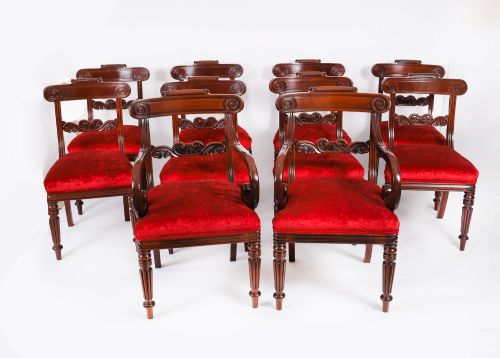
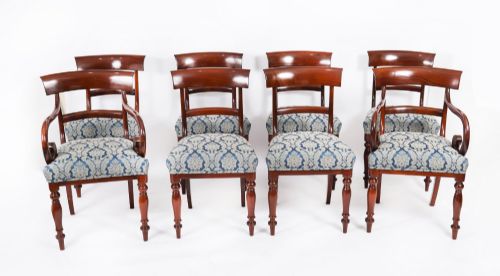
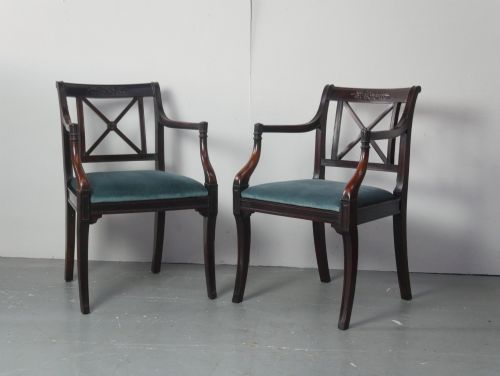
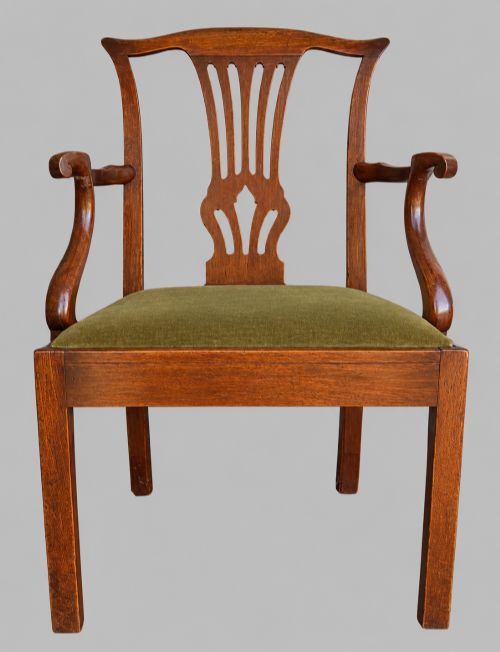
Mahogany Carver Dining Chair
Choosing a mahogany carver dining chair brings solid timber, scrolling arms and dependable seating to a period dining room.
Mahogany Carver Dining Chair
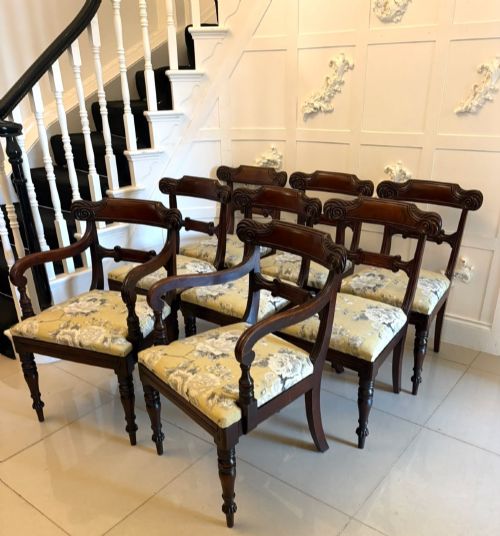
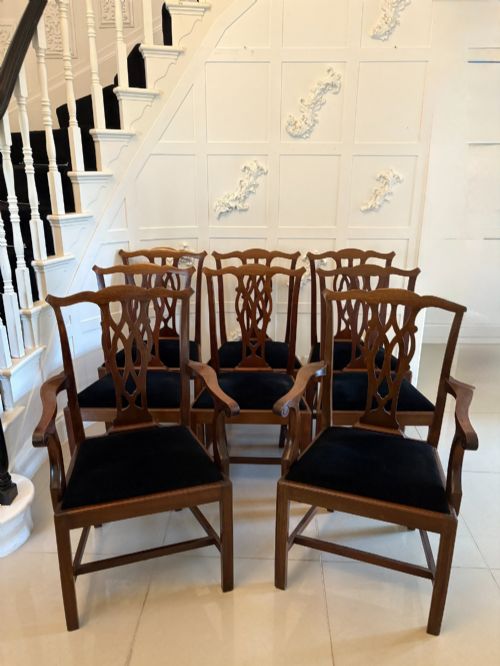
A mahogany carver dining chair serves as the armchair counterpart to a set of single dining chairs, traditionally positioned at the head of the table. These seating pieces provide wider proportions and supporting armrests compared to standard dining chairs.
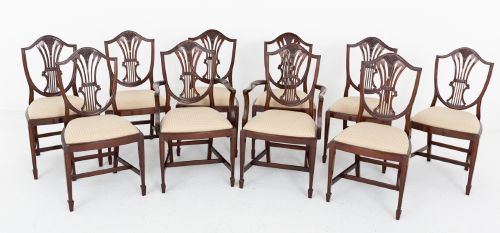
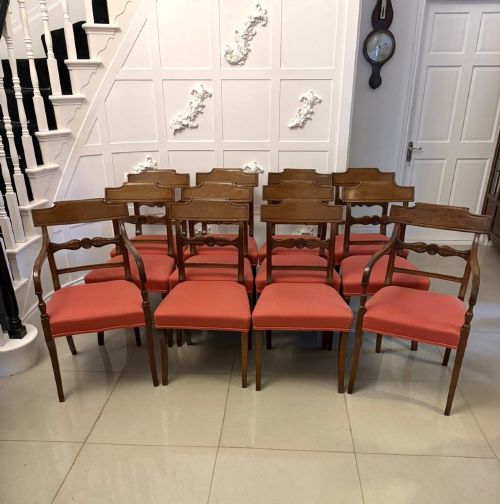
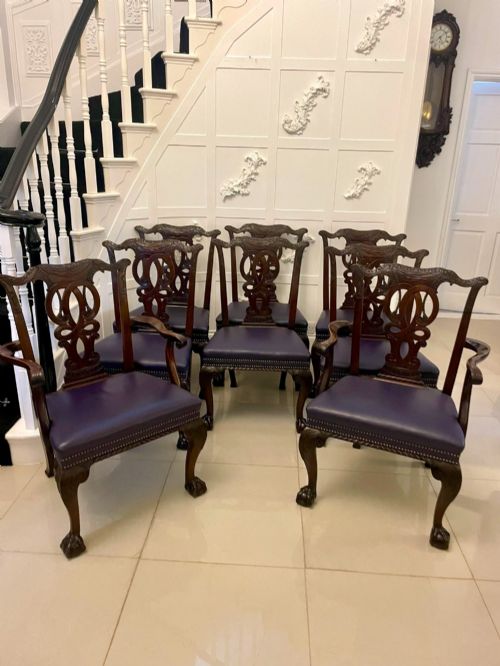
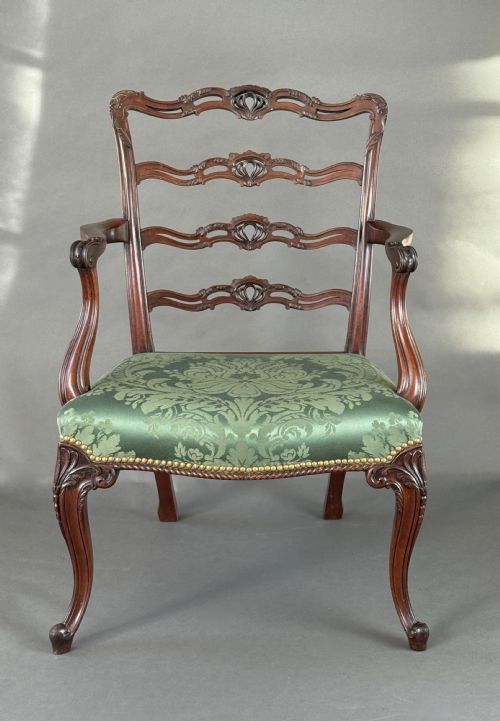
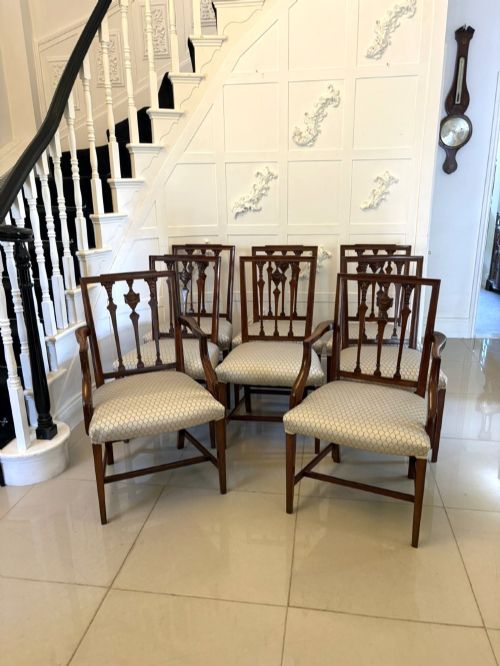
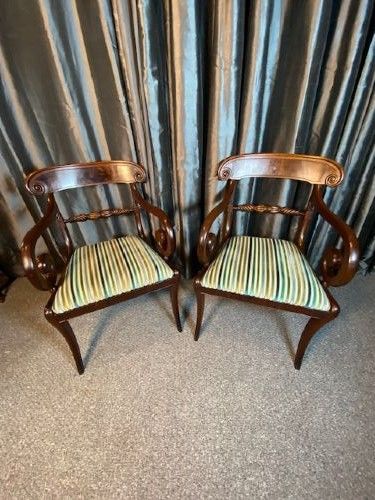
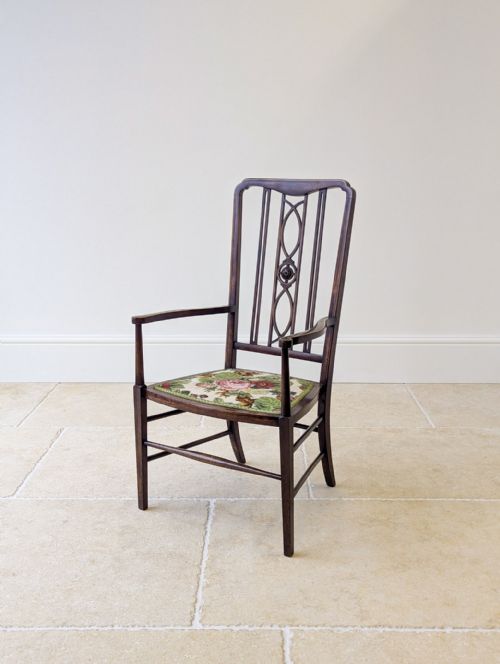
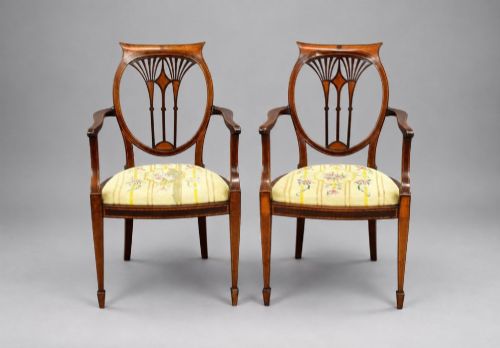
The pieces appearing on this page span the 18th century through to the Edwardian period and later revivals. Common iterations include George III originals, Regency bar-back designs and later Chippendale or Hepplewhite style revivals.
Makers often produced these armchairs individually, in pairs, or as part of larger dining sets containing multiple single chairs. Buyers encounter them as standalone desk chairs as well as components of complete dining suites.
Materials and Construction
Makers relied primarily on dense tropical mahogany, frequently complemented by secondary timbers and decorative inlays of satinwood or maple. Workshops employed traditional joinery techniques, using mortise and tenon joints to ensure stability under daily use.
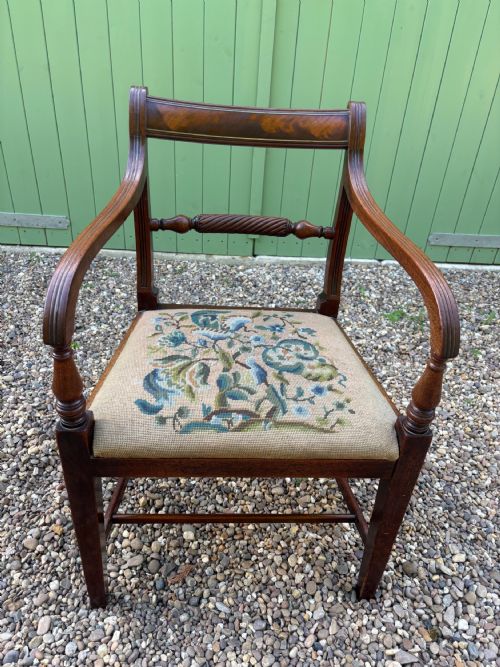
Upholstered elements feature drop-in or stuffed pads covered in fabric, velvet, leather, or tapestry upholstery. Selected examples incorporate cane paneling within shield backs or open framework designs.
Several Scottish carvers bring a distinct regional weight to the dining room.
Assessing Quality
The quality of a mahogany carver dining chair depends heavily on the crispness of the hand-carved details, such as ribbon backs, wheat ears, or acanthus scrolls. Superior examples display thoughtful timber selection with consistent grain patterns across the show wood.
Structural integrity separates workshop standards, evident in the rigidity of the arm joints and the seamless integration of curved elbows into the upright stiles. Period pieces that retain their original timber patina without excessive sanding command greater appreciation.
Howard and Sons·Warings·Alfred Allen of Birmingham·Waring and Gillow·Thomas Clarkson and Sons
The Mahogany Carver Dining Chair Glossary
- Carver
- An armchair designed with armrests, traditionally set at the heads of a dining table. These pieces match or complement the surrounding single chairs.
- Elbow chair
- An alternative term for an armchair, referencing the support provided for the arms. This descriptor appears frequently in older inventory records.
- Bar-back
- A chair design featuring a horizontal wooden crossbar across the upper backrest, often curved for comfort. This form became popular during the Regency period.
- Shield back
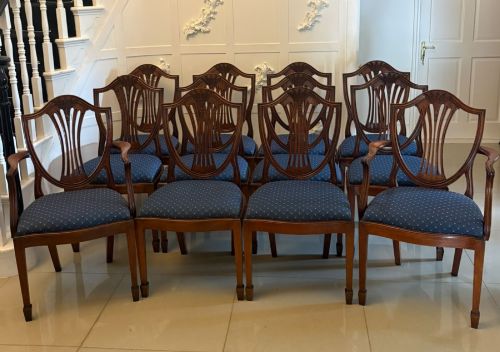
- A backrest shaped like a heraldic shield, commonly associated with the designs of George Hepplewhite. Makers often incorporated pierced splats within the frame.
- Ropeback
- A chair back featuring carved decoration resembling twisted rope. This detail characterises specific regional variations from around 1800.
Mahogany Carver Dining Chair: Frequently Asked Questions
How are carver chairs used today?
Carver chairs function effectively as head-of-table seating in formal dining rooms or as occasional desk chairs in a study. Their wider frames provide additional comfort for prolonged sitting.
Pairs of these armchairs also work well in hallways, libraries, or flanking a fireplace when removed from the dining table entirely.
How do I tell original Georgian from revival pieces?
Original 18th-century pieces display genuine hand-cut joinery marks, varied timber density, and centuries of accumulated wax patina on the primary surfaces. Revival pieces from the late 19th and early 20th centuries often feature machine-assisted precision and standardised components.
Examining the underside of the seat frame and the wear patterns around the feet helps clarify the age of the timber.
Are carver chairs comfortable for long dinners?
The comfort level depends entirely on the upholstery padding and the ergonomic curve of the backrest. Many period models feature webbed drop-in seats that offer supportive bounce.
Adding a loose cushion can adjust the seating height and softness without altering the historic frame.
Can I mix different styles of dining chairs?
Harlequin sets of dining chairs have a long tradition of combining slightly mismatched single chairs with matching carvers. This approach creates an eclectic interior look rather than a rigid uniform suite.
Matching the timber tone or general period helps unify chairs gathered from different sources.