
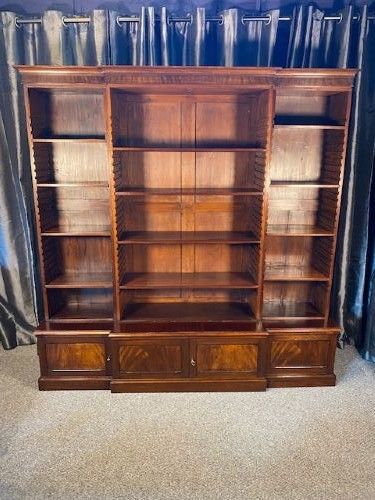
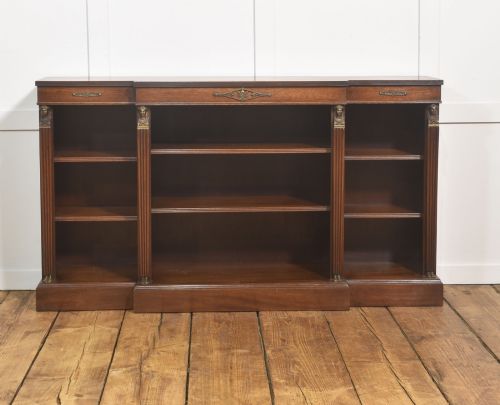
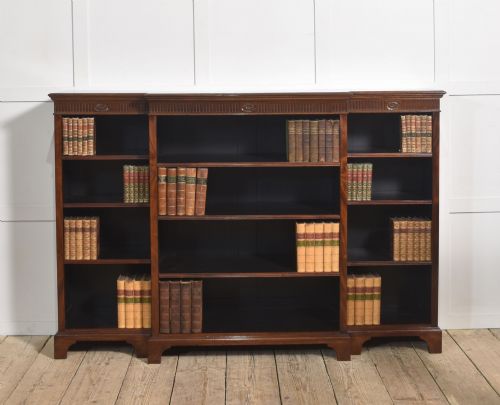
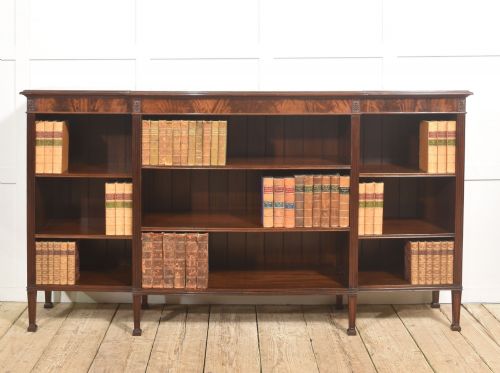
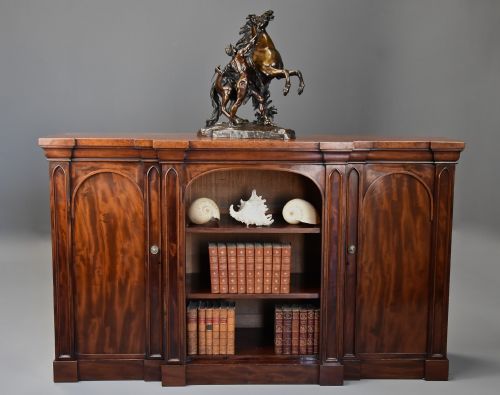


Mahogany Breakfront Shelves
Mahogany breakfront shelves offer stately architectural presence and generous storage, bringing classic British library design into a room.
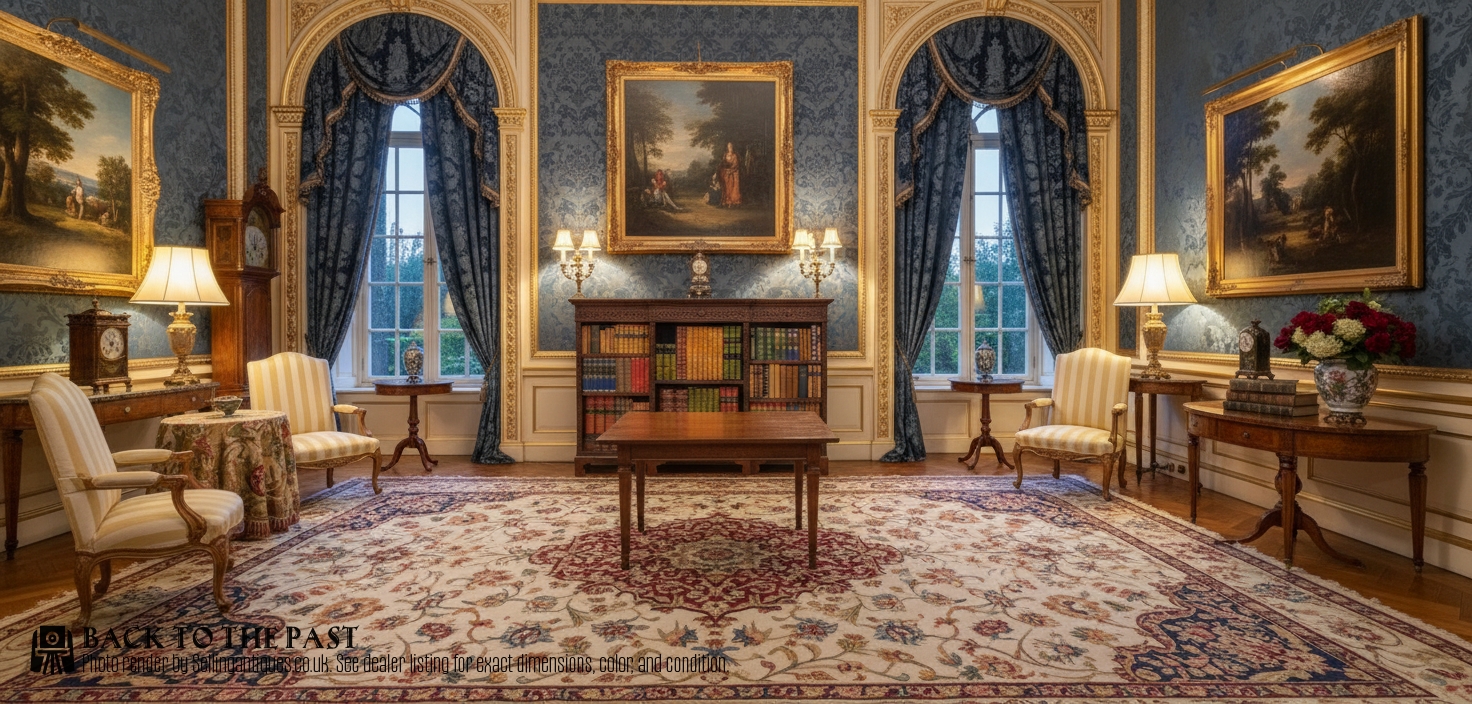
Mahogany Breakfront Shelves
Mahogany breakfront shelves combine substantial proportions with a stepped forward central section, creating a commanding focal point in a study or drawing room. These pieces function primarily as library bookcases and display units, providing ample space for book collections and decorative objects.
The pieces on this page span several distinct eras, stretching from Georgian and Regency origins through Victorian revivals and into the Edwardian period. Buyers encounter both grand floor-standing library bookcases with multiple doors and open shelf formats designed for accessible display.
Makers adapted the breakfront form across the nineteenth and early twentieth centuries, introducing glazed doors, adjustable shelving, and occasional dwarf configurations. Architectural influences ranging from Neoclassical to Victorian Gothic Revival shape the detailing found across these examples.
What varies in quality
Quality in these bookcases rests on the selection of timber figures, particularly the depth and vibrancy of the flame mahogany veneer across the breakfront facade. Superior examples display carefully matched grain patterns and crisp, hand-carved architectural details rather than repetitive machine moulding.
Structural integrity and the retention of original finishes separate standard pieces from exceptional library furniture. Well-executed adjustable shelving mechanisms, balanced proportions, and documented maker attributions elevate certain examples above everyday production.
Some diminutive bookcases tuck neatly into unexpected corners, proving that even grand library architecture occasionally comes in miniature.
Gillows·Robert Strahan
The Mahogany Breakfront Shelves Glossary
- Breakfront
- A cabinet design where the central section projects forward from the flanking wings. This architectural arrangement creates shadow and depth on a wall.
- Flame mahogany
- A veneer cut from timber where the branch meets the trunk, producing a distinctive flickering flame pattern. Cabinetmakers placed these veneers centrally to draw the eye.
- Dwarf bookcase
- A low shelving unit designed to sit below dado height. These pieces keep books at hand without overwhelming smaller rooms.
- Ormolu
- Gilded bronze mounts applied to furniture for decorative accent. Makers utilised these fittings to highlight the classical lines of high-status pieces.
Mahogany Breakfront Shelves: Frequently Asked Questions
Where should I place a breakfront bookcase?
These imposing units require a solid wall with sufficient width to allow the central projection to stand clear without crowding surrounding furniture.
Positioning them away from direct sunlight protects the timber and delicate veneers from fading over time.
How do I adjust the shelves?
Many period bookcases feature wooden ratchets, brass pegs, or slotted interior pilasters that allow shelves to move freely.
Carefully support the shelf weight while shifting the supports to avoid damaging the interior veneered surfaces.
Can these bookcases hold heavy books?
Library bookcases were built specifically to support dense collections of leather-bound volumes across sturdy timber shelving.
Distributed weight across adjustable wooden planks prevents bowing, though exceptionally heavy folios sit best on lower fixed shelves.
How do I date a mahogany breakfront?
Examine the construction methods, secondary woods used inside the carcass, and stylistic details such as glazing bar thickness.
Georgian and Regency pieces often show hand-cut dovetails and lighter internal framing compared to heavier Victorian and Edwardian iterations.