

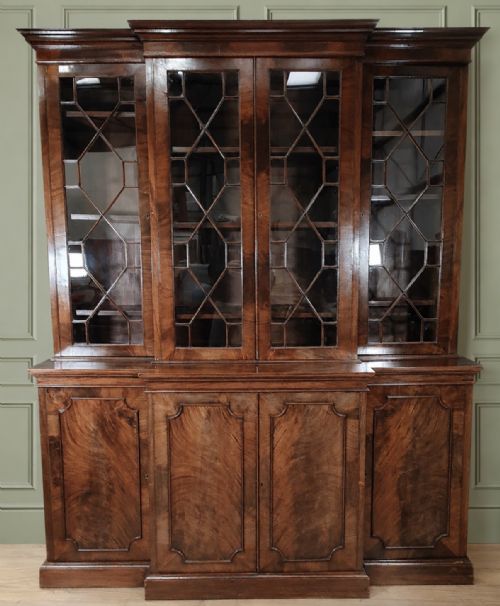
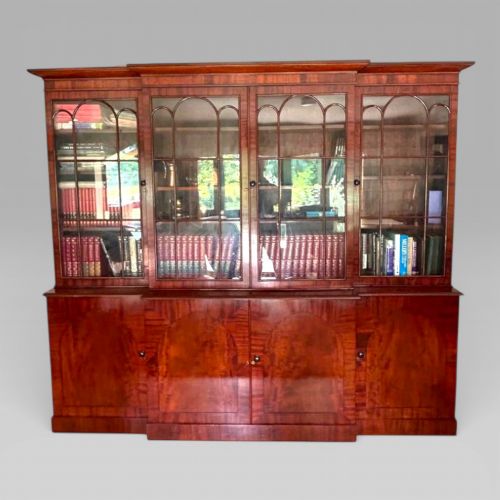
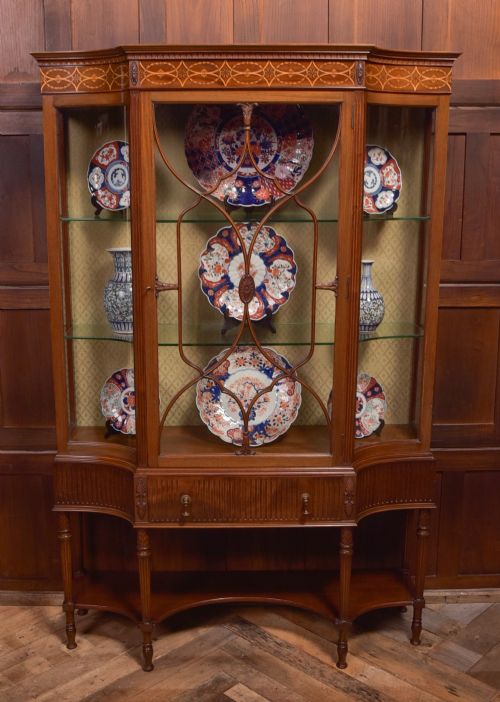
Mahogany Breakfront Cupboard
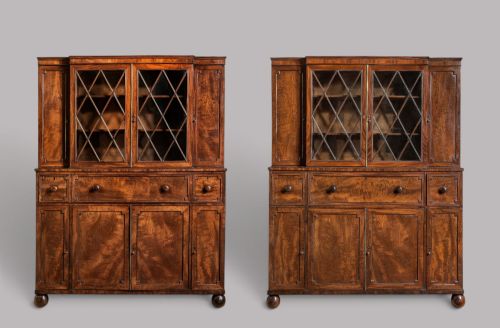
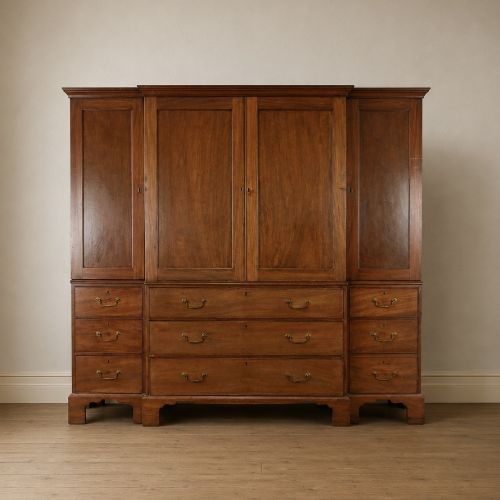
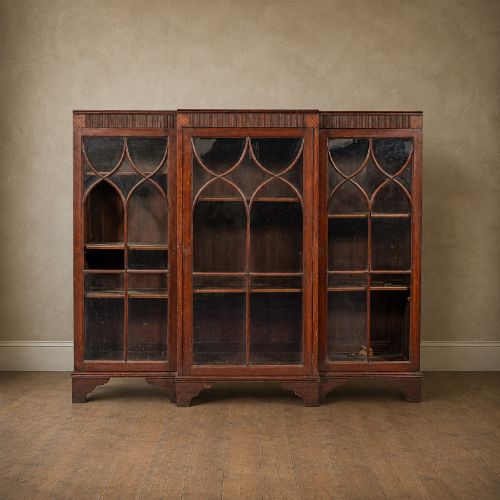
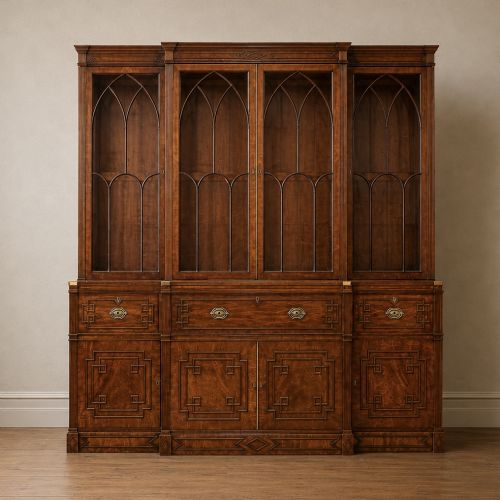
A mahogany breakfront cupboard commands a room through its stepped forward central section, offering substantial display and storage space in rich timber.
Mahogany Breakfront Cupboard
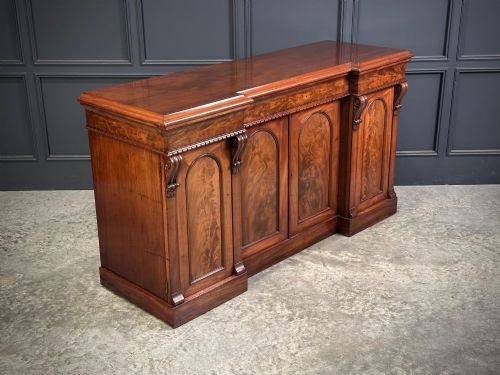
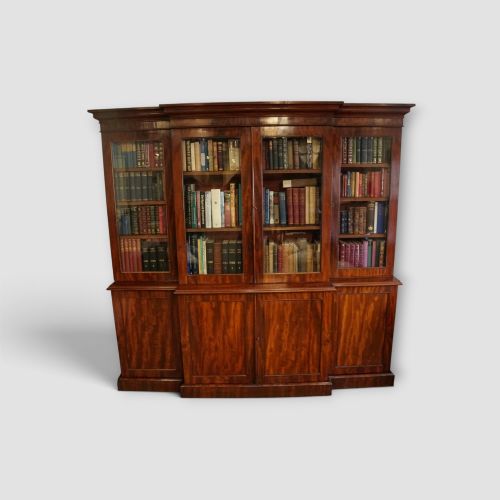
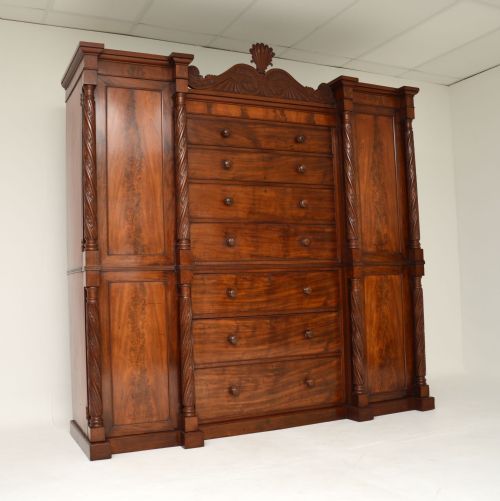
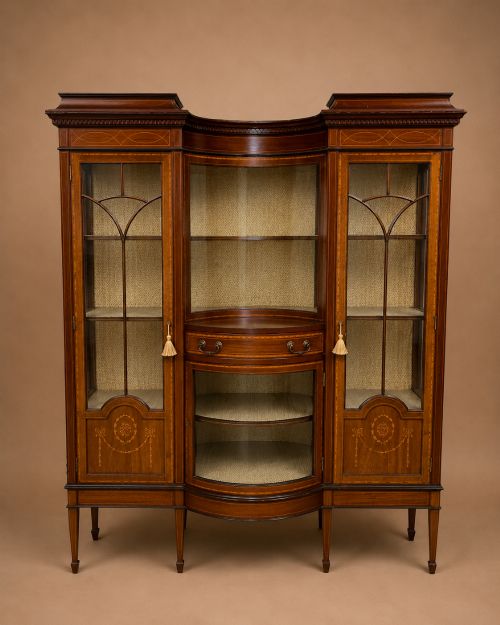
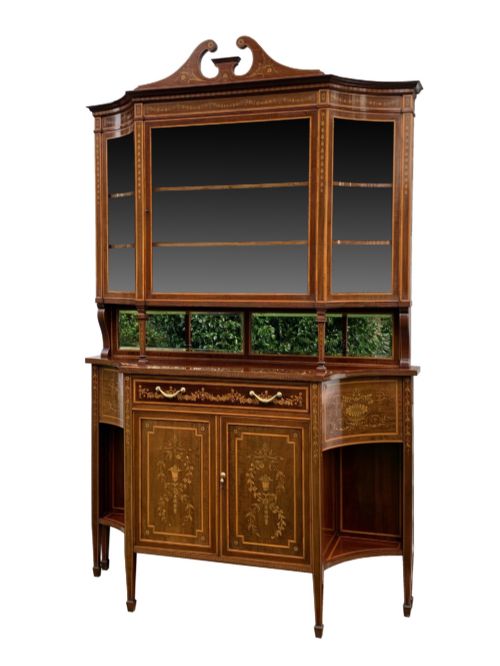
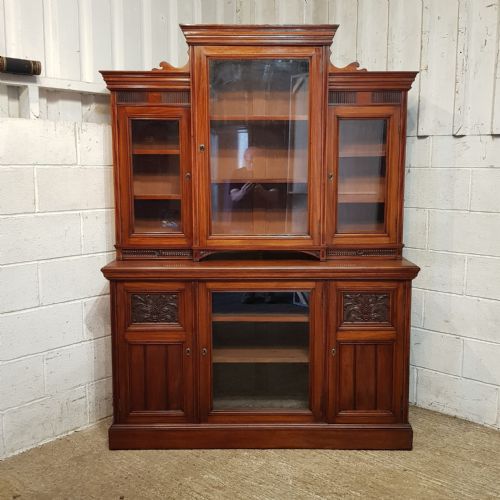
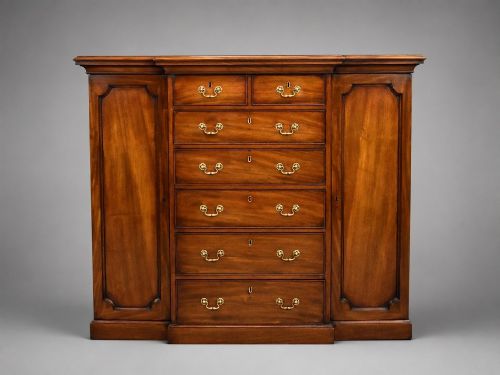
A mahogany breakfront cupboard typically manifests as a large bookcase, library bookcase, wardrobe, or sideboard where the central section projects forward from the flanking wings. When searching for a mahogany breakfront cupboard, buyers encounter substantial pieces primarily from the Georgian, Regency, and Victorian periods, alongside Edwardian revivals.
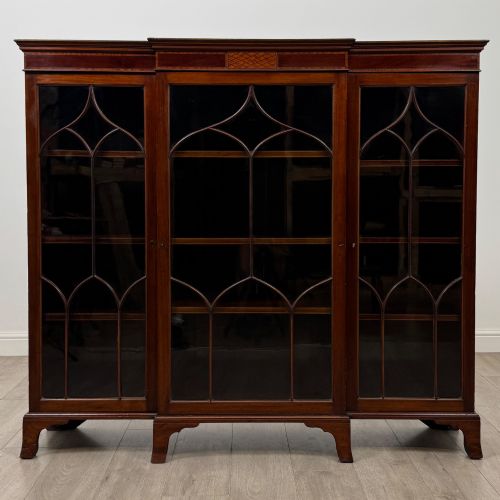
The proportion and scale of these architectural items demand generous ceiling heights and dedicated wall space. Bookcases and display cabinets with glazed upper doors dominate the available examples, frequently partnered with lower wooden cupboard sections or drawer configurations.
Materials and Construction Methods
Cabinet makers utilised solid mahogany and applied flame mahogany or curl mahogany veneers to structural carcases, often highlighting grain patterns with satinwood stringing or marquetry inlay. Brass hardware, including handles, escutcheons, and door grilles, provides functional contrast to the dark timber.
Glass panels in upper bookcase and display cabinet doors are held by wooden glazing bars, whilst internal shelving adjusts on traditional wooden racks or metal pins. Large carcases were designed to dismantle into modular sections to ease transportation and positioning within period rooms.
Listings span the eighteenth, nineteenth, and early twentieth centuries, uniting Georgian proportions, Regency restraint, Victorian Gothic revival, and Edwardian Sheraton revivals.
Distinguishing Quality Across the Range
The sophistication of the timber selection dictates the visual hierarchy, where symmetrical flame mahogany veneers and intricate satinwood or marquetry details separate exceptional workshops from standard commercial production. Crispness of carved mouldings and the precision of the stepped breakfront geometry reveal the cabinet maker's underlying skill.
Originality of components, from glazed panes and brass hardware to internal fittings and polished finishes, governs the integrity of each piece. Maker attribution, through documented signatures or established workshop traditions, further elevates specific examples above anonymous vernacular furniture.
Jas Shoolbred·Gillows·Edwards & Roberts·Robert Strahan
The Mahogany Breakfront Cupboard Glossary
- Breakfront
- An architectural cabinet design where the central section projects forward from the flanking wings. This configuration creates visual depth and breaks up the long facade of large bookcases and sideboards.
- Flame mahogany
- A highly figured wood veneer derived from the branch junctions of the mahogany tree. The distinctive pattern resembles flickering flames and was prized for principal doors and drawer fronts.
- Compactum
- A multi-compartment wardrobe designed for efficient clothing storage, incorporating hanging space, sliding trays, and drawers. These large pieces often feature breakfront configurations to organise internal volumes.
- Glazing bar
- A narrow wooden strip holding individual panes of glass within a door frame. Fine glazing bars create geometric patterns typical of Georgian and Regency display cabinets.
- Marquetry
- Decorative patterns created by fitting different wood veneers together onto a structural surface. Craftsmen used contrasting timbers like satinwood to form floral or geometric motifs.
Mahogany Breakfront Cupboard: Frequently Asked Questions
How do I style a large breakfront bookcase?
Allow the architectural mass of the piece to anchor the room by placing it against a substantial, uninterrupted wall. Balance heavy book collections with decorative objects behind the glazed doors to prevent visual congestion.
Ensure adequate clearance in front of the projecting central section so that lower cupboard doors or drawers open fully without obstruction.
How do I care for antique mahogany surfaces?
Maintain the timber by dusting regularly with a soft, dry cloth and applying natural beeswax sparingly to nourish the grain. Avoid placing mahogany furniture in direct sunlight or near heat sources, which causes veneers to dry out and lift.
Protect the polished finish from moisture and alcohol by using coasters under glasses and placing felt pads beneath decorative objects.
How can I distinguish Regency from Victorian examples?
Regency pieces often display restrained classical proportions influenced by archaeological discoveries, featuring architectural pediments, brass inlay, and understated flame mahogany surfaces. Victorian examples frequently exhibit heavier proportions, bolder carving, and elaborate ornamentation reflecting nineteenth-century industrial confidence.
Examining internal construction methods, drawer linings, and secondary timbers helps confirm the manufacturing period when styling appears transitional.