



Mahogany Brass Compass
A mahogany brass compass is a precision navigational instrument housed in timber, prized by collectors for its blend of utility and maritime history.
Mahogany Brass Compass
When you search for a mahogany brass compass, you are looking at tactile scientific instruments constructed during the eighteenth and nineteenth centuries. These pieces encompass pocket compasses, travelling instruments, and larger surveyor examples housed in protective wooden boxes. The versions most frequently met on this page date from the Georgian and Victorian periods, often linked to maritime or land surveying use.
The objects range from small portable pocket instruments to desk models and mine's compasses. Many retain their original circular brass rings, glass covers, and fitted timber cases. They reflect an era when precise navigation depended entirely upon mechanical ingenuity and reliable materials.
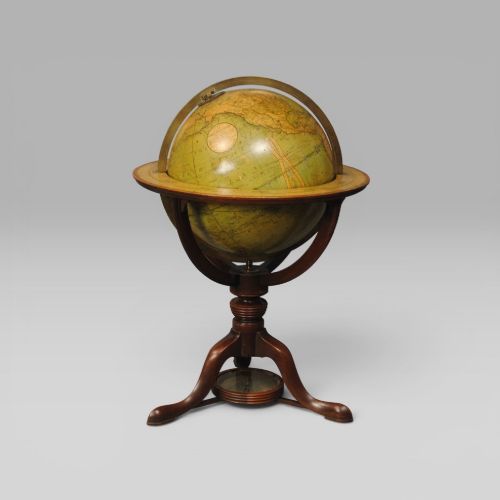
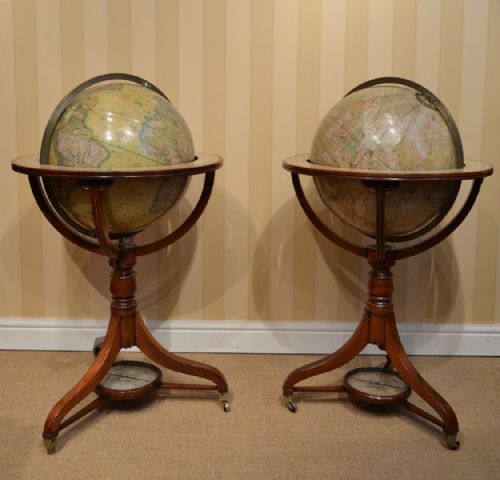
Makers such as G. Davis of Leeds, Stanley of London, and R. Field & Son of Birmingham produced these items for explorers, surveyors, and mariners. Alongside pocket variants, the listings include related scientific apparatus such as library globes and draughtsman's tool sets by makers like G & J Cary and Malby's.
How they were made
The construction of a mahogany brass compass relies upon the combination of durable hardwoods and cast or spun non-ferrous metal. Solid mahogany forms the protective outer cases, often shaped with circular recesses to securely hold the delicate instrument within. Brass provides the structural housing for the dial, needle, and gimbal rings, resisting corrosion in marine environments.
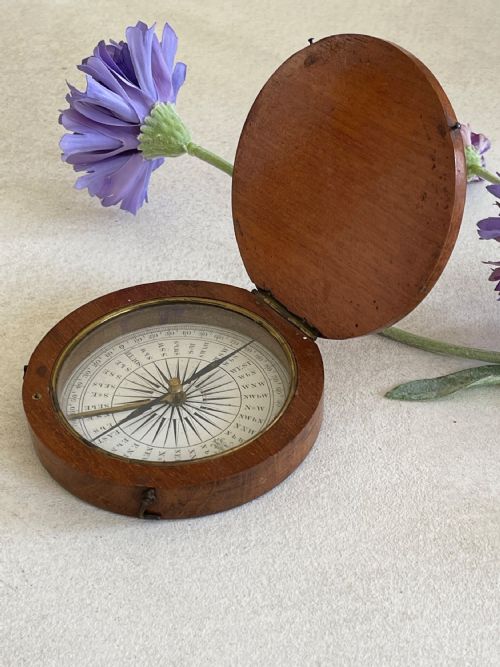
Interior components frequently incorporate delicate paper dials, printed with cardinal points and degrees, protected beneath a tight-fitting glass plate. Some portable examples include secondary materials like velvet linings to cushion the instrument, and occasionally bone or iron elements in the mechanical fittings.
The listings on this site combine pocket and surveyor compasses with related nineteenth-century scientific apparatus including library globes and draughtsman's tool sets.
What varies in quality
Quality in a mahogany brass compass is determined by the crispness of the engraved markings on the brass dial and the precision of the needle balance. Finer examples exhibit hand-engraved lettering and maker signatures, whereas standard utility pieces feature simpler printed paper cards.
The condition and execution of the timber housing also define the tier of the piece. Superior examples possess finely dovetailed or joined mahogany boxes with intact hardware, original glass, and legible maker stamps.
G. Davis of Leeds·G & J Cary·Malby's·Stanley, London·R. Field & Son, Birmingham
The Mahogany Brass Compass Glossary
- Binnacle
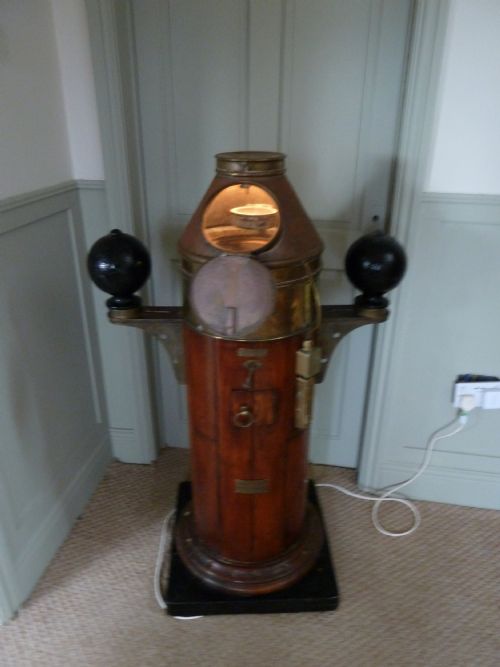
- A navigational housing designed to hold a ship's compass securely on deck. It protected the sensitive instrument from the elements and the iron of the vessel.
- Gimbal
- A pivoted ring system that allows a compass to remain horizontal regardless of the motion of a ship or traveller. This mechanical linkage ensures accurate readings in rough conditions.
- Surveyor's compass
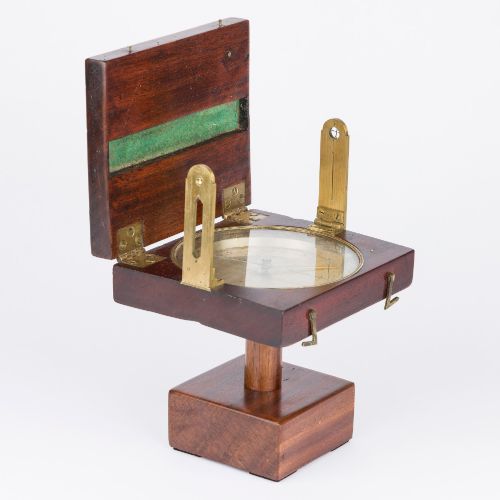
- A specialised land instrument used for measuring angles and determining property boundaries. These often include fold-out sighting vanes and a larger brass plate.
- Library globe
- A terrestrial or celestial sphere mounted on a wooden stand, intended for indoor study. They frequently accompany scientific instrument collections from the nineteenth century.
Mahogany Brass Compass: Frequently Asked Questions
How do I date a mahogany brass compass?
Dating relies heavily on the style of the lettering, the complexity of the brass housing, and any maker signatures stamped upon the dial or timber case. Georgian examples often feature simpler, hand-engraved brass plates, whilst Victorian and Edwardian pieces show more standardised manufacturing techniques.
Examining the secondary materials, such as the paper used for the compass card or the dovetailing on the mahogany box, provides further chronological clues. Signed pieces by recorded makers allow for a much tighter date range based on their active working years.
Were these compasses used at sea or on land?
These instruments served both maritime and terrestrial purposes, depending on their specific configuration. Pocket and travelling compasses were carried by explorers and travellers, whilst larger binnacles and desk models belonged on ships or in offices.
Specialised variants like the mine's compass were built specifically for subterranean surveying. Each design reflects the distinct demands of navigation and cartography in the nineteenth century.
How should I clean the brass and mahogany?
Maintenance should be kept to a minimum to preserve the natural aged patina of the wood and metal. A light dusting with a dry cloth is usually sufficient for the mahogany case.
Harsh metal polishes should be avoided on the brass, as removing the historical darkening alters the appearance of the instrument. The glass and paper dial require particular care to prevent moisture damage during cleaning.
Do these compasses still point north accurately?
Over long periods, the magnetic needle in an antique compass can lose its charge or become sluggish on its pivot. While many still find magnetic north, they are primarily valued as historical and scientific objects rather than reliable modern navigation tools.
Changes in the Earth's magnetic field and potential wear on the internal jewel bearing also affect their contemporary precision. Collectors appreciate them for their craftsmanship rather than their current directional accuracy.