
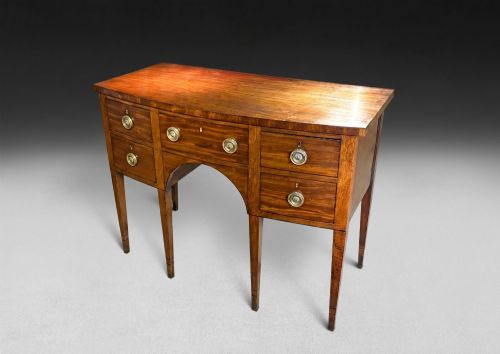
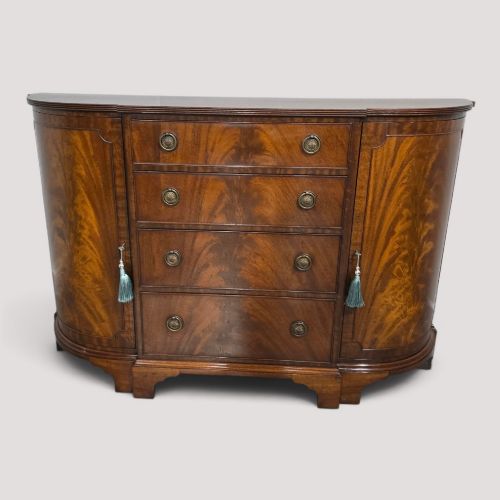
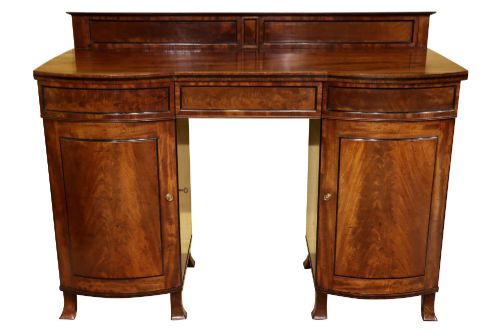
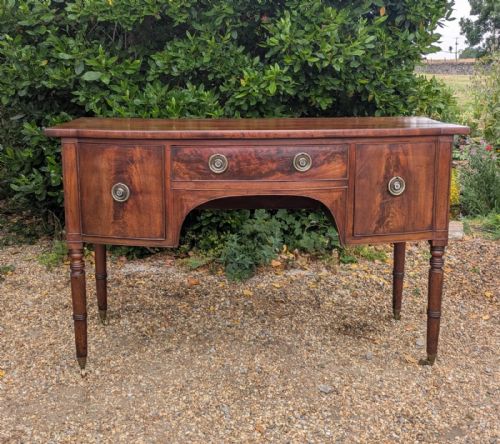
Mahogany Bow Sideboard
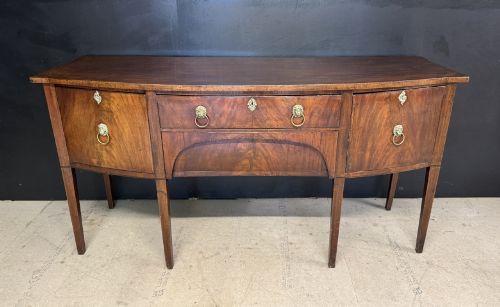
A mahogany bow sideboard brings fluid architectural curves and deep timber grain to a dining room or hallway.
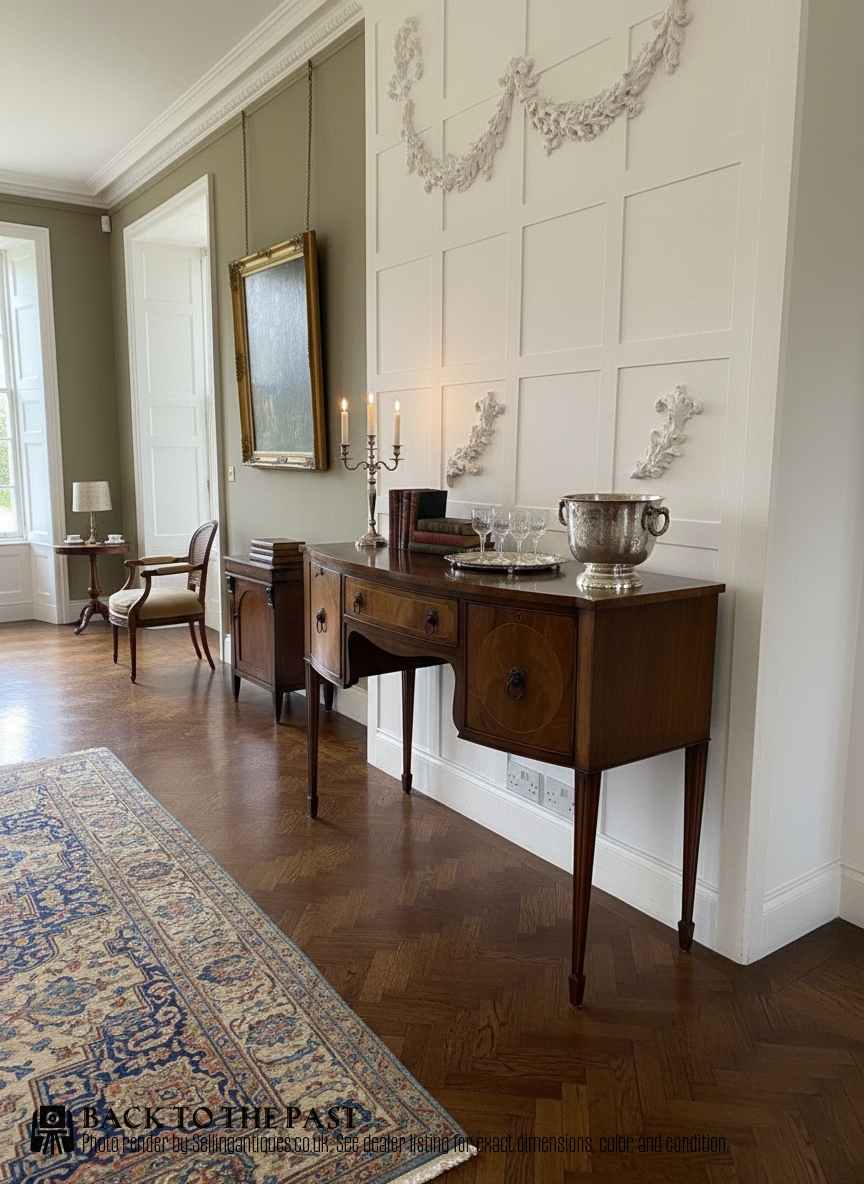
Mahogany Bow Sideboard
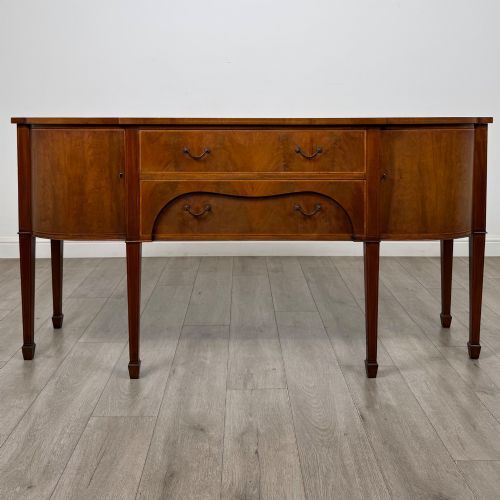
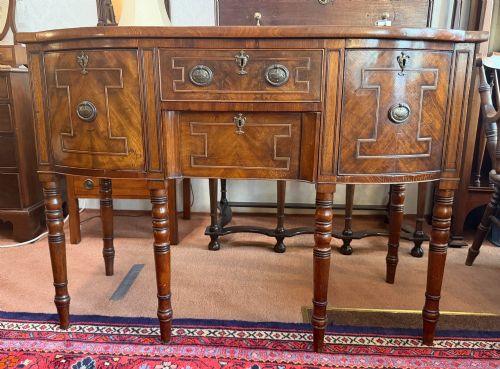
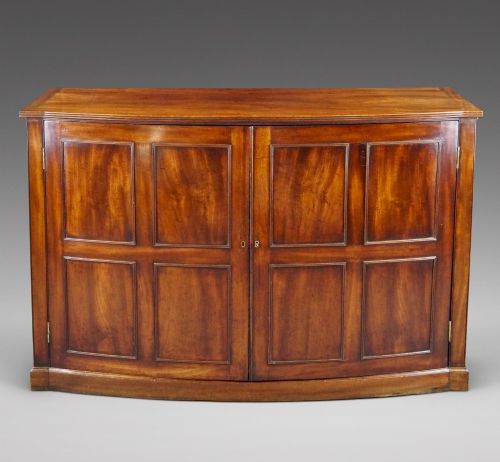
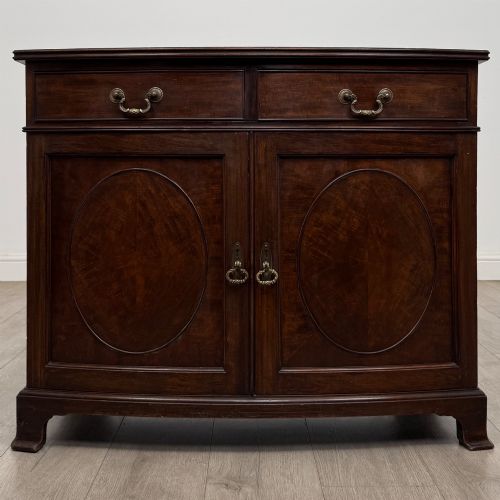
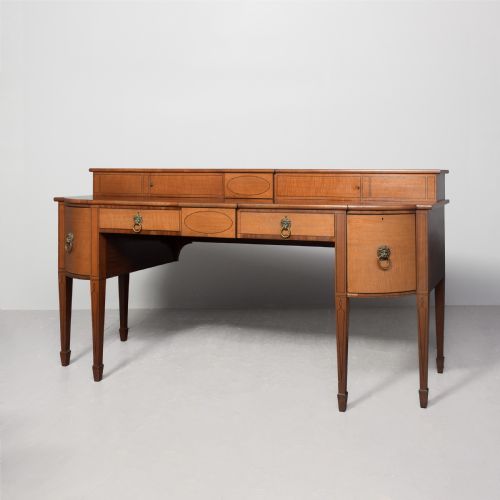
A mahogany bow sideboard is a dining room storage piece defined by its convex, curved front. These cabinets emerge primarily from the Georgian and Regency periods, alongside later Edwardian revivals.
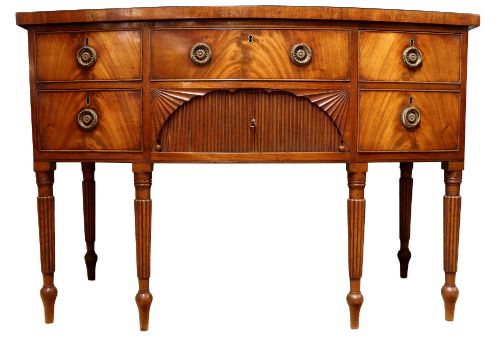
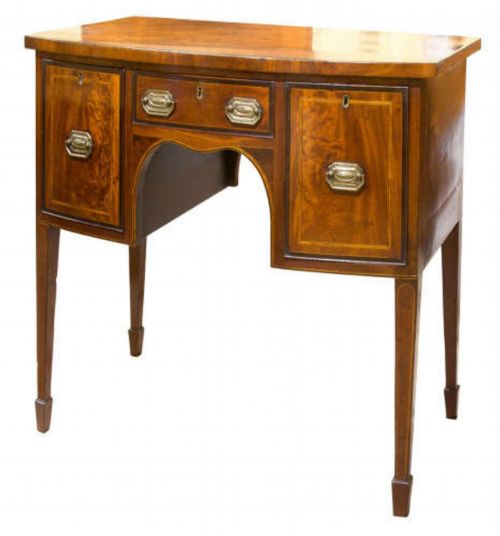
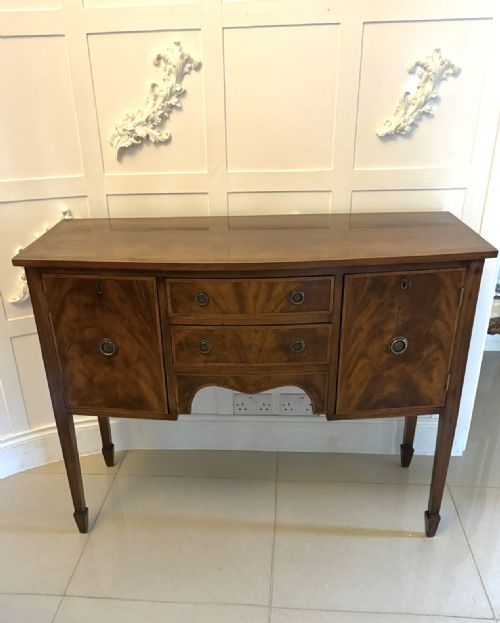
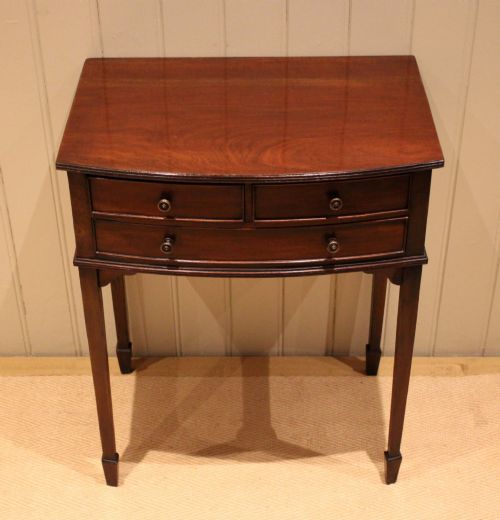
The format ranges from compact side tables and serving pieces to larger pedestal sideboards and cupboards. Buyers most frequently encounter George III and Regency examples featuring graduated drawers flanked by cupboards.
Makers of the late 18th and early 19th centuries designed these curving carcasses to soften the rigid geometry of formal rooms. Later 20th-century adaptations continue this tradition in both full-scale and smaller proportions.
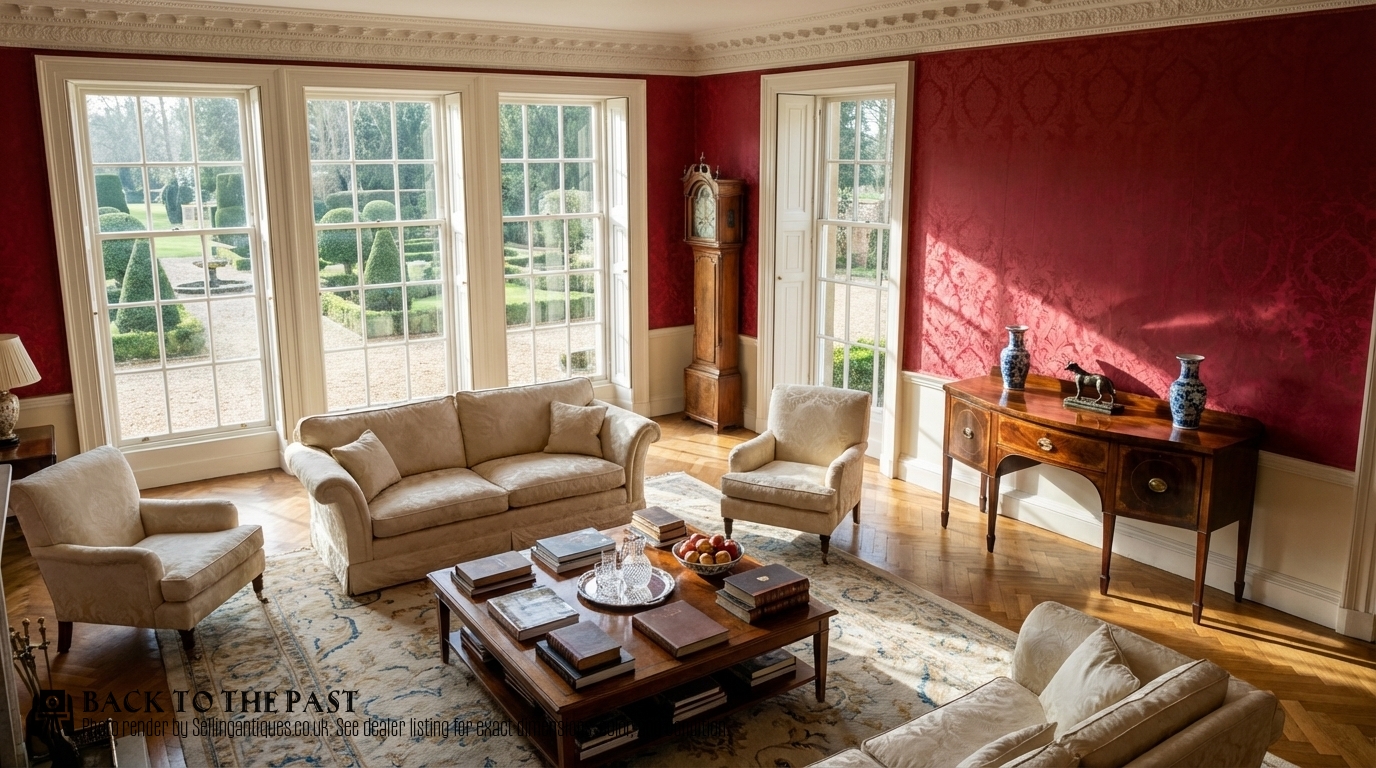
Timber selection and construction
Cabinet makers built the primary carcass using solid mahogany, often selecting figured timber or flame mahogany veneer for the drawer fronts to catch the light. Secondary woods such as oak appear in the drawer linings and internal framing.
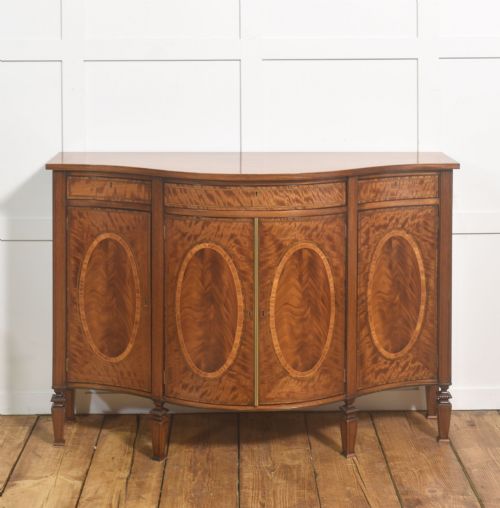
The characteristic curved front required precise carpentry to shape the solid rails and veneer the bowed surfaces without splitting. Boxwood and satinwood inlay provide contrasting stringing and geometric banding along the edges.
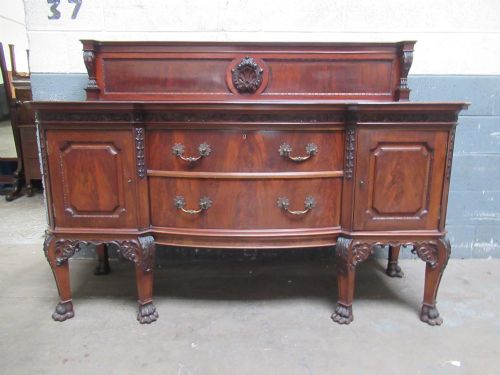
Brass fittings, including ring handles and backplates, punctuate the dark timber alongside occasional boxwood and purpleheart accents. Glass doors and silver mounts appear on associated cutlery boxes and specialised display cabinets.
Listings span the Georgian, Regency, and Edwardian periods, utilising mahogany alongside boxwood, satinwood inlay, and flame mahogany veneer.
Markers of cabinet-making standard
The standard of a mahogany bow sideboard rests on the selection of the timber grain and the precision of the inlay work. Figured mahogany with strong natural movement commands attention, supported by crisp, tight boxwood stringing rather than printed decoration.
Structural integrity shows in the fluid sweep of the bowed front and the smooth running of deep graduated drawers. Superior examples display dovetailed drawer construction and matching timber grain flowing horizontally across multiple drawer fronts.
Proportion and scale dictate the visual weight of the piece, with narrow, shallow models demonstrating greater joinery skill than standard bulky frames. Original brass hardware and well-preserved patination complete the higher tier of surviving pieces.
The Mahogany Bow Sideboard Glossary
- Bow front
- A convex curving front facade that projects outward in an arc. This shape softens the corners of dining rooms and allows for deeper central storage.
- Stringing
- Thin lines of contrasting wood inlay used to outline drawer fronts and borders. Boxwood and satinwood provide the pale contrast against dark mahogany.
- Flame mahogany
- A veneer cut from timber where the branch meets the trunk, producing a flickering flame-like pattern. It is prized for its decorative visual depth on principal surfaces.
- Pedestal sideboard
- A form where independent pedestals flank a central table base, popular during the Regency period. They offer substantial capacity while maintaining architectural presence.
- Sheraton revival
- A late 19th and early 20th-century style echoing the lighter classical designs of the 18th century. These pieces often feature refined satinwood inlay and marquetry.
Mahogany Bow Sideboard: Frequently Asked Questions
How do I spot a Georgian original?
Georgian originals display hand-cut dovetails, secondary woods like oak inside the drawers, and natural wax patination built up over centuries. The timber grain flows naturally across the curved surfaces without modern synthetic finishes.
Examine the backboards and drawer linings for signs of hand-planing and age-related shrinkage. Hardware should sit in original fixing holes, and construction methods must align with 18th-century workshop practices.
What is the difference between Georgian and Edwardian revival?
Georgian pieces date from the 18th and early 19th centuries, carrying genuine period wear and construction methods specific to that era. Edwardian revival items date from around 1900 to 1920, copying those earlier aesthetic lines with machine assistance.
Revival pieces often feature brighter satinwood marquetry and cleaner internal timber than their 18th-century predecessors. Both hold functional value, but the earlier examples carry greater historical weight.
How do I care for the timber surface?
Maintain the finish by applying natural beeswax sparingly and buffing with a soft cloth to preserve the historical patination. Avoid placing the cabinet near direct heat sources or strong sunlight, which can dry out the mahogany and fade the veneer.
Keep humidity levels stable in the room to prevent the solid wood carcass and curved drawer fronts from warping. Gentle dusting with a dry lint-free cloth is sufficient for daily upkeep.
Where should I place a bow front sideboard?
Position the piece against a flat dining room or hallway wall where the curved projection can stand clear of tight doorways. The shallow ends of the bow front make these cabinets useful in rooms where floor space is limited.
Ensure the surface is level so the large drawers run smoothly within their curved tracks. Pairing the sideboard with a wall mirror or matching cutlery boxes completes the traditional display.