
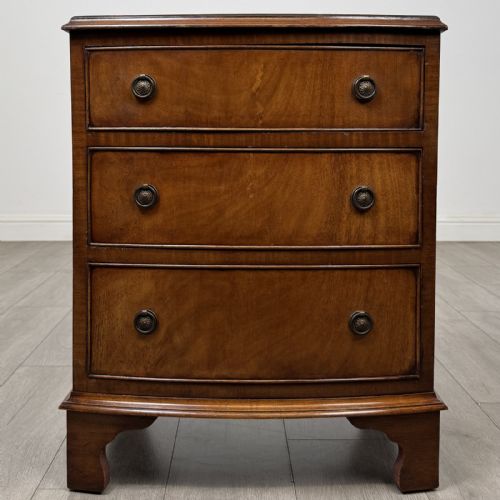
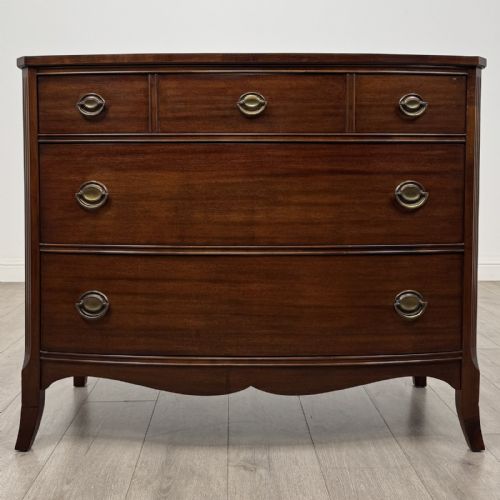
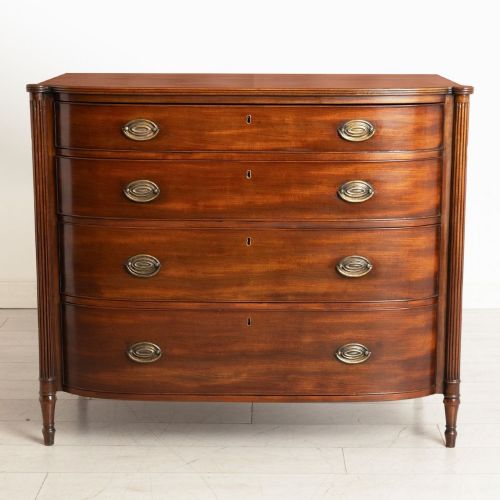
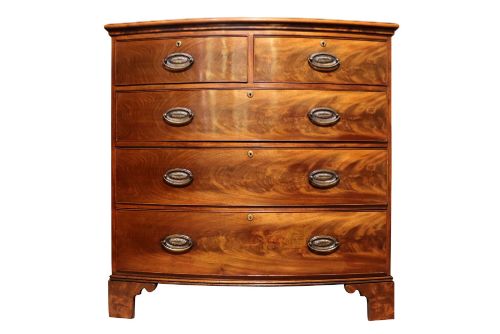
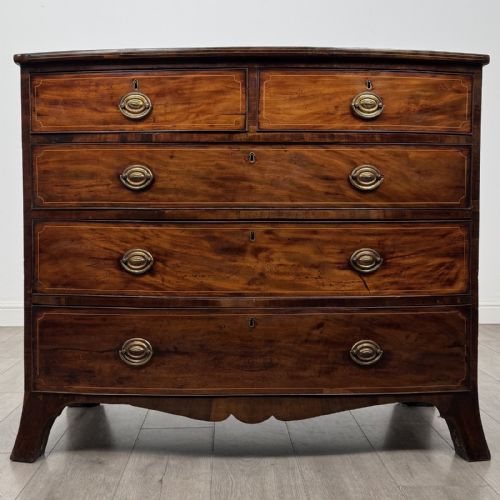
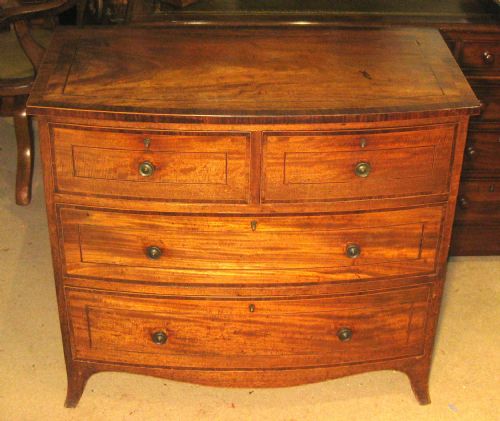
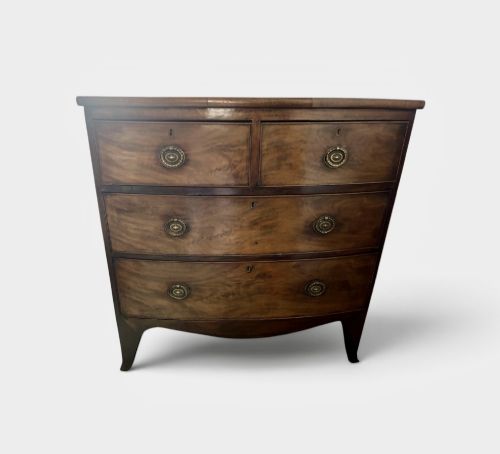
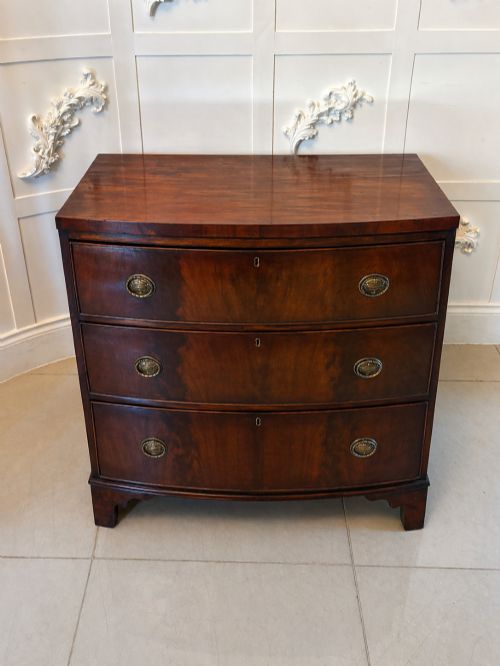
Mahogany Bow Front Chest of Drawers
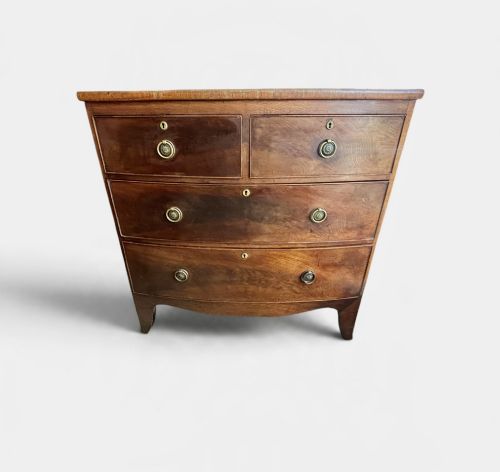
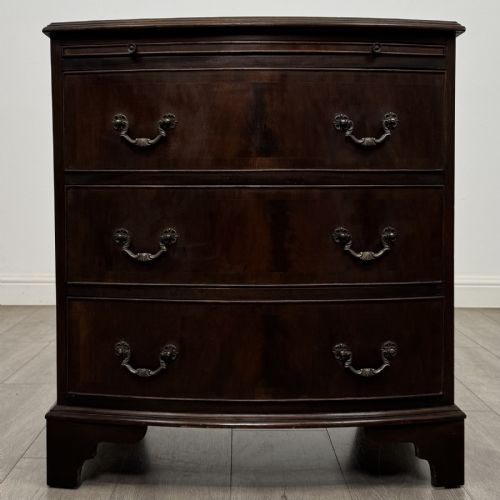
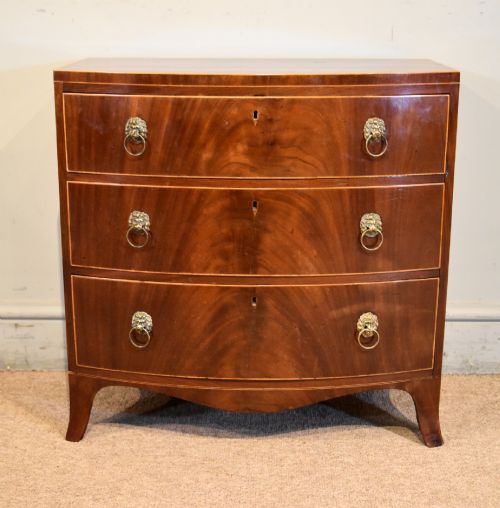
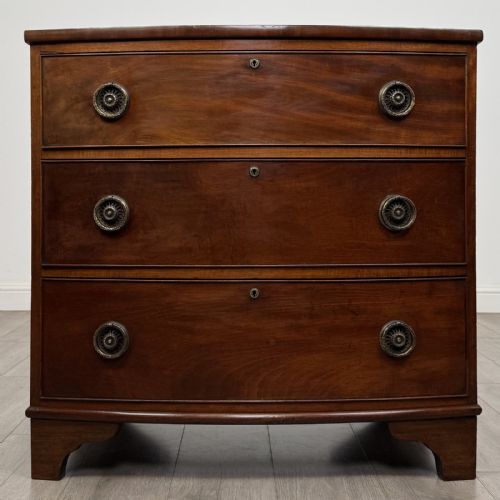
A mahogany bow front chest of drawers brings the curved elegance and rich timber tones of the Georgian and Regency periods directly into a modern bedroom.
Mahogany Bow Front Chest of Drawers
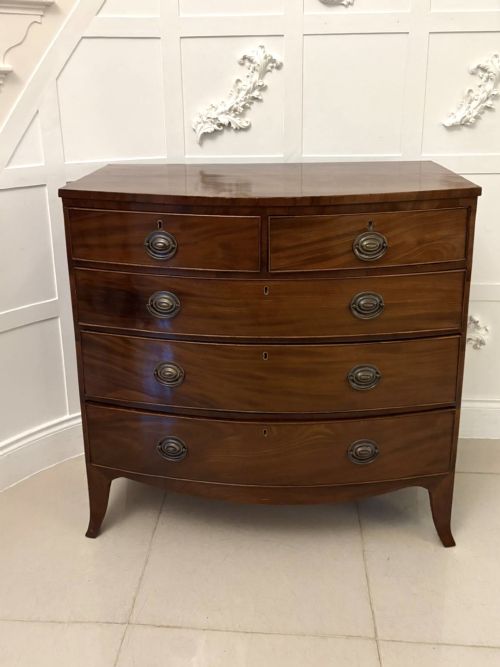
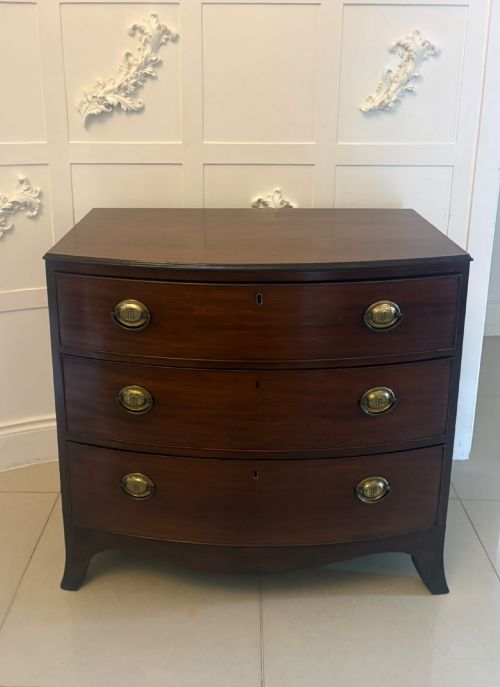
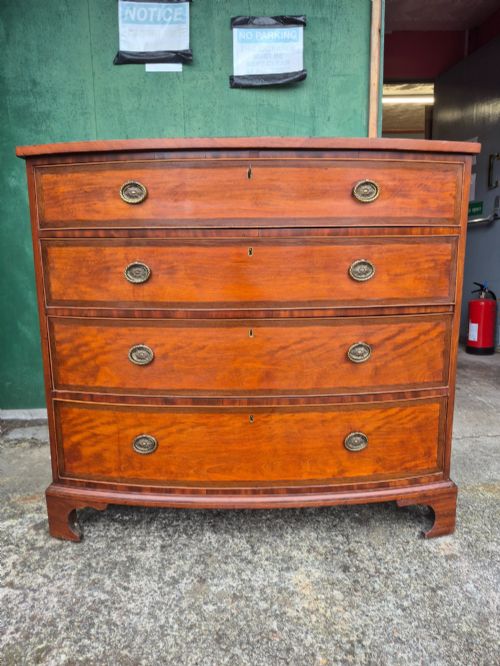
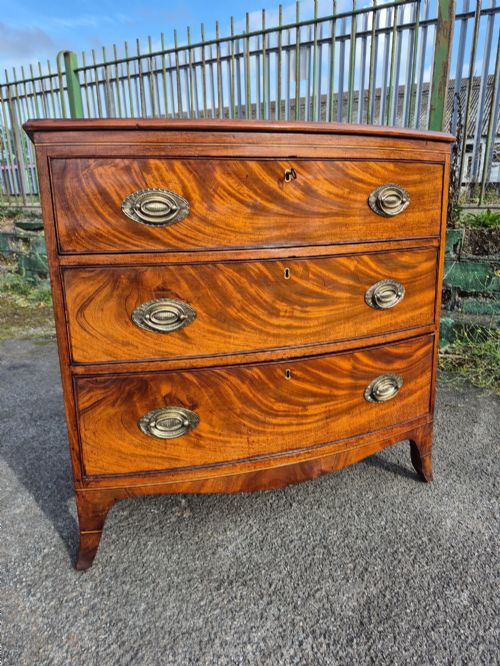
A mahogany bow front chest of drawers is a storage piece defined by its outward-curving front, a design that softens the angles of a traditional bedroom. These pieces emerge predominantly in Georgian, Regency, and Victorian styles, spanning the eighteenth and nineteenth centuries.
The standard form on this page is a chest of drawers with three to five graduated drawers, though variations include small chests, tallboys, and dressing chests. Makers also produced sideboards and miniature furniture utilising the same curved aesthetic.
Originating across various regions, these chests appear in English, Scottish, and Welsh variations, alongside French Louis XV interpretations. Buyers encounter compact proportions suitable for smaller spaces as well as larger, grander formats.
What Varies in Quality
Quality rests heavily on the choice of timber and the grain pattern visible on the drawer fronts. Pieces displaying highly figured flame mahogany or careful satinwood crossbanding sit at the upper end of the scale.
The crispness of the bow curve and the integration of secondary timbers like pine reveal the maker's skill. Finer examples maintain smooth drawer operation and well-preserved patination across the wood surface.
The page includes miniature furniture and secret drawers alongside standard chest of drawers formats.
The Mahogany Bow Front Chest of Drawers Glossary
- Bow front
- A convex, outward-curving front profile that defines the aesthetic of these chests. This curved shape requires specialised carpentry to veneer successfully.
- Flame mahogany
- A distinct wood veneer figure resembling flickering flames, created by cutting across the branch forks of the mahogany tree. Cabinet makers prized this timber for principal display surfaces.
- Crossbanding
- A narrow strip of veneer applied around the border of a drawer front so the grain runs perpendicular to the main panel. This decorative technique frames the primary mahogany grain.
- Bracket feet
- Simple, architectural feet supporting the corners of the chest, typical of Georgian and Regency cabinetry. They elevate the body of the furniture off the floor.
- Graduated drawers
- A series of drawers decreasing in depth from bottom to top. This arrangement creates pleasing visual proportions on the face of the chest.
Mahogany Bow Front Chest of Drawers: Frequently Asked Questions
How do I date a bow front chest?
Dating relies on stylistic clues like foot shape, handle design, and timber choice. Georgian pieces often feature bracket feet and subtle proportions, while Regency examples introduce bolder brass hardware and striking veneer work.
Construction methods inside the drawers also help verify the era. Hand-cut dovetails and secondary woods point directly to eighteenth or nineteenth-century workshops.
Where should I place a chest in my home?
These chests function naturally in bedrooms as traditional storage for clothing and linens. Their shallow curved profile also suits hallways, landings, or living rooms where standard rectangular furniture might obstruct walkways.
The finished backs and polished tops on select models allow them to stand away from walls. They pair effectively with mirrors placed above them.
How do I care for antique mahogany timber?
Maintain the wood by keeping the chest away from direct sunlight and steady heat sources to prevent the veneer from drying out. Dust regularly with a soft, dry cloth rather than using silicone-based sprays.
Occasional applications of quality beeswax preserve the natural patina. Avoid placing damp items directly onto the polished top surface.
What is the difference between Georgian and Regency styles?
Georgian furniture generally displays restrained classical proportions with clean lines and bracket feet. Regency design, emerging later, often incorporates bolder curves, richer satinwood banding, and more pronounced brass mounts.
Both periods utilise high-grade mahogany, but Regency pieces frequently showcase more dramatic flame veneers. Cabinet makers during the Regency also experimented with taller, narrower proportions.