


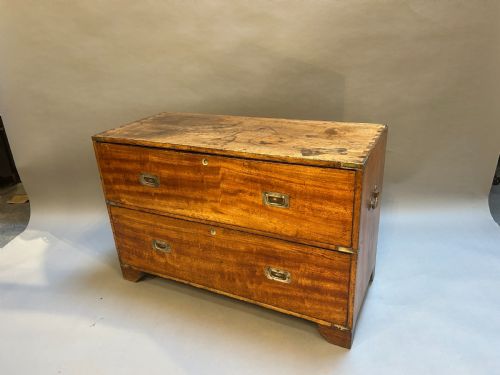


Mahogany Bound Trunk
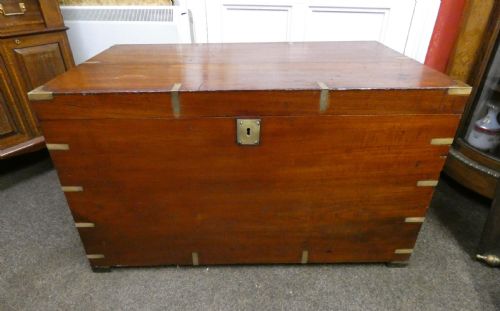
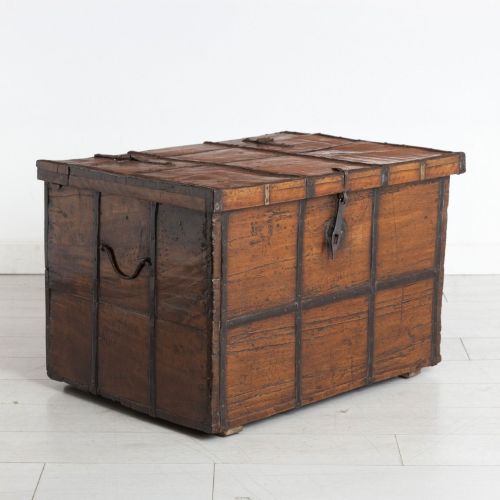
Mahogany bound trunk pieces are robust travelling chests and storage boxes reinforced for heavy transit.
Mahogany Bound Trunk
When you search for a mahogany bound trunk, you are looking at substantial storage furniture designed for travel, domestic use, or trade. The evidence shows these items span from the seventeenth century through the Victorian period to the early twentieth century.
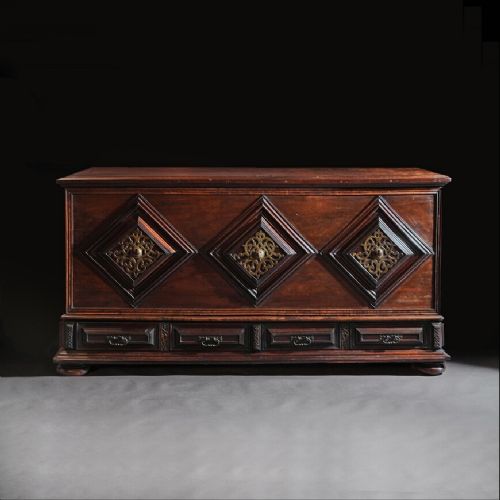
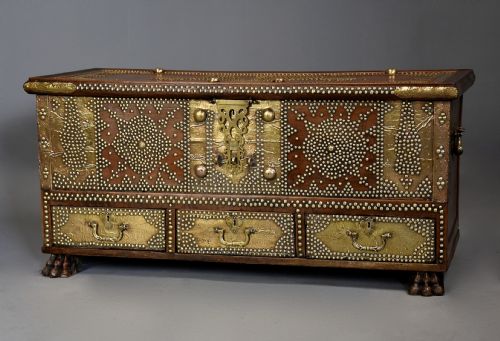
You are most likely to meet Victorian campaign pieces, military chests of drawers, and metal or brass bound trunks on this page. Styles stretch across Victorian military, Portuguese Colonial, and Zanzibar trader influences, using sturdy timbers and metal reinforcements.
Forms range from simple boxes and dowry chests on stands to large travel trunks with zinc linings and chests with wheels. Each object reflects a practical need for secure transport and heavy-duty storage across various domestic and overseas contexts.
How they were made
Maker construction relies on dense timber such as mahogany and teak, chosen for structural strength and resilience during transit. Workshops construct the main body of the chest to withstand long journeys and heavy loads.
Metalwork forms a crucial part of the fabrication, utilising brass and iron for corner brackets, straps, bindings, and stud decoration. These metal additions protect vulnerable edges and reinforce the structural integrity of the box.
Mahogany Bound Trunk Retail Price Guide 2026
Typical asking prices for mahogany bound trunk among the pieces listed under this phrase on Sellingantiques today, from the lower quarter to the upper quarter. They describe what is for sale here now, not the wider market.
The listings on this site record periods from the seventeenth century through Georgian and Victorian eras up to nineteen ten, using mahogany, brass, iron, teak, and zinc.
What varies in quality
Quality depends heavily on the robustness of the metal mounts, the weight and grain of the mahogany timber, and the precision of the joinery. Pieces intended for military service or distant trade often display heavier brass binding and more rigorous internal fittings.
The sophistication of the hardware, such as flush-fitting brass handles and secure locking mechanisms, distinguishes standard domestic boxes from higher-grade military and colonial chests.
The Mahogany Bound Trunk Glossary
- Zanzibar chest
- A heavily decorated storage chest originating from trade routes, featuring elaborate brass stud work and strapwork over timber. These pieces often incorporate complex interior compartments and specialised locking systems.
- Portuguese Colonial
- A style of furniture produced under Portuguese influence overseas, blending European forms with local timbers like mahogany and distinct decorative motifs. These chests show deep historical trade connections.
- Zinc lined
- A trunk interior fitted with a sheet metal lining to protect contents from moisture, pests, or damage during sea voyages. This addition indicates heavy travel use.
Mahogany Bound Trunk: Frequently Asked Questions
What is a mahogany bound trunk?
A mahogany bound trunk is a sturdy storage chest constructed from mahogany timber and reinforced with metal bindings, corners, or straps. These pieces were historically built for travel, military campaigns, and long-distance trade.
The metal reinforcement protects the edges and corners of the chest from heavy knocks during transit. They range from simple nineteenth-century travel boxes to elaborate colonial and military chests.
How were campaign chests used?
Campaign chests served as portable furniture and storage for military officers on active service or travel. They were built to dismantle or stack securely inside tents and baggage wagons.
Recessed brass handles and protective corner brackets prevented the hardware from catching on ropes or canvas. This practical design allowed officers to maintain functional storage while moving across regions.
How do I identify a Victorian trunk?
Victorian trunks often display specific construction markers such as dovetail joints, brass or iron bindings, and utilitarian handles. The evidence points to pieces spanning the mid to late nineteenth century.
Look for period-appropriate materials like solid mahogany and heavy brass hardware. Zinc linings and makers' marks or labels can also help confirm the era of manufacture.
Where were Zanzibar chests made?
Zanzibar chests were produced for trade networks in East Africa and the Indian Ocean, incorporating local craftsmanship and imported materials. They are easily recognised by dense brass stud decoration and intricate metal straps.
These chests often served as dowry boxes or luxury storage for traders. Their distinct ornamental hardware sets them apart from standard British domestic trunks.