



Mahogany Bookcase with Shelves
A mahogany bookcase with shelves brings warm timber grain and practical tiering to a room, holding volumes securely while anchoring the interior.
Mahogany Bookcase with Shelves
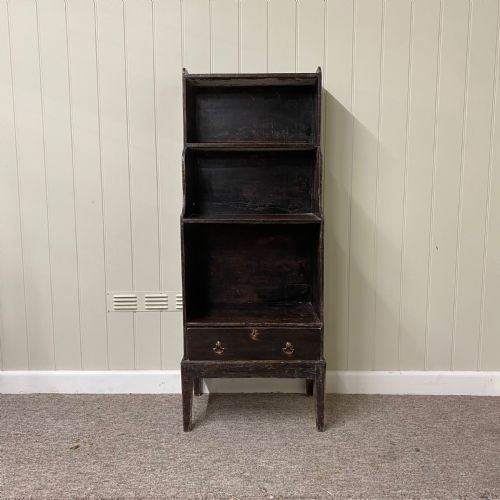
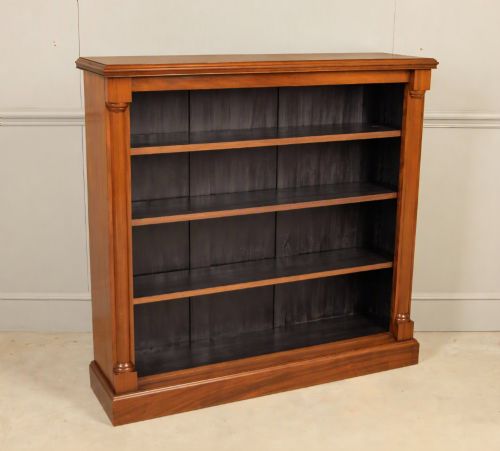
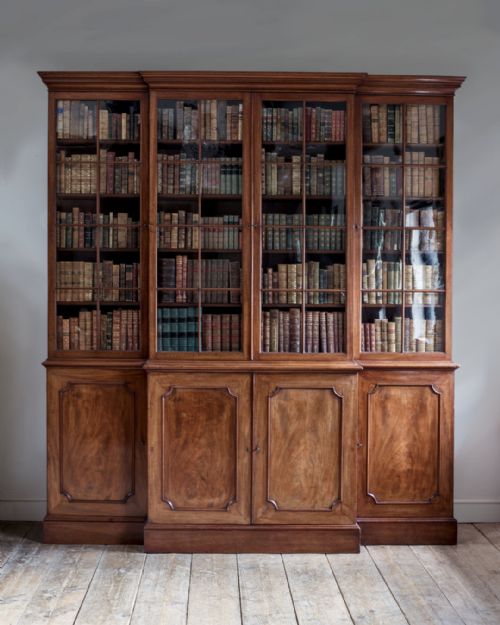
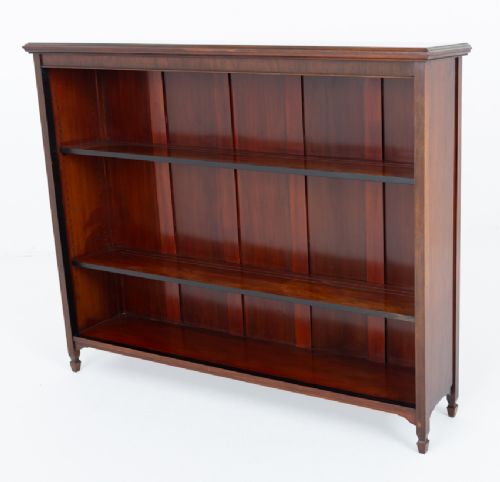
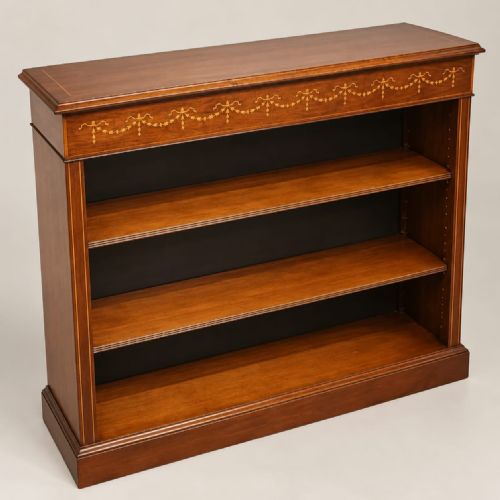
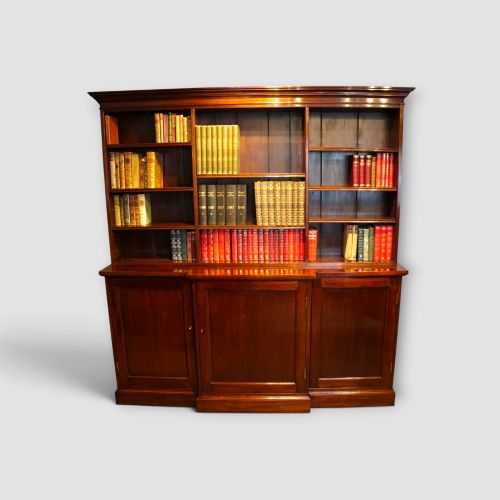
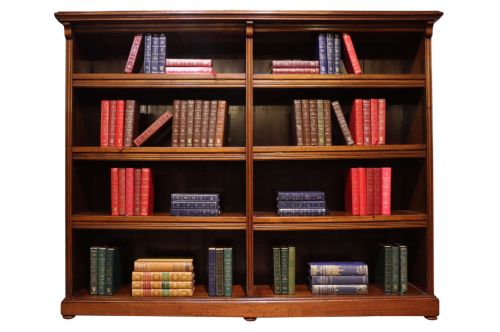
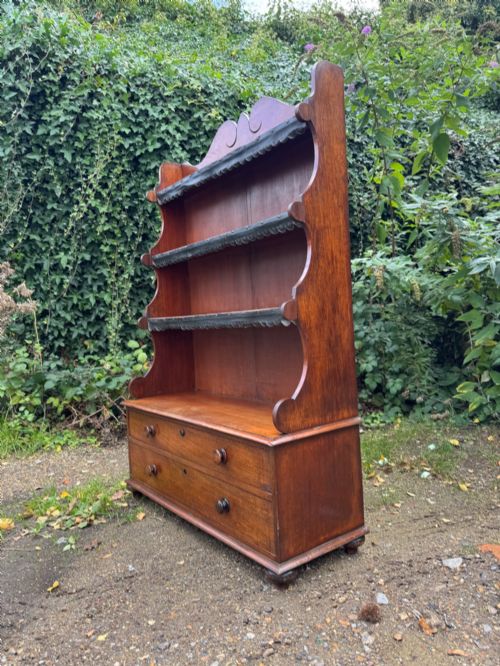
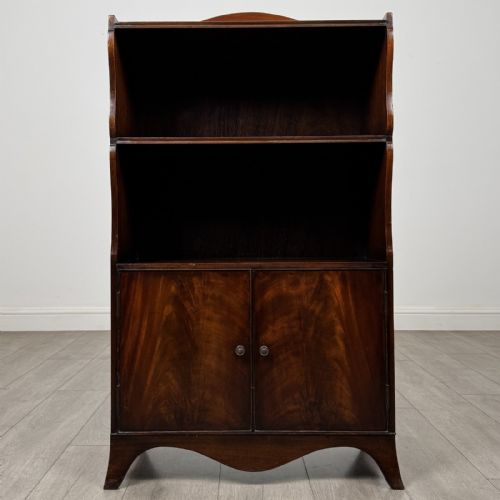
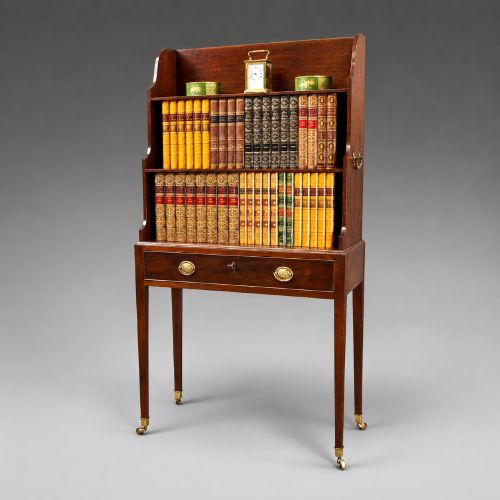
A mahogany bookcase with shelves typically spans periods from the Georgian era through the Edwardian years and into the early twentieth century. Buyers encounter open shelving formats alongside breakfront designs, tall vertical units, and waterfall tiers suited to domestic libraries or studies.
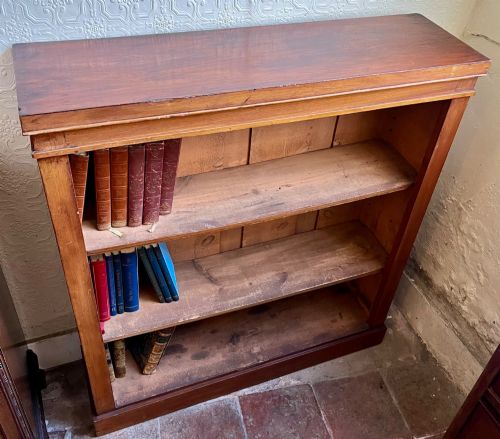
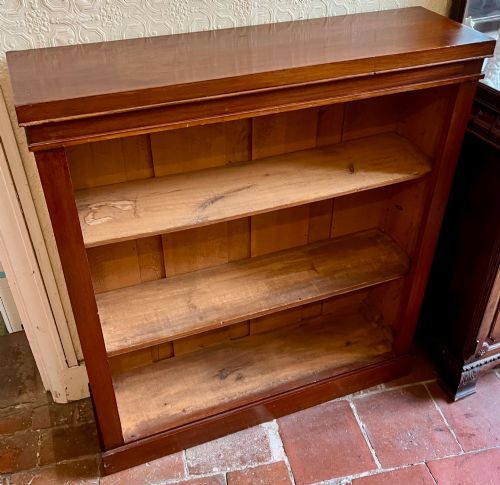
Many examples incorporate adjustable shelving to accommodate varying book heights, while others combine open display space with lower cupboards or glazed upper sections. The forms range from grand breakfront library pieces down to compact corner and pier cabinets.
Origins stretch across nineteenth-century workshops and twentieth-century production, frequently displaying stylistic influences such as Regency, Sheraton, and Gothic revival details upon solid timber and veneer carcases.
Materials and construction methods
Makers utilised solid mahogany and flame mahogany veneer applied to secondary timbers, frequently accentuating surfaces with contrasting boxwood and satinwood stringing or inlay. Structural stability relied on traditional joinery, with brass hardware providing functional movement on castors and doors.
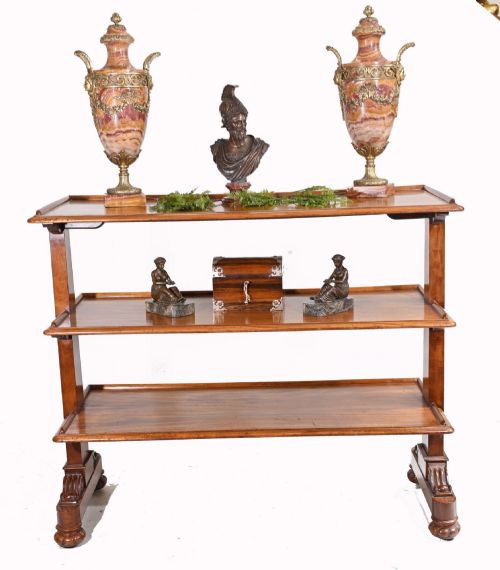
Glass panels fitted into doors protect enclosed compartments, while interiors occasionally feature leather-lined writing surfaces or mirror backs. Open tiers often rest on slender pillars or incorporate raised galleries along the top edge.
Mahogany Bookcase with Shelves Retail Price Guide 2026
Typical asking prices for mahogany bookcase with shelves among the pieces listed under this phrase on Sellingantiques today, from the lower quarter to the upper quarter. They describe what is for sale here now, not the wider market.
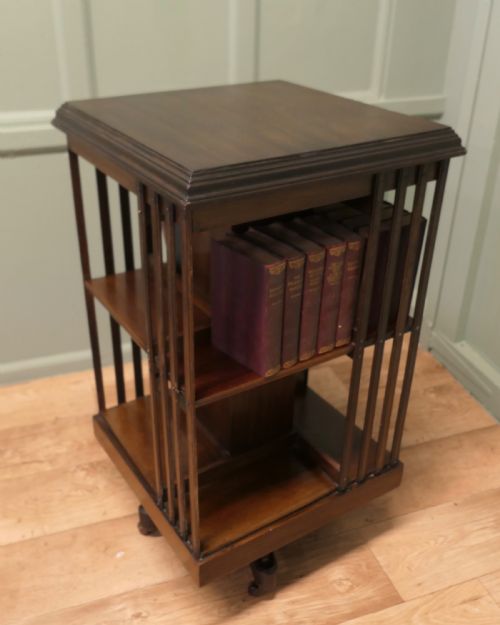
Some nineteenth-century revolving bookcases let readers spin an entire library round with a gentle flick of the wrist.
Factors determining quality
Quality rests on the selection of timber figures, where rich flame mahogany veneer and carefully matched grain patterns elevate the visual impact of the piece. Crispness of inlaid stringing and refinement in proportions distinguish superior examples from plain utility furniture.
The integration of functional elements such as smoothly operating adjustable shelf mechanisms, solid brass castors, and well-fitted doors dictates the standard of craftsmanship. Original untouched surfaces and balanced architectural proportions hold greater appeal for discerning collectors.
Macey·Tudor and Burrey·Lamb of Manchester·Robert Strahan
The Mahogany Bookcase with Shelves Glossary
- Breakfront
- A piece of furniture with a central section that projects forward from the flanking wings.
- Waterfall bookcase
- A tiered shelving unit where each successive shelf steps back from the one below it.
- Whatnot
- An open set of multiple shelves used for displaying books or ornaments, supported on slender corner posts.
- Pier cabinet
- A low freestanding cabinet designed to fit against the narrow wall space between windows.
- Flame mahogany
- Timber cut from the fork of the mahogany tree to produce a distinctive flickering flame-like grain pattern.
Mahogany Bookcase with Shelves: Frequently Asked Questions
How do I adjust the shelves?
Most antique bookcases utilise traditional wooden support slips, brass rack strips, or wooden pegs inserted into pre-drilled holes along the interior sides.
Simply lift the shelf clear of its supports and reposition the pins or brackets to the desired height before resting the timber back in place.
Can these hold heavy books?
Solid timber construction and sturdy internal supports allow many larger bookcases to bear substantial weight.
Shorter shelf spans generally resist bowing better than extended open tiers, making them ideal for heavy folio volumes.
Where should I place a waterfall bookcase?
The stepped profile of a waterfall bookcase suits placement against flat walls in studies, living rooms, or hallways.
Because many examples feature finished backs, certain pieces can also stand away from the wall as a room divider.
How do I identify a Georgian bookcase?
Georgian pieces typically display restrained classical proportions, solid mahogany construction, and architectural cornices without excessive ornamentation.
Details such as hand-cut dovetails in the drawer construction and period-appropriate brass hardware help confirm the era.