




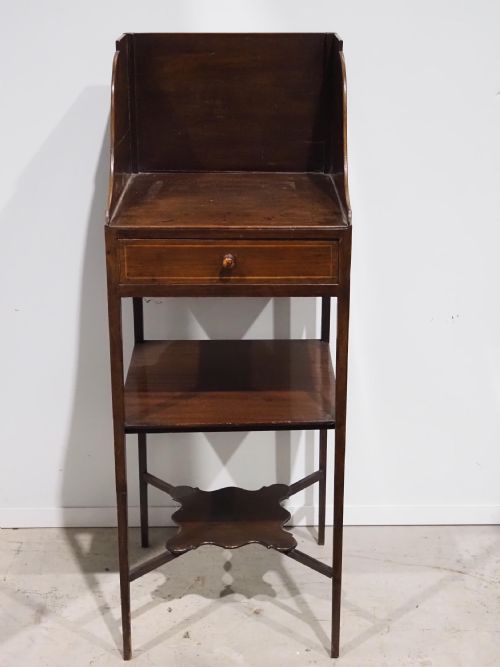
Mahogany Bed Side
Mahogany bed side tables bring functional warmth to a bedroom, offering sturdy storage and classic surfaces from the Georgian, Victorian, and Edwardian periods.
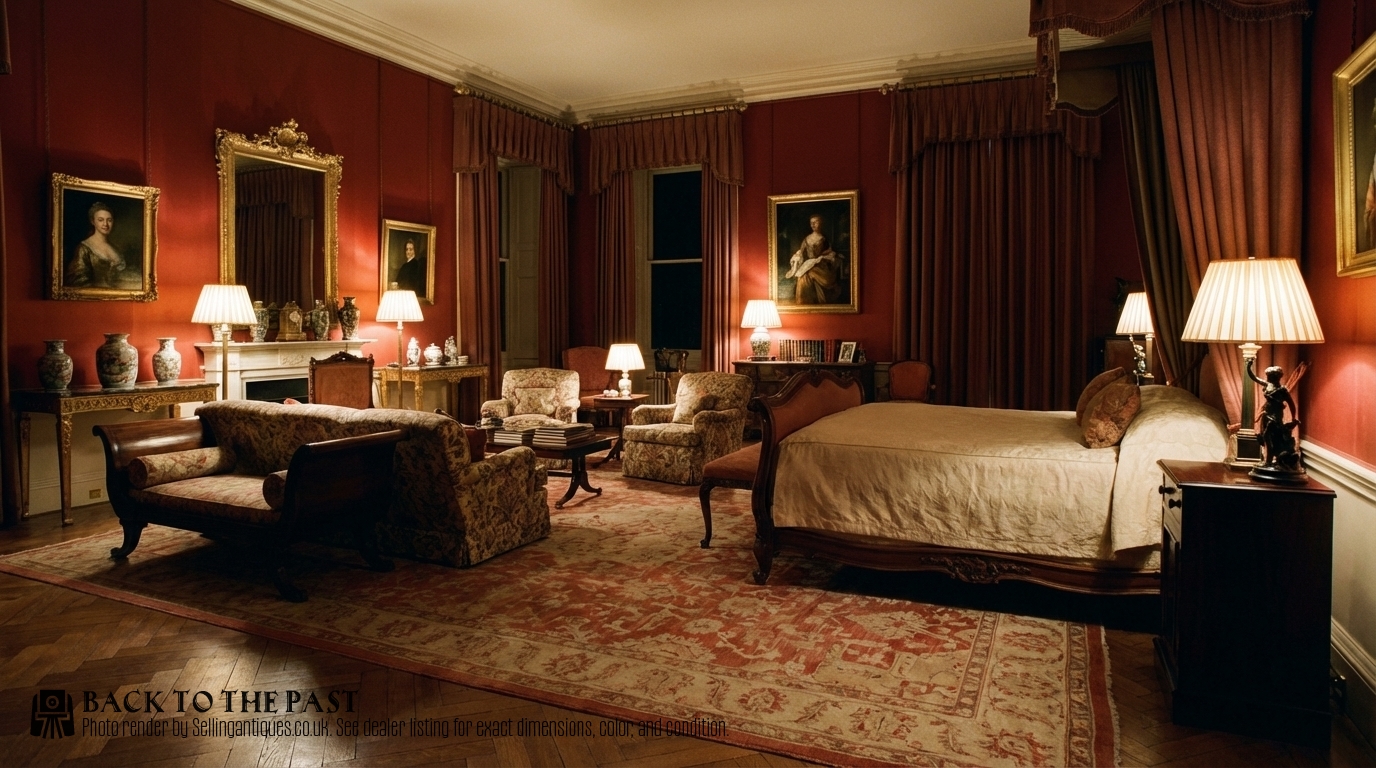
Mahogany Bed Side
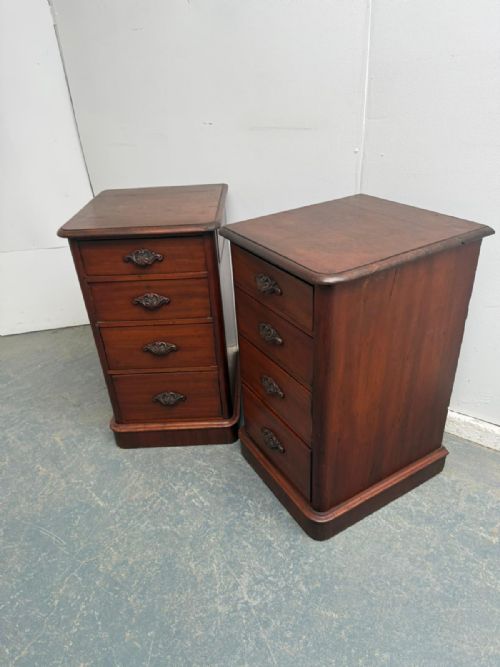
When you search for a mahogany bed side, you encounter compact bedside cabinets, small chests of drawers, and pot cupboards designed to sit neatly beside a bed. The selection spans Georgian, Victorian, and Edwardian eras, alongside later revivals and twentieth-century interpretations.
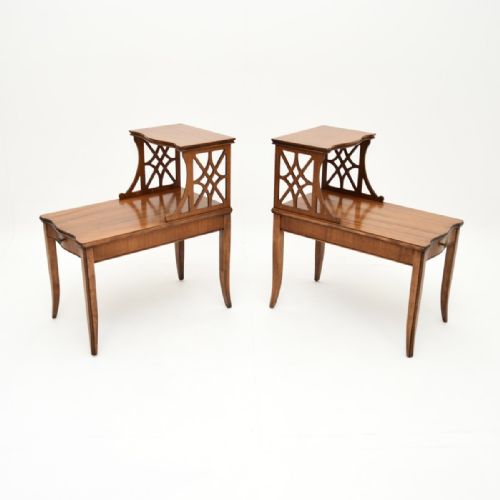
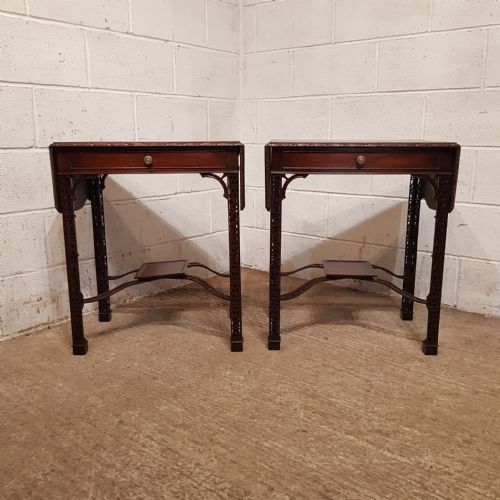
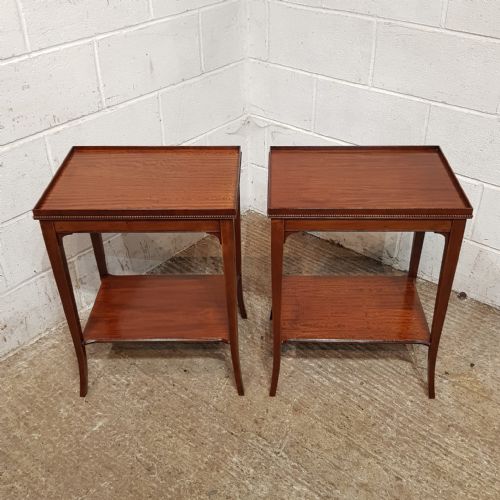
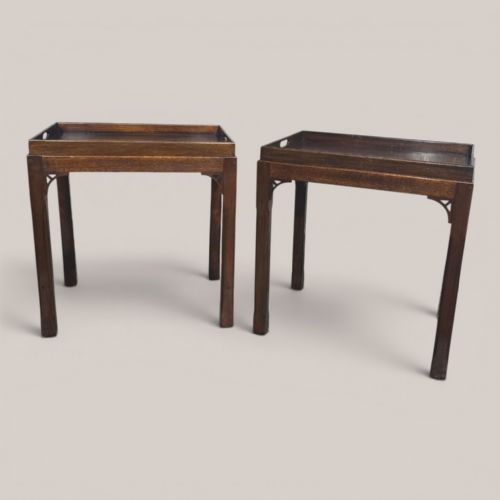
You are most likely to meet enclosed cabinets with single doors or small stacks of drawers, often found in pairs. Alongside these traditional cupboards, the listings include occasional lamp tables, tray top surfaces, and drop leaf variants originating from the nineteenth century.
How they were made
Cabinet makers utilised solid mahogany and rich mahogany veneers over secondary timbers, often pairing the dark timber with contrasting boxwood stringing or brass handles. Structural elements frequently incorporate brass hinges, leather inserts, and occasionally marble tops.
Construction methods range from hand-dovetailed drawer boxes in eighteenth-century workshops to turned legs and inlaid surfaces characteristic of later Victorian and Edwardian production.
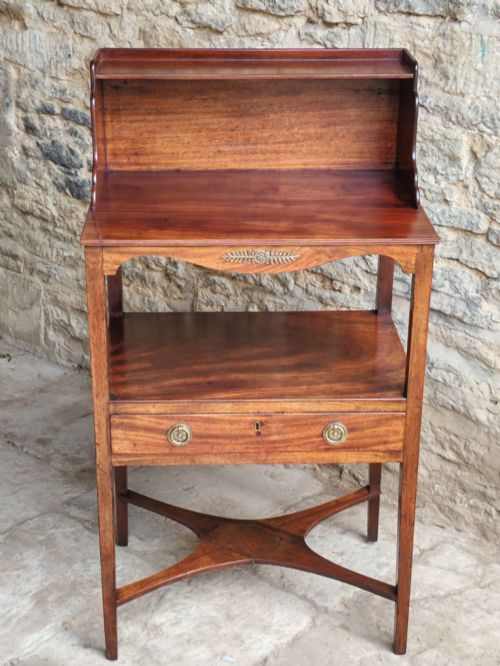
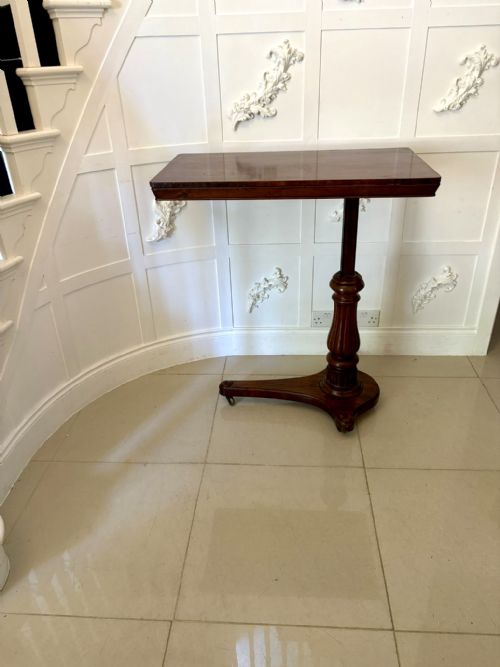
Some nineteenth-century pieces doubled as calligrapher's desks and library steps, proving Victorians loved furniture that could perform two unrelated jobs at once.
What varies in quality
The distinction between ordinary utility items and superior pieces rests on the choice of timber grain, the crispness of carved details like Chippendale-style motifs, and the integrity of the original hardware. Superior examples display thoughtful proportions, balanced drawer alignments, and well-executed boxwood inlay rather than plain mass-produced surfaces.
Finish also dictates standing, with waxed surfaces that retain a deep natural lustre commanding more attention than dull or heavily stripped alternatives.
The Mahogany Bed Side Glossary
- Pot cupboard
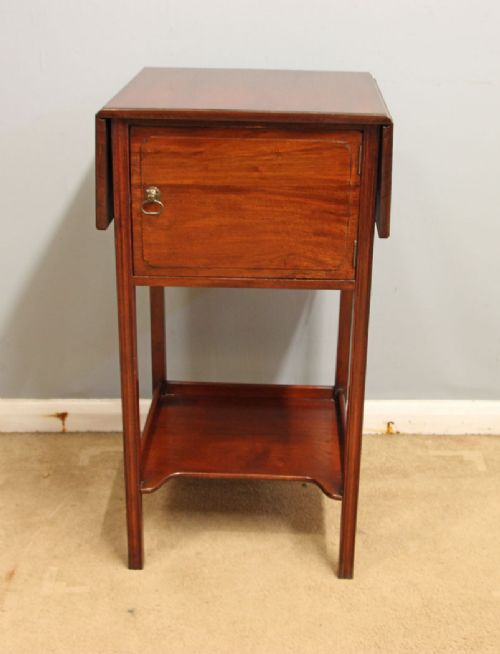
- A small bedside cabinet originally built to enclose a chamber pot behind a single panelled door. These pieces often feature an enclosed upper section or a small drawer.
- Bow-front
- A curved cabinet front that swells outward in the centre, offering a softer silhouette than standard flat-fronted bedside chests. This shaping requires skilled carpentry to match the mahogany veneers along the curve.
- Tray top
- A tabletop finished with a raised moulded edge or gallery designed to prevent items from rolling off. This practical feature appears frequently on Georgian and Edwardian examples.
- Drop leaf
- A table featuring hinged side flaps that fold down to save space when not in use. These versatile surfaces appear on various side and lamp tables across the periods.
- Inlay
- A decorative technique where contrasting materials such as boxwood are fitted into recesses cut into the mahogany surface. Edwardian pieces frequently utilise this method for subtle geometric or floral borders.
Mahogany Bed Side: Frequently Asked Questions
What is a bedside cabinet?
A bedside cabinet is a small piece of furniture designed to stand next to a bed, typically featuring a cupboard door, drawers, or an open shelf for nighttime essentials.
Historically, many of these cabinets served as pot cupboards to conceal chamber pots, but today they function purely as storage tables for lamps and books.
How do I date a mahogany bedside table?
Dating relies on observing construction details, timber characteristics, and stylistic markers such as bracket feet, handles, and inlay techniques. Georgian pieces tend to show hand-cut dovetails and solid timber construction, while Edwardian versions often incorporate delicate stringing and lighter internal framing.
Comparing the overall proportions and hardware to documented examples from the same era helps narrow down the decade of manufacture.
Are these tables usually sold in pairs?
Many bedside tables and cabinets on the market are offered as matched or near pairs, reflecting the traditional arrangement of placing matching units on either side of a bed. Single tables also appear frequently, often selected as standalone lamp tables or occasional pieces.
Finding a true pair from the Georgian or Victorian periods requires matching timber grain, height, and hardware closely.
How do I care for mahogany furniture?
Maintaining mahogany involves keeping the wood away from direct sunlight and strong heat sources to prevent the timber from drying out or fading. Regular dusting with a soft cloth and occasional application of appropriate wax helps preserve the natural lustre of the polished surface.