




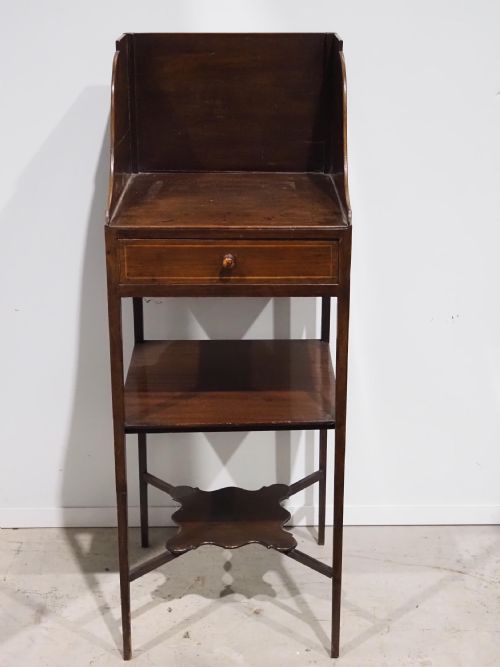
Mahogany Bed Side Table
A mahogany bed side table brings sturdy timber and quiet utility close to the bed, holding small essentials within arm's reach.
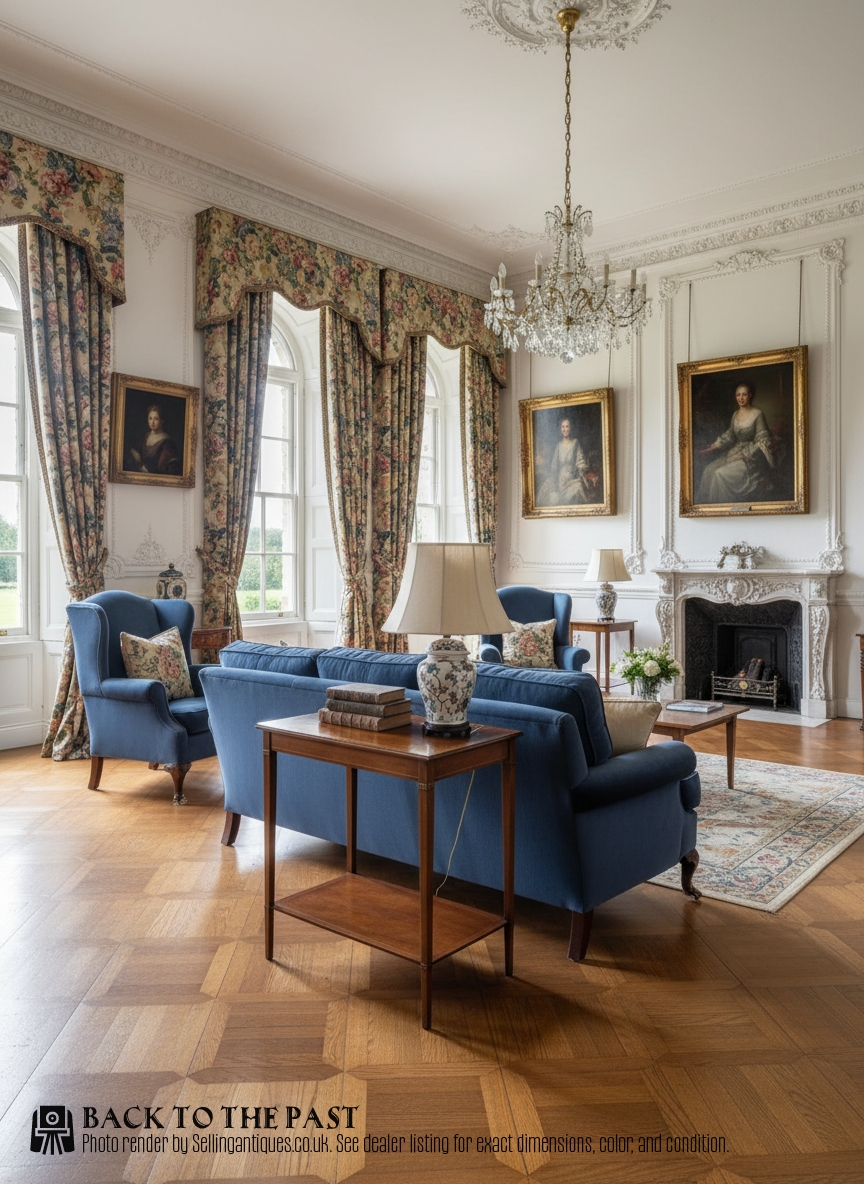
Mahogany Bed Side Table
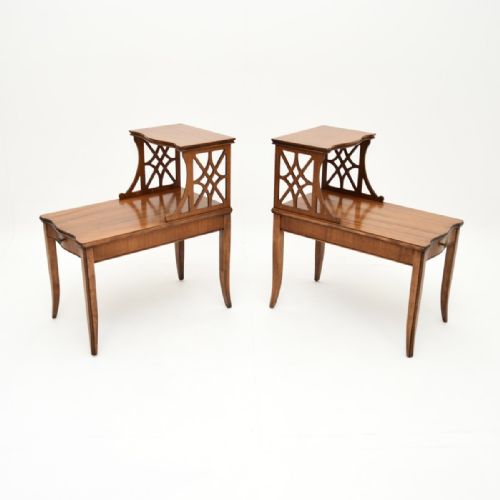
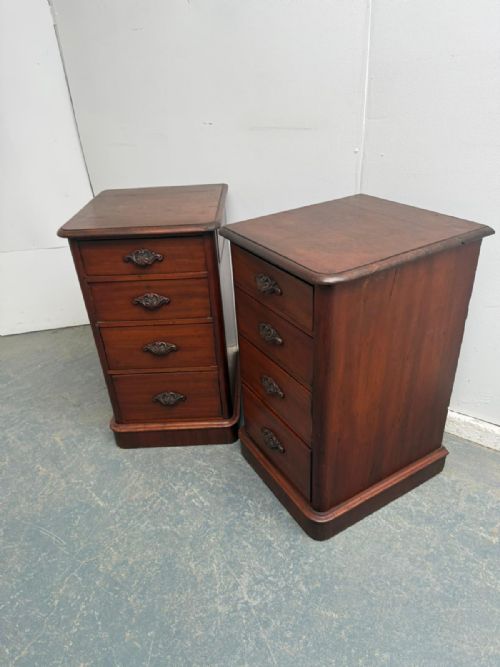
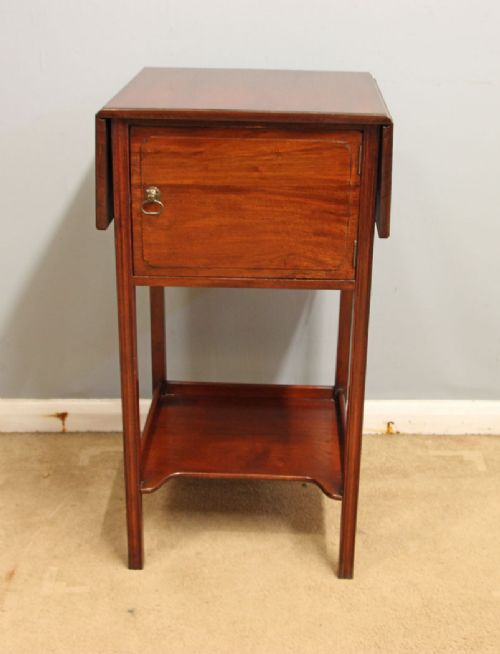
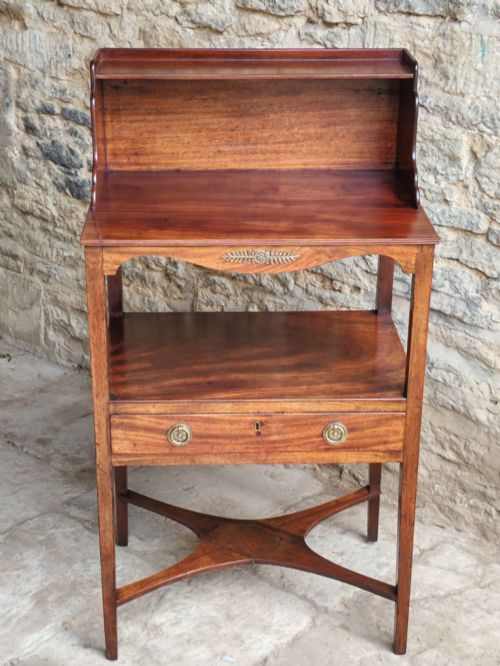
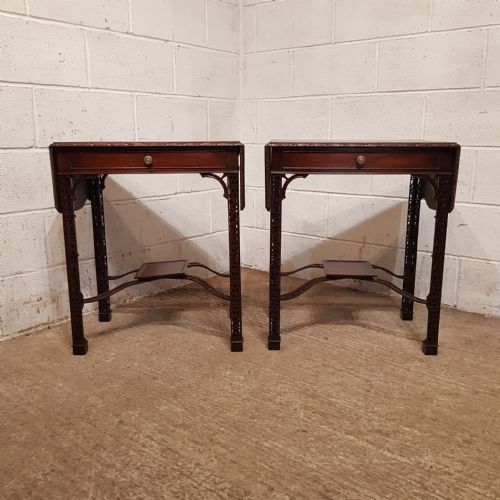
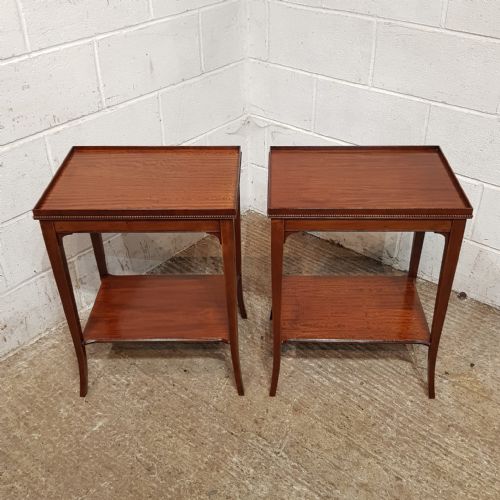
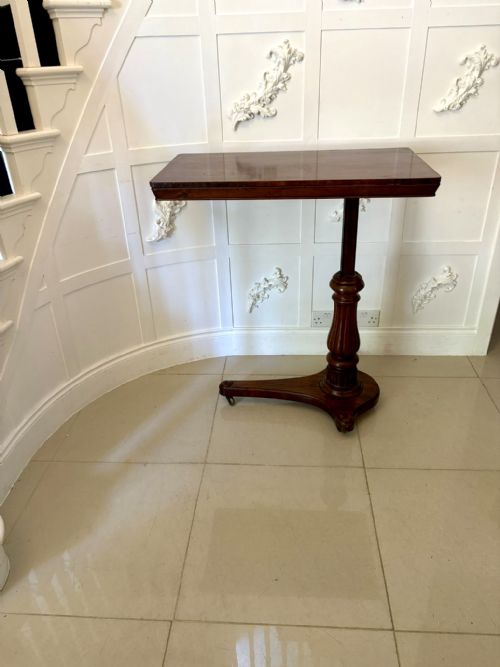
A mahogany bed side table encompasses compact cabinets, pot cupboards, and lamp tables designed for daily bedside use. The form spans Georgian, Victorian, and Edwardian periods, appearing alongside related pieces like reading tables and drop-leaf side tables.
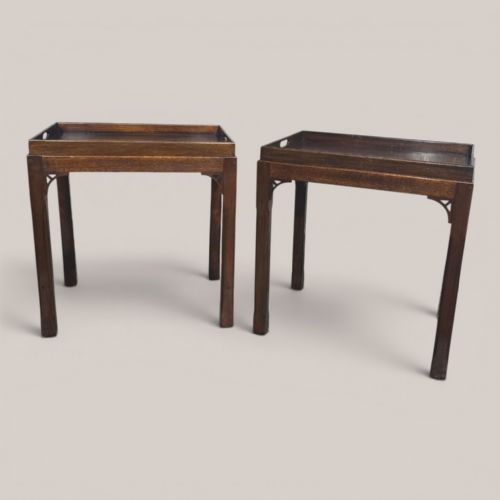
Georgian and Regency examples show clean lines and tray tops, while Victorian and Edwardian pieces frequently incorporate doors, drawers, or marble surfaces. Buyers frequently encounter pairs alongside single tables, constructed primarily for domestic bedrooms.
What varies in quality
The choice of timber grain determines visual depth, ranging from plain mahogany boards to highly figured flame patterns across drawer fronts and table tops. Crispness in carved details, boxwood inlay precision, and original brass hardware elevate the standing of a piece.
Structural integrity depends on the original stability of the frame, the neatness of dovetail joints within drawers, and whether secondary woods remain unaltered through later restorations.
Step commodes disguised as polite little side tables ensured a gentleman's night-time ascent was handled with absolute discretion.
Gillows
The Mahogany Bed Side Table Glossary
- Mahogany
- A durable tropical hardwood prized for its rich reddish-brown colour and stable grain. It forms the primary structural and decorative material for these tables.
- Pot cupboard
- A small bedside cabinet originally designed to enclose a chamber pot. They frequently feature a panelled door above a lower compartment.
- Tray top
- A raised moulded edge surrounding the top surface of a table to prevent items from rolling off. This feature appears frequently on Georgian examples.
- Drop-leaf
- A hinged flap on a table top that folds down when not in use. It allows the surface area to expand flexibly.
- Inlay
- A technique where contrasting materials such as boxwood are fitted into recesses flush with the wood surface. It creates decorative geometric borders.
Mahogany Bed Side Table: Frequently Asked Questions
What periods do these bedside tables come from?
The pieces span from the Georgian era through the Victorian and Edwardian periods up to the early twentieth century. Common styles include George III designs alongside later revivals.
Construction methods and hardware generally align with the prevailing taste of each era, distinguishing 18th-century pieces from later Victorian cabinets.
Were these tables originally made in pairs?
While many Georgian and Victorian examples were produced individually as single bedside pieces, matching pairs and near pairs appear frequently. Makers often built lamp tables and cabinets in sets for larger bedrooms.
Pairs usually share identical timber figure, dimensions, and hardware configurations, though slight variations occur in matched antique sets.
What is the difference between a cabinet and a table?
Bedside cabinets typically feature enclosed storage behind a door, sometimes housing shelves or compartments originally intended as pot cupboards. Open tables rely instead on drawers, lower tiers, or tray tops.
Both forms served the same domestic function beside the bed, holding lighting, books, and personal items.
How do I care for mahogany surfaces?
Maintenance requires simple dusting with a soft, dry cloth to protect the polished wood and veneer. Avoid placing the tables in direct sunlight or near heat sources to prevent timber splitting.
Occasional application of traditional wax helps preserve the lustre of the mahogany without building up heavy chemical residues.