

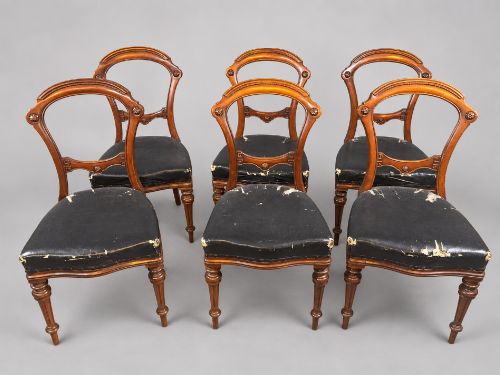
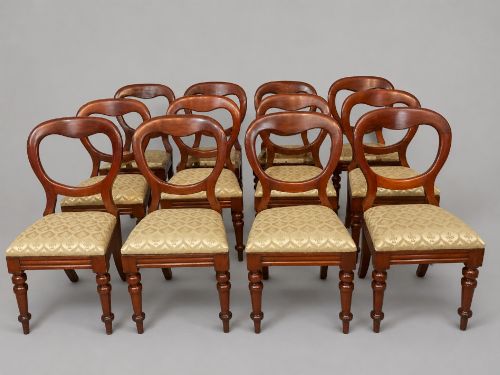
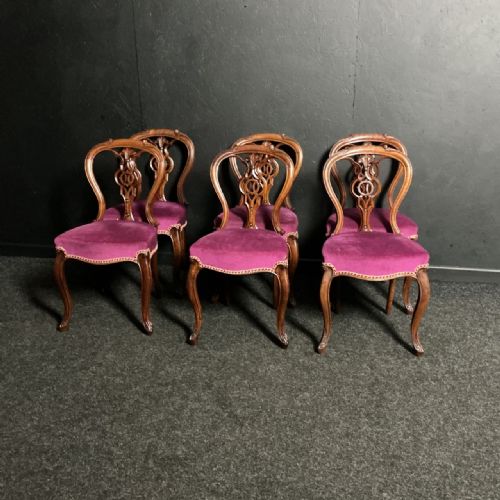
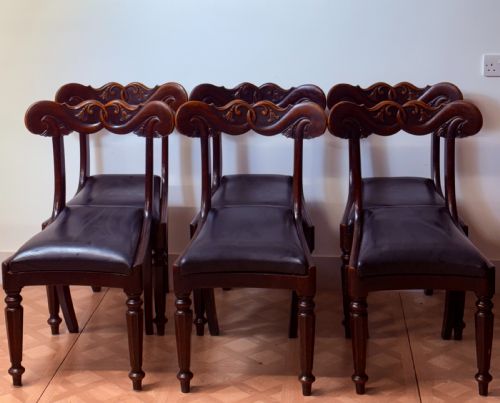
Mahogany Balloon Back Seats
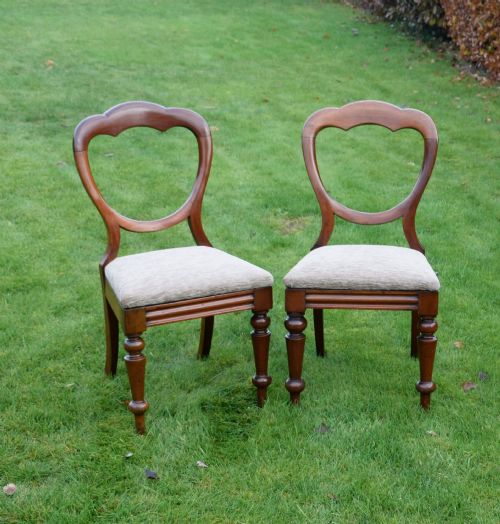
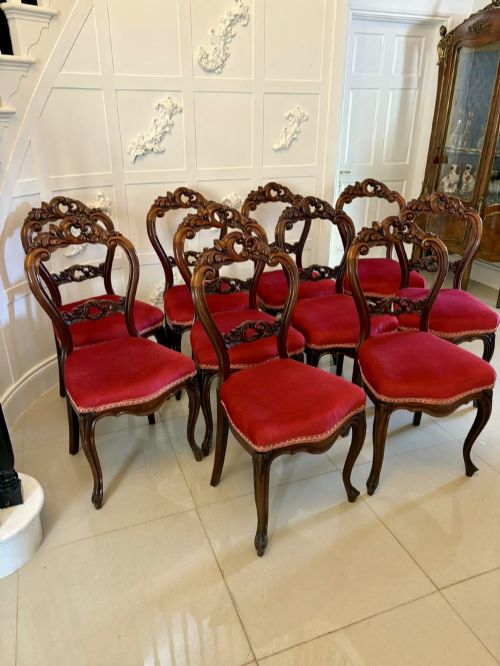
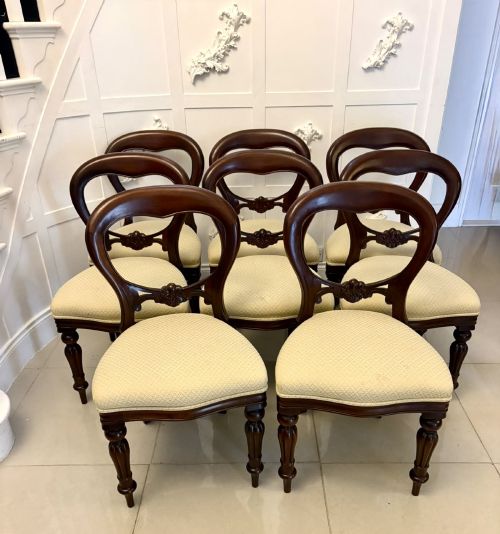
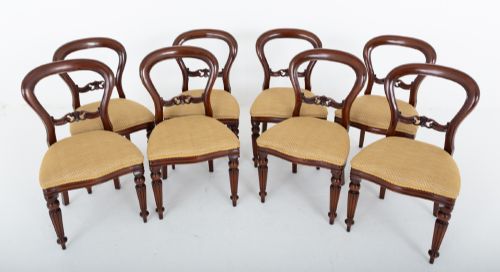
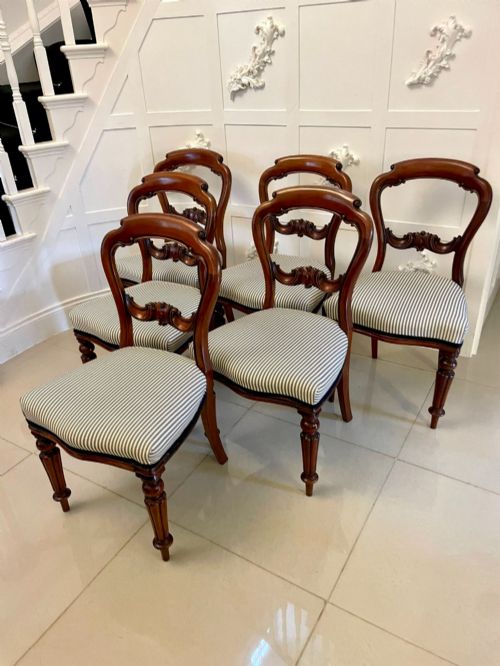
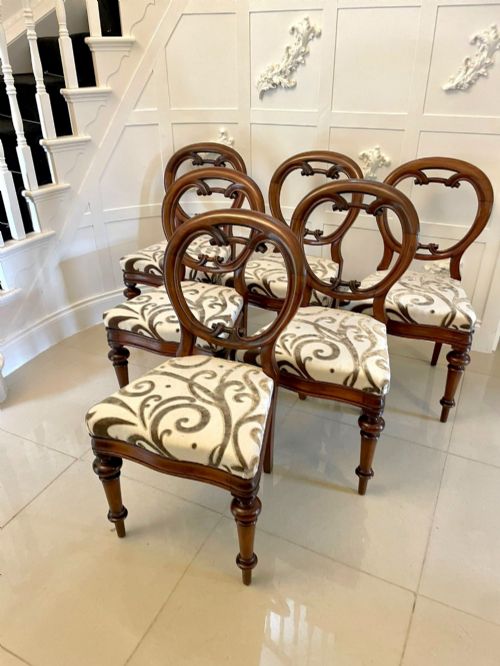
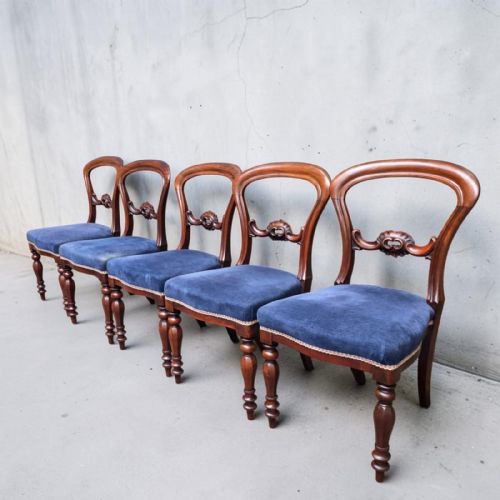
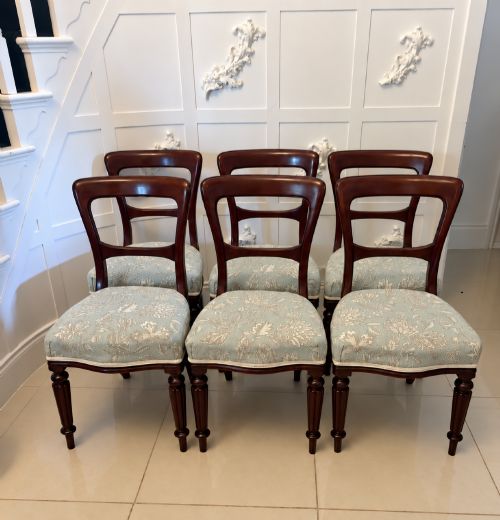
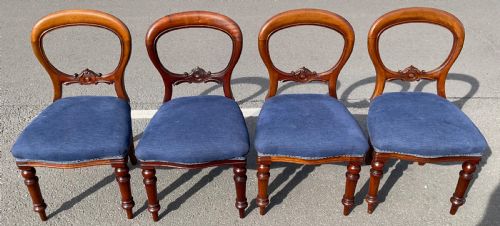
Mahogany balloon back seats are quintessential nineteenth-century dining chairs defined by their curved, oval toprails, designed to bring elegance and supportive comfort to the dining room.
Mahogany Balloon Back Seats
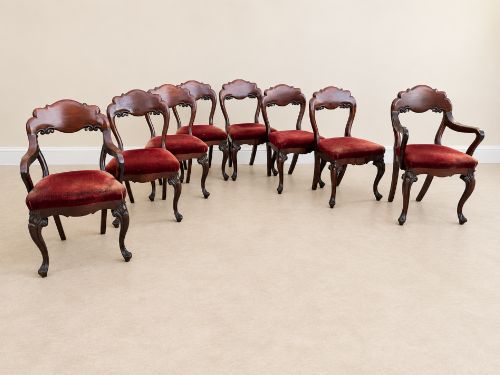
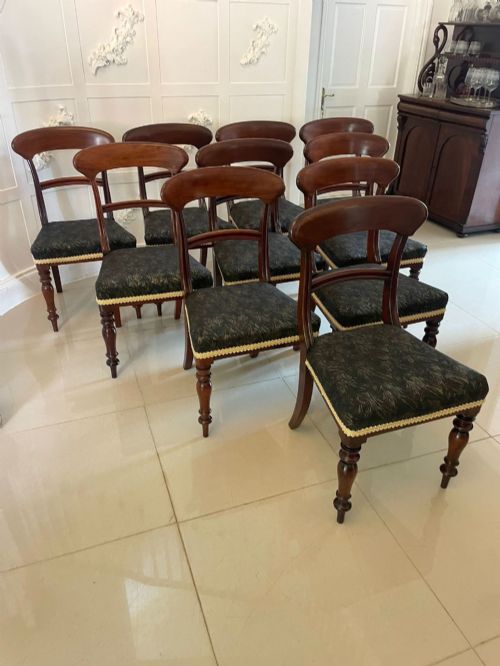
Mahogany balloon back seats primarily appear on this page as Victorian and nineteenth-century dining chairs, often found in sets ranging from pairs to groups of ten or twelve. These pieces serve primarily as formal dining furniture, though the category also encompasses salon suites, nursing chairs, and hall chairs.
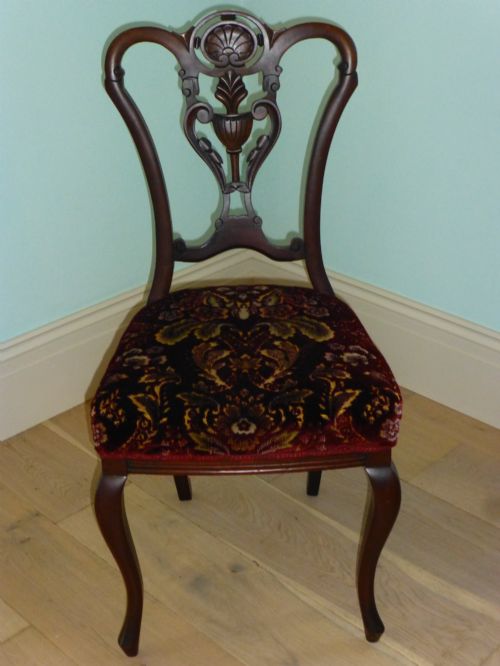
The dominant material visible across these listings is mahogany, supplemented occasionally by rosewood and walnut timbers. Frames are frequently paired with upholstered seats in fabrics such as velvet.
Makers and periods represented span the Regency, William IV, and Victorian eras, stretching from around eighteen hundred through the late nineteenth century into nineteen thirty.
How they were made
The distinctive curved backrests of these chairs were formed by steaming and bending solid mahogany or rosewood into the characteristic oval or spear point balloon shape. Carved details, such as scroll-carved bars and serpentine front rails, were hand-chiselled directly into the timber frame.
Upholstered seats were traditionally built up with horsehair and webbing over a wooden frame, then finished with overstuffed padding and secured with textile coverings like velvet or standard upholstery fabric.
Mahogany Balloon Back Seats Retail Price Guide 2026
Typical asking prices for mahogany balloon back seats among the pieces listed under this phrase on Sellingantiques today, from the lower quarter to the upper quarter. They describe what is for sale here now, not the wider market.
Some nineteenth-century makers evidently decided that an ordinary oval simply lacked punch, giving us the wonderful spear point balloon back.
What varies in quality
Quality in these seats rests on the selection of timber and the crispness of the carved ornamentation on the balloon back and cabriole forelegs. Dense mahogany with rich grain figures distinguishes finer examples from plain utilitarian frames.
The integrity of the frame construction and the proportion of the curved back rail determine the visual harmony of each piece. Larger matched sets demonstrate a higher degree of initial craftsmanship and uniformity than assembled pairs.
Blyth and Sons·Gillows
The Mahogany Balloon Back Seats Glossary
- Balloon back
- A chair back shaped in a continuous oval or loop resembling a rounded balloon, popular during the Victorian period.
- Serpentine front
- A furniture front edge that curves outward in the centre and inward at the sides, often seen on chair seats.
- Cabriole leg
- A furniture leg that curves outward and then tapers inward, typically ending in a pad or scroll foot.
- Overstuffed seat
- An upholstered chair seat where the padding completely covers the wooden seat rail, concealing the frame from view.
- Spear point balloon back
- A specific variation of the curved chair back featuring an upward taper resembling the tip of a spear.
Mahogany Balloon Back Seats: Frequently Asked Questions
How do I date a balloon back chair?
Dating relies on stylistic shifts and recorded periods, moving from early nineteenth-century Regency and William IV forms toward heavier Victorian proportions. Evidence on this page points primarily to the mid-to-late nineteenth century.
Secondary indicators include timber choice, such as the use of rosewood alongside mahogany, and the complexity of the carved scrollwork on the chair frame.
Were these chairs only used for dining?
While the majority function as dining chairs in sets of four up to twelve, the form was adapted for other domestic seating. Variants include bedroom chairs, low nursing chairs, and hall chairs.
Salon suites also incorporate the same curved backrest design to provide matching seating across a formal reception room.
What wood was most commonly used?
Mahogany is the primary timber recorded across the majority of these listings, valued for its strength and deep reddish-brown colour. It provided a stable base for the steam-bent curved frames.
Alternative timbers such as rosewood and walnut also appear in specific Regency and Victorian examples.
Can I mix different sets together?
Mixing sets requires careful attention to the specific shape of the balloon back, the height of the seat, and the timber tone. Listings show combinations such as four walnut chairs paired with a pair of mahogany chairs.
Matching the overall proportions and the period style ensures visual consistency around a large dining table.