

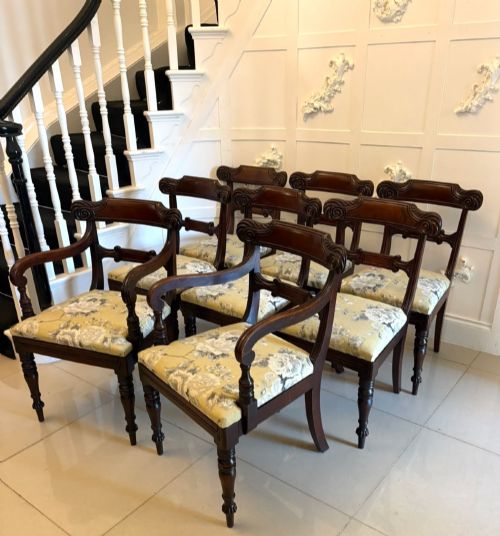
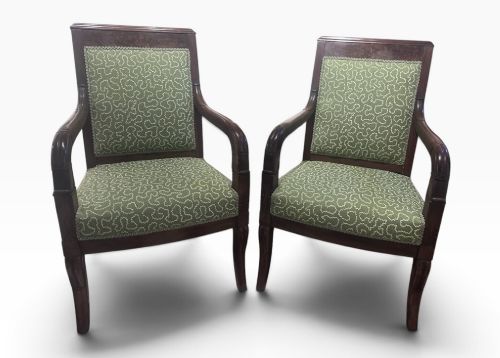
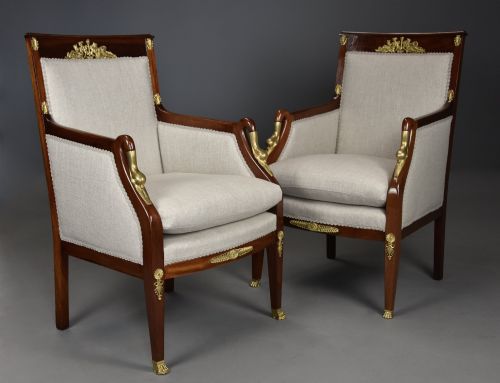
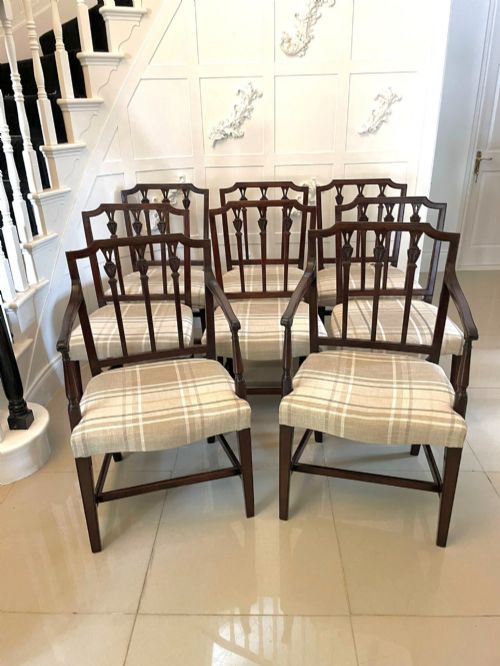
Mahogany Carver Chairs
Mahogany antique carver chairs bring formal seating into a room, offering sturdy elbow support alongside rich timber grain.
Mahogany Carver Chairs
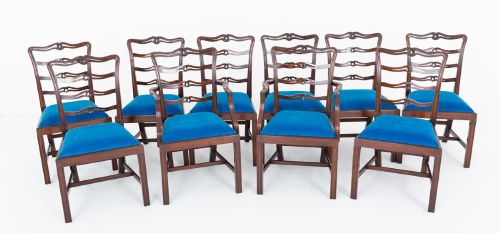
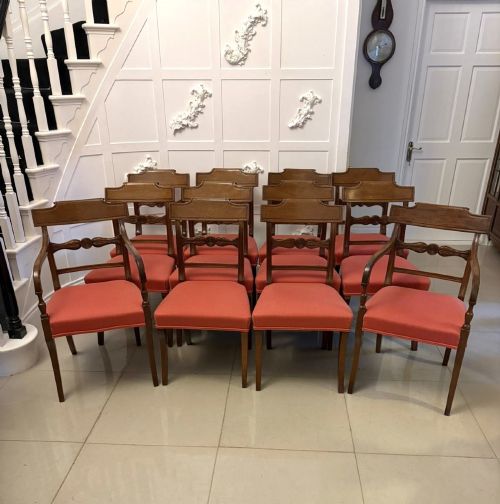
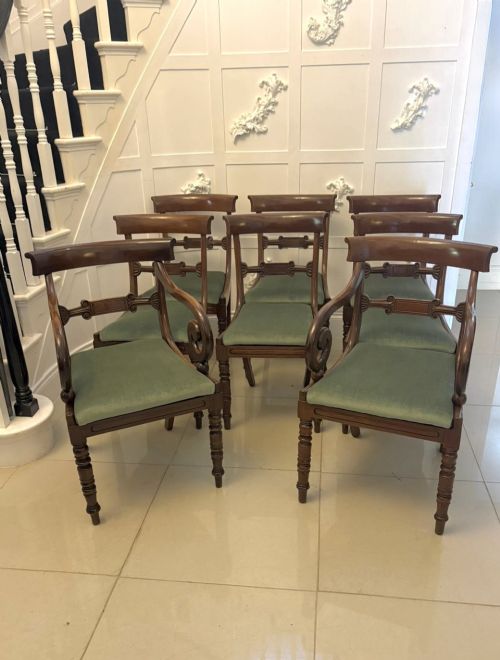
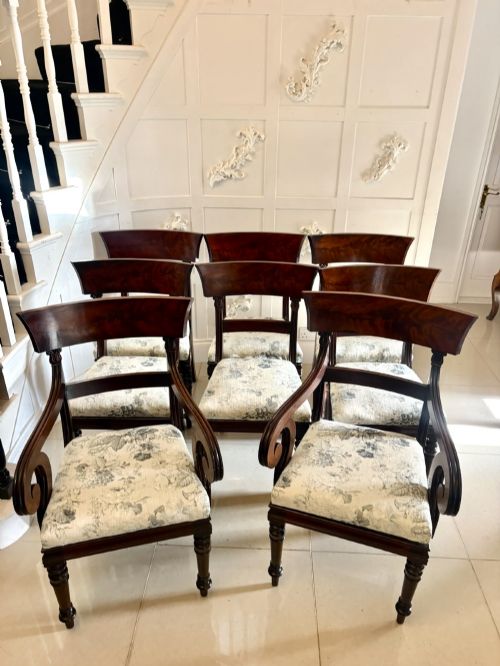
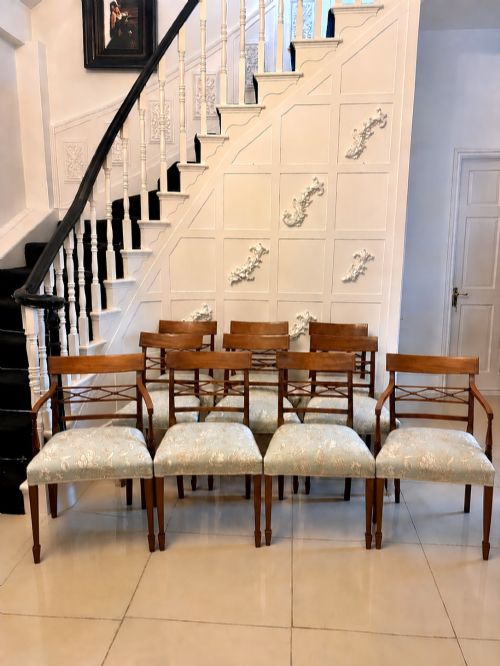
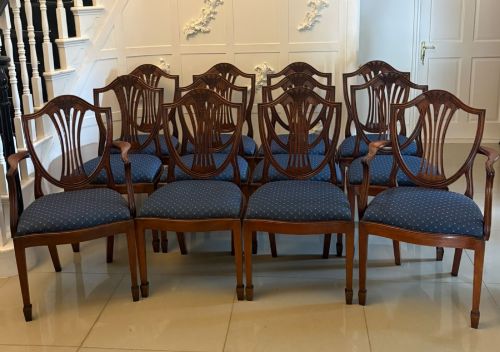
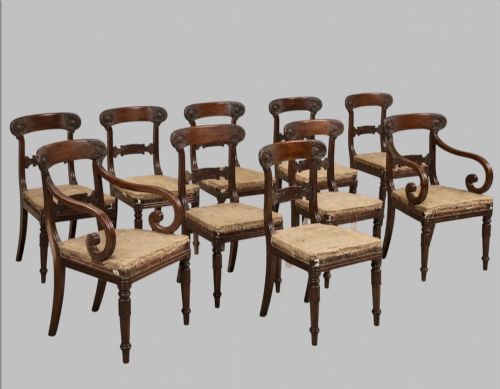
These mahogany antique carver chairs comprise single armchairs or matching pairs, alongside larger sets of dining chairs that incorporate a pair of carvers for the head of the table. The forms span the eighteenth, nineteenth, and early twentieth centuries, drawing on Georgian, Regency, Victorian, and Edwardian periods.
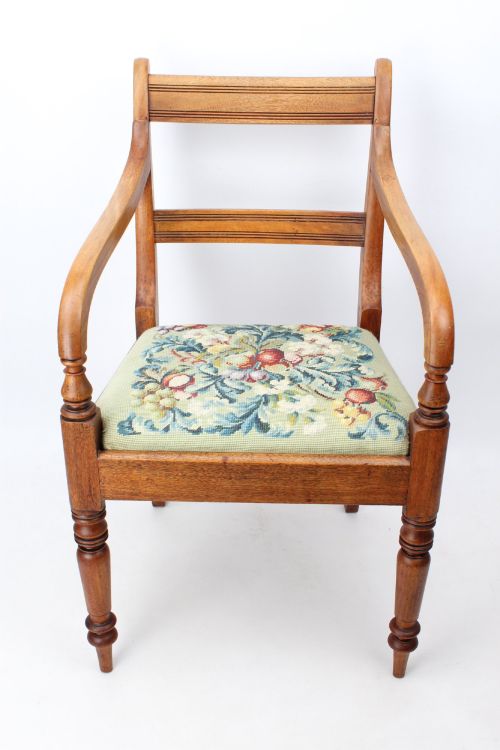
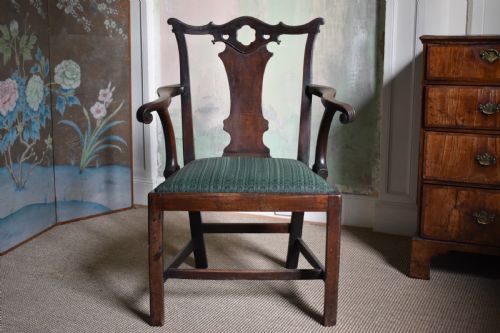
Individual pieces range from straightforward provincial elbow seats to elaborate Chinese Chippendale open armchairs and French Empire designs. The selection balances standalone library or desk seating with dining suites designed to anchor a formal room.
Materials and construction methods
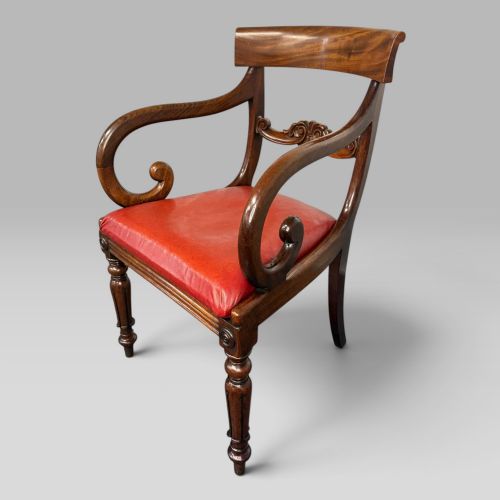
Makers utilised solid mahogany for the structural frames, often selecting figured timber for back splats and crest rails to catch the light. Joinery relied on traditional mortise and tenon joints, pinned for stability under daily use at the dining table.
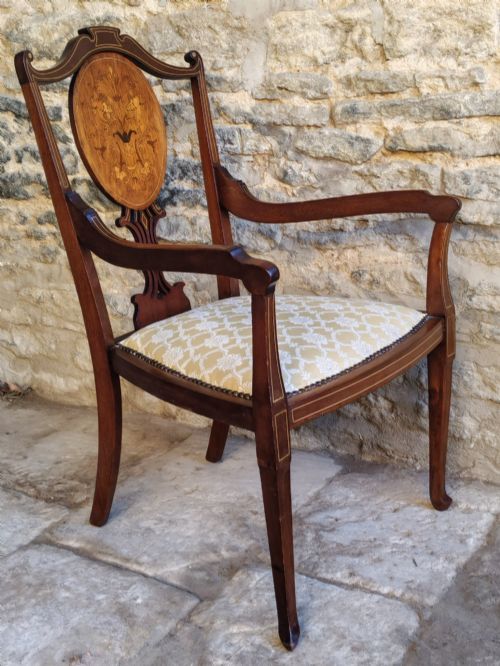
Upholstery materials varied from early leather and horsehair stuffing to later velvet, brass studs, and modern woven fabrics applied over drop-in or webbed seats. Carved details, such as wheelbacks, pierced splats, and Dutch marquetry inlay, were shaped by hand directly into the dense wood.
Mahogany Carver Chairs Retail Price Guide 2026
Typical asking prices for mahogany carver chairs among the pieces listed under this phrase on Sellingantiques today, from the lower quarter to the upper quarter. They describe what is for sale here now, not the wider market.
The listings span the Georgian, Regency, Victorian, and Edwardian periods, featuring mahogany paired with leather, velvet, brass, and woven upholstery.
Distinctions in construction and design
The degree of hand-carving defines the tier of a piece, moving from plain structural rails to deeply undercut ribbon backs or detailed Gothic tracery. Timber selection also dictates grade, with highly figured grain and uniform colour commanding greater attention than plain stock.
Structural integrity separates workshop execution, visible in the snugness of joints, the retention of original blocking beneath the seat, and the crispness of moulded edges. Later revival interpretations rely on the precision of the cabinetmaker's hand to match the authority of eighteenth-century prototypes.
Mayhew and Ince
The Mahogany Carver Chairs Glossary
- Carver chair
- An armchair designed with elbow rests, traditionally used at the head of a dining table or as a standalone desk seat. These pieces match the simpler side chairs in a larger dining suite.
- Shield back
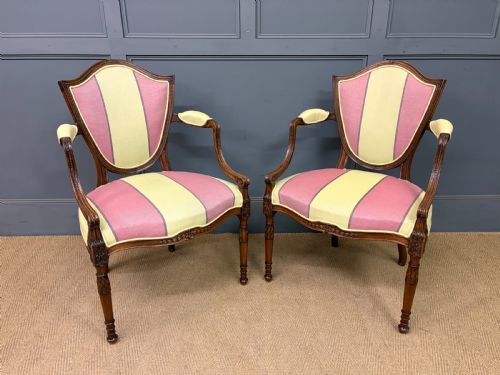
- A chair back shaped like a heraldic shield, popularised by Hepplewhite in the eighteenth century and revived in later decades. The design often incorporates pierced central splats.
- Sabre leg
- A concave, outwardly curving chair leg that tapers toward the foot, characteristic of the Regency period. This form provides lateral stability without heavy stretcher bars.
- Marquetry
- Decorative inlay work using various coloured veneers to form pictorial or geometric patterns on the wood surface. It appears on select late eighteenth and nineteenth-century chairs.
- Elbow seat
- An alternative term for an armchair or carver, referencing the prominent arm rests designed to support the sitter's arms. The expression appears frequently in historic inventory records.
Mahogany Carver Chairs: Frequently Asked Questions
What is a carver chair?
A carver chair is an armchair featuring structural elbow rests, historically placed at the head and foot of a dining table while matching the design of the surrounding side chairs.
These pieces also served as standalone desk or reading chairs in the parlour, providing additional support compared to standard dining seats.
How do I identify a Georgian chair?
Georgian chairs display architectural proportions, often utilising mahogany with carved splats, drop-in upholstered seats, and straight or cabriole legs.
Later Victorian and Edwardian pieces frequently reinterpret these eighteenth-century motifs, requiring careful inspection of the timber ageing and joinery methods.
Are these chairs suitable for daily dining?
These antique chairs were built for daily domestic use from solid mahogany, utilising sturdy mortise and tenon joinery that withstands regular sitting.
Maintenance involves checking the stability of the frame and occasionally updating the underlying webbing or fabric upholstery to suit modern comfort.
What distinguishes Regency from Chippendale styles?
Regency chairs lean toward classical antiquity, featuring saber legs, reeded frames, and brass inlay influenced by French Empire and Roman designs.
Chippendale pieces rely on mid-eighteenth-century aesthetics, characterised by ornate pierced splats, carved cabriole legs, claw-and-ball feet, and Gothic or Chinese fretwork influences.