


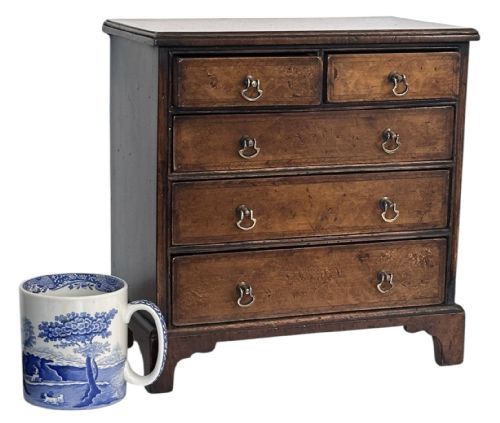


Mahogany and Walnut Chest
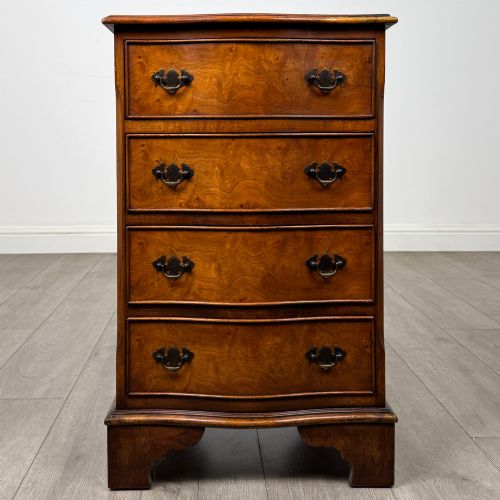
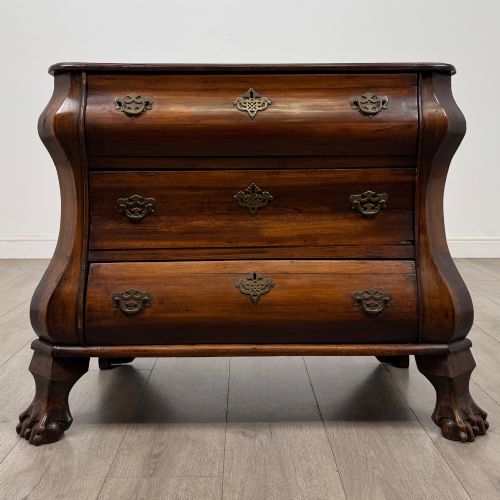
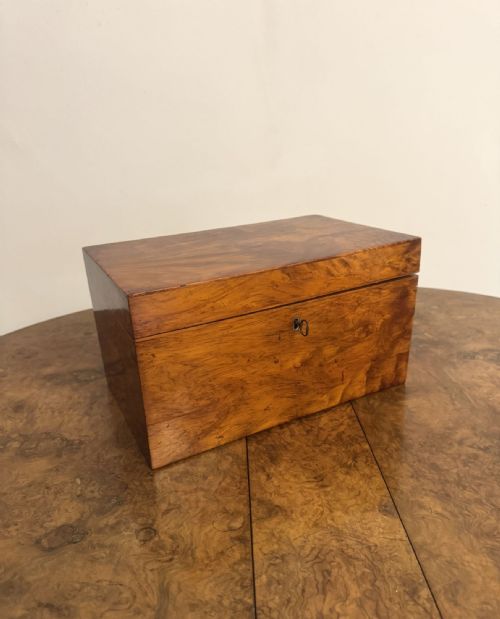
A mahogany and walnut chest brings together two of the finest cabinet timbers in one substantial piece of antique furniture.
Mahogany and Walnut Chest
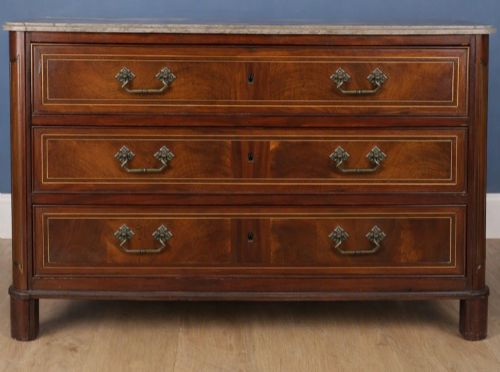
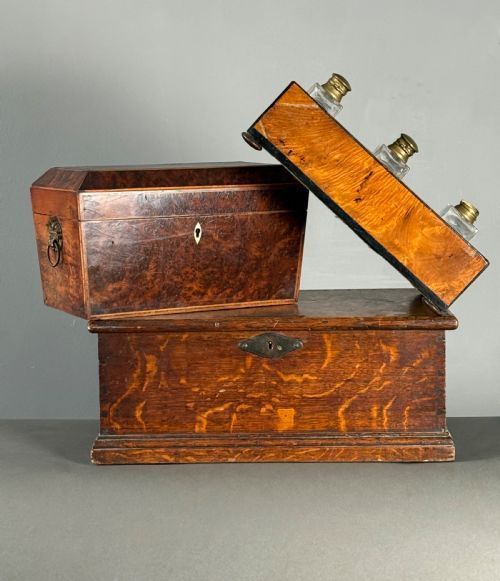
A mahogany and walnut chest takes several forms across this selection, primarily appearing as chests of drawers, collectors cabinets, and tall-boys from the Georgian, 19th Century, and Edwardian periods.
Buyers seeking a mahogany and walnut chest will encounter examples ranging from compact apprentice pieces and small serpentine drawers to massive Wellington chests and linen presses.
The material combination bridges several eras, seen in early red walnut and mahogany pieces as well as later Victorian and Edwardian interpretations.
How they were made
Cabinetmakers utilised solid mahogany and walnut alongside burr walnut veneers, applying them to carcases constructed from secondary timbers like oak.
Decorative surfaces often incorporate brass handles, mother of pearl, bone details, marble tops, and intricate marquetry or inlay work.
Listings feature walnut, mahogany, burr walnut, and oak across Georgian, Victorian, and Edwardian periods.
What varies in quality
The standard of a mahogany and walnut chest rests on the selection of timber grain, particularly the figure in walnut veneers and the depth of colour in the mahogany.
Construction details such as drawer lining, the precision of dovetailing, and the retention of original brass hardware set finer examples apart from later revivals.
The Mahogany and Walnut Chest Glossary
- Wellington chest
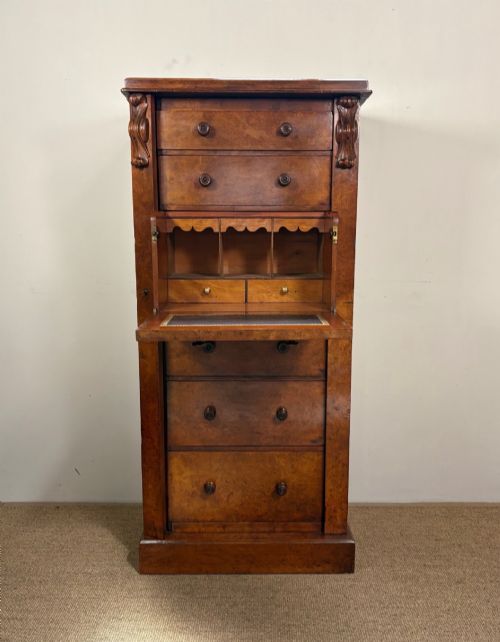
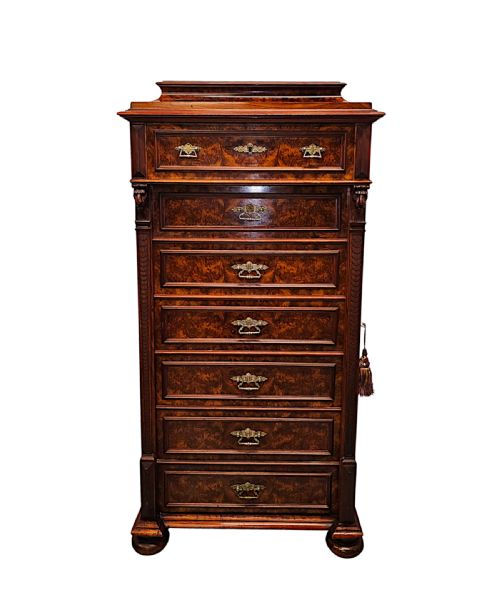
- A tall, slender chest of drawers secured by a locking hinged side pilaster bar. This style originates from the 19th century.
- Chest-on-chest
- A tall piece formed by a smaller chest stacked directly upon a larger base chest. It is also known as a tall-boy.
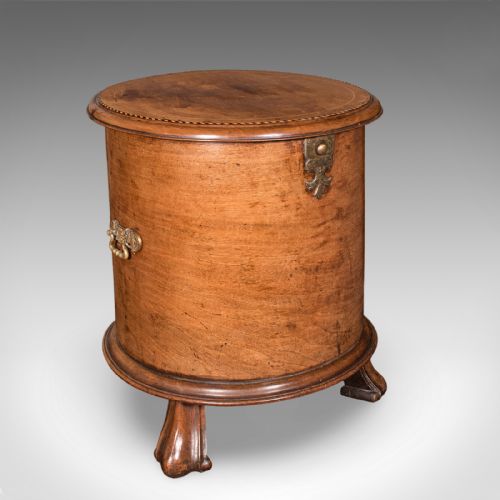
- Cellarette
- A fitted cabinet or box designed to hold bottles of wine and spirits. Examples frequently appear in walnut and mahogany.
- Marquetry
- The art of applying pieces of veneer to a structure to form decorative patterns. Dutch pieces often display this technique prominently.
- Secretaire
- A cabinet or chest incorporating a fitted writing drawer with a drop-front desk surface. Internal compartments often include small drawers and pigeonholes.
Mahogany and Walnut Chest: Frequently Asked Questions
How do I date a walnut chest?
Dating relies on examining construction methods, timber choice, and hardware. Earlier pieces often use solid red walnut or oak drawer linings, while later examples incorporate veneers.
Secondary woods and the style of the bracket feet or handles provide further clues to the manufacturing decade.
Where should I place a collectors cabinet?
Collectors cabinets require stable environmental conditions away from direct sunlight and heat sources. These pieces suit studies, hallways, or drawing rooms where humidity remains relatively constant.
Allow sufficient clearance around doors and drop-front writing surfaces for ease of access.
What is red walnut?
Red walnut refers to specific grades of American or European walnut with a warm, reddish tone. It frequently appears in 18th-century Georgian furniture.
Over time, this timber develops a rich patina that distinguishes it from darker mahogany.
How do I maintain wood surfaces?
Maintenance involves dusting with a soft, dry cloth and applying traditional beeswax periodically. Avoid modern silicone polishes that can build up and soften the historic finish.
Keeping pieces away from radiators prevents the timber and veneer from splitting.